








The festive anticipation for Rawayana’s grand return to Venezuela in December 2024 was abruptly shattered by an official decree from President Nicolás Maduro, accusing the beloved Caracas psych-tropical pop band of a "humiliating outburst against Venezuelan women." This pronouncement, delivered with characteristic severity, marked an incomprehensible yet, in retrospect, entirely predictable turn of events for a nation increasingly defined by political friction and shrinking freedoms. Until that moment, Rawayana had been an exuberant explosion of rhythm and vibrant pride for Venezuelans, their music a soundtrack to both everyday life and the diaspora’s yearning for home. Suddenly, they were officially barred from returning to their homeland, their ten completely sold-out shows across Venezuela, eagerly awaited by legions of fans, unceremoniously dropped from their tour schedule. The band took to social media, issuing a poignant statement: "Until further notice, this is how we say goodbye to our country," expressing gratitude to their fans and collaborators before defiantly adding, "Now it’s time for us to conquer the world." This dramatic severance was not merely a setback for a musical act; it was a stark illustration of the deep-seated political tensions and the escalating repression of artistic expression in Venezuela, forcing a cherished cultural emblem into an unexpected, high-stakes exile.
The "Veneka" Controversy: A Cultural Reclamation Twisted into a Political Weapon
The ostensible trigger for this severe governmental backlash was a Venezuelan raptor-house song titled "Veneka." On the surface, the track held no direct political connotation; it was neither a protest anthem nor a political manifesto. Like much of Rawayana’s discography, it was conceived as a vibrant celebration of Venezuelan culture, specifically aiming to reclaim the "Veneka" slur. This derogatory term is frequently weaponized against Venezuelan women migrants in other Latin American countries, highlighting the xenophobia and discrimination faced by a population forced to flee their homeland. By embracing and recontextualizing the term, Rawayana sought to imbue it with dignity and resilience, transforming a symbol of shame into one of pride.
However, according to Alberto Montenegro, Rawayana’s charismatic frontman, the song’s content was merely a pretext. Speaking from his forced exile in the Dominican Republic, Montenegro asserted, "They had no problem with ‘Veneka.’ That was just the excuse. Their goal was to prevent people from enjoying the concerts." He elaborated on the true motive, stating, "The real problem is that we started to be seen as a threat. Our concerts are massive gatherings of young people in a politically charged environment, and they wanted to control our message. I received threats through various channels telling me not to go [to Venezuela], that if I spoke about certain things, there would be problems." This revelation painted a clearer picture: the ban was not about a specific lyric or alleged offense, but about the government’s perceived loss of control over large public assemblies and the band’s potential to inadvertently foster dissent among a restless youth population. The "Veneka" controversy, therefore, became a convenient smoke screen for a broader agenda of silencing influential voices.
Venezuela’s Deepening Crisis: The Backdrop to Repression
Rawayana’s confrontation with the Maduro government did not occur in a vacuum but against the grim backdrop of Venezuela’s prolonged and devastating political and economic crisis. For years leading up to 2024, the nation had been gripped by an unprecedented economic collapse, characterized by hyperinflation that at its peak rendered the national currency almost worthless, widespread scarcity of basic goods, and a profound humanitarian crisis. Millions of Venezuelans faced daily struggles for food, medicine, and essential services. This catastrophic decline triggered the largest exodus in Latin American history, with over 7.7 million Venezuelans having migrated globally by mid-2023, according to UNHCR figures. These migrants often faced precarious conditions, including xenophobia and exploitation, making the "Veneka" slur a poignant symbol of their plight.
Concurrently, the Maduro government had steadily tightened its grip on power, systematically eroding democratic institutions and stifling dissent. Restrictions on freedom of expression, assembly, and political participation had become increasingly severe. Independent media outlets were shuttered or co-opted, opposition leaders were persecuted, and civic space shrank dramatically. Montenegro’s reference to an "election had just been stolen" likely alluded to the continuous controversies surrounding Venezuela’s electoral processes, which international observers frequently deemed neither free nor fair. In such a politically charged and economically devastated environment, large, independently organized public gatherings like Rawayana’s concerts, with their capacity to unite thousands of young people, represented a significant, albeit indirect, challenge to the state’s narrative and control. The government’s actions against Rawayana were thus consistent with a broader pattern of suppressing any perceived threat to its authority, regardless of its explicit political intent.
From Cultural Ambassadors to Voices of Resistance: Rawayana’s Evolution
Prior to the ban, Rawayana had largely cultivated an image as a joyful, apolitical celebration of Venezuelan culture, their music embodying the vibrant spirit of the Caribbean nation. However, as Venezuela’s crisis deepened, bringing with it economic collapse, mass migration, and growing restrictions on fundamental freedoms, the harsh realities of the country inevitably began to seep into Montenegro’s lyrics and the band’s artistic output. The band found itself in a paradoxical position: loved by the people, yet increasingly at odds with the ruling power.
Montenegro articulated this evolving mission: "I fight for my country, seeking to represent what we truly are. I fight so that they don’t steal our identity, something I believe many have tried to do both inside and outside of Venezuela." He viewed the "Veneka" song, despite its humorous tone, as profoundly important because of "the dignity it showed at a time when an election had just been stolen." For Rawayana, music became a vital tool to "resist these blows to our dignity," evolving from pure celebration to a nuanced form of cultural and political commentary. This transformation reflected the growing sentiment among many Venezuelan artists and citizens who, confronted with profound national upheaval, felt compelled to use their platforms to reflect, question, and challenge the prevailing circumstances. Their forced exile, rather than silencing them, paradoxically amplified their message on an international stage.
Global Recognition and the Soundtrack of Defiance
The ban, while isolating Rawayana from their home country, inadvertently propelled their international reputation to new heights. The band’s narrative of artistic suppression resonated deeply with global audiences and industry professionals, drawing increased attention to their unique sound and compelling story. This surge in international visibility culminated in a significant milestone in February 2025, when Rawayana clinched their first Grammy Award for Best Latin Rock or Alternative Album for their acclaimed record, ¿Quién Trae Las Cornetas? (Who Brings the Trumpets?). This prestigious award, bestowed upon them while in exile, served not only as a testament to their artistic merit but also as a powerful symbol of resilience against authoritarian pressures. It underscored the universal power of music to transcend borders and political divides, validating their journey and affirming their place on the global stage.
A year later, in early 2026, Rawayana released their next album, ¿Dónde Será El After? (Where is the Afterparty?). This record marked a distinct shift in their musical journey, incorporating explicit elements of direct political protest, albeit through their signature upbeat, tropical dance rhythms and satirical lens. The album masterfully channeled the exhaustion, frustration, and paradoxical optimism of a generation navigating Venezuela’s relentless political repression and economic collapse. It was a testament to the Venezuelan spirit of finding joy amidst adversity, a danceable critique of a dire situation. The opening track, "Si Te Pica Es Porque Eres Tú" (If It Itches, It’s Because of You), quickly became emblematic of the album’s defiant spirit. Its seemingly prophetic opening line – "Rawa wishes you a happy new year, and may those sons of bitches finally leave" – resonated with an unexpected and profound immediacy just two days after its release.
The Unprecedented Capture of Nicolás Maduro and its Aftermath
The timing of "Si Te Pica Es Porque Eres Tú" proved to be eerily prescient. A mere 48 hours after the album’s debut, news broke of an event that sent shockwaves across Venezuela and the international community: the capture of President Nicolás Maduro by US military forces. The specifics of the operation remained shrouded in geopolitical intrigue, but the fact of a foreign military intervention to apprehend a sitting head of state was unprecedented in recent Latin American history, raising immediate questions about national sovereignty and international law.
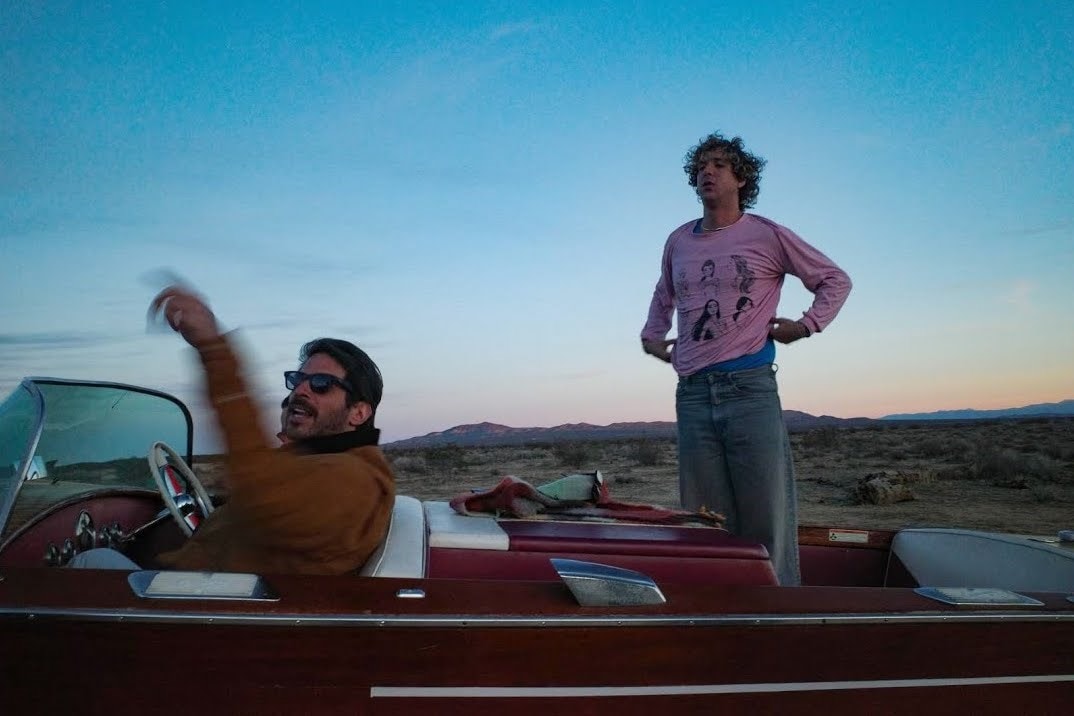
Montenegro’s reaction to Maduro’s capture was a mix of surprise, concern, and a profound sense of uncertainty. "It’s insane to see a foreign force enter your country and do something like that," he reflected. Drawing a powerful analogy, he continued, "It’s like when you’re kidnapped; you don’t have a good solution. You have a better or a worse solution, but there’s no good solution. I feel like we have a bad solution and we still don’t know the consequences. We don’t know what’s going to happen. It seems like everything will make sense now, but it also forces us to stare straight into the wolf’s den. The feeling was one of surprise. The wolf arrived. And now what’s going to happen?" His words captured the complex emotions of many Venezuelans: relief at the removal of a leader widely blamed for the nation’s woes, yet deep apprehension about the implications of foreign intervention and the unknown future.
In the immediate aftermath, "Si Te Pica Es Porque Eres Tú" went viral, its opening lines becoming an anthem for a nation reeling from the sudden shift in power. Montenegro himself expressed astonishment at the song’s unexpected resonance. "I just looked at the songs we had just released and thought, ‘Damn, what have I gotten myself into? What can I say?’" he recounted. He recognized the song as born from a "national sentiment," explaining, "This is a national feeling, and that’s why it will be powerful… We all want the people we don’t want around to stay out of our lives. The crazy thing is that it happened right after its premiere; it does feel like we manifested it." The song became a cathartic expression for millions, articulating a collective desire for change that had suddenly, dramatically, manifested in reality. The capture of Maduro created a profound power vacuum, leaving Venezuela at a critical crossroads with immense uncertainty about its political trajectory, economic recovery, and social cohesion.
Looking Ahead: Rebuilding a Nation and Resisting Nostalgia
Amidst the swirling uncertainty following Maduro’s capture, Alberto Montenegro offered a perspective rooted in cautious optimism and a rejection of past failures. He articulated a belief that the years of "disaster and absurdity" had served as a harsh but necessary period of "learning and maturing" for Venezuelan society. This outlook underscored a forward-thinking philosophy that eschewed a mere return to a bygone era.
Montenegro critically examined the common sentiment among some Venezuelans to "go back to how things were before Chavismo," the political ideology associated with Hugo Chávez and continued by Maduro. He argued that "the reality is that the problem started long before, and I’m not optimistic about chasing nostalgia. I think we must build something new, because if we go back to a past that was supposedly good, we’ll inevitably return to what we’re experiencing now." This statement highlights a crucial challenge for post-Maduro Venezuela: the need for genuine structural reform and a societal reckoning that addresses the root causes of its political and economic fragility, rather than simply reversing recent policies. It speaks to the complexity of nation-building after prolonged authoritarian rule and deep societal division.
The title of Rawayana’s latest album, ¿Dónde Será El After?, serves as more than just a catchy phrase; it’s a profound, forward-directed question, an "exercise in trying to look ahead." For Montenegro, it embodies a personal and collective commitment to living in the present and shaping the future, rather than being "trapped in nostalgia my whole life." His philosophy of finding hope in continuous learning — "if I live learning every day, tomorrow everything will be alright and the after-party will be great" — offers a poignant message for a diaspora yearning for return and a nation grappling with its next chapter. It reflects a resilient spirit that seeks to transform past suffering into a foundation for a better, more consciously constructed future.
The Enduring Spirit of Venezuelan Culture: Humor as Resilience
Beyond the political upheaval and personal exile, Montenegro offered profound insights into what he perceives as the unique, indomitable spirit of Venezuelan culture. He spoke with admiration for the Venezuelan "ability to laugh at everything, even to the point of irresponsibility." While acknowledging potential downsides, he emphasized the inherent beauty in this trait, arguing that "if we approach it from a positive perspective, nothing can hold us back if we’re laughing." This profound sense of humor, he explained, serves as a crucial coping mechanism, especially in a nation experiencing "profound social conflict with our self-esteem." It has allowed Venezuelans to "look ahead without much drama" despite unimaginable hardships.
This cultural phenomenon, where laughter coexists with profound sorrow, manifests in everyday life. "For Venezuelans, nothing is so dramatic; everything makes us laugh. We laugh at ourselves," Montenegro elaborated. "We say, ‘Damn, there’s no electricity, no water, no food’. But then we say, ‘Let’s grab that mango and have a good time.’" This capacity to "stay positive" has been a source of personal strength for Montenegro during the most difficult moments of his life, including a harrowing incident where his family was kidnapped. He recounted how his mother, facing armed assailants, began telling jokes, eventually eliciting laughter from the kidnappers themselves. This extraordinary anecdote vividly illustrates the deep-seated resilience and humanizing power of humor in Venezuelan society, transforming terrifying situations into moments of shared humanity.
Montenegro further connected this cultural trait to the very essence of Caribbean music, noting his experience singing "El Niágara en Bicicleta" with Juan Luis Guerra. He mused on the "crazy" idea that people dance to songs about grief, yet affirmed its naturalness: "We dance our sorrows, we sing about our grief. I think that’s part of us, beyond it being a deliberate act of resistance; it’s who we are." Rawayana’s music, political yet undeniably joyful, is a perfect embodiment of this spirit. It serves as a testament to a culture that, despite enduring immense suffering and political turmoil, refuses to surrender its capacity for joy, laughter, and an unwavering hope for a better future.
Conclusion: Music as a Beacon of Identity and Hope
Rawayana’s journey, from a celebrated Venezuelan band to exiled dissidents, Grammy winners, and unwitting prophetic voices, encapsulates the tumultuous narrative of a nation in crisis. Their forced ban in late 2024 by the Maduro regime, ostensibly over a song reclaiming a derogatory slur, revealed a deeper governmental anxiety about the band’s unifying power among Venezuela’s youth. Against a backdrop of severe economic collapse, mass migration, and escalating political repression, Rawayana’s music evolved from purely celebratory to a potent form of cultural and political resistance.
Their international acclaim, marked by a Grammy win in 2025, underscored the global resonance of their story and their sound. The release of ¿Dónde Será El After? and its opening track, "Si Te Pica Es Porque Eres Tú," just days before the unprecedented capture of Nicolás Maduro by US forces in early 2026, cemented their role as a poignant soundtrack to a nation’s sudden, dramatic pivot. Through it all, frontman Alberto Montenegro articulates a forward-looking philosophy, rejecting the siren call of nostalgia and advocating for the construction of a new, more just future. His insights into the unique Venezuelan spirit – characterized by an irrepressible humor and an ability to find joy amidst profound sorrow – illuminate the enduring resilience of a people. Rawayana’s continued global journey is more than just a band’s pursuit of musical conquest; it is a powerful affirmation that even in exile, art can preserve national identity, inspire hope, and serve as a vital beacon for change, carrying the vibrant, defiant spirit of Venezuela to the world.