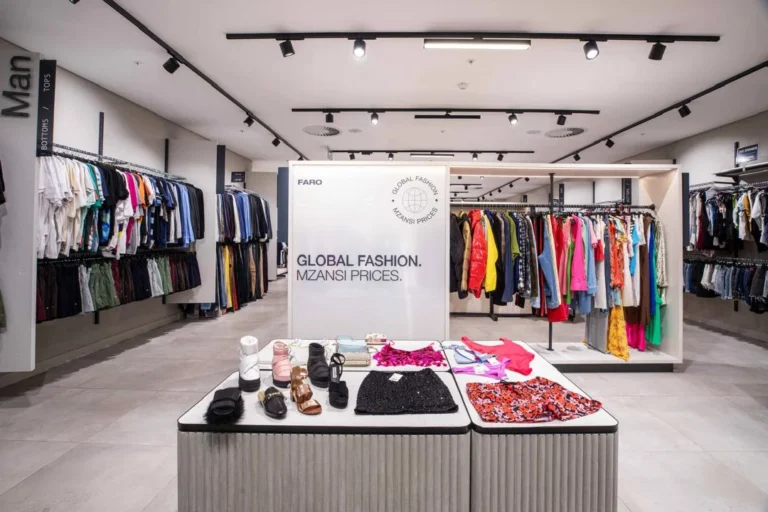











The global fashion industry operates on an unrelenting and accelerating timeline. Traditional retail models once relied on four distinct seasonal collections per year, but the modern marketplace has fundamentally shifted. Driven by the meteoric rise of fast-fashion giants such as Shein, H&M, and Zara, consumer expectations now demand continuous updates, micro-trends, and nearly instantaneous availability of new styles. To survive and thrive in this hyper-competitive environment, fashion brands, manufacturers, and design houses are increasingly turning to advanced technology to compress their product development lifecycles.
At the forefront of this digital transformation is Raspberry AI, a two-year-old technology startup that has captured the attention of both major global fashion brands and prominent venture capital firms. By deploying a specialized text-to-image platform tailored specifically for the apparel and retail sectors, Raspberry AI allows designers to visualize, iterate, and refine their creative concepts almost instantaneously. This technological leap addresses one of the industry’s most persistent bottlenecks: the transition from a conceptual sketch to a tangible, market-ready product.
The Genesis and Vision of Raspberry AI
Raspberry AI was founded by Cheryl Liu, whose professional background bridges the worlds of high-level finance and consumer technology. Before launching the startup, Liu worked as a private equity analyst at KKR, where her portfolio focus centered heavily on the retail sector. She later gained operational experience at major technology companies including Amazon and DoorDash.
Liu’s pivotal realization occurred in late 2012 [sic: late 2022], coinciding with the public emergence of groundbreaking generative image models such as OpenAI’s DALL-E and Stability AI’s Stable Diffusion. Recognizing the latent potential of these foundational models, Liu identified an acute commercial application within the fashion design space.
"For the first time in history, you could rapidly create hundreds of designs in a way that you could never do before," Liu noted in interviews regarding the founding thesis of Raspberry AI.
Historically, the apparel design process has been painstakingly slow and resource-intensive. Traditionally, designers conceptualize garments through initial sketches or digital illustrations using legacy computer-aided design (CAD) software such as Adobe Photoshop or specialized industry tools like Browzwear. Once a promising design is selected, brands must order physical samples from manufacturers—often located overseas—to properly evaluate drape, texture, fit, and pattern placement. This sampling process frequently takes weeks, and producing multiple physical iterations for a single design concept is prohibitively expensive and environmentally taxing. Consequently, brands are forced to make high-stakes manufacturing decisions based on a very limited pool of physical prototypes.
Revolutionizing Design Iteration Through Generative AI
Raspberry AI fundamentally alters this workflow by bridging the gap between abstract imagination and photo-realistic visualization. The platform enables designers to upload their hand-drawn sketches or input detailed text prompts, instantly generating hyper-realistic images that depict how a garment would appear on a model or a brand’s e-commerce website.
This capability allows creative teams to explore vast combinatorial possibilities without incurring the financial and temporal costs of physical sampling. For instance, a designer can take a foundational silhouette and instantly visualize it rendered in fifty distinct fabrics, prints, textures, and colorways.
"You can see the same foundational piece in a lot of different materials and prints," Liu explained. "No company is going to order 50 different sample iterations for one single product, but now they can see 50 different iterations of a single design."
Beyond mere visualization, Raspberry AI distinguishes itself from general-purpose image generators—such as Midjourney, DALL-E, or Adobe Firefly—through its deep comprehension of industry-specific vernacular and technical textile terminology. While a consumer-grade generative model might struggle to accurately render specialized apparel concepts, Raspberry AI’s proprietary architecture is trained on the nuanced lexicon of fashion manufacturing.
As a primary differentiator, Liu points to specialized terminology like a "fuzzy sweater." While a generic AI model might misinterpret the technical specifications, knit weights, and yarn types implied by industry professionals, Raspberry AI’s platform comprehends the underlying parameters required to make the garment viable for actual production. This technical fluency ensures that the generated visuals are not only aesthetically pleasing but also physically and commercially plausible.
Rapid Commercial Adoption and Industry Validation

Despite its relatively brief operational history, Raspberry AI has achieved significant commercial traction. The startup has amassed a robust roster of 70 enterprise customers, ranging from high-performance athletic brands to multinational luxury and mass-market manufacturers.
Among its marquee clients are Under Armour, the prominent American sportswear and athletic footwear manufacturer; MCM Worldwide, the luxury leather goods and fashion house; and Gruppo Teddy, an influential Italian apparel manufacturer operating an extensive retail footprint consisting of 8,840 stores spread across 39 countries. The adoption of Raspberry AI by such diverse and high-volume organizations underscores the universal applicability of generative design tools across different market segments, from fast fashion to luxury goods.
Funding Milestones and Venture Capital Backing
The rapid market penetration and scalability demonstrated by Raspberry AI have translated into substantial backing from the venture capital community. The startup recently closed a $24 million Series A funding round. The investment was led by prominent Silicon Valley venture capital firm Andreessen Horowitz, with participation from existing investors including Greycroft, Correlation Ventures, and MVP Ventures.
This latest capital infusion arrives merely ten months after Raspberry AI successfully closed its $4.5 million seed round, signaling immense investor confidence in the company’s technology stack and growth trajectory.
Bryan Kim, a partner at Andreessen Horowitz who spearheaded the investment, explained the firm’s strategic motivation for backing the startup. According to Kim, the venture firm had actively evaluated multiple artificial intelligence companies operating within the fashion and manufacturing technology space before selecting Raspberry AI.
"We had met with multiple companies and got excited about Cheryl as a founder and how she approaches building a company," Kim stated, emphasizing that the presence of exceptionally large, marquee enterprise clients further validated the strength of Raspberry AI’s market position.
Strategic Allocation of Capital and Future Roadmap
With $24 million in newly secured Series A funding, Raspberry AI plans to aggressively scale its operations across multiple fronts. A primary objective is the recruitment of top-tier engineering, sales, and marketing talent to support its expanding customer base and accelerate product development.
Furthermore, the company is not resting on its early successes within the apparel sector. Raspberry AI has outlined a strategic roadmap to expand its generative design technology beyond fashion and into adjacent lifestyle categories. The startup intends to adapt its text-to-image and sketch-to-photo-realistic platforms for home goods, furniture design, and cosmetics product packaging. By entering these multi-billion-dollar design markets, Raspberry AI aims to establish itself as an indispensable visualization engine across the entire consumer products landscape.
Broader Economic and Environmental Implications
The integration of generative AI startups like Raspberry AI into the traditional fashion pipeline carries profound implications for the broader retail economy and environmental sustainability.
Economically, the ability to compress design cycles from weeks to minutes allows brands to respond dynamically to fast-moving social media trends and shifting consumer preferences. This agility reduces the risk of dead inventory—unsold garments that must be heavily discounted or sent to landfills—thereby improving profit margins for retailers operating in an increasingly volatile economic climate.
Environmentally, the fashion industry has long faced intense scrutiny regarding its massive carbon footprint, water consumption, and waste generation. By significantly reducing the reliance on physical samples, material shipping, and iterative prototyping, generative AI tools offer a pathway toward more sustainable product development. Digital-first iteration ensures that physical resources are consumed only when a design has been rigorously vetted and validated by internal stakeholders and consumer data analytics.
As venture capital continues to flow into applied generative AI solutions, startups like Raspberry AI are proving that the technology’s true value lies not in novelty, but in deep, vertical-specific workflow integration. By solving concrete operational challenges for apparel giants and luxury houses alike, Raspberry AI is actively reshaping how the physical world is imagined, designed, and manufactured.