










The Wilson College of Textiles at North Carolina State University is mourning the profound loss of Andre West, a transformative professor and the former director of the Zeis Textiles Extension (ZTE). West, who passed away in September 2026, leaves behind a legacy defined by a rare synthesis of academic rigor, entrepreneurial zeal, and a deeply held commitment to student advocacy. His career, which spanned four decades, bridged the gap between theoretical textile science and real-world industrial application, fundamentally reshaping the curriculum and physical infrastructure of one of the nation’s premier textile institutions.
A Journey of Innovation: From London to Raleigh
Andre West’s professional trajectory was marked by a global perspective on the textile and fashion landscape. Born and educated in England, he earned his Bachelor of Science in textile design from the University of Huddersfield. His early career in London provided a foundation in trend forecasting and high-level design—skills that would later become the bedrock of his teaching philosophy.
Following his tenure in the United Kingdom, West relocated to Florida, where he expanded his expertise through roles at the Art Institute of Fort Lauderdale and leadership positions during Fort Lauderdale Fashion Week. This period allowed him to pivot between creative design and the logistical demands of the Knit Design Group, Inc.
In 2009, he achieved his Master of Fine Arts in visual arts from Miami International University of Art and Design, followed by a Doctorate in Education in 2012. This academic maturation paved the way for his arrival at NC State in 2013. Joining the Department of Textile and Apparel, Technology and Management as an assistant professor, West rose through the ranks, attaining the status of associate professor in 2019 and full professor in 2024.
The Zeis Textiles Extension Transformation
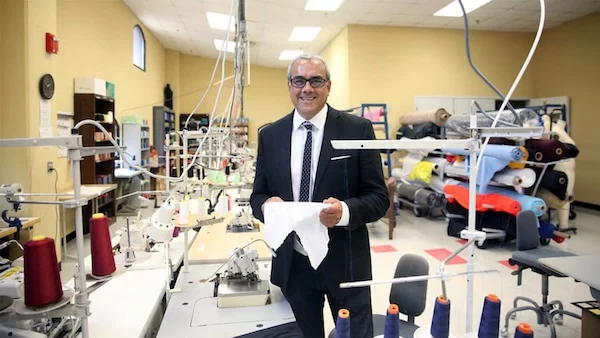
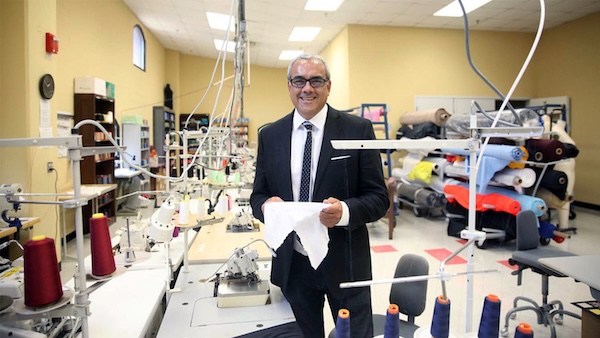
Perhaps the most significant chapter of West’s career began in 2019 when he was appointed director of the Zeis Textiles Extension (ZTE). At a time when the textile industry faced unprecedented disruption, West steered the unit toward a model of financial self-sustainability and technical agility.
Under his stewardship, the ZTE underwent an organizational restructuring that prioritized revenue diversification. When the COVID-19 pandemic necessitated a rapid shift in global supply chains, West repurposed the facility’s machinery to manufacture critical personal protective equipment (PPE), demonstrating the university’s capacity for emergency response. By leveraging his connections and vision, he transformed the ZTE’s grant-funding landscape, moving from near-zero annual grant intake to securing more than $1 million per year.
His vision for infrastructure was equally ambitious. West was a primary architect of the concept for a prototype lab, an idea that eventually materialized as the W. Duke Kimbrell Flex Factory. This facility now serves as a hub for industry collaboration, allowing students and entrepreneurs to bridge the "valley of death" between laboratory research and commercial production.
Research, Advocacy, and Student Empowerment
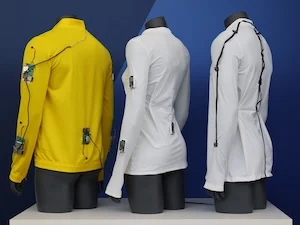
West’s research agenda was characterized by its interdisciplinary nature. He was a vocal proponent of integrating technology into textile production, exploring innovations such as textile electronics, technical knit design, and chemical-free, mosquito-resistant apparel—the latter of which earned him international acclaim for his collaboration with the College of Agriculture and Life Sciences and the Department of Entomology.
Beyond the laboratory, West was a tireless advocate for his students. He recognized that academic success is often predicated on holistic support. To that end, he founded the Greater Good Textile Group, a student-led organization focused on ethical labor practices and sustainability. He also acted as the faculty advisor for Latinos Unidos en Textiles, providing a platform for underrepresented students to find their voice within the college.
His commitment to students was perhaps best illustrated by his receipt of the Textile Leader of the Year award in 2018. Unlike awards bestowed by academic boards, this honor was student-nominated, a fact West frequently cited as the highlight of his professional career.
A Legacy of Grant-Funded Global Impact
West’s ability to secure federal and international funding was instrumental in elevating the stature of the Wilson College. His portfolio included:
- USAID Programs: A multi-year initiative that trained over 1,000 individuals in northern Honduras, providing them with the technical skills necessary to participate in the global textile economy.
- NSF Engines: Leadership in projects focused on hemp-based materials and the complexities of textile-to-textile circularity, addressing the industry’s critical need for sustainable fibers.
- Department of Defense: Development of advanced manufacturing ecosystems tailored to military specifications, proving the feasibility of high-performance domestic production.
These projects were not merely academic exercises; they were designed to influence policy and industrial standards. By focusing on hemp as an alternative fiber, West sought to mitigate the environmental impact of the "fast fashion" cycle, a commitment that resonated throughout his body of work.
Remembering the Man and the Mentor
Colleagues remember West not only for his resume of accomplishments but for his personality. Jeff Joines, associate dean for academic programs at the Wilson College, described him as a "tireless embodiment of the entrepreneurial spirit."
"He had a million great ideas and, unlike most, he made them happen," Joines noted. "He was a friend who focused on the success of others, never needing the spotlight himself."
Dean Hinks, the Prakash Chand Kochhar Dean of the college, underscored the rare nature of West’s skill set. "Andre possessed the unique ability to merge the aesthetic demands of fashion design with the technical constraints of textile engineering," Hinks said. "He was a bridge-builder who saw potential in every student he encountered."
Melissa Sharp, who worked alongside West for six years as his partner in the transformation of the ZTE, noted that his mentorship style was defined by balance. "He knew exactly when to give you space and when to provide the push needed to clear a hurdle," Sharp remarked. "He showed us that servant leadership is not a passive role, but an active, creative, and sometimes exhausting commitment to the future of the college."
Implications for the Future of Textile Education
The passing of Andre West marks the end of an era for the Wilson College of Textiles, yet his influence remains embedded in the institution’s DNA. The programs he helped establish—most notably the Wells Fargo Pitch to the Pack event—ensure that the pipeline of textile entrepreneurs remains robust.
The institutionalization of his ideas, from the Flex Factory to the diverse research consortia he led, suggests that the "West model" of education will continue to shape future generations of students. His work highlighted a critical shift in modern higher education: the move away from siloed academic departments toward integrated, industry-facing centers of innovation.
As the university moves forward, the challenge for the Wilson College will be to maintain the momentum West generated. His career serves as a case study for how a single educator can influence an entire industry by focusing on the intersection of sustainability, technology, and, most importantly, human potential.
The impact of his mentorship is perhaps best captured by his former student, Adaline Griffin, a Centennial Scholar. Reflecting on his guidance during the 2024 Pitch to the Pack competition, she noted that West’s influence was not just about the technicalities of a business plan, but about the development of one’s character. "He challenged me to think better, do better, and reach for a higher standard than I thought possible," she said.
In the final assessment of his career, Andre West did not merely teach textiles; he taught resilience. Through his patents, his global partnerships, and the countless students he ushered into the industry, he built a framework for innovation that will persist long after his passing. The Wilson College of Textiles and the broader industry have lost a giant, but the possibilities he cultivated remain a permanent feature of the academic and professional landscape.