





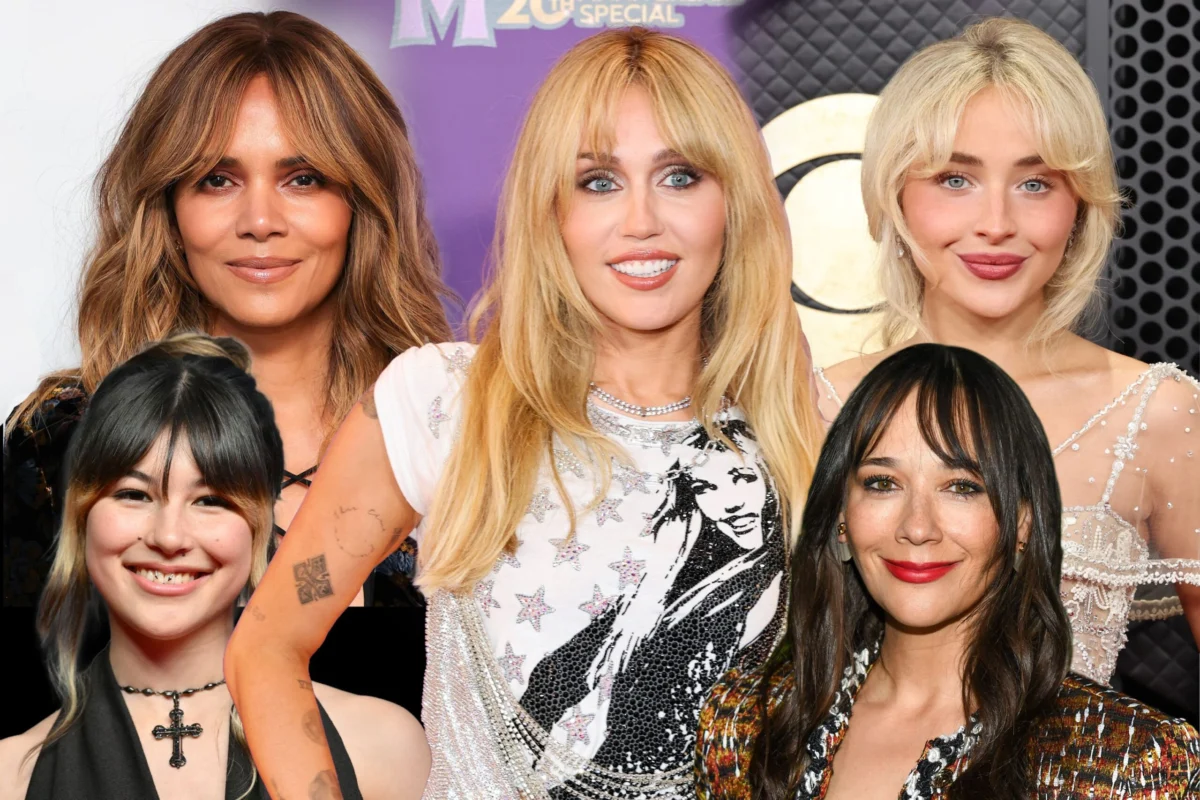
From the iconic, textured fringe of Brigitte Bardot in the 1960s to the retro-flipped aesthetic popularized by Farrah Fawcett in the 1970s, the evolution of the face-framing bang has been a cornerstone of modern hairstyling. In the current beauty landscape, curtain bangs have ascended to a position of near-ubiquity, championed by contemporary figures like Sabrina Carpenter, whose voluminous, high-maintenance glamour has solidified the look as a red-carpet staple. Beyond celebrity influence, the style has seen a massive surge in adoption across social media platforms, with industry data suggesting a 30% year-over-year increase in search queries related to "face-framing fringe" and "curtain bangs styling." This resurgence is not merely a fleeting trend; it represents a fundamental shift in how consumers view maintenance, versatility, and the role of hair in defining facial symmetry.
.jpg)
Historical Context and the Aesthetic Evolution of the Fringe
To understand the current popularity of curtain bangs, one must look at the historical trajectory of the style. The 1960s marked the birth of the "Bardot bang," which prioritized a thick, piece-y texture that felt intentionally undone. By the 1970s, the look transitioned into the "Farrah flip," utilizing feathered layers to create volume that mirrored the era’s penchant for dramatic silhouettes.
In the 2020s, the style has been reinterpreted to meet the demands of a more "effortless" beauty standard. While previous iterations required significant time with hot rollers and setting sprays, modern curtain bangs are designed to work in tandem with an individual’s natural hair texture. This shift reflects a broader movement in the beauty industry toward inclusivity, where styles are no longer dictated by a "one size fits all" approach but are instead customized to suit diverse hair types, ranging from 1A straight to 4C coily textures.

The Technical Anatomy of the Curtain Bang
Professional stylists define curtain bangs as a long, sweeping fringe that originates from a center part and gracefully cascades down to hug the brow bone and cheekbones. Unlike blunt bangs, which create a hard horizontal line across the forehead, curtain bangs are characterized by a gradual slope. The center is typically cut shorter to draw attention to the eyes, while the sides are left longer, often grazing the tops of the cheekbones or extending to the jawline.
According to industry experts, the primary appeal of this cut lies in its inherent symmetry. By creating a transition between the hair length and the face, the cut acts as a natural contour, softening angular jawlines or adding dimension to rounder face shapes. This architectural approach to cutting is what distinguishes the style from basic face-framing layers. While face-framing layers often provide a subtle gradient, curtain bangs possess the weight and volume necessary to function as a distinct feature of the hairstyle.

Inclusivity in Salon Practices: A Shift Toward Customization
A critical development in the adoption of curtain bangs is the professional pivot toward personalized consultations. New York-based hairstylist Rubi Aguilar notes that the era of "cookie-cutter" haircuts is effectively over. The modern professional standard dictates that a stylist must evaluate a client’s growth patterns, hair density, and daily styling habits before executing the cut.
This is particularly vital for those with textured or curly hair. Historically, stylists often attempted to cut curly hair using methods developed for straight hair, leading to disastrous "shrinkage" issues where the bangs would bounce up far higher than intended. Today, the industry standard has shifted toward "dry cutting" for curly textures. By cutting the hair in its natural state, the stylist can observe how each curl interacts with the others, ensuring that the final result is a consistent, balanced frame rather than an uneven, unmanageable fringe.

The Economics of Maintenance: Why the Style Endures
One of the most significant factors in the longevity of the curtain bang trend is its "graceful grow-out" phase. Unlike traditional blunt bangs, which require a trim every three to four weeks to prevent them from obstructing vision or losing their shape, curtain bangs are designed to evolve. As they grow longer, they naturally blend into the layers of the hair, effectively becoming face-framing tendrils. This reduces the frequency of necessary salon visits, making the style a more economical and time-efficient choice for the average consumer.
Industry analysts suggest that this low-maintenance profile is a primary driver of the style’s adoption among working professionals. The ability to style them with minimal effort—often requiring nothing more than a quick air-dry or a light misting of texturizing spray—aligns with the current consumer preference for "quiet luxury" and "clean girl" aesthetics, where the goal is to look polished without appearing as though one has spent hours in front of a mirror.

Navigating the Salon Experience: Professional Recommendations
Hairstylists emphasize the importance of preparation before an appointment. Bringing visual references remains the most effective way to ensure that the client and the stylist have a shared understanding of the desired length and volume. However, experts note that providing images of "what to avoid" is equally beneficial. This allows the stylist to identify the specific elements of a haircut—such as excessive bluntness or a lack of layering—that the client finds unappealing.
Furthermore, communication regarding styling habits is essential. A stylist needs to know if a client is a dedicated "blow-dryer" or if they prefer to air-dry. If a client prefers the latter, the stylist will likely cut the bangs with more internal texture to ensure they don’t look heavy or greasy when left to dry naturally.

The Dangers of DIY: A Cautionary Note from the Industry
Despite the abundance of social media tutorials promising "salon-quality results" at home, the professional consensus remains overwhelmingly against the DIY approach. Hairstylists argue that the face-framing nature of curtain bangs leaves no margin for error. A botched cut cannot be easily hidden, and because the bangs are in the direct line of sight, even minor mistakes are immediately noticeable.
Most professional salons offer complimentary or low-cost bang trims for existing clients. Stylists view this as a retention strategy and a way to ensure the integrity of their work. For those who insist on attempting the cut at home, professionals stress the necessity of investing in high-quality, dedicated shears—such as those from Equinox or Fromm—as standard household scissors can cause split ends and structural damage to the hair cuticle, leading to a frizzy, uneven finish.
.jpg)
Styling and Maintenance: The Role of Modern Products
The "breezy, effortless" look associated with curtain bangs is often the result of careful product selection rather than excessive heat. For those with fine, straight hair, a lightweight texturizing spray is the industry gold standard. These products provide the "grit" necessary to keep the bangs from falling flat, while simultaneously absorbing excess oil at the roots.
For individuals with curly or coily textures, the focus shifts to moisture and definition. Curl-control creams, such as those from Innersense or Isima, are recommended to provide a light, hydrating hold that prevents frizz without weighing down the hair.

The use of styling tools is also undergoing a refinement. Where once massive, high-heat curling irons were the norm, the current preference is for 1.5-inch to 2-inch round brushes used in conjunction with a blow-dryer. This technique allows for a softer, more voluminous bend. For those looking to avoid heat altogether, the resurgence of the Velcro roller has provided a low-impact solution for maintaining the "swoop" of the bangs between washes.
Future Implications: The Normalization of the "Personalized Fringe"
The widespread popularity of curtain bangs signals a broader shift in the beauty industry: the move away from rigid, trend-based uniformity toward personalized hair architecture. As the style continues to evolve, we can expect to see more variations, including "micro-curtain" bangs and variations that integrate more heavily with shags and butterfly cuts.

The implications for the hair-care market are clear: consumers are increasingly seeking products that offer versatility and health-focused results rather than simple hold. The success of volumizing sprays and styling oils that prioritize hair health—such as those containing bonding technology or heat-protectant properties—reflects a more educated consumer base.
Ultimately, the curtain bang is a testament to the power of a classic silhouette to adapt to the needs of each generation. By bridging the gap between historical glamour and modern, low-maintenance living, the style has secured its place as a permanent fixture in the global beauty lexicon. Whether on the red carpet or in the daily routine of the average individual, the curtain bang remains a versatile, flattering, and enduring choice for those seeking to highlight their features with elegance and ease. With the right consultation, the right tools, and a commitment to regular, professional maintenance, the style serves as a reliable framework for personal expression, confirming that some trends are not just temporary—they are timeless.