










The global fashion industry is currently grappling with an unprecedented paradox: while major brands in the United States, Europe, and the United Kingdom struggle with billions of dollars worth of unsold inventory and consumer returns, emerging markets face severe environmental degradation caused by the very influx of discarded textiles. Traditional retail strategies dictate that excess stock is either heavily discounted locally—risking severe market cannibalization and brand dilution—or quietly incinerated and sent to landfills to protect corporate profit margins. For decades, the byproduct of this systemic overproduction has been absorbed by developing nations, primarily across Africa, through secondhand clothing imports. However, industry estimates indicate that between 30% and 40% of these imported secondhand garments are completely unusable upon arrival, transforming local communities into dumping grounds for the Western world’s sartorial excess.
Enter FARO, a forward-thinking South African recommerce startup founded to intercept this broken supply chain, rehabilitate surplus apparel, and make premium fashion accessible to emerging consumer bases. Having recently secured $6 million in a heavily subscribed funding round led by high-profile venture capitalists and industry operators, FARO is positioning itself at the vanguard of a global recommerce revolution. As the broader global resale market races toward a projected valuation of $350 billion by 2027, companies like FARO are proving that sustainability and profitability can successfully intersect in regions long overlooked by traditional multinational retailers.
The Chronology and Genesis of FARO
The roots of FARO trace back to a collaborative vision shared by its four co-founders: David Torr, Will McCarren, Chris Makhanya, and Amber Penney-Young. Drawing upon deep professional backgrounds gained at industry titans such as Amazon, Jumia, UCOOK, Superbalist, and Zumi, the founding team recognized a fundamental structural inefficiency in how global fashion conglomerates managed their excess inventory. Major brands routinely accumulated millions of units of overstock, alongside customer returns featuring minor, easily fixable defects. Due to the high cost of manual labor in Western countries, processing these items for secondary retail was economically unfeasible, prompting brands to write them off entirely.
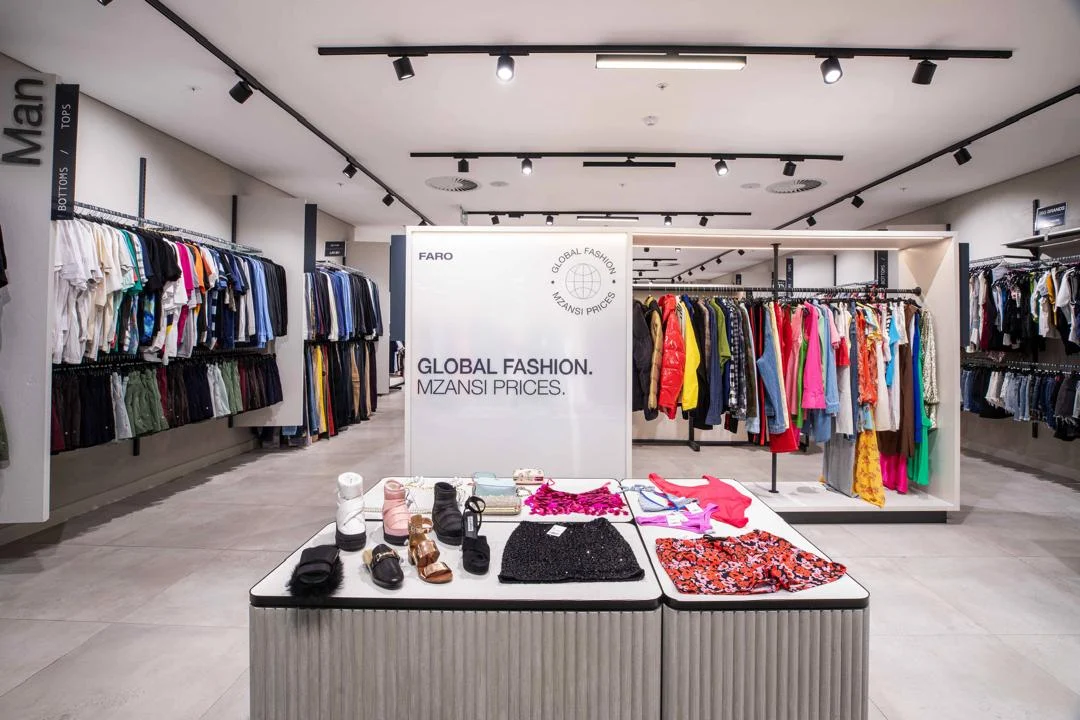
In 2023, the fledgling enterprise launched an experimental pop-up store in South Africa to test the viability of its core thesis. The response exceeded all conventional retail expectations. Within its very first month of operation, the pop-up generated a staggering $100,000 in revenue. Conventional retail benchmarks had suggested that FARO would require at least seven physical storefronts to cross the $2-million annual revenue threshold. Instead, by capitalizing on high-density urban hubs, mid-market shopping centers, and formal retail spaces, the startup achieved a remarkable $2.3 million in revenue with just four brick-and-mortar locations. This performance translated into a phenomenal 20-fold year-over-year revenue growth trajectory, prompting the founders to accelerate their long-term expansion blueprint.
Bridging the Gap Between Surplus and Demand
The mechanics of FARO’s business model are designed to address economic disparities while maximizing environmental sustainability. Developing economies in Africa often lack the purchasing power required to sustain full-price retail footprints for international lifestyle brands such as Calvin Klein, Tommy Hilfiger, Zara, ASOS, Boohoo, G-Star, Jack & Jones, and Levi’s. Nevertheless, the cultural desire for authentic, high-quality branded merchandise remains exceptionally strong among aspirational consumers.
FARO bridges this gap by forging direct B2B partnerships with major global fashion brands and e-commerce giants. The startup acquires unsold overstock and customer-returned items—sometimes for as little as £1 per piece—and transports them to its centralized processing facilities in South Africa. Equipped with industrial laundries, specialized steam tunnels, and cost-effective labor, these facilities restore the garments to pristine, retail-ready condition.
The product mix currently consists of approximately 40% reconditioned returns and 60% brand-new overstock items. By streamlining this reconditioning process and maintaining a strict fixed-margin model capped at 45% after covering all operational costs, FARO is able to pass significant savings down to the consumer, offering authentic branded apparel at discounts of up to 70% off original retail prices.
According to co-founder and co-CEO David Torr, customer-centricity remains the cornerstone of the company’s growth strategy. Rather than artificially inflating corporate profit margins when financial performance exceeds initial projections, FARO consistently funnels excess capital back into price optimization, ensuring maximum value for its shoppers.
Navigating the Complexities of Off-Price Retail and Logistics
Unlike many contemporary retail startups that rush to build digital-first e-commerce platforms, FARO has deliberately chosen a brick-and-mortar-heavy distribution strategy. South Africa boasts a uniquely advanced retail landscape compared to the wider sub-Saharan region, featuring over 2,000 established shopping centers. This robust physical infrastructure makes it an ideal testing ground for off-price retail distribution.
The decision to avoid e-commerce is rooted in the unique nature of off-price inventory. Because customer returns and overstock arrive as fragmented, single-item pieces with unpredictable sizing and colorways, the cost of photographing, digitizing, and listing every individual SKU online is prohibitively high. Furthermore, e-commerce adoption across much of Africa continues to face severe headwinds, including infrastructural bottlenecks, sparse population densities, and exorbitant last-mile delivery costs. While established marketplace platforms like Takealot and Jumia have maintained market share over the years, they increasingly find themselves competing against ultra-cheap, cross-border fast-fashion giants like Shein and Temu. By sidestepping digital logistics altogether and focusing on physical retail experiences, FARO insulates itself from these margin-crushing delivery expenses.
Automating the Supply Chain Through Artificial Intelligence
Behind the scenes of FARO’s physical retail expansion lies a concerted effort to disrupt the notoriously antiquated administrative workflows of the global fashion industry. Historically, off-price retail giants like TJX have relied on legacy systems and manual labor, with supply chain planners wading through massive, complex data manifests in Excel spreadsheets.
To eliminate these inefficiencies, FARO is actively developing and deploying proprietary AI-powered agents designed to break down intricate buyer workflows into streamlined micro-tasks. Pointing out that major fashion brands often employ thousands of head-office workers solely dedicated to manual data manipulation, Torr emphasizes the transformative potential of artificial intelligence. FARO’s newly implemented buy models can process complex inventory manifests not in hours, but in seconds, achieving an operational accuracy level that vastly outperforms human data-entry teams.
Additionally, the company is rolling out personalized shopping intelligence tools. These features allow shoppers to register interest in specific brands or product categories, triggering automated alerts when matching items are en route to a local store, thereby cultivating deeper brand loyalty and repeat foot traffic.
Investment and the Road to a Thousand Stores
The commercial viability and scalability of FARO’s business model have attracted significant financial backing from prominent institutional investors and angel syndicates. The company’s recent $6 million funding round was led by JP Zammitt, president of Bloomberg. The syndicate also featured participation from established venture capital firms including Presight Capital, Gharage Ventures, and E4E Africa. A roster of notable individual investors further bolstered the round, including Mato Perić (MPGI), Leonard Stiegeler (Pulse), Oliver Merkel (Flink), Vikram Chopra (Cars24), Tushar Ahluwalia (Razor Group), Sudeep Ramnani (885 Capital), and Kresten Buch (88mph).
Buoyed by this fresh capital infusion, FARO has set an ambitious long-term objective: scaling its physical footprint to 1,000 retail locations over the next decade. The expansion roadmap envisions extending operations beyond South Africa into broader emerging markets across Africa, South America, Asia, and the Middle East.
However, company leadership remains keenly aware that consumer preferences and retail dynamics are not monolithic. A localized pricing and inventory strategy that resonates deeply with shoppers in Johannesburg or Cape Town may not directly translate to consumer segments in Lagos or Nairobi. Consequently, the success of FARO’s aggressive multi-region rollout will depend heavily on its ability to tailor regional price profiles and curate localized inventory assortments that match the cultural and economic realities of each specific market.
Broader Industry Implications and Outlook
FARO’s rapid ascent underscores a vital structural shift within the global apparel industry. As regulatory scrutiny regarding textile waste intensifies and consumers increasingly demand ethical corporate practices, traditional linear models of overproduction and disposal are becoming untenable. By creating an organized, technologically optimized secondary channel for surplus inventory, startups like FARO are offering a pragmatic blueprint for how the fashion industry can monetize dead stock without exacerbating environmental degradation in the developing world.
For international brands desperate to clear warehouse space without damaging their primary market pricing power, partnerships with recommerce pioneers provide a viable, sustainable alternative to incineration or landfill dumping. As FARO continues to refine its AI-driven procurement systems and push forward with its thousand-store expansion strategy, the company is well-positioned to redefine the economics of off-price retail across the Global South, proving that yesterday’s surplus can successfully serve as tomorrow’s thriving market.