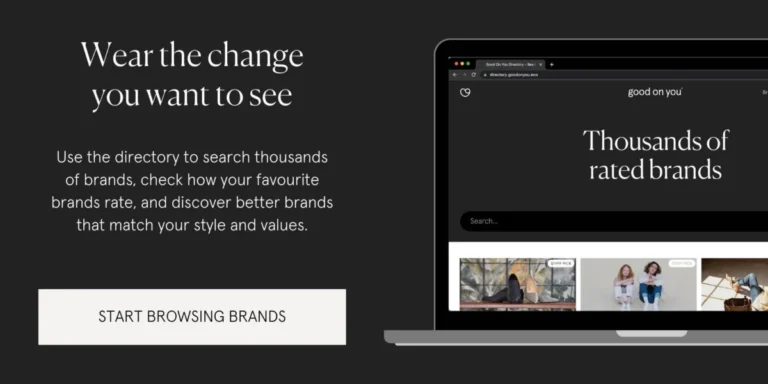












The global fashion and beauty industries face an unprecedented reckoning regarding their environmental footprint, ethical supply chains, and animal welfare practices. At the center of this movement stands Good On You, widely recognized as the world’s leading platform for rating consumer brands across three core pillars: people, the planet, and animals. Operating in an ecosystem historically plagued by opacity, Good On You maintains a strict methodological rule: its expert analysts rely exclusively on publicly available information to evaluate corporate conduct. This deliberate approach is not merely a logistical choice, but a foundational stance designed to enforce accountability, combat widespread greenwashing, and empower increasingly conscious consumers with verifiable data.
The Evolution of Corporate Accountability and Public Disclosure
To understand the necessity of public-only data sourcing, one must examine the historical context of transparency within the consumer goods sector. For decades, fashion and beauty conglomerates operated behind deeply complex, globalized supply chains that effectively insulated them from public scrutiny. Subcontracting, tiered manufacturing, and a lack of legal mandates for disclosure allowed brands to market themselves as sustainable while engaging in environmentally destructive or socially exploitative practices.
Critical turning points in the twenty-first century shifted public awareness permanently. The catastrophic 2013 Rana Plaza factory collapse in Bangladesh, which claimed the lives of more than 1,100 garment workers, exposed the deadly human cost of fast fashion and forced brands to confront their labor practices. Similarly, investigative reports linking major high-street retailers to heavily polluting viscose production facilities in Asia, alongside controversies involving animal welfare—such as the exploitation of monkey labor in coconut harvesting for beauty ingredients—demonstrated that hidden supply chains present severe risks to both people and ecosystems.
In response to these systemic failures, civil society organizations, labor unions, and consumer advocacy groups began demanding open data. Good On You was established to bridge the gap between complex corporate sustainability reports and everyday consumer purchasing decisions. By synthesizing up to 1,000 publicly available data points per brand—including codes of conduct, independent third-party certifications, and regulatory filings—the platform creates a standardized scoring system ranging from "We Avoid" to "Great."
A Comprehensive Statistical Overview of Industry Disclosures
Despite growing regulatory pressures and heightened consumer awareness, hard data reveals that the fashion and beauty sectors still have a remarkably long way to go. Good On You’s extensive directory, which tracks over 6,000 fashion brands, highlights pervasive gaps in corporate transparency.
An analysis of the industry’s largest players reveals a concerning lack of leadership. Notably, among the 40 most profitable fashion brands globally, zero achieved a "Great" rating, illustrating a systemic failure of top-tier companies to lead by example. Furthermore, statistical breakdowns within the directory underscore critical blind spots in environmental reporting:
- Water Management: 61% of large fashion brands fail to disclose any public information regarding their water usage, conservation strategies, or wastewater treatment protocols.
- Chemical Usage: 54% of large brands provide no public data concerning the hazardous chemicals utilized in their manufacturing and dyeing processes.
- General Environmental Policies: While disclosure is marginally better for broad environmental targets, 18% of large brands and 24% of small brands still fail to publish basic details regarding their corporate policies.
- Climate Action and Greenhouse Gas Emissions: Among large fashion brands that have established formal greenhouse gas reduction targets, an alarming 81% fail to report whether they are actually on track to meet those goals.
Gordon Renouf, Chief Executive Officer of Good On You, emphasizes the fundamental right of consumers to access this information. "It should be as easy to understand how a product or brand impacts on the sustainability issues that are important to you as it is to know the price or features of a product," Renouf notes. He argues that without mandatory and consistent public reporting, holding multi-billion-dollar corporations accountable remains an uphill battle.
The Structural Divide Between Large and Small Enterprises
A central challenge in rating sustainability performance is the vast operational and financial disparity between multinational conglomerates and independent small-to-medium enterprises (SMEs). Large corporations possess dedicated compliance departments, expansive legal teams, and substantial financial resources to compile, audit, and publish detailed corporate social responsibility (CSR) reports. Conversely, small brands often operate with lean teams and decentralized supply chains, making comprehensive data gathering exceptionally difficult.
To ensure fairness, Good On You’s rating methodology incorporates the European Commission’s definition of small and large businesses, utilizing annual turnover thresholds to adjust expectations accordingly. While large brands are held to rigorous standards regarding in-depth policy documentation and quantifiable targets, small brands are evaluated with an understanding of their structural limitations.
Jessica Ouano, a ratings analyst at Good On You, highlights the internal bureaucratic hurdles that even large brands face when attempting disclosure. "Some large brands have mentioned to us that they aren’t disclosing information on all their sustainability initiatives because they need approvals internally to disclose everything. I understand that can make it more challenging," Ouano explains.
Despite these internal friction points, analysts maintain that transparency is non-negotiable. Ouano points out that public disclosure invites stakeholders, watchdogs, and consumers to scrutinize corporate claims, acting as a vital check against misleading or false assertions. "It also allows consumers and stakeholders connected to a brand to call them out when the information they do share about their initiatives is misleading or incorrect," she adds.
Combatting Greenwashing and the Threat of Greenhushing
As global regulatory bodies introduce stricter anti-greenwashing laws—particularly within the European Union, the United Kingdom, and Australia—fashion and beauty brands face mounting legal risks for unsubstantiated environmental claims. Greenwashing, characterized by vague marketing slogans and sweeping, unverified commitments to sustainability, has long deceived well-meaning shoppers.
However, a dangerous counter-trend known as "greenhushing" has recently emerged. Fearing public backlash, accusations of greenwashing, or potential regulatory penalties for non-compliance, some brands have chosen to remove or withhold sustainability data entirely, effectively going silent on their environmental and social impacts.
Industry leaders argue that greenhushing represents a severe regression for the sustainable fashion movement. Sandra Capponi, co-founder of Good On You, stresses that retrenchment is not the solution. "Full transparency may not be easy for an industry with complex supply chains, but it’s really the bare minimum we should expect," Capponi states. "Consistency in data and disclosure is critical to consumers’ ability to make informed decisions."
By refusing to evaluate brands based on private, unverified assurances, Good On You reinforces the principle that if an initiative cannot be verified publicly, it cannot be validated responsibly. This strict adherence to public data protects consumers from taking corporate greenwashing claims at face value.
Implications for the Future of Retail and Regulation
The broader implications of Good On You’s methodology extend far beyond consumer app ratings; they actively shape corporate strategy and policy formulation. When brands receive lower ratings such as "We Avoid" or "Not Good Enough," the objective is not merely punitive, but catalytic. These ratings serve as clear performance indicators that signal to investors, executives, and marketing teams where urgent operational changes are required.
To assist brands seeking to improve their standing, Good On You has expanded its offerings to include specialized advisory tools, such as "Good Measures." This sustainability hub helps brands of all sizes navigate the complexities of environmental and social disclosures, identify material impact areas, and implement measurable improvements that can eventually be reflected in their public ratings.
Furthermore, as governments move toward mandatory due diligence laws—requiring companies to map and report on their human rights and environmental impacts—the gap between private promises and public accountability is narrowing. Platforms that aggregate public data are playing an increasingly vital role in auditing corporate compliance independently of industry lobbying.
Ultimately, the demand for radical transparency redefines the relationship between buyer and seller. By insisting that all critical data regarding human rights, animal welfare, and planetary health remain in the public domain, evaluative frameworks like Good On You ensure that the fashion and beauty industries can no longer hide behind closed doors. For consumers, this transparency transforms shopping from a passive transaction into an informed, active vote for a more ethical and sustainable global economy.