







The landscape of fashion technology is undergoing a significant transformation as Alta, a startup founded by Jenny Wang, transitions from a conceptual digital closet to a fully integrated retail solution. Following an $11 million funding round led by Menlo Ventures last year, the company has successfully moved its "Clueless"-inspired technology from the realm of cinematic fantasy into a functional tool utilized by millions of consumers. During the recent New York Fashion Week (NYFW), the company announced a milestone integration with the renowned streetwear brand Public School New York, marking a pivotal shift in how high-end designers interact with digital avatars and artificial intelligence.
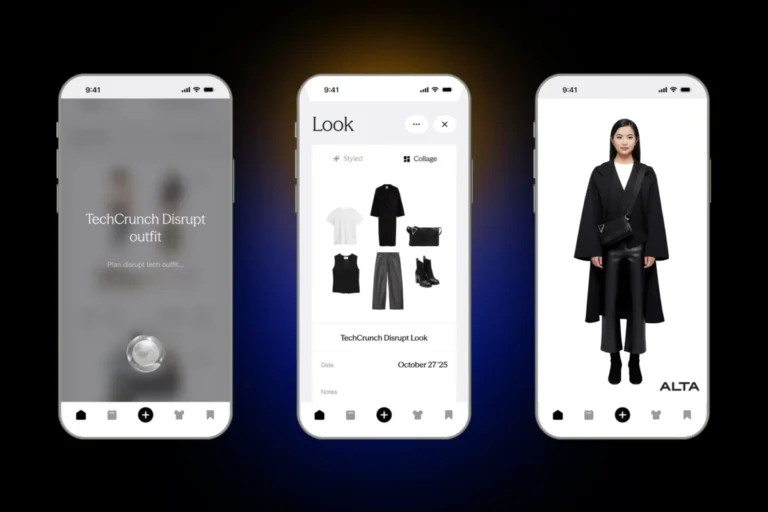
The core premise of Alta revolves around the creation of personalized digital avatars that allow users to curate virtual closets and simulate the "try-on" experience with high precision. This technology, which mirrors the iconic outfit-planning computer used by Cher Horowitz in the 1995 film "Clueless," has evolved into a sophisticated AI-driven platform. Since its official launch in 2023, the Alta app has facilitated the generation of over 100 million outfits, earning accolades from major publications such as Time and Vogue, which recognized it as one of the premier innovations of the year.
Strategic Funding and the Convergence of Fashion and Venture Capital
Alta’s growth trajectory was accelerated by a high-profile funding round that brought together a diverse group of investors from both the technology and fashion sectors. Led by Menlo Ventures, the round included participation from the Anthology Fund—the venture arm of the AI safety and research company Anthropic—as well as industry figures such as models Karlie Kloss and Jasmine Tookes. The involvement of Jenny Fleiss, co-founder of Rent the Runway, further signaled the industry’s confidence in Alta’s ability to bridge the gap between digital convenience and physical wardrobe management.
This influx of capital has allowed Alta to expand its technical capabilities beyond simple wardrobe organization. The platform now hosts thousands of brands, enabling a seamless transition from virtual styling to direct e-commerce. By securing partnerships with major entities like Poshmark and the Council of Fashion Designers of America (CFDA), Wang has positioned Alta as a central node in the modern fashion ecosystem.
The Public School New York Integration: A Case Study in Digital Re-entry
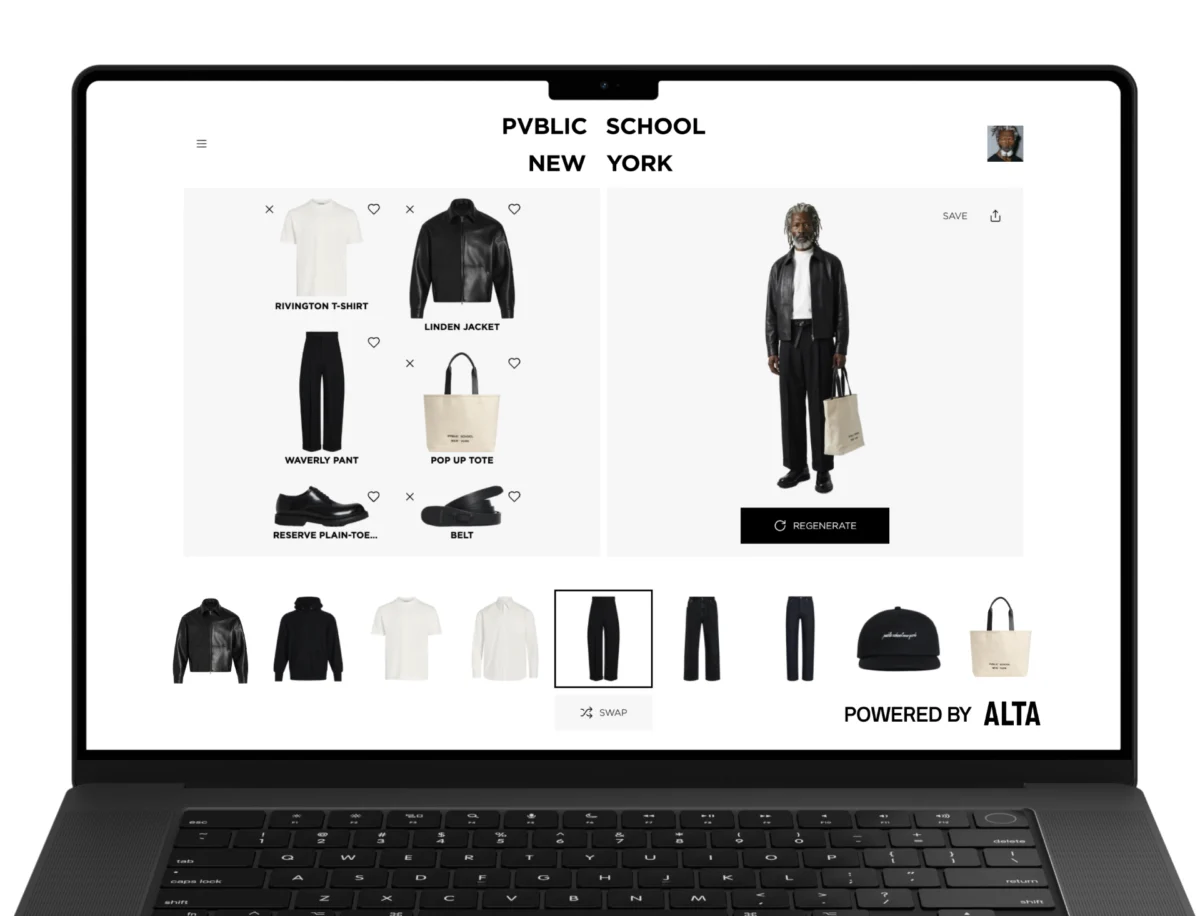
The most recent development in Alta’s expansion is its collaboration with Public School New York, a brand that recently returned to the spotlight after a multi-year hiatus. Founders Dao-Yi Chow and Maxwell Osborne utilized NYFW to debut their new collection, simultaneously launching a digital integration with Alta that allows shoppers to style the collection on their personal avatars directly through the Public School website.
The partnership was facilitated by the founder of Poshmark, an angel investor in both companies, highlighting the interconnected nature of the current fashion-tech investment landscape. According to Wang, Dao-Yi Chow was an active user of the Alta app prior to the professional collaboration, seeking a virtual try-on solution that could extend the brand’s storytelling capabilities.
"We have to look at tech as a partner in the business today," Chow stated during the launch. "It’s not 2015 anymore. We want to be thoughtful on how we use tech and AI, not as a design tool but as a tool to interact with the consumer and have them experience the brand even if they can’t do so in person."
The integration manifests as a "Style with Alta" icon on the Public School product pages. Upon clicking, users are redirected to the Alta environment where their pre-existing avatar can "wear" the new garments. This functionality represents one of the first instances of a luxury designer embedding personalized avatar technology directly into their primary sales channel, rather than keeping it contained within a third-party social or gaming app.
Technical Benchmarking: Speed, Scale, and User Experience
In a competitive market where major retailers like Zara and Balmain have experimented with digital avatars, Alta distinguishes itself through technical efficiency and user capacity. Industry analysis suggests that traditional virtual try-on (VTO) solutions often suffer from high latency and limited outfit complexity.
Wang noted that while legacy systems, such as those tested by Zara, often limit users to four items and require approximately two minutes for rendering, Alta’s infrastructure allows for the styling of at least eight items simultaneously within seconds. This speed is critical for maintaining consumer engagement in an e-commerce environment where every second of load time can lead to cart abandonment.

The ability to handle multiple layers of clothing—such as a base layer, mid-layer, outerwear, and accessories—is a significant leap forward in generative AI for fashion. It allows for a more realistic representation of "styling" rather than just "viewing" a single item. This technical edge is a primary reason why the platform has seen such high engagement levels, with the 100-million-outfit milestone serving as a testament to the scalability of their proprietary AI models.
The Chronology of Alta’s Development
The journey of Alta reflects the broader timeline of AI’s integration into consumer retail:
- Early 2023: Alta launches its standalone app, focusing on the "digital closet" concept where users could upload photos of their own clothes.
- Mid-2023: The company receives critical acclaim, featuring in "Best of" lists by Vogue and Time, which boosts its user base and brand visibility.
- Late 2023: The $11 million funding round is finalized, bringing in strategic partners from Menlo Ventures and the fashion world.
- Early 2024: Alta begins establishing enterprise-level partnerships, moving from a consumer-facing app to a B2B service provider for fashion brands.
- February 2024: The Public School New York integration is unveiled at NYFW, marking the first major website-embedded avatar experience for the company.
Agentic Commerce and the Future of Personal Identity Layers
Looking beyond the current "try-on" features, Jenny Wang views Alta as a foundational element of what she terms "agentic commerce." This concept refers to a future where AI agents act on behalf of consumers to make purchasing decisions, manage logistics, and curate experiences based on deep personal data.
"For agentic commerce to truly work, we need a data layer that understands the shopper’s style preferences, such as their closet, past purchases, and their avatar, likeness, and body," Wang explained. "That is Alta."
By positioning the Alta avatar as a "personal identity layer," the company aims to create a portable digital asset that users can take across the internet. In this vision, a shopper’s Alta profile would contain their exact measurements, style history, and aesthetic preferences. When visiting any partner brand’s website, the AI could instantly recommend items that fit the user’s physical body and existing wardrobe, effectively acting as a digital stylist with perfect memory.
Industry Implications and Economic Impact
The implications for the broader retail industry are substantial. One of the most significant challenges in e-commerce remains the high rate of returns, which currently costs retailers billions of dollars annually. According to data from the National Retail Federation, the average return rate for online apparel purchases can exceed 20-30%, often due to poor fit or a mismatch in style expectations.
Virtual try-on technology like Alta’s has the potential to drastically reduce these numbers. By allowing a consumer to see how a specific jacket fits over a specific sweater they already own, the "uncertainty gap" of online shopping is narrowed. Furthermore, the data collected through these virtual interactions provides brands with invaluable insights into how consumers are styling their pieces, which can inform future design cycles and inventory management.
As the fashion industry continues to grapple with sustainability and the need for more efficient production models, the shift toward digital-first interactions offers a path toward reducing physical waste. If consumers can "experience" a garment digitally before it is ever manufactured or shipped, the environmental footprint of the global fashion supply chain could be significantly altered.
Conclusion: A New Standard for Digital Retail
The evolution of Alta from a "Clueless" homage to a serious contender in the AI enterprise space reflects a broader shift in consumer expectations. Today’s shoppers demand more than just static images; they seek interactive, personalized experiences that respect their time and provide genuine utility.
With the successful integration of Public School New York and a robust backing from both tech and fashion heavyweights, Alta is moving toward its goal of becoming the definitive identity layer for the future of shopping. As Jenny Wang continues to expand the platform’s reach, the line between the physical closet and the digital avatar will likely continue to blur, ushering in an era where fashion is as much about data and algorithms as it is about fabric and form.