










Tracee Ellis Ross, the Emmy-nominated actress and established fashion icon, officially expanded her creative repertoire on Thursday evening with her Broadway debut in the solo production of Every Brilliant Thing. The opening night performance took place at the historic Hudson Theatre in New York City, marking a significant milestone in Ross’s multi-decade career in the entertainment industry. While the evening served as a showcase for her theatrical range, it also doubled as a high-profile fashion event, with Ross arriving in a directional ensemble from the Marc Jacobs Spring 2027 collection. The intersection of theatrical prestige and avant-garde fashion highlighted the continued evolution of Ross’s public persona as she transitions from television mainstay to stage performer.
The Production: Every Brilliant Thing and the Hudson Theatre
Every Brilliant Thing, written by Duncan Macmillan with Jonny Donahoe, is a critically acclaimed play that navigates the complexities of depression, resilience, and the small joys that make life worth living. The narrative follows a protagonist who, as a child, begins a list of everything "brilliant" about the world to help their mother cope with suicidal ideation. The list evolves over decades, growing from simple pleasures like "ice cream" and "water fights" to more nuanced adult realizations. The play is famously immersive, requiring the lead performer to interact directly with the audience, often casting theatergoers in minor roles to help tell the story.
Ross’s selection of this specific work for her Broadway debut suggests a deliberate move toward intimate, emotionally demanding material. Following the conclusion of her eight-season run on the hit ABC sitcom Black-ish, where she earned five Emmy nominations for Outstanding Lead Actress in a Comedy Series, Ross has increasingly sought projects that challenge her comedic and dramatic boundaries. The Hudson Theatre, the oldest operating theater on Broadway, provided a storied backdrop for this debut. Originally opened in 1903, the venue underwent a massive restoration in 2017, re-establishing itself as a premier destination for high-caliber solo performances and limited engagements.
Sartorial Analysis: The Marc Jacobs Spring 2027 Ensemble
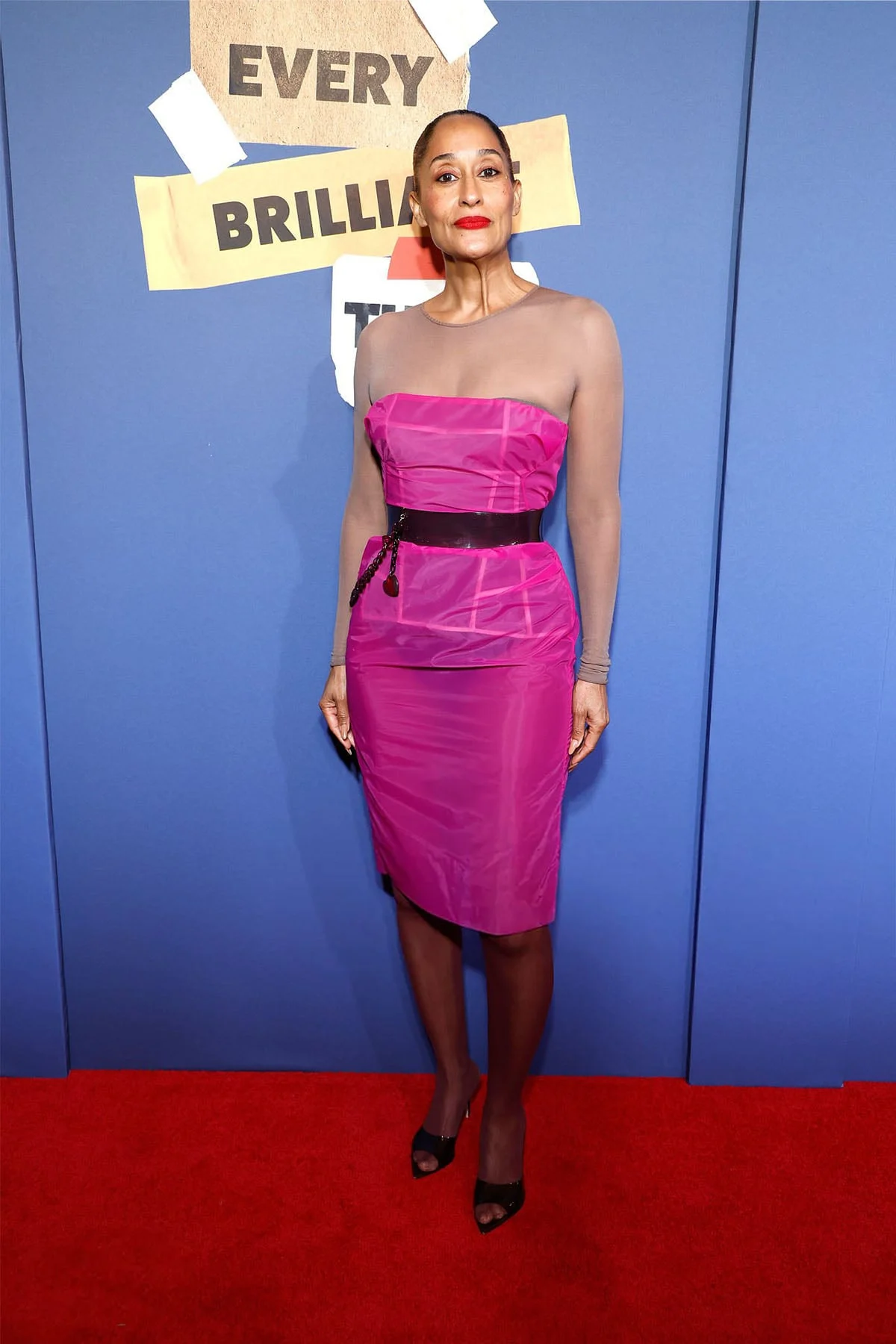
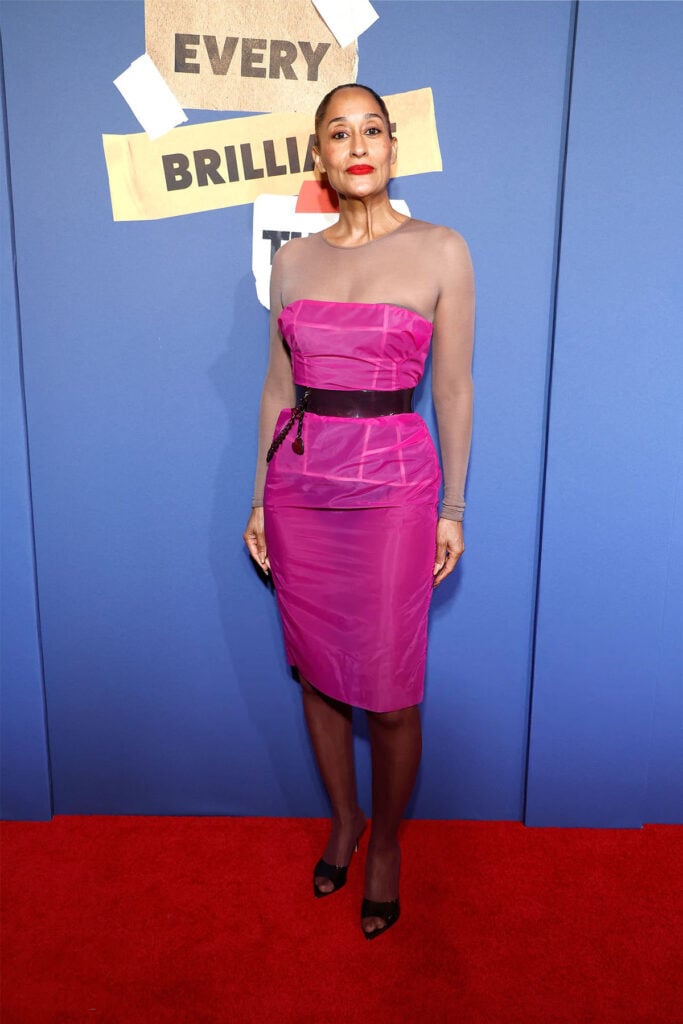
For the debut, Ross and her long-time stylist, Karla Welch, selected a fuchsia organza bustier dress from the Marc Jacobs Spring 2027 collection. The choice underscores Ross’s long-standing relationship with the American designer, a partnership that has frequently resulted in some of the most discussed red-carpet moments of the last decade.
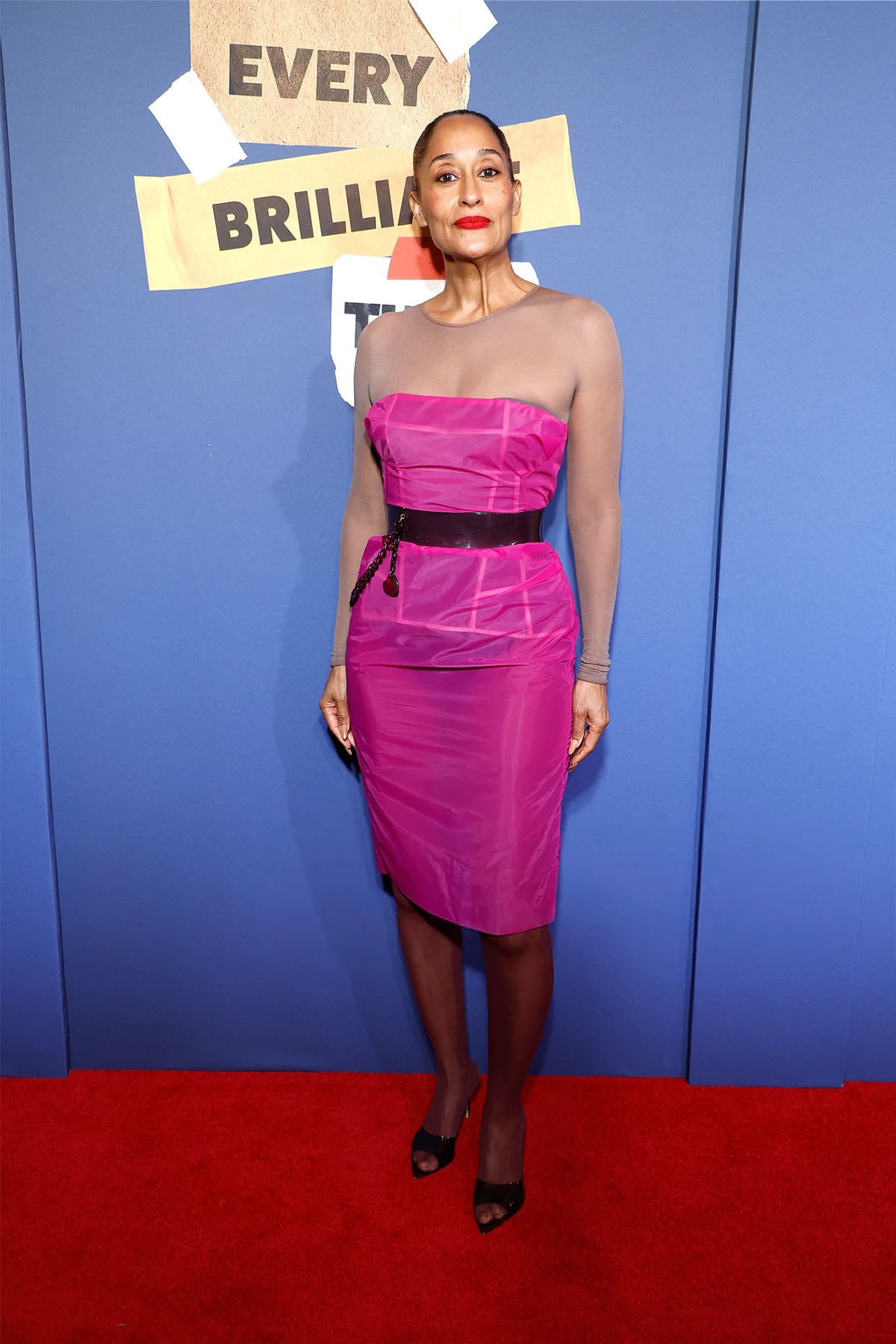
The garment itself is a study in texture and volume. Constructed from fuchsia organza—a thin, plain weave, sheer fabric traditionally made from silk—the dress features a structured bustier bodice that transitions into a voluminous skirt. A key element of the look was the inclusion of a chain-detail belt, which served as a structural anchor. On the runway, this belt was instrumental in defining the silhouette against the ethereal nature of the organza. For the Broadway debut, the belt remained a focal point, providing a metallic contrast to the vibrant pink hue of the fabric.
However, the styling of the ensemble for the New York event deviated from the original runway presentation in several ways. Ross wore the dress with plum-colored opaque tights, a choice that has drawn attention from fashion analysts. While the plum hosiery appeared in the Spring 2027 runway show as part of a layered, maximalist aesthetic, its application in a real-world setting created a different visual weight. Critics of the styling suggested that the heavy tights obscured the lightness of the organza, potentially detracting from the dress’s intended airy impact.
Technical Execution and Fit
Beyond the color palette and accessories, the technical execution of the garment on the red carpet offered a point of comparison to the designer’s original vision. The bodice of the dress, designed to provide a sharp, clean line, appeared to sit differently on Ross than on the runway model. In the high-fashion industry, the transition of a "sample size" runway piece to a celebrity client often requires extensive tailoring to maintain the integrity of the designer’s silhouette.
The skirt’s original silhouette also appeared slightly modified for the occasion. In the Spring 2027 collection, Marc Jacobs emphasized exaggerated proportions and structural whimsy. On the red carpet at the Hudson Theatre, the skirt’s volume seemed adjusted, leading to a more streamlined look that, while functional for a crowded theater lobby, lacked some of the dramatic flair seen during the collection’s initial reveal. These adjustments highlight the ongoing dialogue between high-fashion artistry and the practical requirements of public appearances.
The Collaborative History of Tracee Ellis Ross and Karla Welch
The debut look was curated by Karla Welch, one of the most influential stylists in Hollywood. Welch’s client list includes names such as Justin Bieber, Sarah Paulson, and Greta Gerwig. Her work with Ross is characterized by a "more is more" philosophy that embraces bold colors, unconventional shapes, and a refusal to adhere to traditional "flattering" norms.
The partnership between Ross and Welch has been instrumental in cementing Ross’s status as a "style icon." Unlike many celebrities who utilize fashion as a secondary tool for promotion, Ross has often spoken about clothing as a form of self-expression and armor. The decision to wear Marc Jacobs for such a pivotal career moment is a testament to the trust between the actress, the stylist, and the designer. Marc Jacobs has long been a favorite of Ross; she has frequently attended his shows and worn his designs to major events, including the Met Gala and the American Music Awards.
The Economic and Cultural Impact of Celebrity Broadway Debuts
Ross’s move to Broadway is part of a larger trend of high-profile screen actors returning to the stage to bolster their artistic credentials and drive ticket sales. The "star power" effect is a well-documented phenomenon in the New York theater industry. Data from the Broadway League suggests that productions featuring established television or film stars often see a significant uptick in advance ticket sales and "average ticket price" (ATP) metrics.
Every Brilliant Thing is a production that relies heavily on the charisma and vulnerability of its sole performer. By casting an actress with the global recognition of Tracee Ellis Ross, the production not only ensures commercial viability but also attracts a demographic of viewers who may not be regular theatergoers. The integration of high fashion into the opening night further expands the play’s reach, generating coverage in lifestyle and fashion publications that might not otherwise report on a Broadway opening.
Chronology of the Evening and Reactions
The evening began with a traditional red-carpet arrival outside the Hudson Theatre, where Ross posed for photographers and greeted a select group of fans. Following the performance, which reportedly lasted approximately 90 minutes without an intermission, Ross received a standing ovation from the capacity crowd.
While official reviews for the performance are expected in the coming days, early reactions from industry insiders and attendees have been positive. Observers noted that Ross brought a unique blend of comedic timing and emotional depth to the role, effectively navigating the play’s interactive elements. The fuchsia dress, while not worn during the performance itself—as the role typically requires more utilitarian stage attire—served its purpose as a "statement of intent" for the actress’s arrival on the Broadway stage.
Implications for the Marc Jacobs Spring 2027 Collection
The appearance of the Spring 2027 collection on a high-profile figure like Ross provides valuable data for the Marc Jacobs brand. In the modern fashion cycle, the success of a collection is often measured by its "wearability" among celebrities and its visibility on social media.
The fuchsia organza dress, despite the critiques regarding its styling and fit, remains a centerpiece of the Spring 2027 narrative. The use of vibrant, saturated colors like fuchsia and plum suggests a continuation of the "dopamine dressing" trend that has permeated the mid-2020s, characterized by the use of bright colors to evoke positive emotional responses. As the fashion industry moves further into the 2027 season, the Ross-Jacobs collaboration will likely be cited as a key moment in the collection’s lifecycle.
Conclusion: A New Chapter for a Cultural Icon
Tracee Ellis Ross’s Broadway debut in Every Brilliant Thing represents more than just a career pivot; it is a calculated fusion of her interests in performance art and fashion. By choosing a play that deals with the complexities of the human condition and pairing it with a challenging, avant-garde wardrobe, Ross continues to defy the standard expectations of a Hollywood actress.
The Hudson Theatre event served as a reminder of the power of the "red carpet moment" to frame a performer’s narrative. While the fit and styling of the Marc Jacobs dress may remain a topic of debate among fashion enthusiasts, the significance of the evening was clear: Ross has successfully transitioned to the Broadway stage, bringing with her the same boldness and individuality that have defined her career for over two decades. As the production continues its run, the focus will likely shift from her wardrobe to her performance, yet the images of her in fuchsia organza will remain a definitive visual marker of this professional milestone.