








Photographer Tom Wood, a name synonymous with incisive and empathetic chronicles of British life, is set to release his latest seminal work, And Love Comes in at the Eye, in 2026. This eagerly anticipated publication delves into his extensive archive, focusing on a vivid collection of images from the legendary Chelsea Reach nightclub in Merseyside. The book marks the debut title from Photieman Editions, an independent imprint established by Wood’s son, Ciarán, signifying a deliberate move to navigate beyond conventional publishing channels and expedite the dissemination of Wood’s vast photographic legacy.
The Immense Archive: A Lifetime’s Visual Compendium
Tom Wood’s personal archive is not merely a collection; it is a meticulously organized universe of over a million images, a testament to a lifetime dedicated to observation. His home and studio are a living repository, where prints, negatives, and contact sheets are arranged by alphabetized themes, each box and shelf holding a distinct narrative. One dedicated section, for instance, is a photographic ode to dogs, capturing canine companions in myriad settings. Another, labelled "buses," offers an intimate glimpse into the lives of everyday passengers, transformed into compelling subjects under Wood’s discerning lens. Further shelves are dedicated to expansive landscape photography, spanning his native Ireland and his current home in North Wales, revealing a deep connection to the land. Yet, perhaps the most iconic and culturally significant segment of this colossal collection resides within the "Cs": the Chelsea Reach.
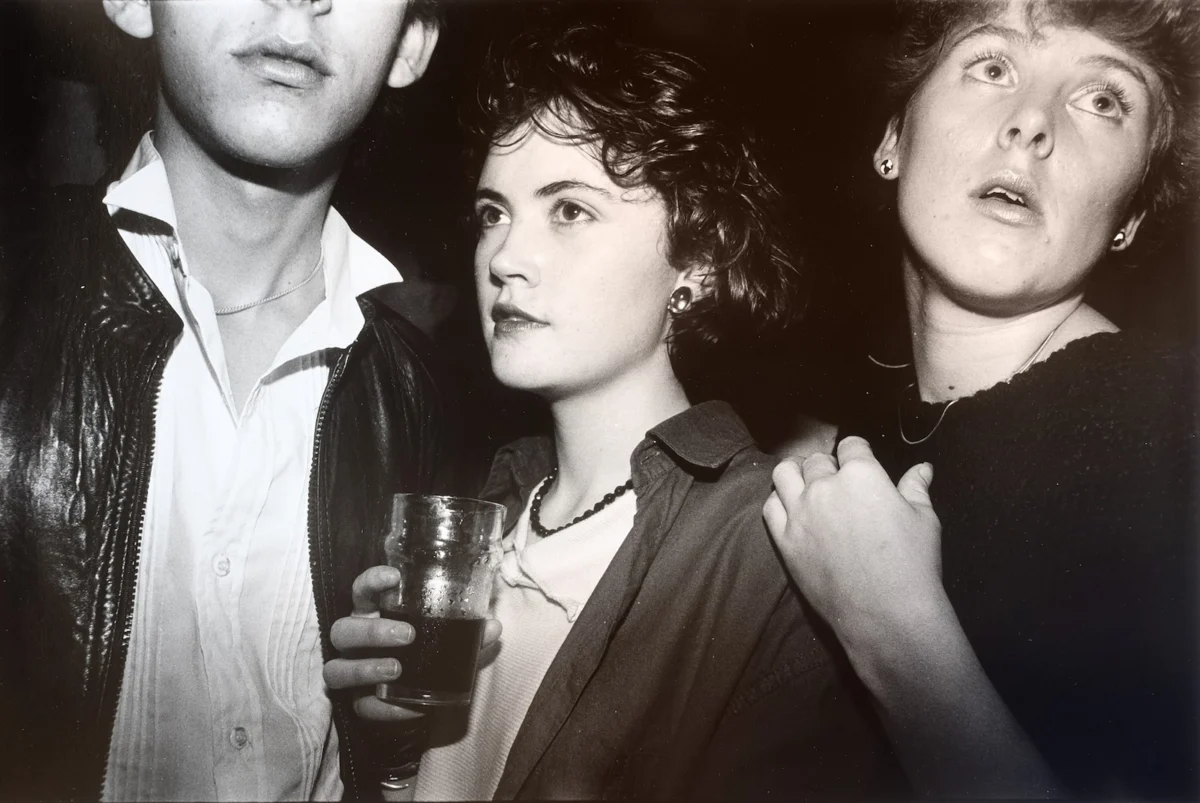
The Chelsea Reach, a Merseyside institution, operated from 1971 until the early 2000s, serving as a vibrant hub for working-class communities. It was within these walls that Wood captured many of his most important photographs, documenting the "ordinary" nightlife that often existed in the shadow of the more publicized, flashier scenes of punks and Blitz Kids prevalent in the 1970s and 80s. This period was marked by significant social and economic shifts in Britain, particularly in industrial heartlands like Merseyside, where communities sought solace and expression in local gathering places. Nightclubs like the Chelsea Reach were not just venues for entertainment; they were vital social crucibles, where identities were forged, relationships blossomed, and the everyday struggles of life were momentarily forgotten amidst music and camaraderie.
"And Love Comes in at the Eye": Unveiling a Cultural Epoch
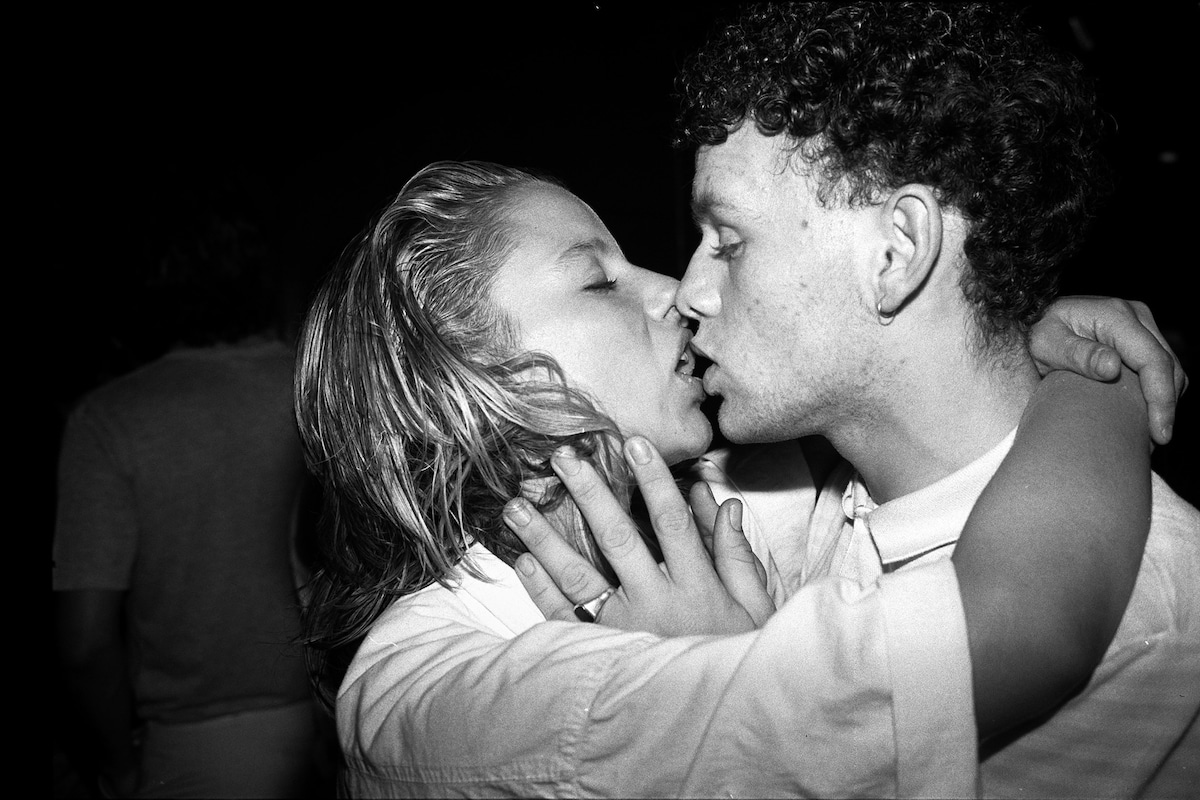
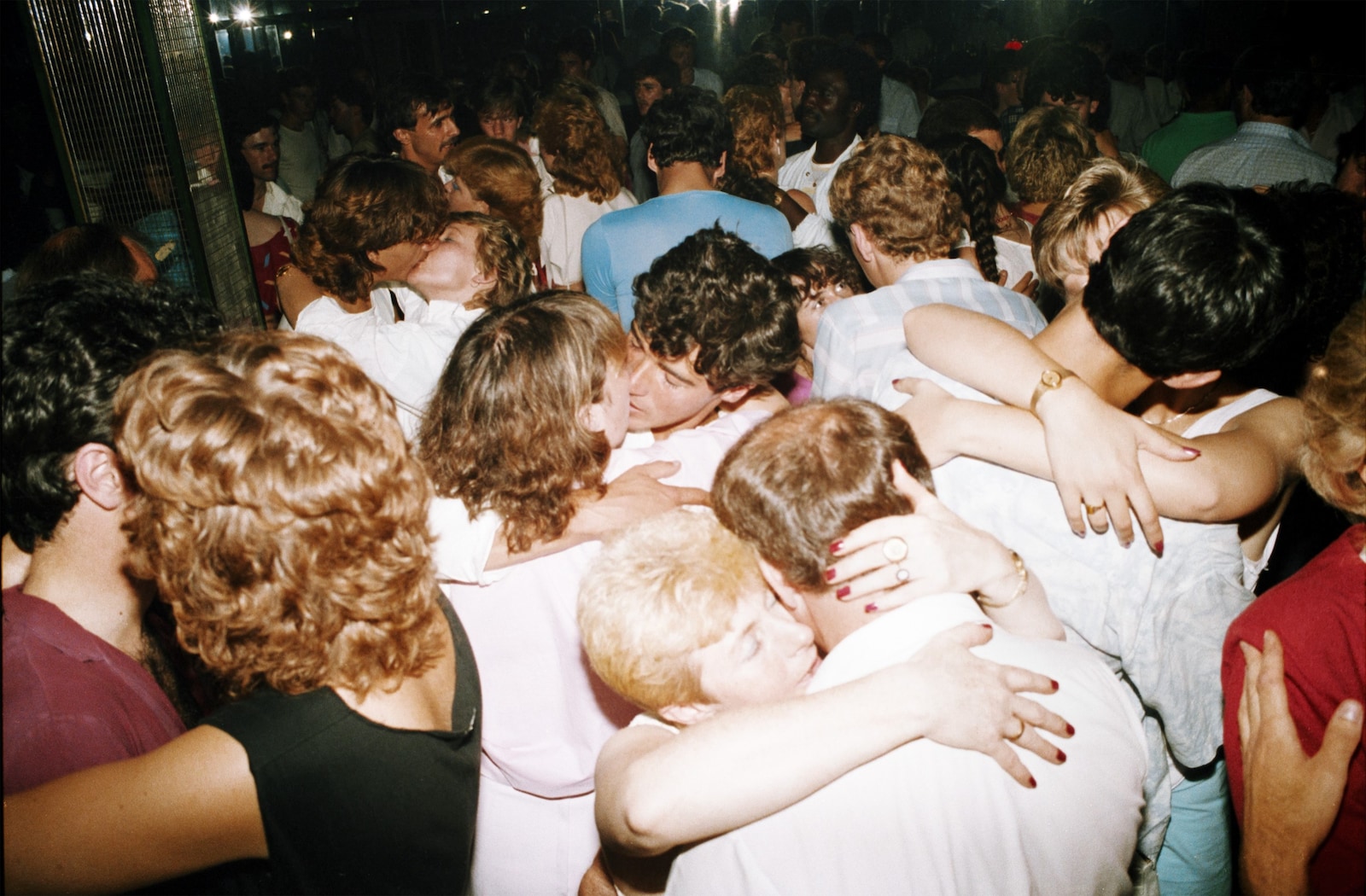
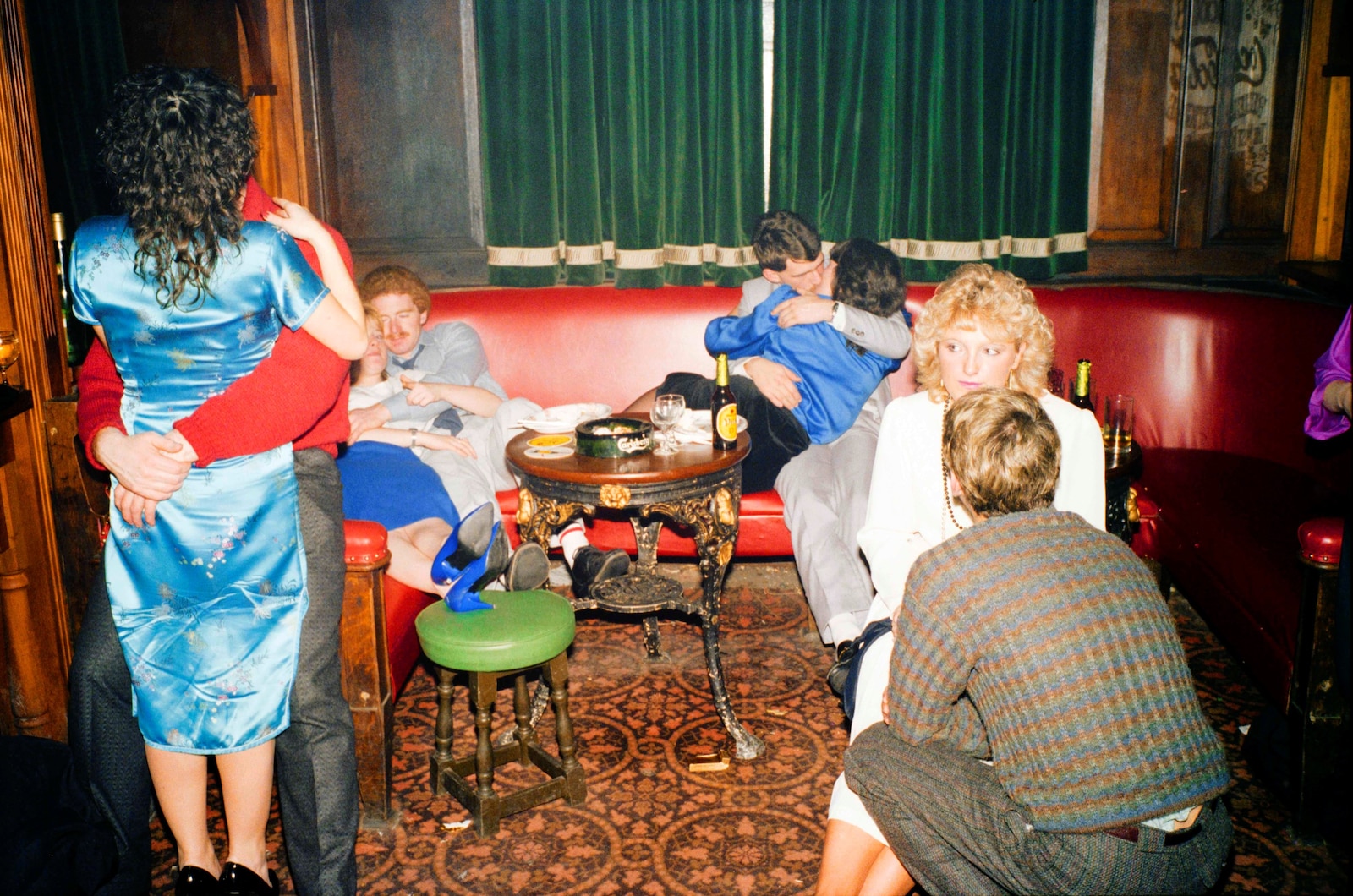
And Love Comes in at the Eye is a profound exploration of these club nights, a candid portrayal of youth, romance, and uninhibited self-expression. Through Wood’s lens, young couples share tender kisses, groups of friends dance with abandon, and clubbers proudly display the era’s distinctive feathered hairstyles. These images offer more than mere nostalgia; they serve as an invaluable ethnographic record of a specific time and place, capturing the authentic spirit of an era before the pervasive influence of digital technology and social media reshaped public interaction. The photographs resonate with a raw intimacy, revealing the universal human desire for connection and celebration.
The publication of this book is particularly noteworthy for the inclusion of rediscovered colour prints, long thought lost to time. Their re-emergence adds another layer of depth and texture to Wood’s already celebrated monochrome work. Wood notes that many of the images in the book possess a special texture, a direct result of the meticulous process of photographing the work directly from contact sheets. This technique imbues the prints with a unique tactile quality, bridging the gap between the analogue past and the contemporary viewing experience.
Photieman Editions: A Vision for Artistic Autonomy
The launch of Photieman Editions, spearheaded by Ciarán Wood, represents a strategic and forward-thinking approach to publishing. In an increasingly competitive and often slow-moving traditional publishing landscape, this independent imprint offers artists greater control over their work, from curation and design to distribution and artistic vision. By bypassing the conventional publishing process, Photieman Editions aims to accelerate the release of Wood’s extensive material, ensuring his vast output reaches a wider audience more efficiently. This model reflects a growing trend in the art world where artists and their estates seek direct engagement with their audience, fostering a more intimate connection and preserving the integrity of the artistic narrative. For Wood, this means a more direct path for his revelations, as he describes the ongoing process of sifting through his archive: "It’s like Christmas every day. Delete, delete, oh, maybe, delete, and then wow. You’re getting all this kind of continual revelation." This continuous discovery, coupled with the urgency of legacy ("Obviously time is passing. I’m getting old. I’m thinking, how can I get all this stuff out?"), underscores the importance of this new publishing venture.
From Collector to Chronicler: Wood’s Unconventional Genesis
Tom Wood’s journey into photography was not preordained but rather an organic evolution of a deeply ingrained visual sensibility. Now 75, he reflects on a childhood fascination with images that predates his own photographic practice. As a boy, growing up in a West of Ireland without electricity until 1962, he would frequent charity shops, acquiring entire albums of photos and postcards, often for the sake of a single compelling image. "I used to collect the pictures and make collages. My bedroom wall became a collage, even the ceiling," he recalls. This early impulse to curate and organize visual narratives foreshadowed his later archiving efforts.
Despite this inherent draw to images, the idea of becoming a photographer himself simply "never occurred" to him. "We never even had a camera in the house," he explains, highlighting the scarcity of such tools in his rural upbringing. The artistic impulse, however, was undeniably present, leading him to art school to study painting. This formal training in composition and visual expression undoubtedly informed his later photographic eye. A pivotal, albeit seemingly humble, experience followed: a stint at a Butlin’s holiday camp in Ayr, where he took "happy snaps" of holidaymakers. This period proved formative, providing a practical, immersive education in capturing candid moments of public leisure and private emotion, a skill that would define much of his later work.
The Empathetic Lens: Capturing "Ordinary" Lives with Profound Insight
Wood’s photographs, often depicting working-class communities bathed in the summer sun of the English seaside or the low, intimate lights of a party, are imbued with a remarkable tenderness and empathy. His subjects are observed with a keen, often wry eye, yet there is a pervasive sense that they are truly living in the frame. This profound connection is not accidental; Wood describes an almost preternatural sensation when photographing. "Often I sense people don’t want to be photographed, and so I won’t do it. But other times I feel they’re allowing me to do it, even though they haven’t seen me… I can tell through their eyes." This intuitive understanding of human interaction is a hallmark of his approach, allowing him to capture moments of unguarded authenticity.
His gravitation towards the Chelsea Reach was a deliberate choice, made after he took on a technician’s role in the fine art department at Liverpool Polytechnic (now Liverpool John Moores University). While other Liverpool nightclubs might have offered more "cool" and aesthetically "easy" subjects, Wood was drawn to the Chelsea for its unpretentious clientele. "The Chelsea was just dead ordinary people, none of whom had a clue why I was doing it… It was a different kind of eye contact, a different kind of understanding." This distinction is crucial to understanding Wood’s oeuvre. He sought out the genuine, the unposed, the unselfconscious expressions of everyday life, echoing his experiences at Butlin’s. He spent countless nights at the Chelsea, as well as in the mirrored halls of The Grand, applying the same observational techniques refined during his time with holidaymakers to capture moments of intimacy and slightly awkward self-expression. "It was kind of like Butlin’s," he elaborates, "in that during the day you photographed families or kids with teddy bears, and then at nighttime you photograph in the clubs where everyone drinks and there’s a lot of smoke. And no one had cameras themselves." Crucially, the absence of personal cameras and, more significantly, smartphones, fostered an environment of uninhibited interaction, free from the self-conscious posturing that often characterizes contemporary photography. This pre-digital era allowed for a level of raw, unmediated eye contact and understanding that is increasingly rare today.
Art vs. Document: A Photographer’s Unique Philosophy
Wood’s work frequently invites comparisons to that of English photographer Martin Parr, particularly due to their shared focus on saturated colours and vignettes of 1980s Britain. While superficial resemblances exist, Wood himself articulates a fundamental difference in their underlying philosophies. He recounts a conversation: "When I first met Martin Parr, he said, ‘I’m a documentary photographer. If I get a good picture, it’s a bonus.’ And I said, ‘Martin, I’m interested in good photographs. If it’s a document, it’s a bonus.’" This exchange succinctly encapsulates Wood’s primary artistic driver: the pursuit of compelling imagery first and foremost.
He purposefully avoids the term "documentary," preferring to describe his practice as "exploring life through the camera, something like a receiver of sensations. Sensations are intangible; you try and organise them through the act of photography. That sounds pretentious, or whatever. But that’s what happens." This perspective elevates his work beyond mere factual record-keeping, positioning him as an interpreter of lived experience, translating ephemeral sensations into tangible visual forms. His photographs, therefore, are not just windows into the past; they are artful meditations on human existence, imbued with emotional depth and visual sophistication.
The Enduring Legacy of Tom Wood
Tom Wood’s contribution to British photography is significant and multifaceted. His colossal archive represents not only a personal artistic journey but also a vital historical record of working-class communities and social landscapes that have undergone profound transformations. His unique ability to blend empathetic observation with a distinct artistic vision has cemented his place as a master of candid photography. The urgency he feels to share his archive, coupled with the innovative approach of Photieman Editions, ensures that his legacy will continue to be explored and appreciated by future generations.
In an age dominated by curated digital images, Wood’s work serves as a powerful reminder of the beauty and honesty found in unvarnished reality. His photographs from the Chelsea Reach offer a poignant look back at a time when social interaction was less mediated, and the camera could capture the raw, unscripted theatre of life. As And Love Comes in at the Eye prepares for its 2026 release, it promises to be a landmark publication, further solidifying Tom Wood’s reputation as a photographer whose vision transcends mere documentation, reaching instead for the deeper truths of human experience.
Tom Wood’s And Love Comes in at the Eye is printed in Denmark by Narayana Press, and is now available via Photieman.