




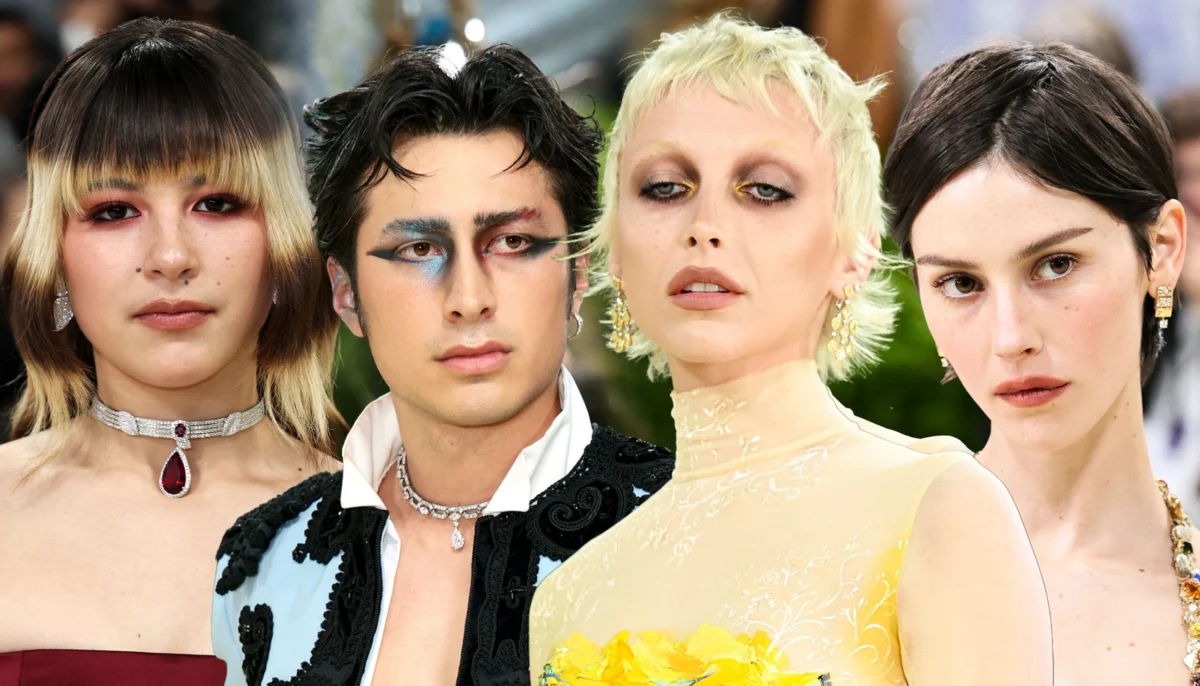
A decade ago, a viral meme captured the collective consciousness, featuring a stark, close-up image of a model’s face adorned with iridescent star-shaped glitter beneath her eyes, accompanied by the bold, all-caps declaration: "HOW TO COVER YOUR DARK EYE CIRCLES." This cultural touchstone served as both a witty commentary on societal pressures to conceal perceived imperfections and a playful invitation to embrace and even accentuate them. Fast forward to the 2026 Met Gala, an event synonymous with pushing sartorial and beauty boundaries, and the echoes of this sentiment resonated not through literal glitter applications, but through a deliberate and widespread trend of undereye emphasis among celebrity attendees.
While the extreme interpretation of the meme remained largely absent from the hallowed halls of the Metropolitan Museum of Art, a significant number of stars eschewed the conventional reliance on concealer to craft an illusion of perpetual rest and agelessness. Instead, they strategically employed makeup to draw attention to the under-eye area, in some instances, even celebrating the natural shadows that contour their faces. This shift marks a notable departure from the long-standing beauty ideal that often prioritizes a flawlessly smooth and unblemished under-eye, signaling a potential evolution in how dark circles are perceived and presented within the high-stakes world of celebrity fashion.

A Spectrum of Undereye Artistry
The Met Gala’s embrace of the under-eye area manifested in a diverse array of artistic expressions, each offering a unique perspective on this formerly "problematic" zone.
The Artistic Shadow Play:
One of the most prominent interpretations involved the strategic application of eyeshadow well below the lower lash line, transforming what might typically be considered makeup "fallout" into a deliberate artistic choice. Emma Chamberlain, an early arrival, exemplified this approach with a diffused metallic mauve shade that artfully blended into her natural contours. Her makeup artist, Lilly Keys, utilized the Makeup by Mario Master Metallics Eyeshadow Palette to achieve this ethereal, almost watercolor-like effect. This technique not only drew attention to the under-eye area but also created a sense of depth and dimension, playing with light and shadow in a sophisticated manner.

Similarly, Ejae’s makeup, masterminded by Min Kim, featured an avant-garde application of eyeshadow from the Diorshow 5 Couleurs palette in Grand Bal. The color was smudged and blended far beyond the conventional boundaries of a smoky eye, extending down towards the cheekbones. This bold move transformed the under-eye into a canvas for expansive color, challenging traditional notions of eye makeup application and demonstrating a willingness to experiment with form and placement.
Bold Hues and Daring Applications:
Beyond subtle diffusion, several attendees opted for vibrant and impactful color choices to highlight their under-eye regions. Hudson Williams showcased a striking, Rufio-inspired mismatched eye look, expertly crafted by Aika Flores. Flores employed shades from the Chanel Les 9 Ombres High Intensity Eyeshadow Palette, specifically "The Space Traveler" and "The Daring Muse," extending the color application significantly downwards, almost to the bridge of his nose. This created a graphic and unconventional statement, emphasizing the under-eye area as a focal point of bold artistic expression.

In contrast, Amelia Hamlin embraced a softer, more luminous approach. Her under-eye area was illuminated not with heavy concealer, but with an iridescent, silvery lavender shimmer. This choice offered a delicate yet noticeable enhancement, adding a touch of ethereal glow without obscuring the natural contours of her face.
Singer Yseult presented a graphic duality, with a captivating combination of black and gold shadow gracing her eyelids. Her under-eye area, however, was boldly painted in a vivid metallic blue. This striking contrast between the upper and lower eye makeup created a visually arresting effect, showcasing a confident embrace of color and a departure from monochromatic or understated beauty looks.
Embracing Natural Features: Aegyo Sal and the "No-Makeup" Makeup Under-Eye
The trend extended beyond overt artistic embellishments, with some celebrities leaning into techniques that celebrate or subtly enhance natural features.

The Art of Aegyo Sal:
Alysa Liu, the Olympic champion figure skater, has consistently championed the K-beauty technique of "aegyo sal," which intentionally plays up the under-eye fat to create a youthful and approachable appearance. For the Met Gala, makeup artist Tami El Sombati further refined this technique, using a deep, warm burgundy shade to create a subtle, almost imperceptible shadow beneath Liu’s eyes. This approach demonstrates a nuanced understanding of how to enhance natural facial characteristics, adding a touch of dimension and warmth without appearing artificial. Liu’s consistent embrace of aegyo sal, as previously shared with Allure, underscores its growing acceptance as a desirable beauty feature.
The "Fuck It" Approach to Concealer:

Perhaps the most significant statement of the night came from those who chose to forgo heavy under-eye concealing altogether. Charli XCX and model Devyn Garcia confidently let their natural under-eye shadows be seen, opting for a more authentic portrayal. This decision aligns with a broader cultural shift towards embracing imperfections and challenging rigid beauty standards.
Gracie Abrams’s makeup artist, Emily Cheng, adopted a similar philosophy, opting for an innovative approach to the "no-makeup" makeup look. Instead of traditional concealer, Cheng utilized Chanel’s upcoming launch, Serum Concealer Natural Healthy Glow. This product is designed to offer a sheer, skin-like finish, providing subtle coverage and hydration without masking the natural texture or color of the under-eye area. This choice signifies a move towards products that enhance rather than erase, promoting a more realistic and relatable beauty aesthetic.
The Cultural Undercurrent: A Shift in Perception
The prevalence of these undereye-focused beauty choices at the Met Gala 2026 is more than just a fleeting trend; it signifies a broader cultural recalibration regarding beauty standards. For decades, the under-eye area has been a battleground, a zone where signs of fatigue, aging, and natural pigmentation were routinely targeted for eradication. The meme that resurfaced at the beginning of this discussion perfectly encapsulates the societal pressure to achieve an unattainable level of perfection.

However, the events of the Met Gala suggest a growing collective weariness with these unrealistic expectations. As the article notes, "Celebrity or not, we’re all tired. We’re all aging. We’re all at the mercy of how lighting hits that ever-so-thin skin." This sentiment resonates deeply in an era where authenticity and self-acceptance are increasingly valued.
Supporting Data and Historical Context
The beauty industry has long profited from the desire to conceal dark circles. The global market for concealers and under-eye treatments is substantial, with reports indicating consistent growth. For instance, market research firm Grand View Research projected the global concealer market to reach USD 4.3 billion by 2027, driven by increasing consumer demand for products that address various skin concerns, including dark circles. This economic landscape highlights the significant cultural and commercial investment in the idea that dark circles are something to be hidden.
The Met Gala, as a highly publicized event, serves as a powerful platform for setting and influencing beauty trends. The looks observed this year can be seen as a continuation of a gradual shift that has been building momentum. In recent years, social media platforms have been instrumental in normalizing discussions around dark circles, with influencers and celebrities sharing unfiltered images and personal experiences. The rise of K-beauty, with its emphasis on techniques like aegyo sal, has also played a crucial role in reframing the perception of under-eye features.

Expert and Industry Perspectives (Inferred)
While direct quotes from makeup artists not directly involved in the article’s original reporting are not available, the observed trend at the Met Gala strongly suggests a deliberate artistic direction from many of the participating professionals. Makeup artists often act as interpreters of broader cultural shifts, translating them into tangible looks. The variety of approaches—from bold color blocking to subtle enhancement and complete omission of concealing products—indicates a collaborative effort to explore new narratives around under-eye beauty.
The beauty industry itself is likely to respond to this evolving sentiment. Brands that champion natural beauty and offer products that enhance rather than mask will likely see increased interest. The mention of Chanel’s upcoming Serum Concealer Natural Healthy Glow is a prime example of this anticipated industry adaptation. Such products are designed to meet the demand for a more minimalist and authentic approach to makeup, aligning with the desire to embrace natural features.
Broader Impact and Implications
The Met Gala’s embrace of undereye authenticity has several significant implications:

- Democratization of Beauty: By showcasing a diverse range of under-eye treatments, the event signals that flawless, concealed under-eyes are not the sole definition of beauty. This can empower individuals to feel more confident without resorting to extensive makeup routines.
- Challenging Ageism: Dark circles are often associated with aging and fatigue. By highlighting them, the Met Gala challenges the notion that these are inherently negative attributes, promoting a more accepting view of the natural aging process.
- Creative Freedom in Makeup: The trend encourages makeup artists and wearers to experiment beyond conventional rules. The under-eye area, once a place for correction, is now being recognized as a space for artistic expression and personal statement.
- Shifting Consumer Demand: As more people see celebrities embracing their natural under-eye features, it is likely to influence consumer purchasing habits. Demand for products that offer subtle enhancement or a "no-makeup" effect may increase, while the market for heavy-duty concealers might see a plateau or shift in focus.
- Mental Health and Self-Esteem: The pressure to constantly "fix" perceived flaws can be detrimental to self-esteem. A cultural shift that embraces natural features, like dark circles, can contribute to improved mental well-being and a more positive body image.
Conclusion: A New Dawn for Undereye Aesthetics
The Met Gala 2026 has undeniably ushered in a new era for under-eye aesthetics. The event served as a powerful testament to the evolving beauty landscape, where authenticity, artistic expression, and self-acceptance are taking center stage. From bold color applications to the quiet confidence of embracing natural shadows, celebrities demonstrated that the under-eye area is not a flaw to be hidden, but a canvas to be celebrated. This shift, echoed by the industry’s response and consumer sentiment, suggests that the era of fighting our natural features may be giving way to a more empowered and expressive approach to beauty, where every contour, shadow, and highlight tells a unique and beautiful story. The meme that once playfully questioned how to cover dark circles has, in essence, been answered: by choosing not to, and by finding beauty in the unvarnished truth.