



Music festivals, for many, represent a temporary departure from the mundane, an immersion into an alternative reality often characterized by sensory overload and a deliberate embrace of discomfort. This inherent grittiness has historically left an indelible mark on festival fashion, evolving beyond mere clothing into a cultural statement. The archetype of the British festival-goer, for instance, conjures images of individuals like Keira Knightley or Jamie Dornan, navigating rain-soaked fields in mud-splattered jeans, or Sienna Miller exuding an effortless, undone chic in a grey hoodie, an unlit cigarette dangling as a prop of rebellion. This aesthetic, rooted in practicality and resilience against the elements, embodies a weathered, functional, and slightly dishevelled charm, where inventiveness often springs from inconvenience.
The Gritty Authenticity of European Festivals
For decades, European festivals, most notably the UK’s Glastonbury, have cultivated a reputation for their raw, untamed atmosphere. Here, the landscape often dictates the wardrobe. Attendees are frequently confronted with ankle-deep mud, flooded tents, and the infamous, overused portaloo – experiences that are, for many veterans, an integral part of the "real" festival experience. This environment necessitates a practical approach to dressing. Think heavy-duty wellington boots, waterproof jackets, layered clothing, and robust accessories designed to withstand unpredictable weather.
Iconic figures like Kate Moss and Alexa Chung, frequently photographed trudging through the Glastonbury mud in seemingly effortless ensembles, inadvertently codified this look. Their style, characterized by chaotic layering, overstuffed crossbody bags, and smudges of last night’s makeup, epitomized a form of anti-fashion that prioritized survival and enjoyment over pristine appearances. This aesthetic wasn’t merely about personal style; it was a communal uniform, a testament to shared endurance and a tacit understanding that true festival spirit thrives amidst minor adversities. Industry analysts often cite this enduring appeal as a key factor in the longevity of such events, with Glastonbury alone attracting over 200,000 attendees annually, many of whom embrace this "griminess" as a badge of honor. This lived-in quality fostered a sense of authentic self-expression, where outfits told a story of the festival journey, rather than a pre-scripted narrative.
Coachella’s Genesis: A Different Vibe Emerges
In stark contrast to the often-soggy fields of European festivals, American counterparts, particularly the Coachella Valley Music and Arts Festival, developed a distinct identity from their inception. Located in the arid Californian desert, Coachella’s environment presented a different set of practical challenges: scorching daytime temperatures that could soar to 48 degrees Celsius, followed by cooler evenings.
The festival’s inaugural edition in 1999 offered a glimpse into its original ethos. Photos from that year depict a crowd dressed primarily for comfort and utility: a sea of t-shirts, vests, sneakers, and jean shorts. Festival-goers prioritized lightweight, breathable fabrics and practical footwear, reflecting the laidback, rock-centric culture of the time. There was an understated authenticity, a focus on the music and the experience rather than a deliberate fashion statement. Attendees were drawn by the lineup, which featured acts like Beck, Rage Against the Machine, and Tool, and their attire mirrored the unpretentious vibe of a large-scale outdoor rock concert. This early period established Coachella as a significant musical event, earning it the moniker "America’s best festival" from Rolling Stone by the mid-2000s.
The Rise of ‘Coachella Style’: A Celebrity Catalyst
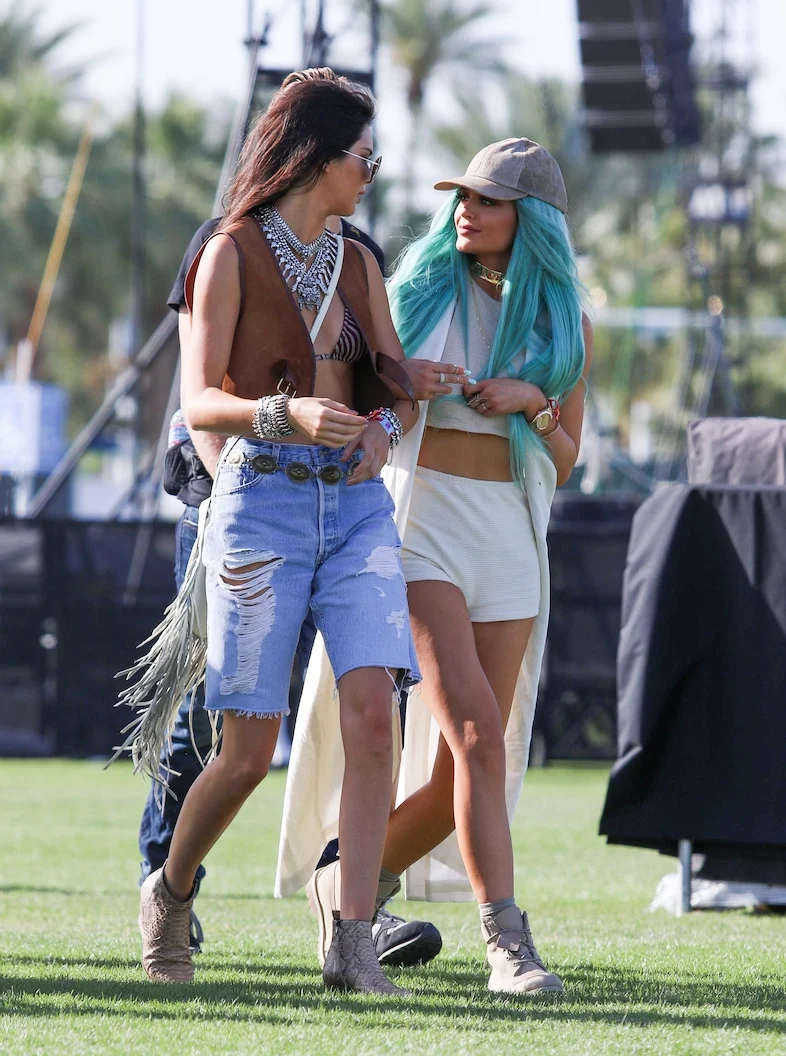
The mid-2000s marked a pivotal shift in Coachella’s cultural trajectory. As its reputation grew, the festival began attracting a new demographic, including Hollywood celebrities and socialites. Figures such as Paris Hilton, Nicole Richie, and Mischa Barton started to make appearances, bringing with them a nascent "boho-chic" aesthetic that would soon become synonymous with the event. Paparazzi, ever-present at celebrity hotspots, eagerly captured their carefully curated looks: paisley mini dresses, suede fringe jackets, distressed jean shorts, and patterned bandanas.
This confluence of celebrity presence and media attention rapidly propelled a specific style into the mainstream consciousness. What began as individual celebrity choices quickly calcified into the recognizable "Coachella fashion" template. The visual spectacle of these well-known personalities enjoying the festival, often styled in ensembles that blended vintage references with contemporary trends, resonated widely. This era also coincided with the proliferation of digital photography and early social media platforms, making these celebrity looks instantly accessible and aspirational.
It wasn’t long before the commercial world capitalized on this burgeoning trend. Fast fashion giants like Forever 21, Topshop, and H&M swiftly began producing affordable imitations of the celebrity-worn styles. This democratization of "festival fashion" meant that consumers worldwide could emulate the Coachella look, turning it into a global phenomenon. However, this commercialization also marked the beginning of a subtle but significant departure from the practical, authentic roots of festival dressing. The focus shifted from functionality to appearance, from enduring the elements to projecting an idealized image.
The Instagram Era: Content Over Culture
The early 2010s ushered in the age of Instagram, profoundly transforming the landscape of festival attendance and, consequently, its fashion. Coachella, with its sunny desert backdrop and growing celebrity roster, became an ideal canvas for visual content. Fashion at the festival was no longer solely about personal expression or even celebrity emulation; it evolved into a strategic pursuit of "content." Every outfit, every pose, every curated moment became a potential post, optimized for likes, shares, and virality.
This shift was driven by the platform’s emphasis on visual storytelling and the emerging power of influencers. The spontaneous, slightly chaotic charm of earlier festival fashion began to give way to meticulously planned ensembles. Celebrities and influencers, often accompanied by full glam squads, were helicoptered into the desert, ensuring not a single splash of mud would mar their pristine appearances. The entire experience became smooth and frictionless, engineered for photographic perfection. Outfits, though ostensibly "free-spirited," were often meticulously chosen to project a specific image, resulting in what many critics describe as a "soulless facsimile" of genuine festival style. The primary objective shifted from experiencing the music and atmosphere to generating visually appealing digital assets.
The "Influencer Olympics": A Commercial Juggernaut
The mid-2010s saw the full bloom of the Coachella influencer economy, earning the festival the derisive but apt nickname "the influencer Olympics." Brands quickly recognized the immense marketing potential of associating with high-profile individuals at such a visible event. The festival became a prime location for brand activations, product placements, and sponsored content creation.
A prime example of this commercialization is the Revolve Festival, launched in 2015. Positioned as an exclusive, invite-only event near Coachella, it rapidly became one of the most coveted invitations on the influencer calendar. Revolve Festival operates as a sophisticated marketing platform, offering a luxurious experience tailored for content creation, celebrity spotting, and networking. Its tightly controlled guestlist, which in recent years has included prominent figures like Teyana Taylor, BLACKPINK’s Lisa, and Gabbriette, underscores its strategic importance. Attendees are not just guests; they are de facto brand ambassadors, their every move and outfit meticulously documented for their vast online followings.
The financial investment in this influencer ecosystem is substantial. Reports indicate that marketers’ budgets for high-profile influencers attending Coachella can "reach into the high six figures to over a million dollars" for a single festival cycle. This includes not only appearance fees but also travel, accommodation, styling, and content creation expenses. The goal is to generate "fashion moments" that transcend the festival itself, living on across social media feeds, fashion blogs, and trend reports. However, critics argue that these overtly commercial endeavors often lack the authentic resonance and moodboard longevity of earlier, more organic festival looks, such as Kate Moss or Alexa Chung captured candidly in the mud at Glastonbury. The results often feel sterile and overtly mercenary, prioritizing brand visibility over genuine cultural engagement.
Economic and Cultural Implications
The transformation of Coachella into an "influencer Olympics" carries significant economic and cultural implications. Economically, the festival has become a massive engine for brand marketing and influencer industries. Estimates suggest that brands collectively spend tens of millions of dollars annually on Coachella-related activations and influencer campaigns. This investment is driven by the desire to tap into the festival’s enormous cultural cachet and its unparalleled visibility on social media, reaching millions of potential consumers globally. The return on investment, measured in terms of engagement rates, brand mentions, and sales lift, often justifies these hefty expenditures for major fashion, beauty, and lifestyle brands.
Culturally, this commodification has led to a blurring of lines between authentic experience and advertising. The curated, optimized nature of influencer-driven festival fashion risks eroding the genuine spirit of music festivals as spaces for uninhibited self-expression and communal experience. Attendees, particularly younger generations, are increasingly exposed to a highly polished, aspirational version of festival life that may be unattainable or even undesirable for many. This creates a pressure to conform to a specific aesthetic, often dictated by brands and influencers, rather than fostering individual creativity. Cultural commentators like Dr. Eleanor Vance, a fashion historian, note, "What we’re seeing is a shift from organic cultural production to highly managed content creation. The ‘festival look’ has become less about spontaneous style and more about fulfilling a brand brief."
The Environmental Footprint of Fast Fashion
The rise of the "influencer Olympics" and its reliance on rapidly changing trends has also exacerbated the environmental concerns associated with fast fashion. To keep pace with the demand for fresh, ‘on-trend’ outfits for each festival season, consumers often purchase inexpensive, disposable garments. These items, often worn once or twice for a photoshoot, contribute significantly to textile waste. The environmental impact includes excessive water usage, chemical pollution from dyeing processes, and the accumulation of non-biodegradable synthetic fabrics in landfills.
While the original article did not delve into specific figures, reports from environmental agencies and fashion industry watchdogs indicate that the global fast fashion industry is a major contributor to pollution. A single festival season, driven by the pressure to showcase new looks, can lead to thousands of garments being purchased and quickly discarded, creating a cyclical demand for cheap, trend-driven clothing that stands in direct opposition to sustainable practices. This phenomenon contrasts sharply with the earlier ethos of repurposing and wearing items until they were truly "lived in."
The Paradox of Counterculture and Consumerism
Contemporary festival fashion often draws heavily from historical countercultural movements, particularly the hippie subculture of the 1960s and 70s. Elements like bohemian dresses, fringe, wide-brimmed hats, and peace signs are frequently referenced. However, this aesthetic appropriation often exists in stark paradox to the original anti-consumerist and anti-establishment attitudes that these movements embodied.
What was once a genuine expression of rebellion against mainstream consumerism has, in the modern context, been co-opted and commodified by the very industries it once sought to critique. The act of purchasing a mass-produced "boho" outfit from a fast fashion retailer for a single Instagram moment represents an imitation of an imitation, stripped of its original social and political meaning. Marketing strategist Mark Jensen observes, "The irony is palpable. We’re witnessing the commercialization of counterculture, where outfits designed to signify freedom and individuality are now standardized products in a global consumption machine." This reliance on nostalgic referencing, rather than the creation of new, authentic subcultures or trends, reflects a broader cultural fragmentation. Lacking a unifying youth movement or aesthetic, contemporary style often defaults to reinterpreting past forms, turning fashion into a costume that is as disposable as an ultra-fast fashion haul.
A Reflective Landscape: Beyond the Algorithm
Ultimately, Coachella influencer fashion serves as a potent microcosm of how modern life, even its most spontaneous and celebratory moments, can be optimized for the algorithm. It underscores a pervasive trend where genuine experiences are increasingly filtered through the lens of social media, transforming lived realities into curated content. The initial joy of dressing up for a festival, balancing style with practicality, and embracing the chaotic beauty of the environment, has been largely supplanted by a meticulously planned performance for an online audience.
This evolution signifies more than just a shift in sartorial preferences; it reflects a deeper cultural transformation. The vibrant, often messy, and truly inventive spirit that once characterized festival dressing, where inventiveness sprang from inconvenience, now struggles to thrive amidst the pristine perfection demanded by digital platforms. The result is not a new trend, but rather a dull cover version of what once was – a melody that never quite sounds as good as the original. As festivals continue to evolve, the challenge remains for attendees, artists, and brands alike to rediscover and prioritize the authentic, unscripted moments that initially defined these unique cultural gatherings, moving beyond the screen and back into the mud, if necessary.