








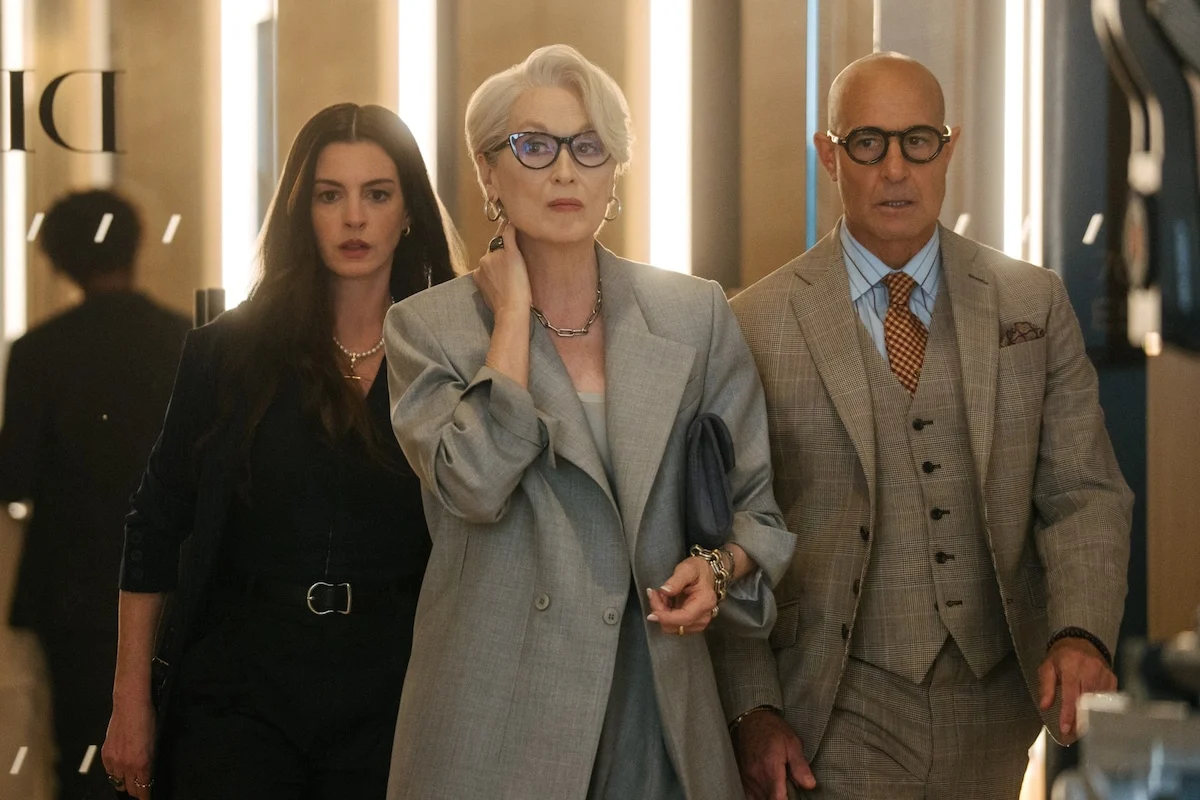
The anticipated, albeit hypothetical, sequel, The Devil Wears Prada 2, serves not as a heartwarming return to a beloved cinematic universe but as a stark, often brutal, mirror reflecting the existential crisis gripping the contemporary media industry. While the original 2006 film inadvertently romanticized the cutthroat world of high fashion magazines, inspiring a generation to pursue careers in journalism, its successor paints a desolate landscape of redundancies, digital pressures, and a desperate search for relevance in an increasingly fragmented attention economy. The narrative arc, which sees protagonist Andrea Sachs and her colleagues facing immediate job loss via text message, is not merely a plot device but a chillingly accurate portrayal of the volatile nature of media employment in 2026.
The Fictional Echo of a Real-World Crisis
The opening scenes of The Devil Wears Prada 2, depicting mass layoffs at Andrea Sachs’ local newspaper, resonate deeply with the experiences of countless journalists and media professionals over the past two decades. The "death of print" has transitioned from a looming threat to a palpable reality, with once-venerable publications struggling to adapt to seismic shifts in advertising revenue, content consumption habits, and technological advancements. This isn’t just a lament about nostalgia; it’s an economic and structural overhaul that has reshaped the entire ecosystem of news and lifestyle journalism.
The film’s portrayal of Andrea’s initial redundancy, followed by her eventual re-hiring at the fictional Runway magazine as a features editor, highlights the relentless pressure to chase clicks and drive website traffic. This pivot from traditional editorial gravitas to digital virality encapsulates the dilemma facing many legacy publications. Content is increasingly measured by engagement metrics rather than intrinsic quality, leading to a constant battle for fleeting attention in a saturated online environment. The movie’s narrative thread, where redundancy is not an isolated event but a pervasive theme, underscores the precariousness that defines modern media careers.
A Decade of Digital Disruption: A Chronology of Decline and Adaptation
The journey from the print-dominated landscape of 2006, when The Devil Wears Prada first captivated audiences, to the digitally fractured world of 2026 has been marked by a series of transformative events and accelerating trends.
- Mid-2000s (2006-2008): The Rise of Social Media and Early Digital Shifts. While print still held significant sway, platforms like Facebook and YouTube began to reshape how information was consumed. Advertisers started experimenting with digital channels, but print ad revenue remained robust. The Devil Wears Prada‘s 2006 release coincided with this nascent shift, presenting a world where glossy magazines were still cultural arbiters.
- Late 2000s (2008-2010): The Great Recession and its Catalyst Effect. The 2008 financial crisis delivered a devastating blow to the advertising market, accelerating the decline of print revenue. Newspapers and magazines, already grappling with digital transitions, faced unprecedented economic pressure, leading to the first significant wave of layoffs and closures. Many publications pivoted aggressively to online content, often without clear monetization strategies.
- Early 2010s (2010-2015): Mobile Revolution and the "Content is King" Era. The proliferation of smartphones and tablets made digital content ubiquitous. Publishers scrambled to create mobile-first experiences, but the rise of ad blockers and the dominance of tech giants like Google and Facebook in the digital advertising space made profitability elusive. Buzzfeed and other digital-native outlets surged, focusing on shareable, often listicle-style, content.
- Mid-2010s (2015-2020): Platform Dominance and the "Pivot to Video." Social media platforms became primary news distributors, often dictating content formats. The "pivot to video" saw many publications invest heavily in video content, often at the expense of text-based journalism, driven by promises of higher ad revenue that largely failed to materialize for many. Subscription models began to emerge as a potential lifeline for quality journalism.
- Early 2020s (2020-2023): Pandemic Acceleration and AI Emergence. The COVID-19 pandemic further disrupted traditional media, accelerating digital adoption and highlighting the importance of reliable information. Simultaneously, advancements in artificial intelligence began to hint at a future where content generation could be automated, posing new questions about the value of human creativity in journalism.
- Mid-2020s (2024-2026): Economic Headwinds, AI Integration, and Sustained Pressure. As depicted in The Devil Wears Prada 2, the mid-2020s are characterized by continued economic uncertainty, intensified competition for attention, and the increasing integration of AI into content workflows. Publications face immense pressure to innovate business models, often leading to painful restructuring and further job losses. The concept of "scroll-past" content, where immense effort yields fleeting engagement, becomes a central industry anxiety.
Supporting Data: The Stark Reality of Media Contraction
The fictional closures and redundancies in The Devil Wears Prada 2 are firmly rooted in real-world data reflecting a systemic contraction in the media industry.
- Job Losses: According to data from the Pew Research Center, newsroom employment in the U.S. fell by 26% between 2008 and 2020, representing a loss of over 30,000 jobs. This trend has continued, with further significant cuts reported across major media companies in recent years. For instance, data from Challenger, Gray & Christmas indicated that the media sector experienced substantial layoffs in the first half of 2023, surpassing figures from the previous year.
- Advertising Revenue Shift: EMarketer data consistently shows a dramatic shift of advertising dollars from traditional print to digital platforms. In 2006, print advertising still accounted for a significant portion of overall ad spend. By 2023, digital advertising dominated, with platforms like Google, Meta (Facebook/Instagram), and Amazon capturing the lion’s share, leaving traditional publishers to compete for a smaller, more fragmented pool of revenue. This disparity makes sustaining large newsrooms increasingly difficult.
- Publication Closures and Mergers: The article cites the shuttering of The Face (seven years after its relaunch) and Self magazine after 47 years, along with the merger of London’s Evening Standard with The Independent. These are not isolated incidents. In the UK, publications like Nylon (UK edition) and Grazia (briefly paused print) have also faced significant challenges. In the US, regional newspapers have been particularly hard hit, with hundreds ceasing operations or significantly reducing their print frequency, leading to "news deserts" in many communities. The Condé Nast Union (@condeunited) has publicly documented numerous rounds of layoffs at high-profile titles such as Glamour, Vanity Fair, and Allure, underscoring the ongoing restructuring within even the most iconic media houses.
- Digital Monetization Challenges: While digital traffic has surged, converting that audience into sustainable revenue remains a hurdle. A 2022 Reuters Institute report highlighted that while subscription models are growing, they are primarily successful for a small number of established, high-quality outlets, leaving many others reliant on volatile digital advertising or philanthropic funding. The film’s depiction of Andy "tirelessly chasing clicks" and being "pressured to drive website traffic" perfectly illustrates the often-unprofitable race for digital eyeballs.
Industry Responses and the Search for Viability
The media industry’s response to these profound challenges has been multifaceted, ranging from innovative pivots to desperate measures.
- Diversification of Revenue Streams: Many publications are aggressively pursuing diverse revenue models beyond traditional advertising. This includes paywalls and subscription services, premium content offerings, e-commerce integration, live events, brand partnerships, and even philanthropic funding. The success of these models varies widely, often favoring niche publications or those with strong brand loyalty.
- "In-House" Content Creation: As depicted by Emily Blunt’s character, Emily, moving to an in-house role at Dior, many journalists are transitioning to brand content studios or corporate communications. Brands, recognizing the need for compelling storytelling and editorial expertise, are increasingly hiring journalists directly to create content for their own platforms, effectively bypassing traditional media outlets. This shift offers stability for some professionals but raises questions about editorial independence and the future of investigative journalism.
- Technological Adoption: Media organizations are exploring AI not just for content generation but also for audience analytics, personalization, and operational efficiency. While AI promises to streamline workflows and provide deeper insights, it also fuels anxiety about job displacement and the authenticity of content. The casual mention of AI in The Devil Wears Prada 2 underscores its growing, albeit sometimes unsettling, presence in industry conversations.
- Unionization and Advocacy: Faced with persistent layoffs and declining job security, media professionals have increasingly turned to unionization. Organizations like the Condé Nast Union have become vocal advocates for their members, negotiating for better severance packages, job protections, and a greater say in corporate decisions, highlighting the human cost of industry transformations.
- The "Billionaire Savior" Dilemma: The film’s eventual "happy ending" – a billionaire swooping in to save Runway – while fictional, echoes a real-world trend where wealthy individuals or tech moguls acquire struggling media outlets. While this can provide a temporary reprieve and financial stability, it often comes with its own set of challenges, including questions of editorial control, strategic direction, and whether such rescues are sustainable long-term solutions for the broader industry. Examples include Jeff Bezos’s acquisition of The Washington Post or Patrick Soon-Shiong’s purchase of the Los Angeles Times.
Broader Implications: Beyond the Magazine Rack
The struggles of the media industry, so vividly (and bleakly) rendered in The Devil Wears Prada 2, have far-reaching implications that extend beyond the personal careers of journalists or the fate of glossy magazines.
- Impact on Public Discourse: A shrinking and financially constrained media landscape can lead to a decline in quality journalism, particularly in areas like investigative reporting and local news. This creates "news deserts" and weakens the public’s access to credible, independently verified information, which is crucial for a healthy democracy and informed citizenry.
- Loss of Cultural Influence: Fashion magazines like Runway once held immense cultural power, shaping trends, influencing consumer behavior, and providing a platform for creative expression. As their reach diminishes in favor of influencer culture and social media algorithms, there is a broader shift in who dictates taste and narratives, potentially leading to a more homogenized or commercially driven cultural landscape.
- The Future of Creative Talent: The romanticized "kill for that job" aspiration of 2006 has given way to a generation "considering their options" in 2026. This means a potential brain drain from traditional journalism, as talented writers, editors, photographers, and designers seek more stable and lucrative opportunities in other sectors, including marketing, tech, or directly with brands. This shift could impoverish the pool of diverse voices and critical perspectives within media.
- Erosion of Trust: The relentless pursuit of clicks, the blurring lines between editorial and advertising content, and the prevalence of misinformation on social platforms contribute to a broader erosion of public trust in media institutions. This challenge is compounded by the financial pressures that can compromise editorial integrity.
- Redefining Value: Nigel’s poignant monologue in the film, lamenting the immense effort behind a photoshoot only for the image to be "scrolled past on social media, gazed at for less than a second," encapsulates a fundamental crisis of value. How do creators and publishers demonstrate the worth of meticulously crafted content in an era of endless, disposable information? This question lies at the heart of the industry’s struggle for survival.
In conclusion, The Devil Wears Prada 2, despite its fictional premise, serves as a sobering and timely commentary on the profound transformations within the media industry. It highlights not only the economic pressures and technological disruptions but also the psychological toll on professionals who once dreamed of a glamorous career only to find themselves navigating a landscape defined by uncertainty and constant adaptation. The film, perhaps unintentionally, becomes a powerful, if disheartening, document of an industry grappling with its past, present, and an uncertain future.