









The transition from academic-era accessories to functional adult professional wear represents a significant milestone in a man’s personal presentation. For decades, the ubiquitous nylon drawstring bag or recycled plastic carrier served as the default receptacle for running shoes and athletic apparel. However, modern lifestyle demands and a shifting corporate culture have redefined what constitutes appropriate gear transport. Industry analyses indicate that the global men’s bag and accessories market has experienced steady expansion, driven largely by hybrid work schedules, a renewed focus on physical wellness, and the consumer expectation that utilitarian items must double as fashion statements.

Contemporary fitness routines often intersect directly with professional commitments. Professionals commuting to urban offices frequently schedule morning, lunchtime, or post-work training sessions, requiring an accessory capable of bridging the gap between corporate boardrooms and high-performance locker rooms. A subpar sports sack not only detracts from professional aesthetics but can also introduce practical inconveniences, such as trapped moisture, disorganized compartments, and unpleasant odor transfer. Consequently, brands across the luxury, sportswear, and outdoor sectors have invested heavily in engineered solutions that combine architectural integrity with technical performance.
The Evolution of Athletic Luggage
The historical trajectory of athletic luggage traces back to the early development of organized sportswear in the 1920s, when legacy brands such as Adidas began introducing dedicated equipment carriers. For most of the twentieth century, gym bags were strictly utilitarian products crafted from heavy cotton canvas or basic rubberized fabrics. Their primary function was simple containment: holding a pair of trainers, a towel, and a change of clothes without structural failure.
By the late 1990s and early 2000s, the rise of global athletic juggernauts shifted market priorities toward synthetic technical fabrics, specialized ventilation, and branded visibility. Companies like Nike and Under Armour introduced moisture-wicking linings, separate wet-kit compartments, and ergonomically designed harness systems. In recent years, the market has segmented further. Consumers now demand sustainability, lifetime guarantees, and aesthetic versatility, pushing legacy outdoor labels and bespoke luxury houses to enter the fitness accessories arena.

Market Analysis and Brand Taxonomy
To navigate the crowded landscape of men’s athletic luggage, consumers must evaluate products based on material durability, compartment engineering, and stylistic adaptability. Industry experts categorize the current market leaders into distinct segments based on design philosophy and manufacturing pedigree.

Bennett Winch: Handcrafted Luxury and Technical Precision
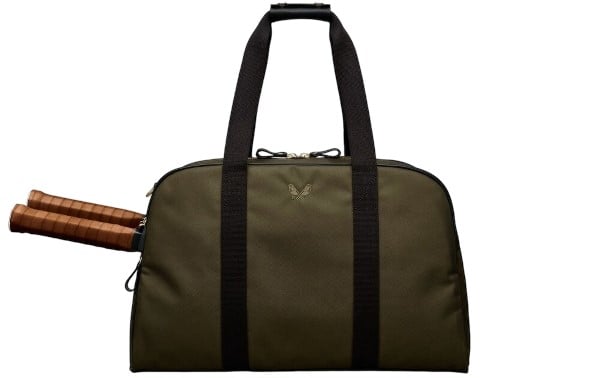
Occupying the premium segment of the market, London-based label Bennett Winch approaches athletic luggage with a bespoke sensibility. Every piece is handcrafted in England, utilizing high-grade, waterproof, and colorfast nylon paired with Italian leather trim and solid brass hardware.

The brand’s flagship Sport Holdall is engineered to address the specific pain points of the multi-faceted professional athlete. Beyond a spacious main compartment capable of storing a full suit and casual change of clothes, the bag features twin exterior pockets specifically sized to accommodate up to two tennis, squash, or padel rackets. A removable waterproof shoe pouch isolates trainers from clean garments, while a dedicated, padded sleeve accommodates laptops up to 16 inches. Supported by RiRi zips and a vented body, the design effectively eliminates the traditional compromise between office functionality and athletic utility. The inclusion of a lifetime warranty underscores a manufacturing philosophy focused on long-term sustainability over disposable fast fashion.
Herschel Supply Co.: Heritage Canvas and Urban Subtlety
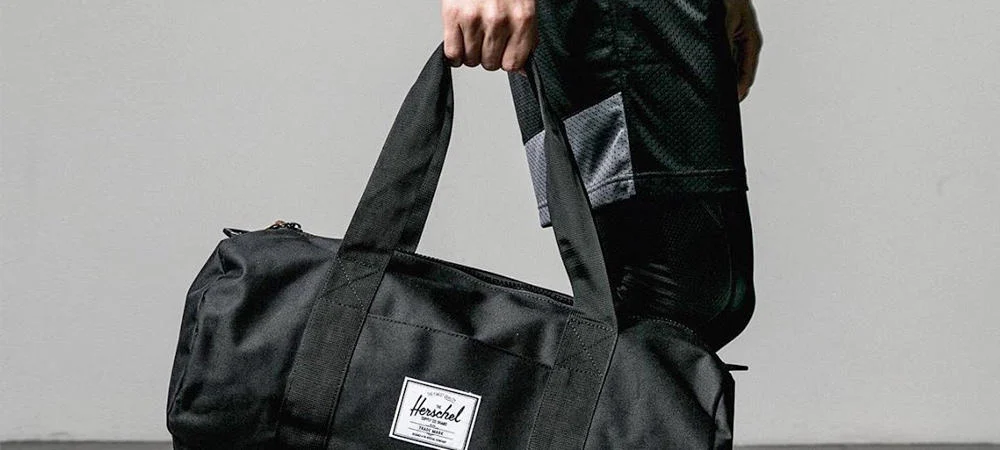
Canadian luggage brand Herschel fundamentally shifted the perception of everyday carry goods in the 2010s by reinterpreting classic mountaineering aesthetics for urban commuters. Known for signature canvas silhouettes and subtle brown leather detailing, Herschel holdalls provide a reliable, understated option for daily training sessions. While lacking the advanced electronic integration of specialized tech-wear brands, Herschel’s focus on robust construction and timeless design makes it a staple for navigating urban transit systems en route to high-intensity interval training (HIIT) classes.
Nike and Adidas: Sportwear Heritage and Technical Innovation

As two of the most influential entities in global sportswear, Nike and Adidas maintain a dominant market share through continuous research and development. Nike’s contributions range from military-inspired, compartmentalized tactical backpacks to fashion-forward collaborations rooted in iconic footwear sub-brands like Air Force 1. Streamlined silhouettes and weather-resistant coatings are standard across their duffel lines.
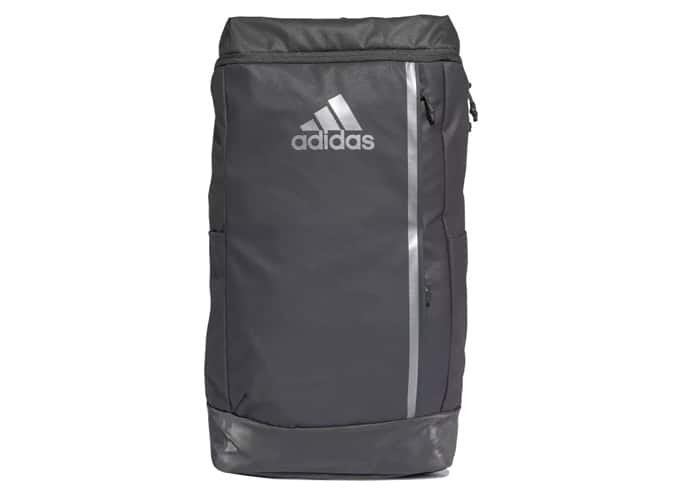
Similarly, Adidas leverages nearly a century of athletic manufacturing experience to produce versatile backpacks, holdalls, and hybrid duffels. These products frequently feature detachable shoe compartments, reinforced base panels, and ergonomic shoulder harnesses designed to distribute weight evenly across the torso, minimizing strain during extended commutes.
Rains and The North Face: Weatherproofing and Outdoor Resilience
Adverse weather conditions present a persistent challenge for urban commuters carrying electronics and fresh apparel. Danish raincoat specialist Rains applies its signature waterproof polyurethane fabric technology to a dedicated line of duffels and gym bags, ensuring that contents remain completely dry regardless of external precipitation.

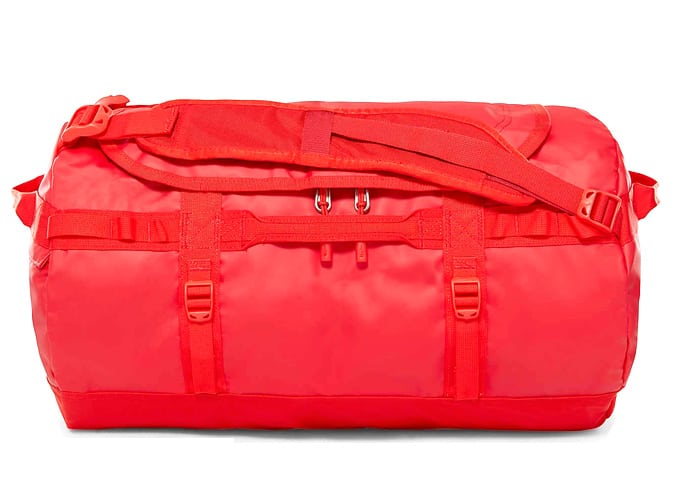
The North Face approaches the category through the lens of alpine exploration. Utilizing heavy-duty, double-coated base camp laminate materials, the brand’s iconic duffel bags are engineered to withstand extreme physical handling. Although typically deployed in mountaineering expeditions, these bags have found a loyal following among urban gym-goers seeking indestructible locker-room storage.
Patagonia and Eastpak: Sustainability and Alternative Lifestyles

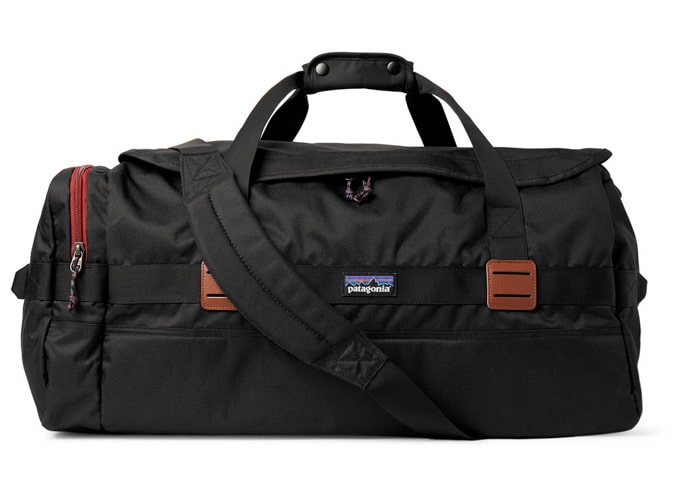
Environmental consciousness has become a primary driver in consumer purchasing decisions. Patagonia addresses this through rigorous manufacturing standards, utilizing recycled textiles, innovative low-impact dyeing processes, and durable water-repellent (DWR) finishes free of perfluorinated chemicals. Their gear is favored by rock climbers, trail runners, and environmentally aware city-dwellers alike.
Eastpak, meanwhile, bridges the gap between alternative subcultures and professional practicality. Originally serving musicians and extreme sports athletes, the brand offers sleek backpacks equipped with specialized internal organization. Notably, Eastpak’s confidence in its manufacturing standards is reflected in its industry-leading 30-year warranty program.

Lululemon, H&M, and Carl Friedrik: Niche Specialization and Value
Lululemon caters primarily to practitioners of yoga, pilates, and mindfulness-based training. Their athletic bags prioritize sleek, minimalist aesthetics, specialized water bottle holders, and yoga mat attachment straps, commanding a higher price point justified by refined material selection.
At the opposite end of the economic spectrum, H&M offers high-street accessibility through lightweight, foldaway weekend and gym bags. While omitting advanced technical features, these products fulfill basic containment requirements affordably.
Positioned at the intersection of luxury leather goods and modern utility, Carl Friedrik provides sophisticated canvas and leather-trimmed holdalls. These pieces are tailored for individuals who treat professional environments as an extension of personal style, offering refined silhouettes that avoid trapping moisture from damp post-workout garments.

Implications and Future Outlook
The continued expansion of the men’s gym bag market highlights a broader cultural shift toward holistic wellness and personal presentation. As employers increasingly encourage physical fitness initiatives and flexible work environments, the demand for sophisticated, multi-functional accessories will only intensify. Industry analysts project that manufacturers incorporating modular design, antimicrobial linings, and sustainable circular-economy production models will capture the largest share of consumer expenditure through the remainder of the decade. Selecting an appropriate bag is no longer merely a logistical decision, but a strategic investment in daily organization, professional credibility, and personal health habits.