











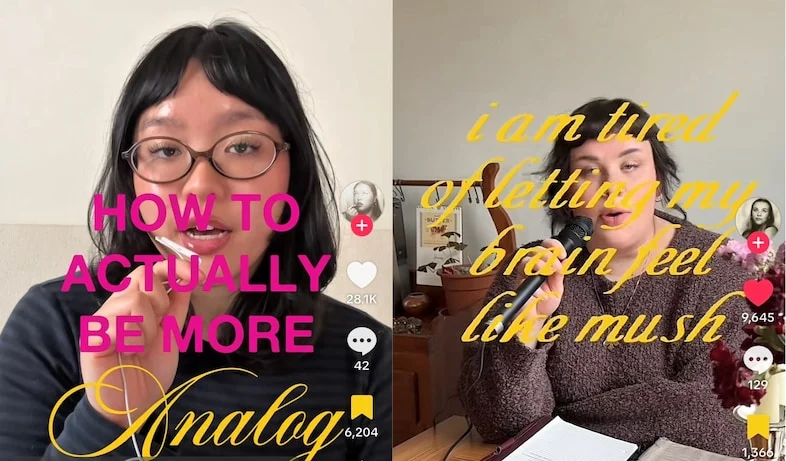
As the calendar turned to a new year, a familiar resolution resonated across countless young individuals: to diminish reliance on digital devices. This sentiment, particularly prevalent among younger demographics, underscores a growing awareness of the pervasive effects of social media addiction, a concern amplified by the increasing integration of digital platforms into professional life. The market has responded with a surge in anti-social media applications and devices, ranging from focused tools like Brick and One Sec to comprehensive digital blockers such as Freedom. This proliferation signals a profound societal hunger, verging on desperation, to break free from digital servitude, reclaim presence in interactions with friends and family, and confront uncomfortable emotions rather than seeking refuge in screens.
The Digital Dilemma: A Growing Crisis of Connectivity
The evolution of smartphone technology and social media platforms over the past two decades has profoundly reshaped human interaction, communication, and daily habits. What began as a tool for connectivity has, for many, morphed into an omnipresent demand for attention. Academic research and public health studies consistently highlight the adverse effects of excessive screen time, particularly on adolescents and young adults. According to a 2024 report by Stanford Law, concerns surrounding social media addiction and its implications for youth mental health have escalated dramatically. Data from institutions like the Pew Research Center indicate that a significant majority of teenagers report using social media daily, with many describing their usage as "almost constant." This sustained engagement is frequently linked to increased rates of anxiety, depression, sleep disturbances, body image issues, and a pervasive sense of "Fear of Missing Out" (FOMO).
The ubiquitous nature of smartphones means they are not merely communication devices but also portals to entertainment, news, education, and increasingly, employment. For many, especially those in creative industries or roles requiring online presence, the line between essential digital engagement and compulsive usage blurs. This intertwining of professional necessity and personal habit makes disengagement particularly challenging, fostering a cycle where digital tools, intended to enhance life, paradoxically diminish well-being and genuine connection.
The Genesis of the Analogue Movement: A Cultural Counter-Current
This mounting digital fatigue reached a crescendo in early 2026, when a groundswell of young people, primarily via TikTok, collectively declared "2026 as the year of analogue." This viral trend, spearheaded by content creators like Rosie Oko, articulated a deep-seated frustration with the ephemeral nature of digital ownership and the increasingly divisive online environment. Oko, in a widely shared video, prophesied that "The biggest trend of this year is going to be going analogue," citing a redefinition of relationships with technology. She highlighted a generation that, having grown up online, was beginning to question the value of countless subscriptions for movies, music, and virtual media, recognizing a lack of true ownership in the digital realm. The proposed antidote was a pivot towards tangible, analogue hobbies: the resurgence of CD players, collective cinema experiences, and even the nostalgic revival of iPods.
This declaration tapped into a latent desire for authenticity and control, quickly gaining traction. Throughout January, thousands of young individuals began documenting their "analogue journeys" online, sharing methods for reducing screen time, limiting television consumption, embracing boredom, and prioritizing in-person interactions with friends and family. This initial outpouring of commitment underscored the collective yearning for a more grounded existence, free from the incessant demands of digital platforms.
Mid-Year Assessment: Navigating the Analogue Path
As 2026 progresses past its halfway mark, a critical question emerges: have these digital rebels sustained their analogue commitments? Is the allure of instant gratification too potent to overcome, or have these efforts genuinely transformed their lives? The initial enthusiasm of January often wanes, but the anecdotal evidence from those who embarked on this journey suggests a nuanced reality: while complete digital abstinence remains largely impractical in a digitally-driven world, significant shifts in behavior and mindset are indeed occurring. The movement appears to be fostering a more intentional, selective engagement with technology rather than an outright rejection.
To understand the practicalities and impacts of this cultural shift, insights from individuals actively participating in the analogue movement offer valuable perspectives. Three self-proclaimed "amateur Luddites" — Shaughnessy, Dais, and Brianna — share their experiences, detailing the challenges, triumphs, and evolving philosophies that define their year of analogue.
Voices from the Frontlines: Personal Journeys in Disconnection
Shaughnessy, 26: The Intentional Disconnector
Shaughnessy’s motivation to embrace an analogue lifestyle stemmed from a profound sense of intellectual stagnation post-education. "When I finished school, I started to feel mushy-brained," she recounts, attributing this to the pervasive influence of technology and the rise of artificial intelligence. Her desire to return to an "engaged environment" of learning and critical thought became a driving force.
Her analogue journey began with a decisive act: canceling all streaming services, including Spotify, Netflix, and Disney+. This decision was not merely about reducing screen time but also aligned with a broader ethical stance, as she expressed disagreement with the political affiliations of the companies owning these platforms. This highlights a deeper layer to the analogue movement – a conscious consumer choice rooted in personal values beyond just digital detox.
Shaughnessy articulates a pragmatic approach, rejecting an "all-or-nothing mindset." She cites a viral TikTok analogy: "I’m a vegetarian plus bacon," which resonated with her belief that one can make positive changes and live an analogue life while still engaging with certain digital comforts, such as watching "Love Island." This philosophy underscores a crucial aspect of the movement: sustainability often lies in moderation and personal tailoring, rather than rigid adherence to an idealized, unattainable standard.
The inherent paradox of promoting an analogue lifestyle via a digital platform like TikTok is not lost on Shaughnessy. She acknowledges the "oxymoron" of using a digital medium to advocate for its reduction. Consequently, her posting frequency on TikTok has significantly decreased, a choice that, while limiting certain opportunities for platform growth, has yielded substantial personal benefits. "I feel so much less stressed than I did before," she states, proudly reporting her average daily screen time has plummeted to a remarkable 18 minutes. Her experience demonstrates that the commitment to analogue principles can outweigh the pressures of digital self-promotion, leading to tangible improvements in mental well-being.
Dais, 23: The Mindful Moderator
Dais initiated her "Becoming Analogue" series on TikTok in January, a public commitment to reshaping her relationship with technology. Her journey reflects a common struggle: maintaining analogue habits when routines fluctuate. "When I’m really busy, it’s so easy not to scroll or check socials," she observes, "but on days when I’m freer, I reach for my phone." This candid admission highlights the role of external structure in managing digital impulses. To counteract this, she recently acquired a "Brick," a device designed to facilitate presence by temporarily disabling smartphone functions, illustrating the practical tools many are employing in their analogue efforts.
Her impetus for change was the realization of wasted time. "I’d go onto TikTok for a few minutes, I’d look up, and half an hour had passed. I realized that this is my actual life that I’m allowing to pass by." This moment of clarity, witnessing time slip away, is a powerful catalyst for many seeking digital detox. Dais’s professional life, like many young adults today, is deeply intertwined with social media, as she creates content and works in the field. This dual existence – needing to be "chronically online" for work while seeking disconnection in personal life – presents a unique challenge.
Despite the difficulty, Dais asserts the transition has been "really worth it." She maintains that she is "not anti-social media by any means," acknowledging its positive aspects when used constructively. However, her personal boundary is clear: "I can’t have it dictating my life anymore." Her success is evident in the dramatic reduction of her personal social media engagement. From four hours a day, she now dedicates approximately 30 minutes, including editing and posting time for work. Dais’s story exemplifies a strategic re-engagement with technology, transforming a compulsive habit into a disciplined tool.
Brianna, 22: The Intentional Living Advocate
Brianna’s analogue journey, which began in March, transcends mere screen time reduction. Her goal is rooted in a broader philosophy of "intentional living" – maximizing life’s richness and meaning. For her, going analogue is about actively cultivating experiences and connections beyond the digital sphere. She has channeled her energy into hosting a book club, attending theatre productions with friends, enrolling in pottery classes to nurture her creative side, and organizing board game nights. "My mindset about intentional living has only strengthened since the start of my journey," she affirms.
Brianna’s experience sheds light on the psychological hurdles inherent in this shift. She identifies the "easiest and hardest parts" as two sides of the same coin. As a self-described "homebody," the initial mental effort required to "peel myself off my couch and enjoy life outside of my home" is the most challenging aspect. This internal resistance, the "daunting mental obstacles," often prevents people from engaging with enriching offline activities. Yet, the reward is immediate and profound once that barrier is overcome. "Life is fun, and sometimes, honestly, I forget that," she admits. By conquering her predisposition to stay in and decline social invitations, she consistently finds greater enjoyment and fulfillment.
Her journey is a testament to the transformative power of intentional choices. "Embracing an analogue and intentional living mindset has been so incredibly rewarding," Brianna states. "I’ve been able to enjoy new experiences, make new friends, and feel more alive." The consequence of this enriched offline life is a natural decrease in phone usage: "I’ve also used my phone less because I’m just too busy living life nowadays." Her narrative powerfully illustrates that a reduction in screen time can be an organic outcome of a life made fuller and more purposeful through analogue engagement.
The Nuance of Disconnection: A Balanced Approach
The experiences of Shaughnessy, Dais, and Brianna collectively illustrate that the "Year of Analogue" is not a monolithic movement demanding absolute digital renunciation. Instead, it represents a diverse spectrum of approaches, largely characterized by intentionality, moderation, and a personalized definition of what "analogue" means in a hyper-digital era. This flexibility is likely a key factor in the movement’s sustainability beyond the initial burst of New Year’s resolutions. The "vegetarian plus bacon" philosophy articulated by Shaughnessy resonates deeply with the practical realities of modern life, where complete disconnection is often neither feasible nor desirable.
Mental health experts widely support the concept of digital moderation over extreme detoxes for long-term well-being. Dr. Anya Sharma, a clinical psychologist specializing in digital wellness, commented on the trend: "Encouraging individuals, especially youth, to critically evaluate their relationship with technology and actively seek balance is crucial. A mindful approach, where digital tools are used purposefully rather than compulsively, can lead to significant improvements in mental clarity, attention span, and overall life satisfaction. The ‘all-or-nothing’ mindset often leads to burnout and a return to old habits." This professional endorsement reinforces the validity of the nuanced analogue movement.
Broader Implications and Expert Perspectives
The "Year of Analogue" trend, while originating from individual resolutions, carries broader implications for society, technology, and commerce. If sustained, such a shift could impact various sectors.
Societal and Psychological Impact: Beyond individual well-being, a collective move towards analogue activities could foster stronger community bonds, enhance face-to-face communication skills, and potentially reduce societal anxieties linked to online comparison and performance culture. The emphasis on "coexisting with boredom," as mentioned in the initial trend declaration, is psychologically significant. It allows for introspection, creativity, and the development of internal resources, rather than constant external stimulation.
Economic Shifts: A sustained analogue trend could prompt shifts in consumer spending. While digital subscriptions might see reduced engagement, industries centered on physical goods and experiences could thrive. This includes increased demand for physical books, vinyl records, board games, art supplies, craft workshops, and local cultural events like cinema and theatre. The growth of digital wellness products and services, like Brick, also points to a burgeoning market catering to the desire for mindful tech use.
Technological Response: Tech companies might feel pressure to design platforms that encourage more mindful usage or offer features that support digital breaks. The current landscape, driven by engagement metrics, incentivizes continuous usage. A cultural counter-movement could push for more ethically designed technology that prioritizes user well-being.
Challenges and the Path Forward:
Despite its positive momentum, the analogue movement faces inherent challenges. The pervasive nature of technology in education, employment, and essential services makes complete detachment difficult, if not impossible, for most. The very platforms that amplify analogue messages (like TikTok) underscore this paradox. Furthermore, the convenience and instantaneous nature of digital life are powerful attractors, and maintaining analogue discipline requires ongoing effort and intentionality.
The long-term sustainability of the "Year of Analogue" will depend on its ability to adapt and integrate into a perpetually evolving digital world. It is unlikely to lead to a wholesale abandonment of technology, but rather a re-calibration of its role in individual lives. The trend highlights a fundamental human need for balance, presence, and genuine connection, signaling a potential paradigm shift in how younger generations perceive and interact with the digital realm.
Conclusion
The declaration of 2026 as the "Year of Analogue" has catalyzed a significant cultural conversation and prompted tangible lifestyle changes among many young people. From Shaughnessy’s ethical disengagement from streaming services to Dais’s disciplined moderation of social media and Brianna’s holistic pursuit of intentional living, the diverse approaches underscore a common thread: a conscious effort to reclaim time, attention, and presence from the pervasive demands of digital technology. While the journey is fraught with challenges inherent in navigating a digitally-dependent world, the mid-year assessment reveals a resilient and adaptable movement. It is not a call for a return to a pre-digital age, but rather a sophisticated attempt to integrate the benefits of technology with the profound human need for authentic experience, ownership, and mindful existence. The analogue awakening may well signify a crucial turning point, shaping a generation more discerning and intentional in their relationship with the digital tools that define modern life.