











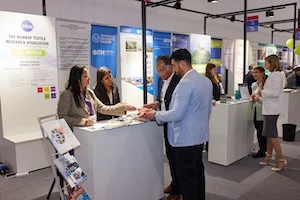
The 2026 editions of Techtextil and Texprocess have officially opened in Frankfurt am Main, Germany, marking a pivotal moment for the global textile value chain. As the world’s leading trade fairs for technical textiles, nonwovens, and textile processing, these biennial events serve as a barometer for the industry’s technological health. This year, the focus has shifted decisively toward the integration of artificial intelligence (AI), circular economy principles, and a robust bridge between academic research and industrial application. With exhibitors ranging from agile start-ups to century-old research institutes, the event highlights a sector in the midst of a profound digital and ecological transformation.
The Convergence of Innovation and Industry in Frankfurt
The 2026 fairs are characterized by an unprecedented level of internationality and a clear focus on future-oriented concepts. Techtextil, focusing on technical textiles and nonwovens, and Texprocess, dedicated to the processing of textile and flexible materials, have effectively merged their narratives to present a seamless view of the production cycle. From the initial fiber synthesis to the final automated garment assembly, the fairs demonstrate how the industry is responding to global challenges such as labor shortages, resource scarcity, and the demand for personalized production.
According to Messe Frankfurt, the 2026 event features a significantly expanded "Campus & Research" area and a dedicated start-up village, reflecting a 15% increase in participation from the research sector compared to previous years. This growth underscores a critical trend: the textile industry is no longer just about manufacturing; it is increasingly a high-tech sector driven by materials science and data analytics.
A Growing Global Network: The Campus & Research Sector
The "Campus & Research" sector has evolved into a global meeting point for textile science, featuring approximately 40 research institutes and universities. The geographic diversity of these participants—spanning Europe, Asia, Africa, and South America—illustrates the global nature of textile innovation.
Prominent participants include the Saxion University of Applied Sciences from the Netherlands, which is presenting breakthroughs in recycled thermoplastic composites, and the InnoFiber Research Lab at the University of Minho in Portugal, known for its work in functionalizing natural fibers. From South America, the IMS Bauhaus Latino América of Uruguay is showcasing sustainable architectural textiles, while the Higher Institute of Technological Studies of Ksar Helal in Tunisia represents the growing technical textile expertise in the Maghreb region.
One of the most notable exhibits in this sector comes from the TFI – Institute for Flooring and Interior Systems at RWTH Aachen University. Their special exhibition demonstrates a textile-based guidance system designed for the visually impaired. By integrating tactile and electronic sensors into floor coverings, the system enables greater accessibility in complex indoor environments like airports and hospitals. This project exemplifies the "human-centric" approach to technical textiles, where innovation serves direct social needs.
Start-ups as Catalysts for Industrial Evolution
The start-up ecosystem at Techtextil and Texprocess has become a primary engine for disruptive change. In 2026, about 20 start-ups are presenting technologies that challenge traditional manufacturing paradigms.
In the realm of materials, Swiss company Climatex is leading the charge in circularity. Their display features textile technologies where every component—from the yarn to the dyes—is designed to be fully recyclable or biodegradable, ensuring that products never reach a landfill. Another Swiss innovator, qCella, is demonstrating ultra-thin surface heating technology integrated into cellulose fibers. This innovation has significant implications for the automotive and outdoor apparel industries, where lightweight, efficient heating is in high demand.
From the United States, R.O.A.M Systems is introducing a new method of nonwoven fabric production through additive fiber placement. This technique allows for the precise "printing" of fibers to create structures with varied densities and strengths, reducing waste by up to 30% compared to traditional nonwoven processes.
On the Texprocess side, the focus is on digital quality control. The Laboratory for Artificial Intelligence in Design (AiDLab) from Hong Kong is demonstrating an AI-supported textile inspection technology. Using high-resolution cameras and deep-learning algorithms, the system can detect minute faults in fabric at high speeds, providing real-time quality control that exceeds human capabilities. Similarly, the Bulgarian start-up Prodactive Solutions is showcasing an AI-supported Software-as-a-Service (SaaS) platform designed to optimize production control in the apparel industry, helping factories reduce lead times and improve resource allocation.
The Artificial Intelligence Revolution in Textile Processing
Artificial Intelligence is no longer a theoretical concept at these fairs; it is a tangible tool integrated into machinery and software across the exhibition halls. The "Texpertise Focus AI" initiative has made it easier for visitors to locate exhibitors who are leading the way in machine learning and robotics.
At the booth of Style 3D/Assyst, visitors can interact with two collaborative robots (cobots). These machines are designed to work alongside human operators, handling complex and repetitive tasks in apparel production. The accompanying software uses AI to simulate fabric behavior in 3D, allowing designers to make real-time adjustments that are immediately translated into production data, effectively bridging the gap between design and the factory floor.

Italian exhibitor Willy Italiana has introduced a "checklabel" machine that utilizes self-learning AI. Unlike traditional inspection systems that require manual programming for each new label design, this machine "learns" the correct parameters of a label or ribbon through initial scans and then identifies defects with increasing accuracy over time.
In the sustainability sector, Spanish exhibitor Picvisa Machine Vision Systems is demonstrating the power of AI in the circular economy. Their optical sorting systems use AI to identify and separate post-consumer textiles based on material composition (e.g., distinguishing between 100% cotton and poly-cotton blends) and color. This technology is vital for the scaling of textile-to-textile recycling, as it ensures the purity of the feedstock for chemical and mechanical recycling processes.
Industry Reactions and Leadership Perspectives
The integration of research and industry has been met with enthusiasm from sector leaders. Sabine Scharrer, Director Brand Management Technical Textiles & Textile Processing at Messe Frankfurt, emphasized the strategic importance of this synergy. "Techtextil and Texprocess bring together global research with textile and user industries," Scharrer noted. "This leads to new ideas and collaborations that bring innovations to the market more quickly."
Industry analysts suggest that the 2026 fairs reflect a "re-shoring" or "near-shoring" trend in Western markets. As automation and AI reduce the labor cost component of textile production, many companies are looking to move manufacturing closer to their primary markets to increase agility and reduce carbon footprints. The technologies on display in Frankfurt—automated inspection, robotic sewing, and AI-driven supply chain management—are the primary enablers of this shift.
Furthermore, the presence of 40 research institutes suggests a tightening of the "innovation loop." Historically, it could take a decade for a laboratory discovery to reach the mass market. In the current environment, the direct interaction between researchers and venture-backed start-ups at Techtextil is cutting that timeline significantly.
Supporting Data and Economic Context
The innovations showcased at Techtextil and Texprocess are backed by significant economic momentum. The global technical textiles market is projected to reach approximately $270 billion by 2027, growing at a compound annual growth rate (CAGR) of nearly 5%. This growth is driven largely by the automotive, healthcare, and construction sectors, all of which are heavily represented at the Frankfurt fairs.
Specifically, the "Smart Textiles" segment—incorporating electronics and sensors—is expected to see even more rapid growth, with a CAGR of 18% over the next five years. The advancements shown by companies like qCella and research projects from TU Dresden align perfectly with these market projections.
In terms of processing, the global AI in manufacturing market is expected to grow ten-fold between 2023 and 2030. The textile industry, traditionally seen as labor-intensive, is now a major contributor to this growth as it seeks to solve chronic labor shortages in major manufacturing hubs through robotics and AI-driven automation.
Timeline of Transformation
To understand the significance of the 2026 fairs, one must look at the timeline of the industry’s evolution over the last decade:
- 2016-2018: The focus was on "Industry 4.0," emphasizing the connectivity of machines and the use of "Big Data" in factories.
- 2020-2022: The pandemic accelerated the adoption of 3D design and digital sampling tools (like those from Style 3D) as physical travel became impossible.
- 2024: Sustainability and the "Green Deal" in Europe moved from a niche interest to a regulatory requirement, pushing circularity to the forefront.
- 2026: The current era is defined by "Industry 5.0," where AI and robotics are not just connected but are "intelligent" partners to human workers, and where research-driven material science is the key differentiator in a competitive global market.
Broader Impact and Implications for the Global Economy
The developments at Techtextil and Texprocess 2026 have implications that extend far beyond the textile industry. The advancements in AI-supported optical sorting, for instance, provide a blueprint for other sectors—such as plastics and electronics—to improve their recycling rates. The work done on textile-based guidance systems for the visually impaired highlights how industrial technology can be repurposed for social infrastructure and urban planning.
Moreover, the fair serves as a critical platform for addressing the environmental impact of the textile industry, which is responsible for an estimated 10% of global carbon emissions. By showcasing fully recyclable products (Climatex) and waste-reducing production methods (R.O.A.M Systems), Messe Frankfurt is positioning itself as a hub for the "Green Transformation."
As the fairs continue through the week, the focus remains on how these diverse innovations can be scaled. The consensus among exhibitors and visitors alike is that the future of textiles lies in the intersection of high-tech materials and intelligent processing. With the 2026 editions, Techtextil and Texprocess have once again proven that the path to industrial resilience is paved with research, collaboration, and the strategic application of artificial intelligence.