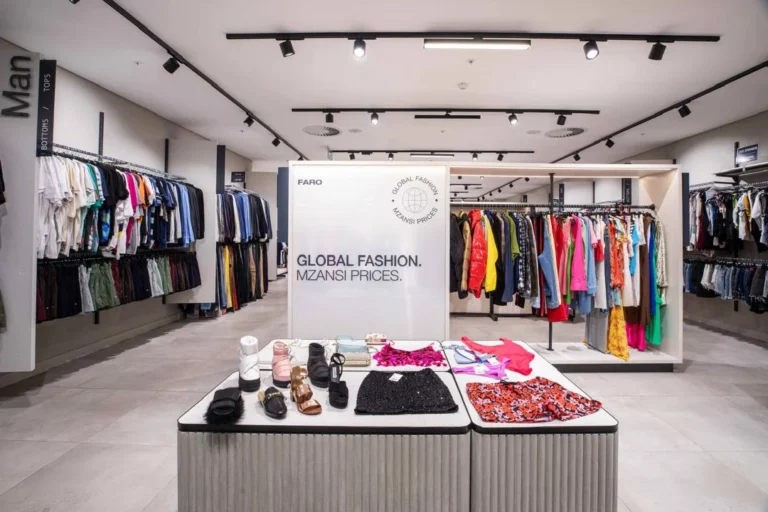











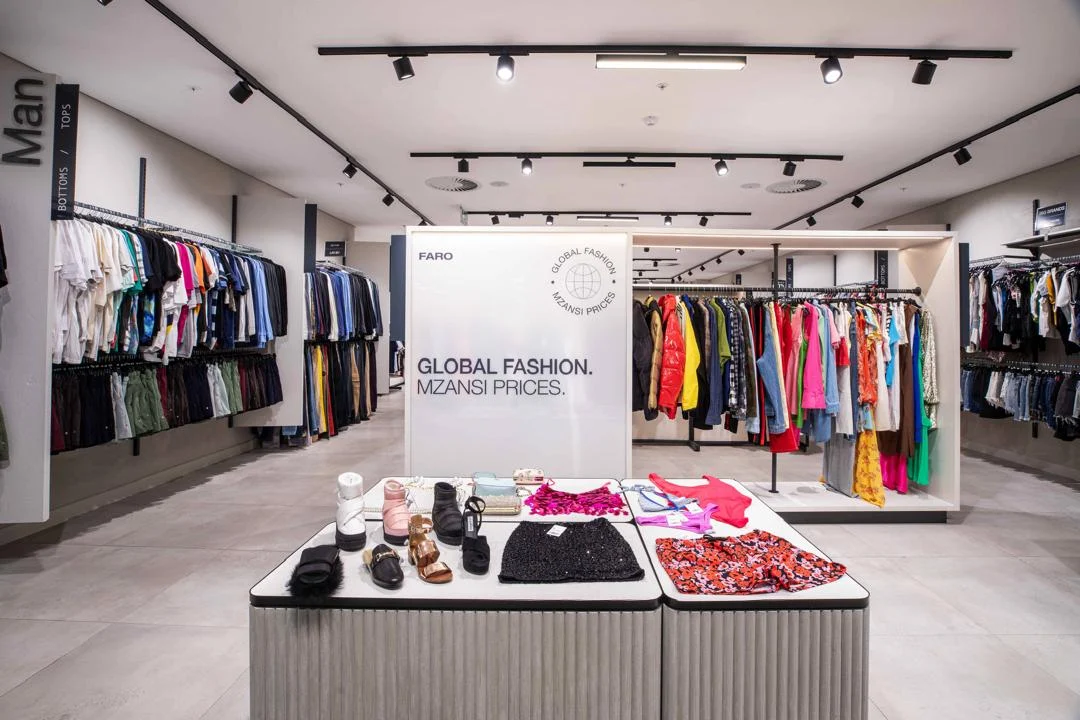
The global fashion industry is currently grappling with a systemic inventory crisis, characterized by billions of dollars in unsold stock and a logistical bottleneck that prevents efficient redistribution. As major brands like ASOS, Zara, and H&M face mounting pressure to manage surplus inventory without devaluing their primary markets, a South African startup named FARO has secured $6 million in seed funding to transform this challenge into a circular economy opportunity. By bridging the gap between excess supply in the West and high demand for quality apparel in emerging markets, FARO aims to mitigate the environmental impact of textile waste while providing affordable, authentic fashion to African consumers.
The $6 million investment round was led by JP Zammitt, the president of Bloomberg, with participation from a diverse group of venture capital firms including Presight Capital, Gharage Ventures, and E4E Africa. High-profile individual investors also joined the round, including Mato Perić of MPGI, Leonard Stiegeler of Pulse, and Vikram Chopra of Cars24. This capital injection is earmarked for the expansion of FARO’s physical retail footprint and the development of proprietary artificial intelligence tools designed to streamline the complex logistics of the off-price clothing market.
The Global Inventory Crisis and the African Paradox
The fashion industry produces approximately 100 billion garments annually, a significant portion of which never reaches a consumer. Traditionally, global brands have avoided reselling excess inventory or consumer returns in their core markets, such as the United Kingdom and the United States, to prevent "market cannibalization"—a phenomenon where discounted goods erode the sales and prestige of full-price collections. Consequently, much of this inventory is either incinerated, sent to landfills, or exported to emerging markets as bulk secondhand bales.
However, the traditional secondhand trade model is fraught with inefficiency and environmental degradation. Data suggests that between 30% and 40% of secondhand clothing imported into African nations is deemed unusable upon arrival due to damage or poor quality. These discarded textiles often end up in massive informal landfills or polluting waterways, creating an ecological crisis in countries like Ghana and Kenya.
FARO’s business model addresses this paradox by shifting the focus from "waste disposal" to "recommerce." Rather than accepting bulk, uninspected bales, the company partners directly with brands like Levi’s, G-Star, and Jack & Jones to source specific overstock and consumer returns. This targeted approach ensures that the inventory entering the South African market is of high value and low waste.
The FARO Operational Model: Refurbishment and Arbitrage
FARO operates on a sophisticated arbitrage model that leverages the price disparity between discarded Western inventory and African retail demand. The startup specifically targets consumer returns—items that may have minor defects or were simply tried on and sent back. Because the labor costs of inspecting and refurbishing these items in Europe or North America often exceed the value of the garment, brands frequently write them off.
FARO acquires these items at ultra-low prices, sometimes for as little as £1 per piece. The inventory is then transported to FARO’s specialized facilities in South Africa, which are equipped with industrial laundries, steam tunnels, and repair stations. By utilizing more affordable local labor to recondition the clothing, FARO adds significant value to the product. The result is a high-quality, authentic garment sold at up to a 70% discount compared to traditional retail prices.
According to co-founder and co-CEO David Torr, the company maintains a strict fixed-margin model. The business targets a 45% margin after all processing, shipping, and administrative costs are accounted for. Torr emphasizes that when efficiencies lead to higher margins, the company chooses to lower prices for the consumer rather than padding profits, a strategy intended to build long-term brand loyalty among price-sensitive shoppers.
A Chronology of Rapid Growth
FARO’s trajectory from a conceptual pilot to a multi-million dollar enterprise has been remarkably swift. The company was founded by a team with deep roots in African e-commerce and logistics, including David Torr (formerly of UCOOK), Will McCarren (Amazon and Jumia), Chris Makhanya, and Amber Penney-Young.
- Early 2023: FARO launched an experimental pop-up store in a South African urban hub. The store exceeded all internal projections, generating $100,000 in revenue in its first month.
- Mid-2023: Based on the success of the pilot, the founders initially estimated they would need seven physical locations to reach an annual revenue run rate of $2 million.
- Late 2023: The company achieved its $2 million revenue milestone—actually reaching $2.3 million—with only four stores, representing a 20-fold growth in revenue over the calendar year.
- 2024: Following the $6 million funding round, FARO has set an ambitious target to grow its revenue fivefold within the year and has begun scouting locations for its next phase of expansion.
Technological Innovation in Off-Price Retail
While FARO is a physical retailer, its backbone is built on modern data science. One of the primary hurdles in the off-price industry is the lack of standardized data. Unlike traditional retail, where a buyer might order 10,000 identical units of a single SKU, off-price manifests often consist of thousands of unique, single-item pieces, each with different conditions and sizes.
Historically, managing this inventory has been a labor-intensive process involving massive Excel spreadsheets and manual entry. Torr notes that some major global brands employ thousands of people just to manipulate this data. To solve this, FARO is developing AI-powered agents capable of breaking down complex buying workflows into micro-tasks. These agents can process massive manifests in seconds, determining the optimal price point and distribution channel with a level of accuracy that exceeds human capabilities.
Furthermore, FARO plans to implement personalized shopping tools. By analyzing local demand and individual customer preferences, the company can notify shoppers via mobile alerts when a specific brand or style they prefer is arriving at their local store. This "digital-to-physical" bridge is designed to create a "treasure hunt" atmosphere that is hallmark to successful off-price retailers like TJ Maxx in the United States.
The Strategy of Physical Retail in a Digital Age
In a market where e-commerce giants like Jumia and Takealot have struggled with the high costs of "last-mile" delivery, FARO has made the strategic decision to remain focused on physical brick-and-mortar stores. South Africa provides a unique landscape for this approach; it possesses a highly developed retail infrastructure with over 2,000 shopping centers, which serve as the primary social and commercial hubs for the population.
The physical model also solves the "digitization cost" problem. In the recommerce sector, the cost of photographing, measuring, and listing a single unique return item online often exceeds the potential profit. By moving inventory directly to store shelves, FARO bypasses these digital overheads.
This strategy also positions FARO as a formidable competitor against the rise of ultra-fast-fashion platforms like Shein and Temu. While these Chinese platforms offer low prices, they often face criticism regarding quality and long shipping times. FARO counters this by offering established, high-status global brands that consumers can touch, try on, and purchase instantly.
Broader Implications and Future Outlook
The success of FARO signals a broader shift in how emerging markets view international trade. For decades, Africa has been a recipient of the West’s "waste." FARO’s model suggests a future where African enterprises act as sophisticated partners in the global supply chain, providing the labor and logistical innovation necessary to keep products in circulation longer.
The environmental implications are equally significant. By professionalizing the resale of returns and overstock, FARO directly reduces the volume of clothing that would otherwise be discarded. If the company achieves its goal of opening 1,000 stores across Africa, South America, and Southeast Asia over the next decade, it could potentially divert millions of tons of textiles from landfills annually.
However, challenges remain. Expanding into other African markets like Kenya or Nigeria will require FARO to navigate different regulatory environments, import duties, and consumer preferences. A brand that carries high status in Cape Town may not have the same resonance in Nairobi. The company’s ability to use its AI tools to build "localized price profiles" will be the ultimate test of its scalability.
As the global recommerce market is projected to reach $350 billion by 2027, FARO stands at the intersection of technological innovation and environmental necessity. Its recent funding round not only validates the "off-price" opportunity in Africa but also provides a blueprint for how technology can be used to solve one of the fashion industry’s most enduring and wasteful problems.