











The global technical textiles industry is standing at the threshold of a significant technological shift as Roaches International, a prominent member of the British Textile Machinery Association (BTMA), announces the launch of the Sentire evaluation system. This innovative technology, scheduled for its public debut at the Techtextil exhibition in Frankfurt from April 21 to 24, 2026, aims to solve one of the most enduring challenges in textile engineering: the objective quantification of fabric "handle." For decades, the tactile quality of a fabric—how it feels to the human touch—has been determined by subjective assessment, a method that is increasingly incompatible with the precision-driven demands of modern high-performance materials and digitized global supply chains.
The emergence of the Sentire system comes at a critical juncture for the textile sector. Technical textiles, which are engineered for specific functional properties rather than aesthetic appeal, are utilized in high-stakes environments ranging from aerospace and automotive safety to medical implants and protective military gear. In these applications, the physical characteristics of a fabric, such as its stiffness, smoothness, and compressibility, are not merely matters of comfort but are often directly correlated to the technical performance and safety of the final product. As the industry faces a dual challenge of a retiring workforce of "master feelers" and an urgent need for sustainable, repeatable manufacturing processes, the move toward data-driven tactility measurement represents a necessary evolution in quality assurance.
The Science of Tactility: How Sentire Quantifies the Human Touch
Developed in close collaboration with researchers at the University of Leeds, the Sentire system is designed to translate the complex sensory experience of human touch into a universal, digital language. Historically, the "handle" of a fabric was described using qualitative terms that varied significantly between individuals, regions, and companies. One specialist might describe a material as "supple," while another might label it "flexible," leading to potential discrepancies in quality control and manufacturing specifications.
The Sentire system eliminates this ambiguity by utilizing four precise test methods that mimic the mechanical interactions of human fingers with textile surfaces. These tests evaluate key tactile properties, including softness, smoothness, creasability, and stiffness. By applying established principles of fabric physics, the system collects high-resolution data that characterizes the material’s mechanical response. This data is then processed to create a unique "tactile fingerprint" for each fabric sample.
Seth Seagraves, Marketing Executive at Roaches International, emphasizes the transformative nature of this data. "No two people will describe how a fabric feels in the same way," Seagraves noted. "Sentire performs the testing and analyses the data that enables a universal common language. Being able to translate the fabric handle into communicable data that can be compared between batches is key to ensuring consistency." This digital approach allows manufacturers to compare new production runs against established benchmarks or competitor samples with mathematical precision, ensuring that technical fabrics remain consistent from one product to the next.
Bridging the Gap Between Laboratory and Production
One of the most significant advantages of the Sentire system is its ability to provide actionable insights during the production cycle. In the manufacturing of technical textiles, fabrics often undergo multiple stages of finishing, including the application of chemical coatings, flame retardants, or antimicrobial treatments. Each of these processes can subtly or drastically alter the handle of the fabric. Furthermore, laundering and durability testing can change the material’s tactile profile over time.
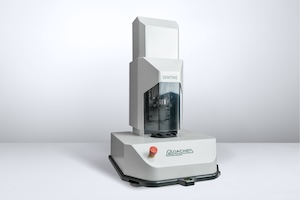
The Sentire system allows for real-time monitoring of these variations. By detecting minute changes in fabric properties caused by finishing or wear, manufacturers can adjust their processes immediately, reducing the likelihood of costly rework or the rejection of entire batches. This responsiveness is particularly valuable in the technical textiles market, where materials often involve expensive high-performance polymers and specialized yarns.
The comparison to the spectrophotometer is perhaps the most apt illustration of Sentire’s potential impact. Before the widespread adoption of digital color measurement, the textile industry relied on visual matching, which was prone to human error and environmental lighting conditions. The spectrophotometer revolutionized the industry by allowing color to be communicated as a set of numerical values (such as Lab* coordinates). Roaches International envisions Sentire performing the same role for fabric feel, enabling a "digital twin" of tactility that can be sent across the globe instantly.
The Role of BTMA and the Innovation Landscape at Techtextil 2026
The unveiling of Sentire is a highlight of the British Textile Machinery Association’s presence at the upcoming Techtextil and Texprocess exhibitions. These biennial events in Frankfurt serve as the global epicenter for technical textiles and nonwovens, attracting thousands of exhibitors and tens of thousands of visitors from across the manufacturing spectrum.
The BTMA, which represents the interests of UK textile machinery manufacturers, has long championed the integration of advanced sensors and automation into textile production. Jason Kent, CEO of the BTMA, views the Sentire system as part of a broader trend toward resilience and resource efficiency within the sector. "From the careful handling of ultra-high value yarns to the forensic inspection of finished fabrics, the BTMA members at Techtextil and Texprocess this year collectively represent a complete chain of innovation," Kent stated.
The 2026 exhibition is expected to focus heavily on the themes of digitalization and the "Green Transformation." As manufacturers strive to meet stricter environmental regulations, the ability to minimize waste through precise testing becomes a competitive necessity. By ensuring that a fabric meets its tactile and performance specifications on the first attempt, technologies like Sentire contribute to a reduction in the carbon footprint associated with textile waste and energy-intensive re-processing.
Economic and Strategic Implications for the Global Supply Chain
The shift toward standardized tactility measurement has profound implications for global supply chain management. In the current landscape, a technical textile might be engineered in Europe, manufactured in Southeast Asia, and integrated into a final product in North America. Maintaining quality across such a fragmented chain is notoriously difficult when relying on subjective assessments.
By digitizing fabric handle, brands and Tier 1 suppliers can issue precise digital specifications to their manufacturing partners. A factory in Vietnam can test a production sample using the Sentire system and instantly transmit the data to a quality control center in the United Kingdom for verification. This reduces the need for shipping physical swatches back and forth, cutting down on lead times and logistics costs.

Furthermore, the data generated by Sentire provides a rich foundation for Research and Development (R&D). As companies experiment with novel polymers, recycled fibers, and bio-based coatings, they can use the system to quantify exactly how these new materials affect the user experience or the mechanical performance of the textile. This accelerates the "time-to-market" for innovative products while ensuring they meet the rigorous standards required by technical applications.
Timeline and Market Outlook
The journey of the Sentire system from a concept at the University of Leeds to a commercial product reflects a growing synergy between British academia and the industrial sector. Following its debut in April 2026, Roaches International plans to roll out the system to key international markets, targeting manufacturers of automotive interiors, medical textiles, and high-end functional apparel.
The technical textiles market itself is projected to continue its robust growth. Market analysts estimate the global sector will reach a valuation exceeding $250 billion by the late 2020s, driven by increased demand in the healthcare, construction, and transportation industries. Within this market, the sub-sector for testing and quality assurance equipment is seeing higher-than-average growth as brands prioritize transparency and traceability in their supply chains.
As the industry gathers in Frankfurt this April, the Sentire system will serve as a testament to the UK’s continued leadership in textile machinery innovation. By bridging the gap between human sensation and digital data, Roaches International is not only preserving the "art" of fabric handle but is also providing the tools necessary for the next generation of textile engineers to build a more efficient, sustainable, and consistent global industry.
The demonstration at Techtextil (Stand Hall 12.0, various BTMA locations) will provide the first opportunity for industry stakeholders to witness the system in action. For many, the move from "feeling" to "measuring" will mark the beginning of a new era in textile science, where the quality of a material is no longer a matter of opinion, but a matter of fact.