









Raspberry AI, a New York-based technology startup, has announced the successful closing of a $24 million Series A funding round led by venture capital titan Andreessen Horowitz. This significant capital injection, which saw participation from existing investors including Greycroft, Correlation Ventures, and MVP Ventures, arrives just ten months after the company’s $4.5 million seed round. The funding marks a pivotal moment for the two-year-old company as it seeks to redefine the product development lifecycle for the multi-billion-dollar fashion and retail sectors. By leveraging specialized generative artificial intelligence, Raspberry AI aims to bridge the gap between creative conceptualization and industrial manufacturing, allowing brands to iterate on styles in seconds rather than weeks.
The Evolution of Speed in Global Fashion Retail
The modern fashion landscape is defined by an unprecedented demand for novelty and speed. Traditionally, fashion houses operated on a seasonal cycle, introducing new collections four times a year. However, the rise of "fast fashion" pioneers like H&M and Zara, followed by the "ultra-fast fashion" model perfected by companies such as Shein, has compressed these timelines into weeks or even days. In this high-pressure environment, the ability to rapidly identify trends and bring them to market is the primary driver of competitive advantage.
To maintain this pace, retailers have historically relied on a labor-intensive process involving manual sketches, complex computer-aided design (CAD) software, and the production of multiple physical samples. These samples are often manufactured in overseas facilities, requiring international shipping and weeks of transit time for every iteration. This process is not only slow but also contributes significantly to the industry’s waste problem, as rejected prototypes are frequently discarded. Raspberry AI entered the market in 2022 with the objective of digitizing this "pre-production" phase, using generative AI to create photorealistic visualizations that can be evaluated before a single thread is sewn.
Chronology of Innovation and Growth
The genesis of Raspberry AI is rooted in the convergence of high-level retail finance and the 2022 breakthrough in image-generation models. Founder Cheryl Liu brought a unique perspective to the startup, having served as a private equity analyst at KKR with a specific focus on the retail sector before gaining operational experience at tech giants Amazon and DoorDash. This background allowed her to identify a systemic inefficiency in how brands develop products.
The timeline of the company’s development reflects the broader "AI summer" that began in late 2022:
- Late 2022: The public release of OpenAI’s DALL-E and Stability AI’s Stable Diffusion demonstrated that high-fidelity images could be generated from text prompts. Liu recognized that while these tools were impressive, they lacked the precision required for professional apparel design.
- Early 2023: Raspberry AI was founded, focusing on training models that understood the specific "grammar" of fashion—fabrics, silhouettes, stitching patterns, and technical construction.
- March 2024: The company secured $4.5 million in seed funding to build out its core engineering team and begin pilot programs with major athletic and luxury brands.
- January 2025: Following a period of rapid customer acquisition, Raspberry AI announced its $24 million Series A, signaling institutional confidence in the platform’s ability to scale across the broader consumer goods market.
Technical Differentiation: Moving Beyond General AI
While general-purpose AI image generators like Midjourney or Adobe Firefly have gained popularity among hobbyists, Raspberry AI has carved out a niche by focusing on domain-specific accuracy. In the professional fashion world, a "fuzzy sweater" is not a singular concept; it involves specific knit gauges, yarn types like mohair or alpaca, and distinct textures that affect how light interacts with the garment.
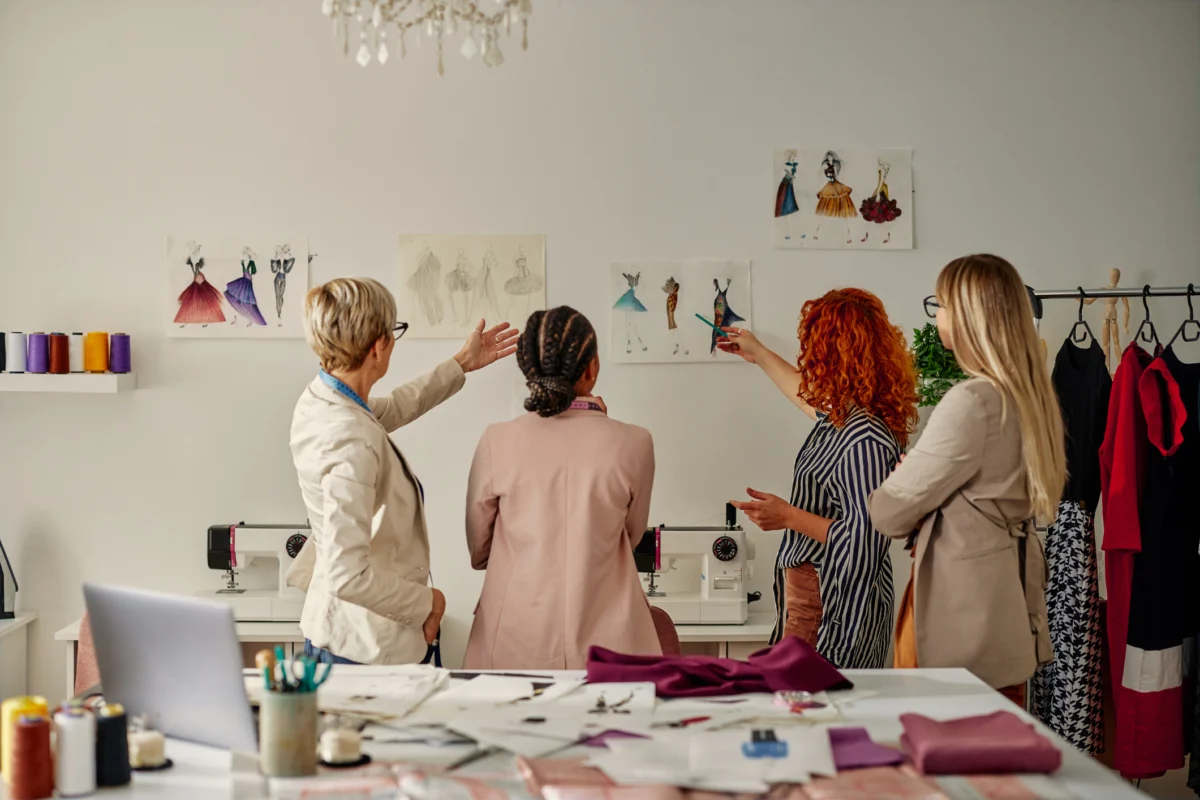
"There’s a lot of terminology behind that sweater that a Midjourney does not know," Liu noted during the funding announcement. Raspberry’s platform is engineered to interpret these industry-specific nuances. Furthermore, the tool allows designers to upload their own hand-drawn sketches and transform them into photorealistic "on-model" images. This capability enables brands to visualize exactly how a garment will look on their website or in a marketing campaign before the item is even manufactured.
The platform also supports rapid iteration on prints and materials. A designer can take a foundational dress silhouette and instantly see it rendered in 50 different floral prints or fabric weights. This "digital sampling" reduces the need for physical prototypes by up to 70% in some use cases, providing both a cost benefit and a sustainability advantage.
Market Adoption and Strategic Partnerships
The rapid growth of Raspberry AI’s client base serves as a testament to the industry’s readiness for AI integration. Currently, the startup services over 70 customers, ranging from mass-market manufacturers to high-end luxury labels. Notable clients include:

- Under Armour: The American sportswear giant utilizes the platform to accelerate the design of performance apparel, where the visualization of technical fabrics is critical.
- MCM Worldwide: The luxury fashion house uses the tool to maintain its high aesthetic standards while reducing the time required for creative brainstorming.
- Gruppo Teddy: A major Italian manufacturer and retailer with a footprint of over 8,800 stores across 39 countries. For a company of this scale, even a minor reduction in the design-to-shelf timeline can result in millions of dollars in saved operational costs.
Bryan Kim, a partner at Andreessen Horowitz, emphasized that the decision to lead the Series A was driven by both the quality of the founding team and the caliber of the early adopters. The firm had evaluated several companies in the "AI for fashion" space but found Raspberry’s approach to be the most aligned with the actual workflows of professional designers.
Financial and Economic Implications
The $24 million investment reflects a broader trend in venture capital where "Vertical AI"—AI tailored for a specific industry—is outperforming generalist models in terms of enterprise adoption. For fashion brands, the economic incentive is clear. The cost of developing a single physical sample, including labor, materials, and shipping, can range from $500 to $2,000. For a large retailer launching 1,000 styles a month, the ability to eliminate even a fraction of these physical iterations represents a substantial improvement to the bottom line.
Moreover, the use of Raspberry AI allows brands to be more "demand-driven." Instead of guessing which designs will sell and ordering thousands of units, brands can test designs digitally on social media or through pre-order systems using AI-generated imagery. This "test-before-invest" model minimizes the risk of overproduction, which currently accounts for an estimated 10% of global carbon emissions due to the fashion industry’s waste.
Broader Impact and Future Expansion
With the new influx of capital, Raspberry AI plans to aggressively expand its workforce, specifically targeting specialists in engineering, sales, and marketing. However, the most significant strategic shift will be the expansion of the platform into adjacent categories.
The company has identified home decor, furniture, and cosmetics as its next frontiers. These industries share many of the same pain points as fashion: a reliance on visual aesthetics, a need for rapid seasonal updates, and high costs associated with physical prototyping. For instance, in the furniture industry, creating a digital twin of a sofa in various upholstery options currently requires expensive 3D rendering; Raspberry’s text-to-image and sketch-to-image technology could potentially offer a faster, more cost-effective alternative.
Analysis of the Competitive Landscape
Raspberry AI does not operate in a vacuum. It faces competition from legacy software providers like Adobe, which has integrated its "Firefly" generative AI into Photoshop and Illustrator. Additionally, 3D design platforms like Browzwear and CLO 3D remain industry standards for technical "tech pack" creation.
However, Raspberry’s competitive edge lies in its accessibility. Traditional 3D design software requires specialized training and can take days to produce a single high-fidelity render. In contrast, Raspberry AI is designed for the "creative" side of the house—designers and merchandisers who need to move at the speed of thought. By focusing on the "top of the funnel" in the design process, Raspberry captures the initial creative spark before it is handed off to technical pattern makers.
As generative AI continues to mature, the industry will likely see a consolidation of these tools. The ultimate goal for companies like Raspberry is to create a seamless pipeline where a text prompt or a napkin sketch can be transformed into a photorealistic image, then into a 3D technical file, and finally into a set of instructions for automated cutting and sewing machines.
The successful Series A funding of Raspberry AI suggests that the fashion industry is no longer viewing AI as an experimental novelty, but as a fundamental infrastructure requirement for the next generation of retail. By prioritizing domain-specific knowledge and practical utility, Raspberry AI is positioned to remain at the forefront of this technological shift, transforming how the world’s clothing and consumer goods are conceived and brought to life.