











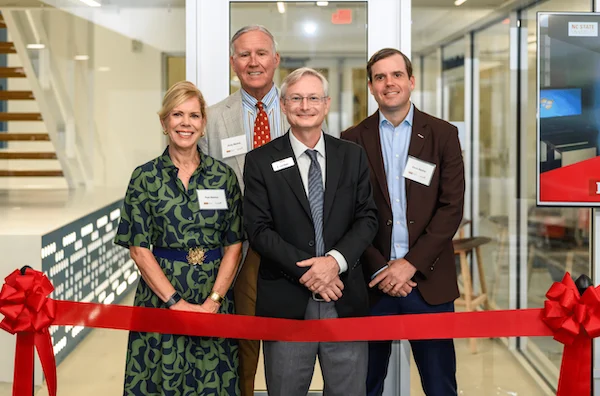
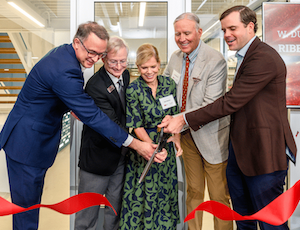
The landscape of American textile education and industrial research underwent a significant transformation on September 11, 2026, as North Carolina State University officially inaugurated the W. Duke Kimbrell Flex Factory. Located within the Wilson College of Textiles in Raleigh, this 17,000-square-foot facility represents the most substantial renovation project undertaken by the college in more than three decades. Designed as a nexus for academic excellence, entrepreneurial collaboration, and industrial prototyping, the facility serves as a tribute to the legacy of the late W. Duke Kimbrell, a 1949 alumnus whose career defined the mid-20th-century textile industry.
Honoring a Legacy of Industrial Leadership
The naming of the Flex Factory is a deliberate nod to the history of North Carolina’s textile sector. W. Duke Kimbrell, who graduated from the then-School of Textiles in 1949, rose to prominence in an era when the domestic industry was undergoing rapid structural changes. Within 12 years of his graduation, Kimbrell had ascended to the role of CEO at Parkdale, which eventually grew into the world’s largest consumer of cotton fibers and a leading yarn manufacturer. By the 1980s, Kimbrell had taken full ownership of the enterprise, cementing his reputation as a visionary leader who navigated global market shifts with tenacity.
University officials and members of the NC Textile Foundation emphasized that the Flex Factory is intended to cultivate a new generation of leaders who possess the same entrepreneurial spirit. By bridging the gap between historical expertise and future-facing technology, the facility aims to ensure that the "Duke Kimbrells" of the future are equipped with the infrastructure necessary to compete in a globalized, highly technical marketplace.
Facility Design and Operational Capabilities
The Flex Factory occupies the space formerly designated as the Wilson College Senior Design Lab, but the transformation extends far beyond a simple aesthetic update. The facility is structured into three primary functional zones, each designed to facilitate a specific stage of the textile development pipeline:

- The Senior Design Capstone Hub: This area remains the central laboratory for textile engineering and technology students. By keeping this program at the heart of the new space, the college ensures that the next generation of engineers is exposed to the most modern machinery available during their final academic projects.
- The Innovation Makerspace: A new addition to the college, this area serves as a low-barrier-to-entry space where students can iterate on concepts, test material properties, and bring early-stage prototypes to life without the immediate pressures of commercial production.
- The Prototype Laboratory: Dedicated to industry partners and external entrepreneurs, this lab provides access to high-tech machinery that would otherwise be cost-prohibitive for startups or small firms. This "open-access" model is designed to accelerate the commercialization of novel textile products, ranging from smart fabrics integrated with electronics to sustainable, bio-based fibers.
The space is intentionally adaptable, allowing for the rapid reconfiguration of equipment. This modularity is essential for accommodating the diverse requirements of modern textile manufacturing, which increasingly demands the ability to switch between small-batch production for niche applications and high-speed R&D cycles.
Chronology of Development
The path to the opening of the Flex Factory has been marked by strategic planning and a sustained commitment to institutional growth.
- 1949: W. Duke Kimbrell graduates from the NC State School of Textiles.
- 1990s–2020: The Wilson College of Textiles maintains its status as a global leader in fiber science, though the primary infrastructure experiences limited large-scale renovation during this period.
- 2023–2025: Planning phases for the Flex Factory are finalized, with initial funding secured from donors and university partners. The project is positioned as a centerpiece of the college’s long-term strategic vision.
- 2025: Construction begins on the 17,000-square-foot facility, replacing the legacy Senior Design Lab.
- September 11, 2026: The W. Duke Kimbrell Flex Factory is officially opened via a ribbon-cutting ceremony.
- Future Outlook: The announcement of "Phase 2" of the project confirms the facility’s role in supporting the broader FutureTEX initiative.
FutureTEX and the Strategic Imperative
A pivotal aspect of the ceremony was Dean Prakash Chand Kochhar’s announcement regarding the future expansion of the site. The W. Duke Kimbrell Flex Factory is set to serve as a critical node in the "Textiles Futures Institute" (FutureTEX). FutureTEX is a 10-year, Department of Defense-backed initiative aimed at revitalizing domestic textile manufacturing to bolster national security and supply chain resilience.
While the headquarters of FutureTEX will be situated on the Kimbrell Campus of Gaston College, the Wilson College of Textiles will maintain a permanent, high-tech presence within the program. This partnership is designed to make North Carolina the definitive hub for advanced textile manufacturing in the United States. By linking academic research in Raleigh with specialized manufacturing capacity in Gaston County, the university is building a vertical pipeline that connects theoretical innovation to large-scale, defense-ready industrial output.
Perspectives on the Student Experience
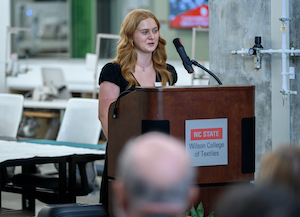
For the students of the Wilson College of Textiles, the Flex Factory represents more than just a new laboratory; it signifies a shift toward a more professionalized, industry-integrated education. Brownley King, a W. Duke Kimbrell Centennial Scholar, noted that the facility removes the traditional barriers between the classroom and the factory floor.
"There is truly no place quite like the Wilson College," King stated during the opening event. "Since coming to NC State, I have experienced the textile industry in ways that I could never do anywhere else." King is scheduled to participate in the Senior Design experience in the coming academic year, where she will utilize the new facility to execute her final capstone project. Her experience reflects the college’s mission to provide students with tangible, marketable skills that meet the evolving demands of the global workforce.
Implications for the Textile Industry
The broader impact of the Flex Factory lies in its ability to shorten the "idea-to-market" timeline. Traditionally, the textile industry has been hindered by a divide between academic research and commercial manufacturing. By providing a common ground where entrepreneurs, corporate partners, and researchers can interact, the facility lowers the risk associated with new product development.
Melissa Sharp, the interim director of Zeis Textiles Extension, characterized the facility as a center for "making" rather than just "imagining." In an era where sustainability and smart textiles are becoming the primary drivers of industry growth, the ability to test new materials—such as eco-friendly, biodegradable fibers or conductive yarns for wearable technology—in a professional-grade environment is a distinct competitive advantage.
Michael Ward, executive director of the NC Textile Foundation, noted that the project was a result of a collective effort. "Today is a wonderful example of what can happen when visionary leaders, generous supporters, university partners, students, alumni and friends come together around a shared belief in what is possible," Ward said.
Analysis: A New Era for American Textiles
The opening of the W. Duke Kimbrell Flex Factory arrives at a critical juncture for the U.S. textile industry. Over the past decade, the industry has seen a resurgence in interest driven by the need for localized supply chains and the rise of high-performance technical textiles. By investing in the infrastructure to support these trends, NC State is reinforcing its role as an anchor institution for the state’s economy.
The facility’s emphasis on "flexibility"—the ability to pivot between different manufacturing technologies—addresses the primary challenge facing modern textile firms: the need to adapt to rapidly changing consumer demands and military requirements. As the facility enters its first full year of operation, its success will likely be measured by the number of new commercial partnerships formed, the volume of patents filed through the prototyping lab, and the career placement success of the students utilizing the space.
In conclusion, the W. Duke Kimbrell Flex Factory serves as both a monument to the past and a launchpad for the future. By honoring a titan of the 20th-century textile industry, NC State is ensuring that the 21st-century industry has the tools, talent, and technological infrastructure to remain globally competitive. As Dean Hinks noted during the ceremony, the goal is not merely to study textiles, but to create the environment where the future of the industry is actively manufactured.