










Japan, a nation renowned for its profound artistic heritage and groundbreaking design, has long been a pivotal force in global fashion. From the avant-garde visions of Rei Kawakubo and Yohji Yamamoto to the minimalist aesthetics that have influenced countless designers, Japanese creativity is unparalleled. In recent years, this innovative spirit has converged with a growing global imperative for sustainability, positioning Japan as a significant player in the ethical fashion and beauty movement. This comprehensive guide explores some of the region’s top-rated, more sustainable brands, illuminating their commitment to responsible practices and their unique contributions to a better future for the industry.
The global fashion industry is at a critical juncture, grappling with the environmental and social ramifications of rapid production and consumption. Reports from institutions like the Ellen MacArthur Foundation highlight that the industry is responsible for an estimated 92 million tons of textile waste annually, much of which ends up in landfills or incinerated. Furthermore, conventional manufacturing processes are significant contributors to water pollution, excessive resource consumption, and greenhouse gas emissions. Against this backdrop, the emergence of brands committed to ethical practices is not just commendable but essential.
Defining a Better Brand: The Good On You Standard
To objectively assess and guide consumers towards more responsible choices, platforms like Good On You meticulously rate brands based on their policies and actions across three fundamental pillars of sustainability: people, planet, and animals. This rigorous evaluation encompasses over 100 key issues, providing a transparent benchmark for ethical performance.
- People: This pillar scrutinizes a brand’s commitment to fair labor practices throughout its intricate supply chain. Key considerations include the prevention of child labor and forced labor, ensuring worker safety, upholding the right to join unions, and critically, the payment of a living wage. The disparity between minimum wage and a living wage in garment-producing countries often means workers struggle to meet basic needs, making a living wage a crucial indicator of genuine social responsibility.
- Planet: A brand’s environmental footprint is analyzed through its resource and energy management, active efforts to reduce carbon emissions, responsible water management, and the safe use and disposal of chemicals. The fashion industry’s reliance on chemical-intensive dyeing processes, for instance, has historically led to severe water pollution, underscoring the importance of brands adopting low-impact or natural dyeing techniques.
- Animals: The use of animal products such as wool, leather, fur, angora, down feather, shearling, karakul, and exotic animal skins and hair is a significant ethical concern for many consumers. Ideally, brands committed to high animal welfare standards, or those that are 100% vegan, receive higher ratings. The traceability of animal-derived materials and the conditions under which animals are raised and processed are also critical factors.
By providing an overall rating, Good On You empowers consumers to make informed decisions, fostering greater accountability within the industry and driving a collective shift towards more sustainable practices.
Japan’s Unique Approach to Sustainable Fashion: Blending Tradition and Innovation
Japan’s contribution to sustainable fashion is distinguished by a harmonious blend of time-honored craftsmanship and cutting-edge innovation. Many Japanese brands are revisiting ancestral techniques that are inherently sustainable, such as sashiko (a form of decorative reinforcement stitching), boro (patchwork and mending techniques), and natural hand-dyeing. These methods, born from a culture of frugality and respect for materials, contrast sharply with the resource-intensive, mass-production embellishment and dyeing techniques prevalent in fast fashion.
Beyond heritage crafts, Japanese innovators are also pioneering advanced solutions. Brands like PLASTICITY are tackling the pervasive problem of waste by repurposing materials, demonstrating ingenuity in transforming discarded items into durable, stylish products. Similarly, BRING stands out for its proprietary polyester recycling technology, offering a closed-loop solution for a material often criticized for its environmental impact. This dual approach—honoring the past while inventing the future—positions Japan at the forefront of the global sustainable fashion movement.
Spotlight on Ethical Japanese Fashion Brands
The following brands exemplify Japan’s dedication to sustainability, each contributing in unique ways to a more responsible fashion ecosystem:
1. 9-jour:
This Japanese denim brand specializes in jeans dyed in a vibrant spectrum of hues. 9-jour’s commitment to sustainability is evident in its exclusive use of selvedge denim, naturally dyed with low-impact solutions, significantly reducing the environmental harm associated with conventional chemical dyes. Furthermore, its manufacturing process is local and to-order, a strategy that drastically minimizes energy consumption and material waste compared to the extensive, often wasteful, conventional fashion supply chains. By focusing on quality, local production, and sustainable dyeing, 9-jour offers a model for responsible denim production.
Available in waists 69-90cm.
2. Malion Vintage:
Malion Vintage embodies the principles of circularity and upcycling. Based in Japan, the brand masterfully reworks vintage and antique items—ranging from neckties and tablecloths to tweed jackets, fisherman’s sweaters, and deadstock shirts—into exquisite new garments. This approach not only diverts textiles from landfills but also infuses new life into materials with a rich history, creating unique pieces with reduced environmental impact. Local manufacturing further enhances its sustainable profile.
Sizing varies.
3. Koraru:
Named after the Japanese pronunciation of "coral," Koraru is a Tokyo-based swimwear brand deeply inspired by circularity. It utilizes lower-impact materials in its collections and actively promotes a recycling program for its products, aiming to minimize its environmental footprint throughout the product lifecycle. The brand also partially traces its supply chain, a crucial step towards greater transparency and accountability in manufacturing.
Available in sizes XS-XXL.
4. Itoshiro Yohinten:
This brand reimagines traditional Japanese clothing, drawing profound wisdom from the founders’ grandparents and their native Itoshiro region. Itoshiro Yohinten’s designs incorporate lower-impact materials and dyes, along with lower-waste cutting techniques, reflecting a deep respect for both heritage and environmental stewardship. Their clothing often carries the aesthetic and functional wisdom of traditional Japanese garments, adapted for contemporary wear.
Available in sizes 1-4.
5. amaud:
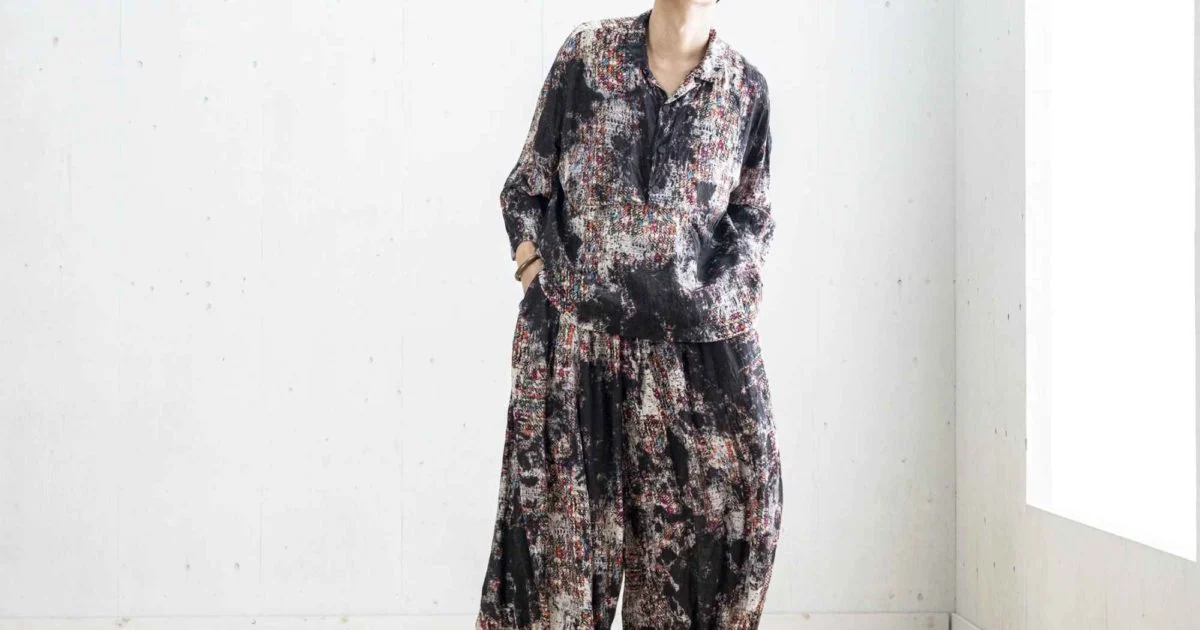
amaud is a luxury Japanese brand dedicated to preserving the beauty and history of vintage kimonos by reworking them into modern, stylish pieces. This innovative approach prevents these exquisite fabrics from going to waste, giving them a renewed purpose and appreciation. The brand employs lower-impact materials and ensures that all pieces are made in-house by the owner, guaranteeing meticulous craftsmanship and ethical production.
Sizes vary.
6. ENSULO:
ENSULO is a Japanese brand specializing in comfortable clothing designed for relaxation or post-training rest. It incorporates traditional Japanese techniques into its designs and utilizes lower-impact materials, emphasizing both comfort and environmental responsibility. The brand’s focus on quality and mindful production aligns with a philosophy of creating garments that last.
7. TERAS:
TERAS is a powerful advocate for Japan’s most beautiful handcrafts: sashiko and boro. Based in the region and committed to local manufacturing, TERAS employs workers from disadvantaged backgrounds, providing economic opportunities and preserving traditional skills. The brand uses lower-impact materials and cleverly reuses offcuts to minimize waste, embodying a holistic approach to social and environmental sustainability.
Available in sizes S-XL.
8. KAPOK KNOT:
Founded by Kisho Fukai, whose family has a long history in textile production, KAPOK KNOT specializes in outerwear and homeware. The brand is notable for its innovative use of kapok down, a more sustainable, plant-based alternative to animal-derived down, addressing both environmental and ethical concerns. KAPOK KNOT manufactures locally in Japan and traces most of its supply chain, ensuring transparency and control over its production processes.
Available in sizes S-L.
9. KasuRekids:
KasuRekids grounds its childrenswear designs in Japanese tradition, utilizing locally made materials and lower-waste cutting methods. Beyond production, the brand actively tackles the issue of textile waste by collecting pre-loved kids’ clothes for resale and offering items for rent instead of purchase. This pioneering circular model addresses the rapid growth of children and the subsequent quick outgrowing of clothes, providing sustainable alternatives for parents.
Available in sizes 90-140.
10. CLOUDY:
CLOUDY is a Japanese brand offering adults’ and kids’ clothes and accessories with a strong social mission. It maintains a direct connection with Ghana, where it employs women and workers with disabilities in its sewing workshop, providing fair employment and empowerment. The brand also contributes to education programs in the region and uses some lower-impact materials in its production, showcasing a commitment to both social equity and environmental responsibility.
Available in sizes S-XXL.
11. PLASTICITY:
A true innovator, PLASTICITY tackles the alarming waste generated by discarded umbrellas. The brand repurposes used umbrellas to create a range of stylish accessories, including bags and wallets, effectively diverting plastic from landfills. Manufacturing in Japan, PLASTICITY also operates an umbrella recycling program, creating a localized circular economy solution for a common urban waste product.
12. PRISTINE:
Japanese brand PRISTINE offers a wide range of clothing and home goods with a primary focus on organic cotton knitwear. Its dedication to organic materials minimizes the use of harmful pesticides and chemicals, protecting both the environment and consumer health. The brand’s emphasis on natural fibers and quality construction promotes longevity and a gentler impact.
Find the clothing range in one size option.
13. KUME:
KUME specializes in casual clothes made in Japan, utilizing some lower-impact materials. The brand is particularly renowned for its colored crew neck T-shirts, a product it has been manufacturing since the 1950s. This long-standing heritage speaks to a commitment to durable, classic designs that transcend fleeting trends, inherently contributing to sustainability through longevity.
14. 10YC:
Founded on the mission to create clothes that consumers will cherish and wear for at least ten years, 10YC champions durability and timeless design. The brand manufactures its products close to home in Japan, significantly reducing shipping emissions. It also uses lower-impact materials and offers resale options, further extending the lifecycle of its garments and promoting a circular consumption model.
15. BRING:
BRING is a pioneer in sustainable material innovation, championing lower-impact and recycled materials for its understated basics. What sets BRING apart is its own fabric recycling program and advanced polyester recycling technology, which allows for the creation of new garments from existing ones. With its final stage of production occurring in Japan, BRING exemplifies a localized, closed-loop system for textile regeneration.
Available in sizes XS-2XL.
More Responsible Beauty Brands from Japan
While the primary focus here is fashion, the ethos of sustainability extends to the Japanese beauty industry. Many beauty brands are similarly embracing natural ingredients, responsible sourcing, and eco-friendly packaging, reflecting a holistic approach to ethical consumption. The principles of people, planet, and animals also apply rigorously to beauty products, scrutinizing ingredient origins, manufacturing processes, and animal testing policies. Consumers seeking ethical beauty choices from Japan will find a growing selection of brands committed to transparency and minimal environmental impact.
The Broader Implications and Future Outlook
The commitment of these Japanese brands to sustainable practices carries significant implications for both the local and global fashion industries. For consumers, it offers a wider array of choices that align with their values, allowing them to participate actively in a more ethical marketplace. For the industry, these brands serve as powerful examples that profitability and responsibility are not mutually exclusive. Their innovative approaches to material sourcing, waste reduction, and fair labor demonstrate tangible pathways towards a more sustainable future.
The emphasis on local manufacturing, as seen with many of these brands, not only reduces carbon emissions associated with global shipping but also supports local economies and preserves traditional skills. Furthermore, the integration of circular economy principles, such as upcycling, recycling programs, and rental services, addresses the critical issue of textile waste at various stages of the product lifecycle.
As global awareness of environmental and social issues continues to grow, the demand for transparent and ethical brands will only intensify. Japan’s rich cultural legacy of craftsmanship, coupled with its forward-thinking technological advancements, positions it as a vital contributor to shaping a truly sustainable and responsible fashion and beauty landscape worldwide. The continued growth and recognition of these brands will undoubtedly inspire further innovation and commitment across the industry, fostering a future where style and ethics are inextricably linked.
Editor’s note: Feature image via Takarajima Senkou, all other images via brands mentioned. Good On You publishes the world’s most comprehensive ratings of fashion and beauty brands’ impact on people, the planet, and animals. Use our directory to search thousands of rated brands. We updated this article on 15 June 2026. Our editors frequently make updates to articles to ensure they’re up to date. We refreshed our round-up of brands.