




The third day of Royal Ascot, traditionally known as Ladies Day, serves as the undisputed pinnacle of the British social and fashion calendar, and the 2024 edition maintained this reputation through a display of high-fashion discipline and classical silhouettes. Among the notable attendees at the Berkshire racecourse was Irish television personality and model Maura Higgins, whose appearance marked a significant departure from her established aesthetic. For the occasion, Higgins opted for a custom ensemble by Sabina Bilenko Couture, a choice that signaled a strategic pivot toward traditional high-fashion standards. This transition from contemporary red-carpet glamour to the rigid requirements of the Royal Enclosure reflects a broader trend among public figures who are increasingly embracing the heritage-driven dress codes of historic British institutions.
The Architecture of the Sabina Bilenko Couture Ensemble
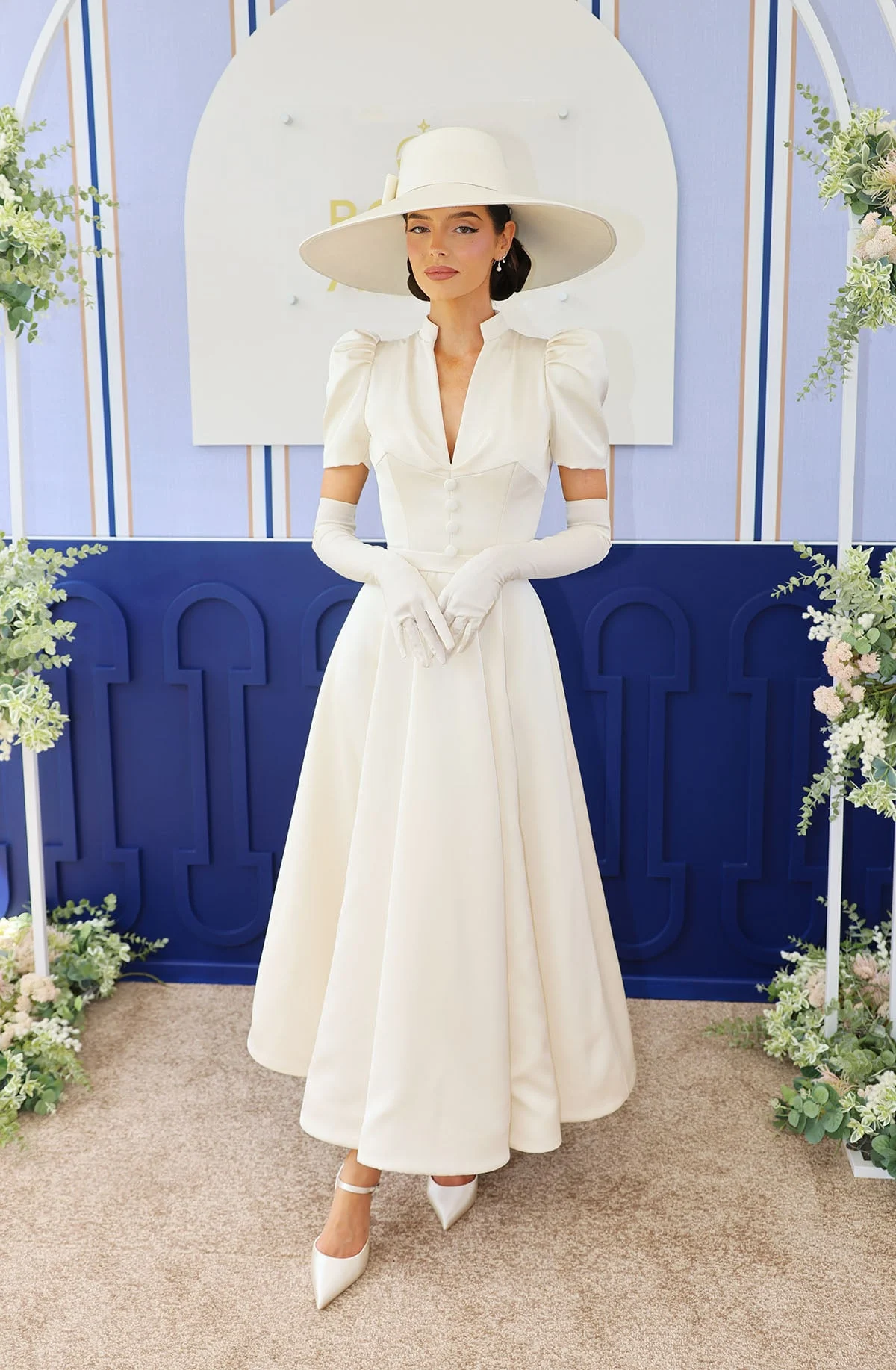
The centerpiece of Higgins’ appearance was a bespoke ivory gown designed by Sabina Bilenko, a designer known for merging structural precision with feminine romanticism. The garment featured a meticulously sculpted bodice that adhered to the traditional corsetry techniques often seen in mid-century haute couture. The silhouette was defined by exaggerated puff sleeves that tapered into fitted forearms, creating a visual balance against the expansive, sweeping skirt. The choice of ivory provided a neutral yet commanding palette that stood out against the vibrant green of the Ascot lawns.
The technical execution of the dress utilized heavy silk and structured organza to maintain the volume of the skirt throughout the day’s proceedings. Observers noted the inclusion of delicate piping and internal boning, which ensured the garment’s architectural integrity remained intact. This level of craftsmanship is characteristic of Bilenko’s atelier, which has gained a reputation for creating "modern heirlooms" that honor the craftsmanship of the past while catering to contemporary figures.
Strategic Accessorizing and the Role of Traditional Millinery
In accordance with the strict regulations of the Royal Ascot dress code, which mandates that hats must have a minimum base of 4 inches (10cm) for the Royal Enclosure, Higgins wore a dramatic wide-brimmed hat. The headpiece, designed to complement the ivory tones of the gown, featured a clean, minimalist finish that avoided the over-embellishment often seen at the races. By choosing a hat with such significant proportions, Higgins leaned into the "theatricality of the track," a term often used by fashion historians to describe the unique intersection of sport and costume at Ascot.
The look was further elevated by the inclusion of opera-length gloves. Historically a symbol of high-society formality, opera gloves have seen a resurgence on international runways over the last two seasons. In this context, they served to bridge the gap between the modern celebrity persona and the timeless expectations of the event. The ensemble was completed with understated jewelry, allowing the structural elements of the couture to remain the focal point. This restrained approach to accessorizing demonstrated a sophisticated understanding of "occasion dressing," where the harmony of the total look takes precedence over individual statement pieces.
Historical Context: The Significance of Day Three at Royal Ascot
Royal Ascot was founded by Queen Anne in 1711, and the third day—coinciding with the Gold Cup—has been the highlight of the five-day meet for over two centuries. While the Gold Cup is a premier Group 1 flat horse race for "stayers" (horses that specialize in long distances), the day has evolved into a global fashion stage. The "Ladies Day" moniker, though not official, dates back to 1823, when an anonymous poet described the third day as "Ladies’ Day, when the women, like angels, look sweetly divine."
The event is governed by a dress code that is updated annually to reflect changing social norms while preserving tradition. For the Royal Enclosure, the requirements are specific: dresses must be of modest length (falling just above the knee or longer), straps must be at least one inch wide, and midriffs must be covered. By adhering to these standards while maintaining a high-fashion edge, Higgins’ attire was analyzed by industry experts as a successful navigation of institutional boundaries.
The Evolution of the Maura Higgins Brand Identity
Since her emergence into the public eye in 2019, Maura Higgins has largely been associated with "high-impact glamour"—a style characterized by body-conscious silhouettes, bold cut-outs, and a preference for contemporary luxury brands. Her appearance at Royal Ascot Day 3 represented a calculated shift in her public-facing style portfolio. Fashion analysts suggest that this "style maturation" is a common trajectory for high-profile figures looking to expand their influence into the spheres of luxury brand ambassadorship and high-fashion editorial work.

The transition from "bombshell" aesthetics to "couture elegance" mirrors the paths taken by other figures who have successfully moved from reality television to the front rows of Paris and Milan fashion weeks. By opting for Sabina Bilenko—a designer who sits at the intersection of bridal and evening couture—Higgins positioned herself within a more exclusive fashion tier. This shift was widely discussed across social media platforms, where fashion enthusiasts noted the "transformative power" of the Ascot dress code.
Economic Impact and the "Ascot Effect" on the Fashion Industry
The fashion displayed at Royal Ascot is more than a social display; it is a significant driver of the UK’s retail economy. According to data from the British Fashion Council and various retail analysts, Royal Ascot contributes an estimated £800 million to the economy annually, with a substantial portion of that spending directed toward millinery, bespoke tailoring, and luxury accessories.
- Millinery Sector: The demand for high-end headwear during the Ascot season supports hundreds of independent British milliners. A single custom hat for the Royal Enclosure can range from £500 to over £5,000.
- Couture Growth: Events like Ascot provide a vital platform for couture houses like Sabina Bilenko. The visibility gained from a high-profile placement can lead to a surge in private commissions for the upcoming wedding and gala seasons.
- The "Halo Effect": When a figure like Higgins wears a specific silhouette—such as the puff-sleeve ivory gown—it often triggers a "halo effect" in the high-street market, where fast-fashion retailers produce accessible versions of the look within weeks.
Industry Reactions and Critical Analysis
Fashion critics and stylists have largely praised the look for its "tonal consistency" and "respect for tradition." Unlike previous years where some attendees have faced criticism for pushing the boundaries of the dress code too far, Higgins’ choice was viewed as a masterclass in compliance meeting creativity.
"The proportions were the key to the success of this look," noted one senior fashion editor. "By balancing the volume of the skirt with the width of the hat, the silhouette remained balanced rather than overwhelming. It was a nod to the 1950s ‘New Look’ but executed with a 21世纪 (21st-century) sharpness."
Furthermore, the choice of Sabina Bilenko was noted as a savvy move. Bilenko, whose atelier is based in London, represents the "new guard" of couture—designers who are reclaiming the craft for a younger, digitally-native audience. The collaboration between the designer and the personality highlighted a synergy between modern celebrity reach and traditional artisanal skill.
Broader Implications for Celebrity Styling at Sporting Events
The 2024 Royal Ascot meet has underscored a growing trend in celebrity styling: the move toward "method dressing" for specific venues. Much like actors wear outfits that reflect the themes of their films during press tours, celebrities attending historic sporting events are increasingly dressing to match the heritage of the location.
This trend toward "classicalism" suggests a fatigue with the ultra-revealing "naked dress" trends that have dominated red carpets for the past decade. The positive reception of Higgins’ Sabina Bilenko look may encourage other public figures to explore more conservative, structured, and historically-informed garments for high-society events.
As the gates closed on Day 3 of Royal Ascot, the conversation remained centered on the intersection of horse racing and high fashion. Maura Higgins’ appearance served as a definitive example of how the event continues to act as a catalyst for style evolution. By embracing the ceremony and the strictures of the occasion, Higgins did not merely attend a race; she participated in a centuries-old cultural performance, proving that even in a modern age, the art of formal dressing remains a powerful tool for personal branding and public narrative.