




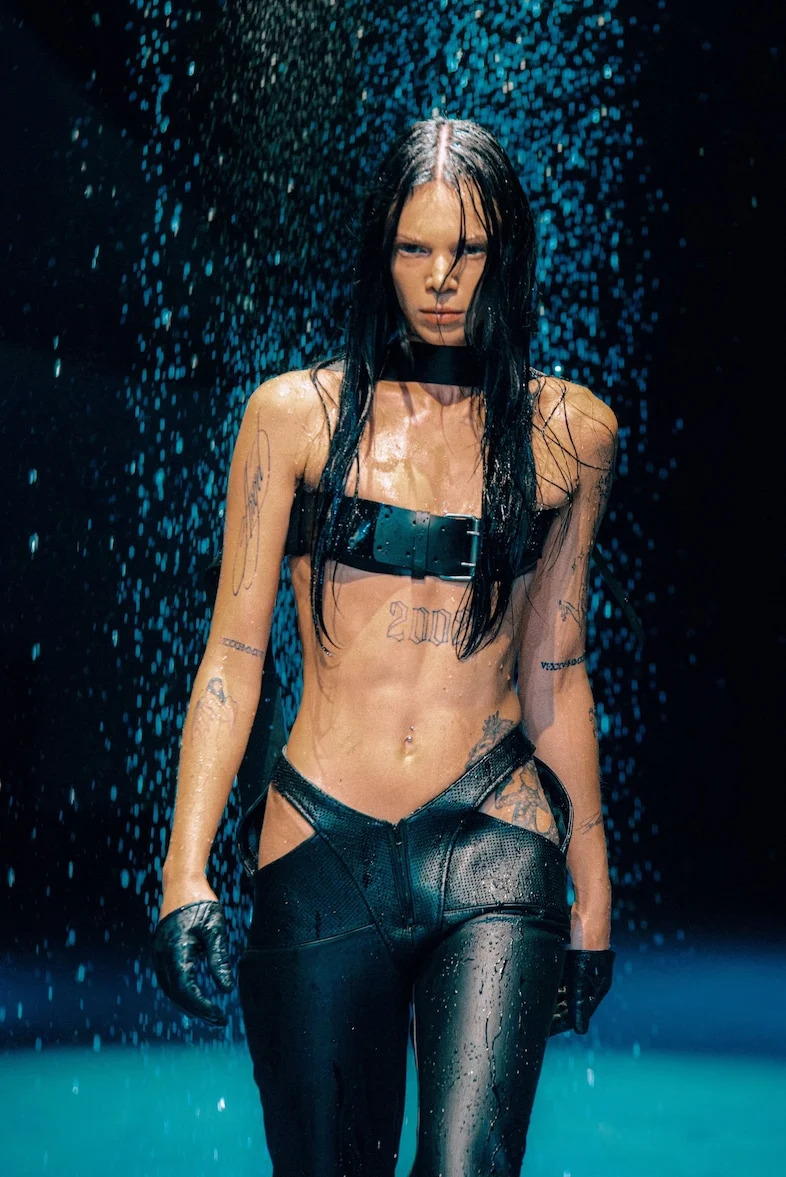
Rising designer Liza Keane officially marked her entry into the global fashion consciousness with her Spring/Summer 2027 runway presentation, titled Rain On My Parade, held within the industrial depths of 180 The Strand in London. Since graduating from the prestigious Central Saint Martins in 2022, Keane has steadily cultivated a distinct aesthetic defined by dystopian world-building and the externalization of psychological turmoil. Her LFW debut served as the physical manifestation of a decaying universe, offering industry insiders, critics, and buyers a sensory-heavy experience that immediately positioned her as one of the most promising new talents on the international calendar.
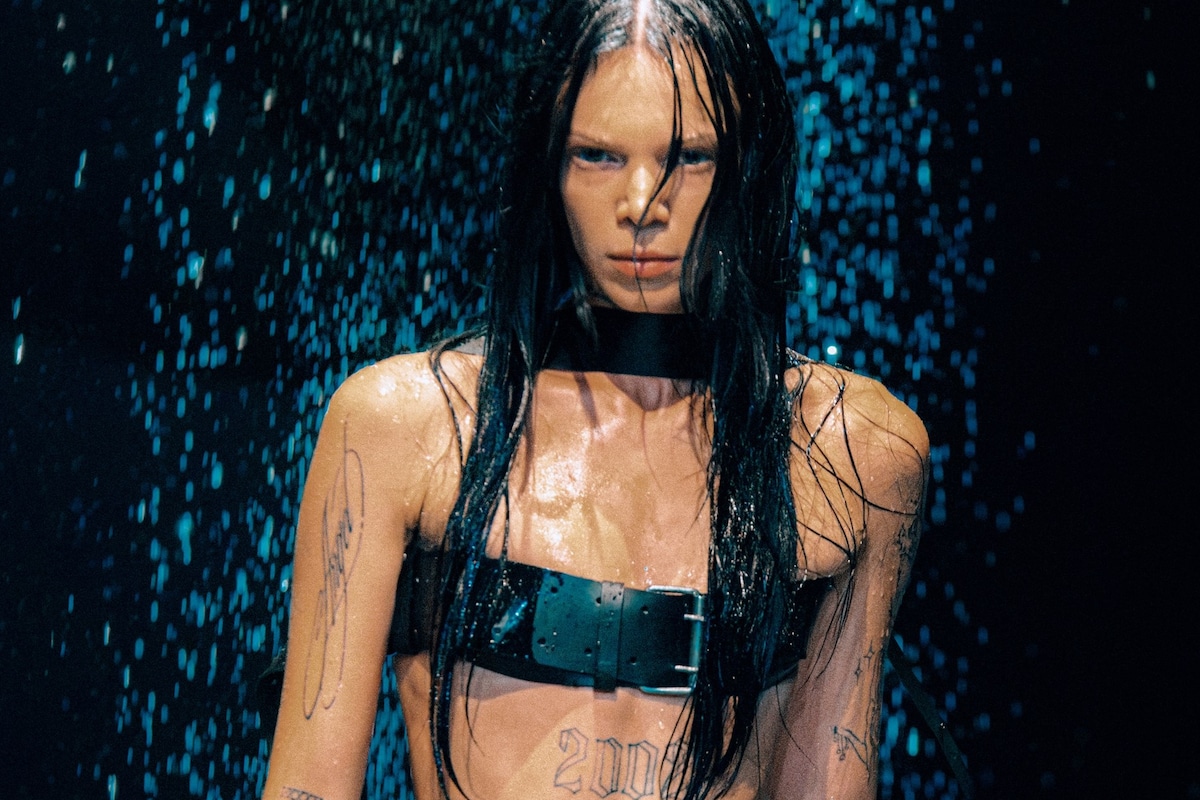
The presentation took place in a dimly lit, subterranean concrete space where anticipation was palpable. Front-row attendees were warned of the impending elements, finding themselves seated directly adjacent to an elaborate runway installation engineered by the radical design studio playbody. The centerpiece comprised six massive concrete breezeblock pillars supporting a scaffolding panel suspended above a tarpaulin-lined trench, all enclosed by a border of damp soil. As DJ Hezen delivered an ominous, atmospheric score, six silver-painted, minimally attired performers climbed the structure to hoist the heavy scaffolding onto their shoulders. Overhead piping released a deluge of water through the mesh framework, deliberately mirroring Alexander McQueen’s legendary SS98 Golden Shower finale and instantly setting a tense, visceral tone.
The Narrative Framework and Garment Construction
Keane’s narrative for Rain On My Parade is rooted in the aftermath of an unspecified cataclysm. According to official show notes, the collection explores a world where ash continues to drift downward, leaving survivors emotionally and physically depleted. The garments reflect this extreme environment, suggesting that the wearer’s skin has hardened into a protective hide, while heavy leather has become keratonized directly into the body rather than merely worn as an external layer. The collection has been widely compared by critics to a hyper-stylized iteration of a dystopian society, merging utilitarian grit with haute couture craftsmanship.
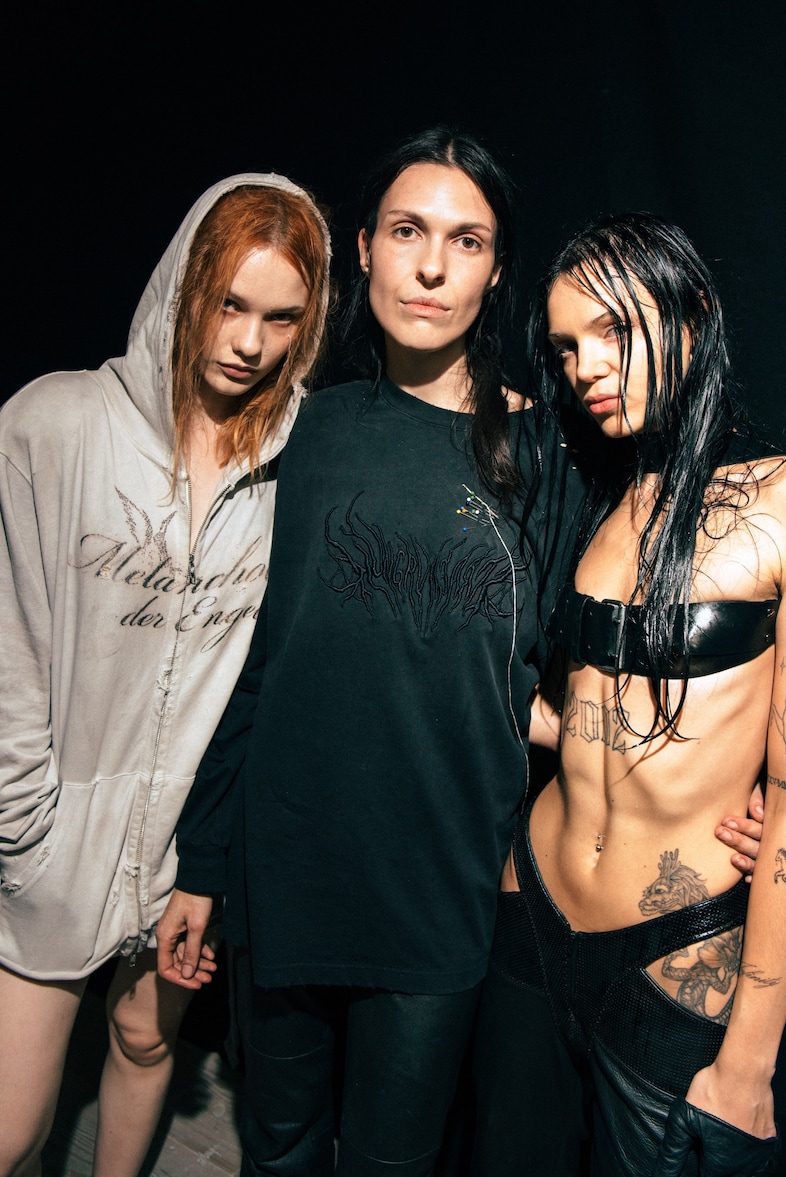
Models navigated the muddy runway in an array of complex silhouettes crafted from waxed leather, trailing black cloaks, ethereal gauzy white dresses, and heavily shredded fabrics. Several looks featured utilitarian accessories such as slingshots, bows, and arrows. In a striking statement of maternal vulnerability amidst ruin, one model carried a blonde-haired infant securely bound to their chest, while the opening look featured distressed angel wings with long fabric trains dragging through the mire. Every piece underscored Keane’s technical proficiency and her ability to translate inner emotional states into tangible, wearable art.
Diary of a Debut: A Week of High-Stakes Production
Behind the conceptual grandeur of the runway lay a grueling, high-pressure week of logistics, design adjustments, and sleep deprivation. Dazed chronicled the final days leading up to the September 21 presentation, offering a granular look at the realities faced by independent emerging designers navigating London Fashion Week.
Monday, September 14: Managing ADHD and Overdrive
The week commenced with a heavy administrative and creative burden. Balancing continuous production meetings alongside pattern-cutting trousers proved challenging. Amidst background music reviews for the show, Keane navigated the demands of managing her neurodivergence in real-time, observing that the fast-paced environment required her focus to shift constantly.
Tuesday, September 15: Logistics and Special Deliveries
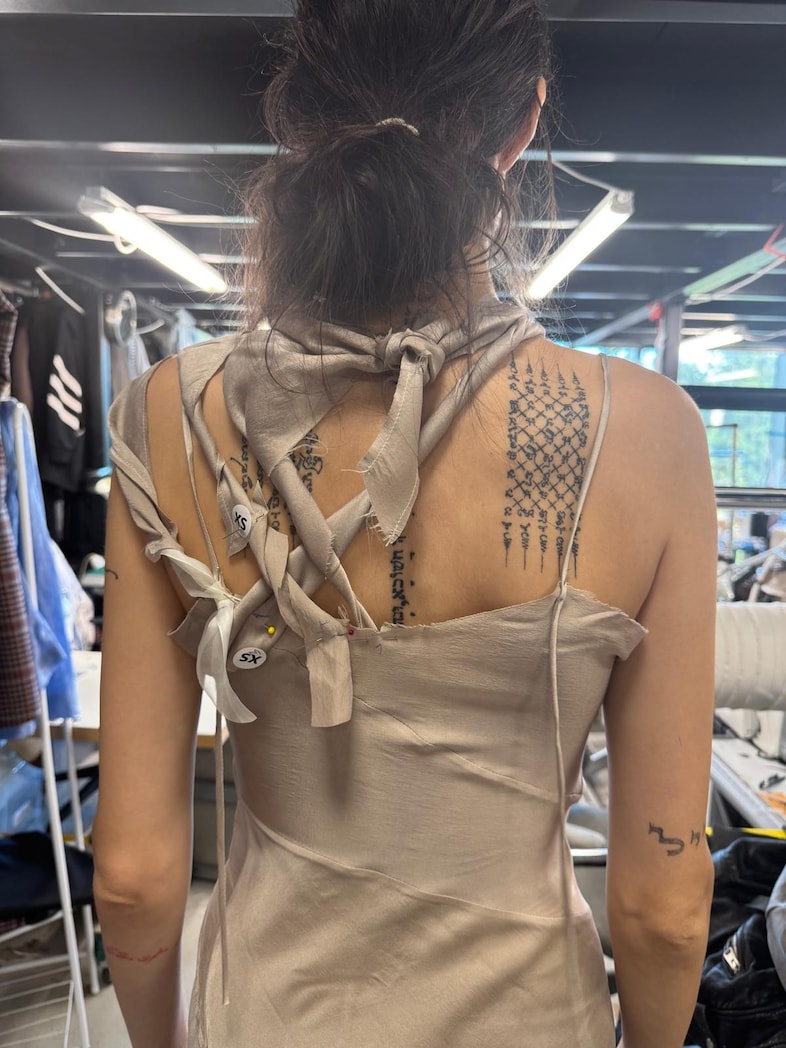
By Tuesday, the schedule involved early morning transit by bicycle, coordinating across multiple phone lines with photography and production teams. Fitting sessions at the studio yielded successful milestones, including the bleaching of trousers and the finalization of a pant pattern. A morale boost arrived with the delivery of a prop baby doll designated for the runway rail, after which Keane spent the evening cutting racing leather.
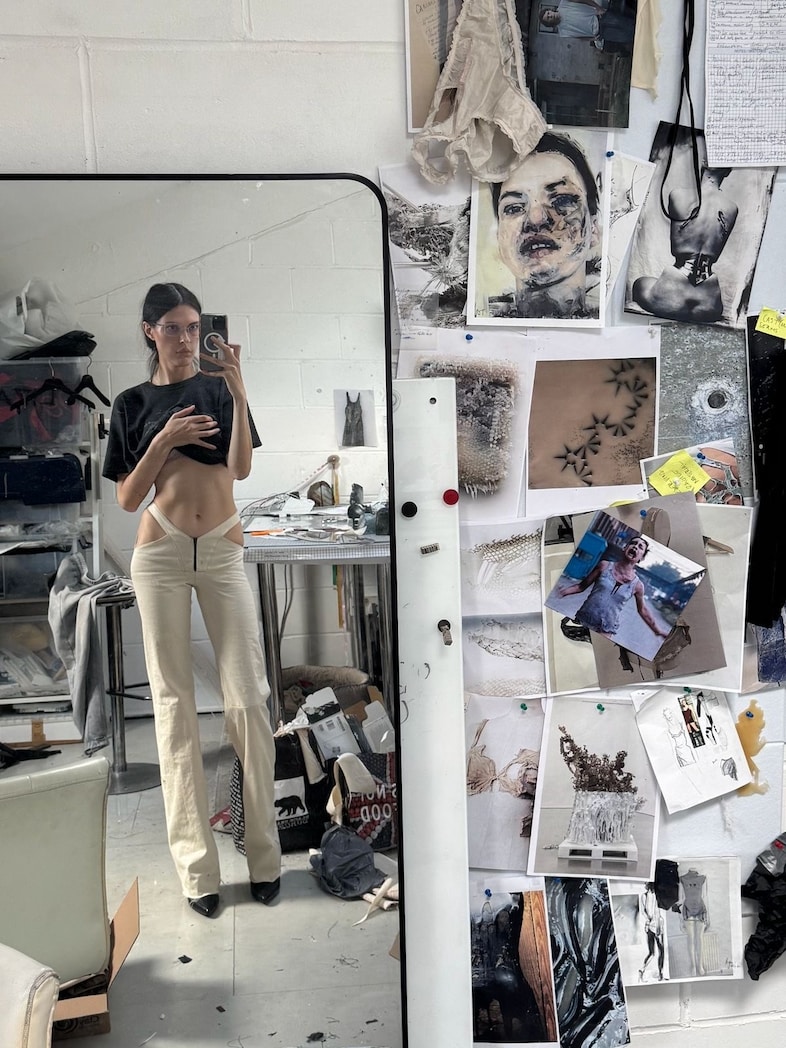
Wednesday, September 16: Textile Dyeing and Late Nights
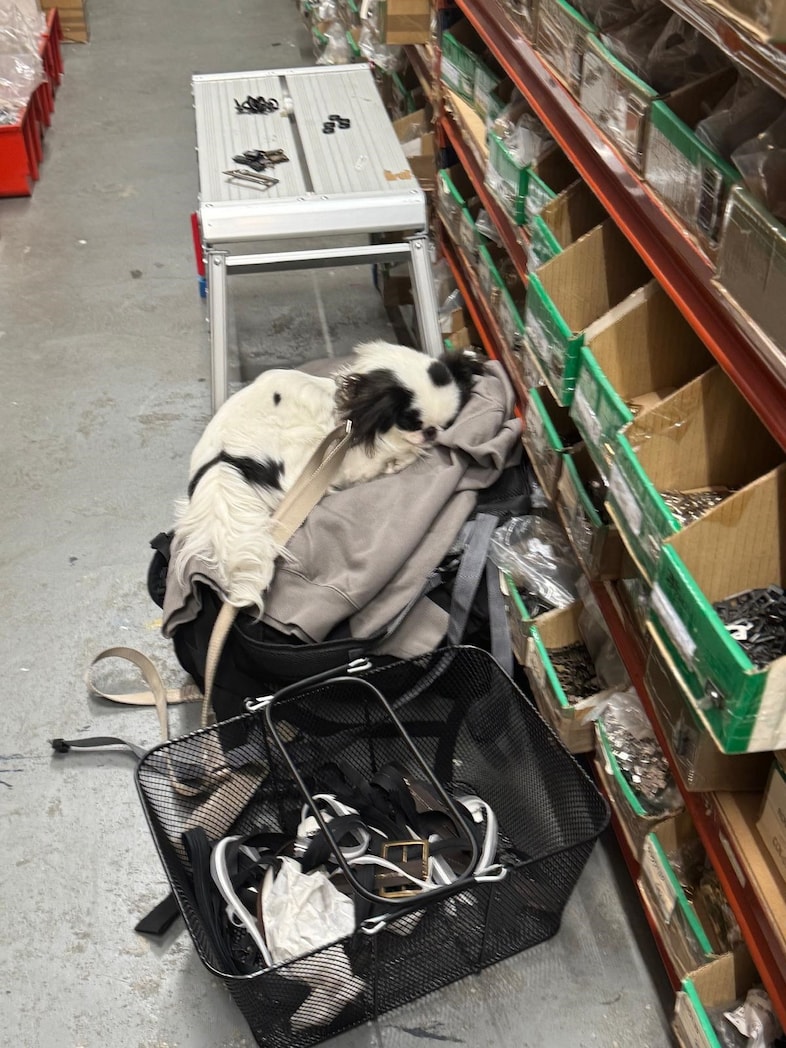
Mid-week activities focused on textile manipulation, with Keane working alongside her intern, Gabriel, to dye specialty fabrics. Studio obligations required balancing bicycle transit for lighting tests accompanied by her dog, Uma. Evening hours were dedicated to fitting complex trousers on her partner, concluding the studio session at 2:00 AM—a milestone considered a relatively early night given the looming deadlines.
Thursday, September 17: The Chaos Before the Storm
As the presentation drew closer, Thursday presented peak operational chaos. Despite the exhaustion of her studio team, Keane faced outstanding production goals, requiring her to manually cut an additional pair of trousers, a dress, and a bag ahead of Friday morning.
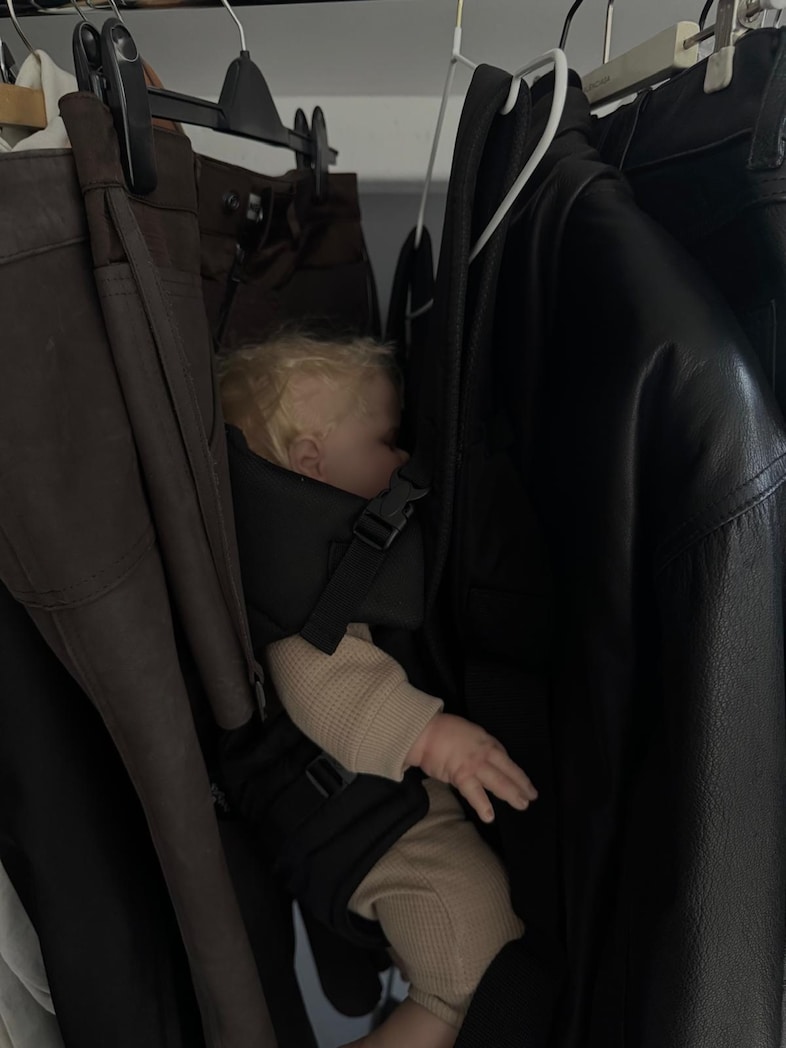
Friday, September 18: Deadline Pressures
Friday marked the official deadline for completing all physical garment samples. The intensity of the work environment peaked as the atelier rushed to ensure every piece met structural and aesthetic standards for the runway.
Saturday, September 19: Casting and Collaboration
Casting operations commenced under the direction of casting director Yuri, alongside a tightly coordinated studio team capable of executing rapid fittings under pressure.
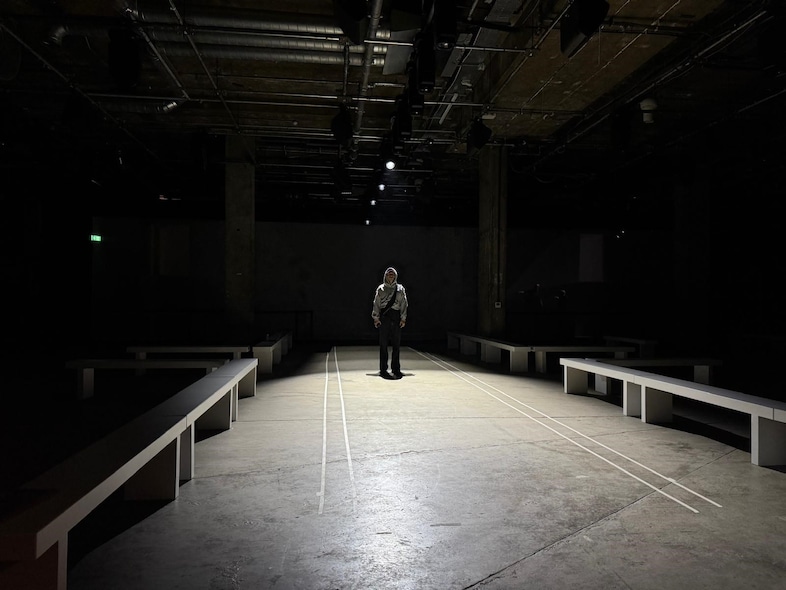
Sunday, September 20: Zero Sleep and Final Alterations
The final 24 hours before the show involved continuous labor without sleep. Keane and her assistant Gabriel worked through the night on final alterations and feather detailing. Amidst the frenzy, preparation for a BBC radio interview required practicing mock Q&A sessions to maintain alertness, while her dog, Uma, provided studio support by playfully shadowing the models during walk rehearsals.
Monday, September 21: The Runway Breakthrough
Show day began at 9:00 AM with Keane nearly falling asleep at her sewing machine. Her sister Lilia and assistant Liv arrived at 10:00 AM to assist with loading cargo. Transit logistics proved nearly catastrophic when an Uber driver initially refused to transport the voluminous equipment due to lack of space; however, after learning the urgency of the LFW debut, the driver relented.
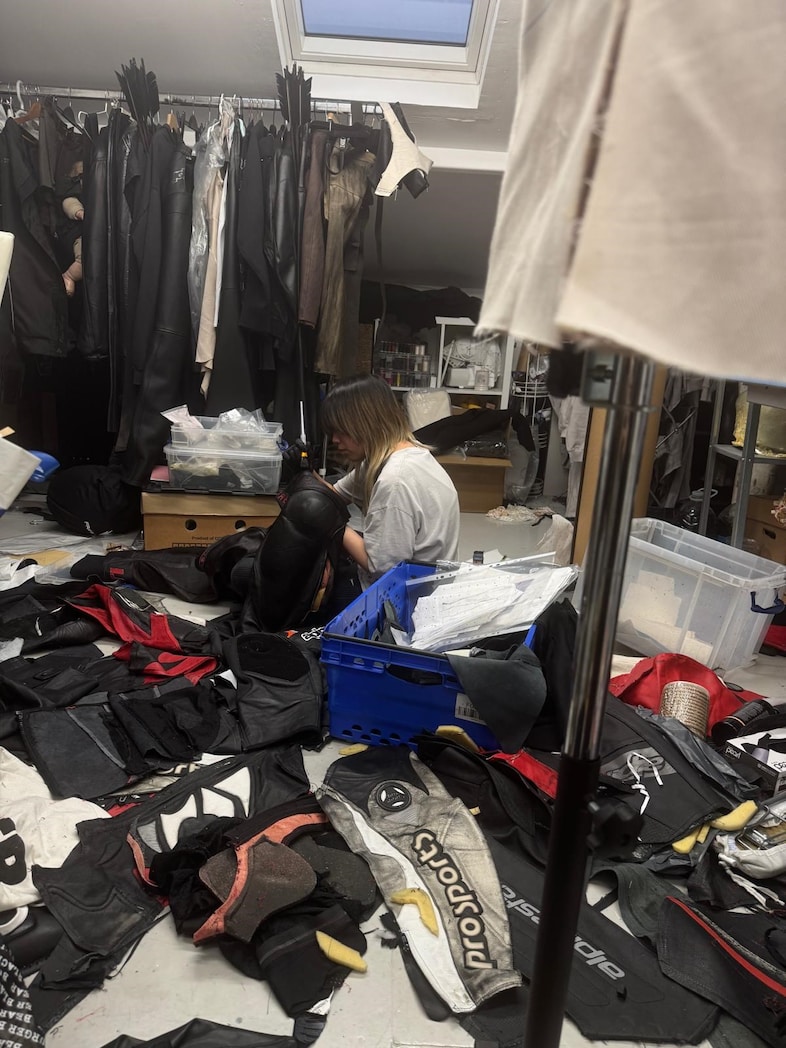
Despite arriving an hour late to 180 The Strand, the team successfully executed the presentation. Lilia managed urgent external communications remotely, allowing Keane a brief moment of quiet equilibrium before stepping into the spotlight. The presentation concluded seamlessly, leaving the designer expressing profound gratitude for her support network and the realization of her creative vision.
Industry Implications and Future Outlook
Liza Keane’s successful SS27 presentation marks a significant milestone for independent design talent in the United Kingdom. Operating within an economic climate where rising production costs and logistical hurdles frequently threaten emerging labels, Keane’s ability to deliver a high-concept, technically ambitious show underscores the resilience required to break through the industry noise.
Fashion critics have noted that Keane’s work bridges the gap between performance art and wearable commerce, a balance that is increasingly vital for young designers seeking commercial viability alongside critical acclaim. By grounding her surrealist, dystopian narratives in rigorous traditional tailoring and innovative textile manipulation, Keane has established a signature vocabulary that sets her apart from her contemporaries.
As the dust settles on 180 The Strand and the water installation is dismantled, the broader implication for the London fashion scene is clear: platforms supporting rising designers continue to yield vital, culturally resonant work that pushes the boundaries of traditional runway formats. For Keane, the successful execution of Rain On My Parade transitions her from a promising graduate to a formidable creative force, setting high expectations for the evolution of her eponymous label in upcoming seasons.