









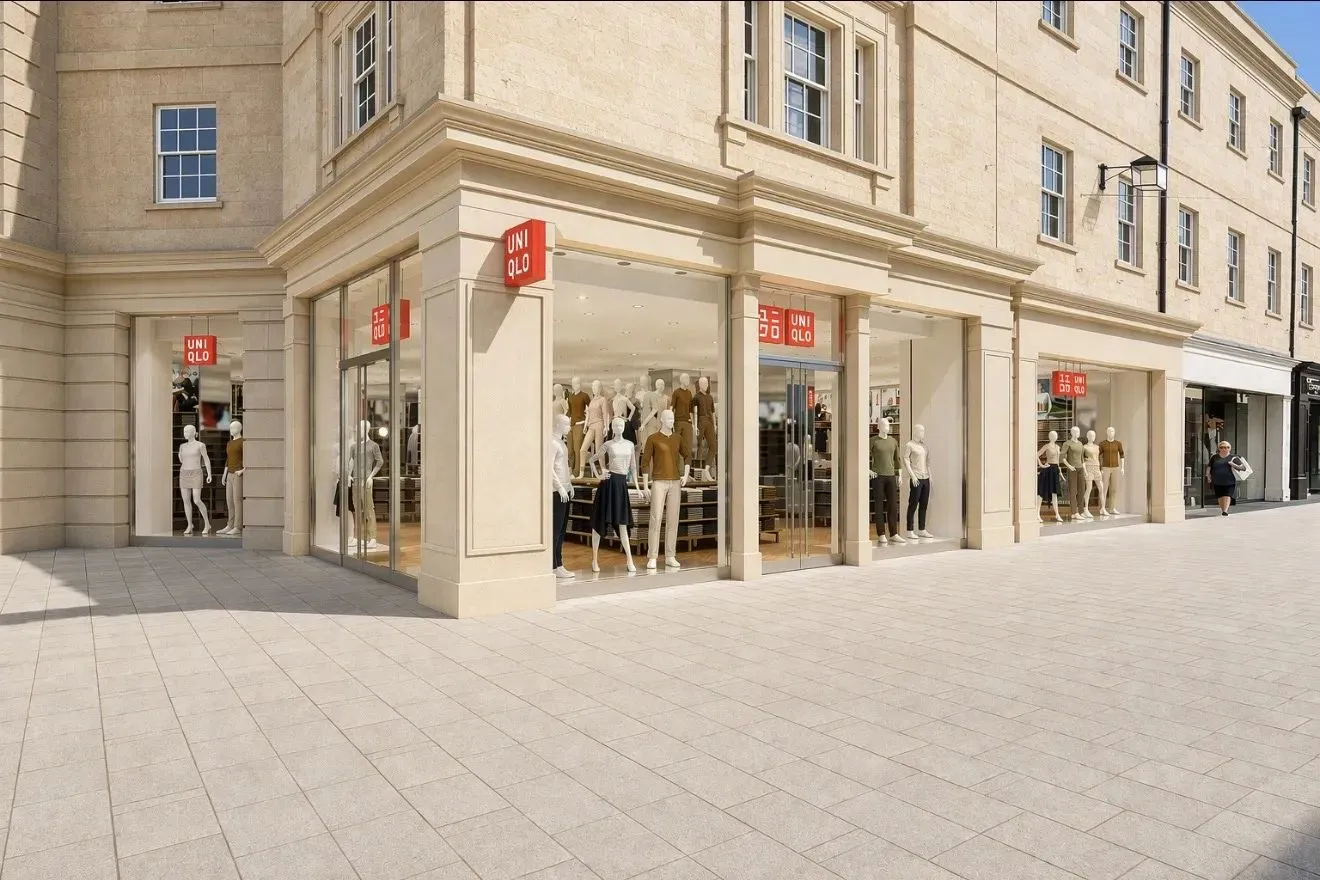
The arrival of the global retail giant at the historic Somerset city marks a significant milestone in the ongoing transformation of Bath’s retail landscape. Spanning 8,000 square feet across two floors on St Lawrence Street, the new location is designed to showcase Uniqlo’s signature "LifeWear" philosophy—a concept rooted in the Japanese values of simplicity, quality, and longevity. The store will feature comprehensive collections for both men and women, reinforcing the retailer’s strategic push into prime regional hubs across the United Kingdom.
This expansion represents more than just a new lease agreement; it is a tactical move by both Uniqlo and the property owner, British Land, to capture the growing demographic of affluent, design-conscious consumers in the South West. As the retail sector continues to navigate a post-pandemic environment defined by shifting consumer habits, the entry of a major international brand into a heritage-protected city like Bath serves as a barometer for the strength of the UK’s physical retail market.
A Chronology of Uniqlo’s UK Expansion
Uniqlo’s journey in the UK began in 2001, when it opened its first store outside of Japan in London. For many years, the brand maintained a primarily London-centric footprint, focusing on high-traffic hubs such as Oxford Street and major transport interchanges. However, the last five years have signaled a pivot in the company’s real estate strategy.
The decision to enter Bath follows a broader trend of "regionalization" for the brand. In April 2024, Uniqlo opened its first store in the South West, located in Bristol’s Cabot Circus. The success of that venture provided the data-backed confidence required to expand further into the region. Bath, with its high footfall of both residents and international tourists, presented a logical next step.
The timeline for the Southgate store is set for the spring/summer of the upcoming calendar year. This period is critical for the fashion industry, as it aligns with the seasonal transition to Uniqlo’s lightweight, technical collections, such as its popular AIRism and linen ranges. The fit-out process is expected to begin in the winter months, with the company aiming for a seamless integration into the existing architectural fabric of the Southgate shopping centre.
The Strategic Importance of Southgate, Bath
Southgate has long been a centerpiece of modern retail in Bath. Developed by British Land, the open-air shopping centre was designed to blend into the city’s Georgian aesthetic while providing the modern infrastructure required by large-scale retailers.
British Land has been vocal about its "curated" approach to leasing. By bringing in brands like Uniqlo, the company is attempting to move away from the traditional, homogenous department store model that has struggled globally. Instead, the focus has shifted toward a "retail mix" that prioritizes lifestyle, wellness, and sustainability. The recent additions of Nobody’s Child—a brand focused on conscious fashion—and the premium beauty retailer Space NK, illustrate a clear move toward a higher-end, curated consumer experience.
For the city of Bath, the arrival of Uniqlo acts as a catalyst for increased economic activity. As a UNESCO World Heritage site, Bath faces unique challenges regarding commercial development. The integration of a global brand into a historic city center requires a delicate balance between modern retail demands and the preservation of the local character. The selection of St Lawrence Street suggests that British Land is prioritizing high-visibility, high-accessibility locations to ensure that the new store can accommodate the expected influx of shoppers.
Data and Market Context
The retail sector in the United Kingdom has undergone a structural shift since 2020. According to data from the Office for National Statistics (ONS) and various retail analysts, the "high street" has seen a bifurcation: luxury and high-utility retailers are performing strongly, while mid-market department stores have seen significant attrition.
Uniqlo’s success lies in its positioning as a "high-utility" brand. By focusing on technical fabrics and minimalist design, the brand has managed to cultivate a loyal customer base that views its products as long-term investments rather than disposable fast fashion. As of the latest reporting, Uniqlo operates 24 stores across the UK. This is a relatively modest footprint compared to its competitors, suggesting that the brand’s current growth phase is characterized by intentional, high-impact site selection rather than aggressive saturation.
Furthermore, the "LifeWear" model has proven resilient during periods of economic uncertainty. When consumers tighten their budgets, there is a measurable shift toward items that offer durability and versatility. Uniqlo’s ability to leverage global supply chains to maintain competitive pricing, while simultaneously maintaining a "premium" brand image, has allowed it to thrive in a market where many other retailers have faltered.
Official Perspectives and Stakeholder Sentiment
The announcement of the new store has been met with optimism from both the developer and the retailer. Kate Lea, head of shopping centre leasing at British Land, highlighted the synergy between the brand and the location:
"Uniqlo is a fantastic addition to Southgate and a great example of the high-quality brands we’re targeting as we continue to evolve its offer. A focus on quality, design and innovation makes it a great fit for Bath’s customer base, and alongside recent arrivals like Nobody’s Child and Space NK, it demonstrates the strength of occupier demand for the city and the momentum behind our leasing strategy."
This sentiment is echoed by the leadership at Uniqlo. Alessandro Dudech, chief operating officer at Uniqlo, emphasized the regional growth strategy:
"Bath is an exciting next step in our continued growth across the UK, and Southgate is a natural home for Uniqlo in the city. We look forward to bringing our LifeWear to the local community when we open next spring."
The collaborative tone between British Land and Uniqlo suggests that the partnership is built on a shared vision of what a modern, sustainable shopping environment should look like. Both parties are betting on the idea that physical retail is not dying, but rather evolving into a destination-based experience.
Broader Implications for the UK Retail Landscape
The opening of this store has several broader implications for the UK retail industry.
First, it highlights the continued importance of "second-tier" cities in the growth strategies of major international chains. As London becomes increasingly saturated and expensive, retailers are looking toward historic cities with strong local economies and high tourist populations to sustain their growth.
Second, it underscores the necessity of "experience-led" retail. An 8,000-square-foot store over two floors is large enough to allow for a comprehensive customer experience, including fitting rooms, product education areas, and perhaps even click-and-collect points that integrate the brand’s online and offline channels. The physical store is no longer just a warehouse for inventory; it is a showroom, a customer service hub, and a branding touchpoint.
Third, the move demonstrates the endurance of the "shopping centre" model, provided it is managed with a modern sensibility. While many malls across the US and parts of Europe have faced "death spirals," well-managed, open-air centres like Southgate, which are integrated into the urban fabric, continue to serve as vital hubs for social and economic interaction.
Finally, the expansion serves as a vote of confidence in the UK market. Despite the macroeconomic headwinds of inflation, supply chain complexities, and high energy costs, international brands continue to view the UK as a primary market for global retail expansion. The success of the Bath store will likely dictate the pace and direction of Uniqlo’s further expansion into the Midlands and the North, providing a roadmap for how the brand can successfully localize its global offerings.
As spring approaches, the eyes of the retail industry will be on Bath. The transformation of the St Lawrence Street site into a Uniqlo flagship will provide a case study in how heritage and modernity can coexist, and how a global brand can adapt its identity to resonate with a distinct, discerning local audience.