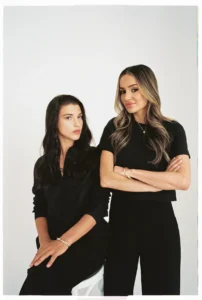











Brittany Aldean, often dubbed the "Hailey Bieber of the MAGA movement," has stepped into the burgeoning market of politically-aligned consumer goods with her new perfume line, Vada. Launched in April, Vada aims to cater specifically to Republican women whom Aldean describes as "rooted in red, white and blue," "faith-based," and possessing "good values." The brand positions itself as addressing a significant gap in the $22 billion global fragrance industry, asserting that this large, affluent demographic has been largely overlooked by mainstream beauty brands. This move highlights a growing trend where personal care products, once considered neutral, are increasingly being imbued with political identity and leveraged as tools for cultural expression and commercial engagement.
The Emergence of Identity-Driven Fragrance
The foray into scent by figures associated with the Make America Great Again (MAGA) movement is a natural progression of a broader aesthetic that has become synonymous with the conservative political sphere. This "Mar-a-Lago aesthetic" often features heavy makeup, voluminous blow-dries, plumped lips, and a generally polished, often maximalist look. As beauty trends evolve, fragrance has emerged as a key area of growth, globally outpacing makeup and skincare in some regions. In the UK, fragrance leads as the fastest-growing beauty sector, while in the US, it is projected to generate $9 billion in revenue by 2026, making it the largest market worldwide. This robust growth underscores the industry’s potential for niche market segmentation, now extending into political identity.
Vada’s initial offerings reflect a preference for saccharine, inoffensive notes: apple blossom, rose petals, "peach fuzz," and vanilla bean. These choices are not coincidental, according to beauty writer and critic Jessica DeFino, who observes a long-standing "gender essentialism of the nose" within the fragrance industry. DeFino notes, "The idea that florals and sweet gourmands are for women, while woods and gunmetal are for men; that framing is conservative, even if the scents themselves aren’t." She points to Vada’s "Georgia Dream," formulated for "trad-wives" or "women who understand that power doesn’t need to shout," and "Muse," which seeks to bottle a mother’s "unconditional love" with notes of bergamot, jasmine, rose, and vanilla.
DeFino critiques this approach, stating, "[Georgia Dream] takes this idea of power and funnels it into perfume, which doesn’t confer any material power whatsoever. At the same time, it’s encouraging quietness. Your scent can be loud, so you don’t have to be… Perfume is invisible, but it’s incredibly effective at communicating whatever identity you want it to." This perspective underscores the symbolic power of fragrance, suggesting it can serve as a proxy for desired social roles and values, rather than just a personal accessory.
Brittany Aldean: A Brand Built on Controversy and Conviction
Brittany Aldean’s pivot into the fragrance market is deeply intertwined with her public persona and vocal support for former President Donald Trump and his administration’s binary gender politics. In 2022, she faced accusations of transphobia following an Instagram video where she applied makeup, captioned: "I’d really like to thank my parents for not changing my gender when I went through my tomboy phase." This comment sparked significant backlash and a public debate, particularly after her husband, country singer Jason Aldean, defended her. Aldean later revealed to the conservative women’s magazine Evie that this controversy was a catalyst for launching Vada, positioning the brand as a response to perceived cultural attacks on traditional values.
Despite or perhaps because of the controversy, Vada has found a receptive audience. A pop-up event in Georgia, a reliably "red" state, saw women queuing around the block, eager to purchase a bottle and pose for photos with Aldean. This enthusiastic reception suggests that politically charged branding, far from being a deterrent, can be a powerful driver for consumer loyalty and engagement within specific demographics. It taps into a sense of community and shared identity, transforming a simple product into a symbol of affiliation.
The Historical Tapestry of Political Scents
While the concept of a "MAGA-pilled fragrance" might seem novel, the use of scent as a political signifier has a long and varied history. At its core, fragrance is a combination of chemical molecules, inherently neither conservative nor liberal. However, these compositions can be strategically wielded to evoke specific associations. For instance, earthy patchouli, once favored by Victorian elites, became emblematic of the 1960s psychedelic-fueled sexual revolution and counterculture. This association endures, sometimes leading to harmful stereotypes, as seen in Giuliana Rancic’s controversial 2015 comments equating Zendaya’s dreadlocks with the scent of "patchouli oil" and "weed."
Over the past half-century, certain notes have also become informally linked with Republican women. Aamna Lone, a certified UK fragrance expert, observes that "the strong avant-garde chypres [a foundational family in perfumery] are preferred by an older demographic of Republican women." More recently, she notes, "Modern day, western conservatives are leaning towards a mix of very bold, sweet fragrances or ‘clean-smelling’ aldehyde profiles," a description that aligns well with Vada’s offerings.
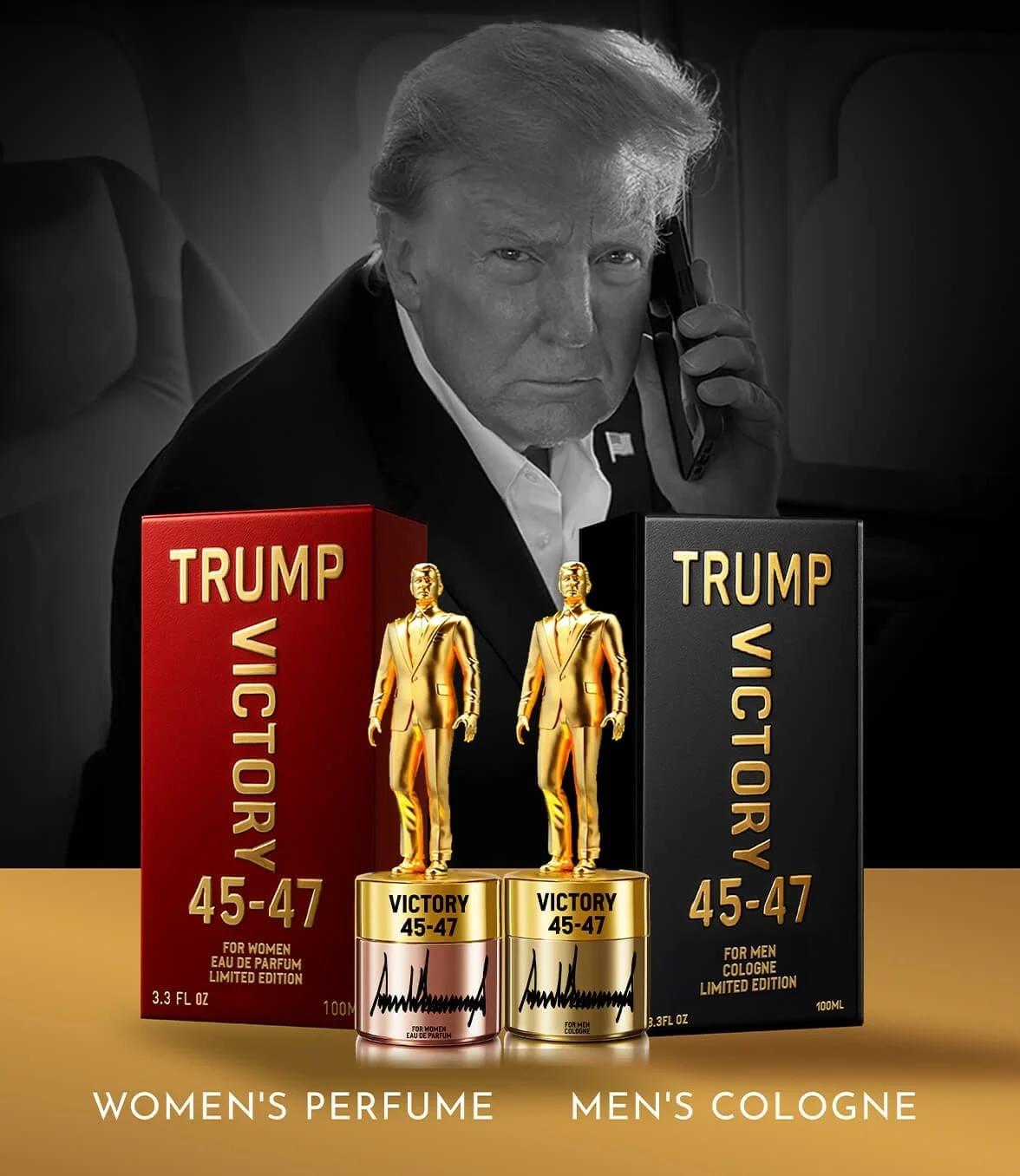
Political figures themselves have long understood the power of fragrance in personal branding and signaling allegiance. Former President Donald Trump launched several fragrance lines, including "Success by Trump," "Empire by Trump," and most recently, "Victory47," which debuted in late 2023. Packaged in a gold bottle sculpted in his likeness, Victory47 is explicitly gendered, offering "men’s cologne" and "women’s perfume." Jessica DeFino notes that the descriptions for these fragrances offer a clear overview of aspirational MAGA gender roles: "For women, it talks about confidence, beauty, sophistication and subtle femininity, without really saying what the fragrance actually smells like. Those aren’t scent notes, they’re characteristics that are being nonsensically applied to perfume." The cologne, in contrast, is said to embody "strength, power and victory."

Trump is not the first president to venture into this territory. Politicians globally have leveraged scent to project desired images. French President Emmanuel Macron reportedly uses "industrial" amounts of Dior Sauvage, a choice often interpreted as a statement of masculinity and presence. Margaret Thatcher famously wore a Penhaligon’s fragrance, a brand that also crafted a scent for her idol, Winston Churchill’s father, Lord Randolph. During his 1960 presidential campaign, Richard Nixon’s Republican ticket even released a promotional perfume for women called "GOPtimism," presented in red, white, and blue bottles and marketed as "the scent of victory." While its exact notes are lost to history, it’s plausible they echoed those of his wife, Pat Nixon’s, favorite, Lanvin Arpège, which featured lily, peach, honeysuckle, jasmine, rose, vanilla, and patchouli—notes that resonate with contemporary conservative preferences.
The Psychology of Political Scent and Consumer Identity
Melissa Rein Lively, founder of America First PR, an anti-woke publicity firm, and an influencer within Trump’s orbit, embodies the "MAGA beauty aesthetic." She views her hyper-feminine look as a reclamation of femininity as a source of power, and fragrance is an indispensable part of her routine. "I would never leave home without it," she states, adding, "Conservative women are drawn to fragrances that feel timeless, polished and feminine rather than highly experimental. I think that preference reflects a broader appreciation for refinement, tradition, worldliness, and enduring style."
Rein Lively’s preference for strong scents aligns with observations from Jack Mason, a MAGA-identifying Republican and host of The Perfume Nationalist podcast, which explores culture and politics through the lens of fragrance. Mason posits, "Bold fragrances assert the wearer’s presence and taste without concern for the scent-phobic or dubiously allergic… Scent was for many years viewed as an imposition on others’ space or even as an environmental pollutant, in keeping with the left-wing view of consumer luxuries as decadent. The confident use of scent as a personal statement is necessarily conservative because it says you don’t take the rules and sensitivities of twenty-first century people seriously. You move around in your own world." This perspective highlights how fragrance can be a defiant act of self-expression, a rejection of perceived societal "rules" or "sensitivities," particularly those associated with progressive ideologies.
Data from the 2016 election further supports the notion of distinct fragrance preferences along political lines. Scentbird, an online perfume subscription service, analyzed over 400,000 fragrance orders against state voting patterns. Their findings indicated that bold, long-lasting fragrances were significantly more popular among Republican voters. This suggests a correlation between political identity and olfactory preferences, underscoring the potential for brands to target consumers based on these insights.
The "Underserved" Market: Reality or Rhetoric?
Evie editor-in-chief Brittany Martinez, in her profile of Aldean, asserts that conservative women are underserved by the broader beauty industry. However, this claim warrants closer examination, especially concerning fragrance. As evidenced by the enduring popularity of certain scent profiles and the established brands that offer them, there is no inherent shortage of products that appeal to this cohort, often featuring the saccharine, timeless compositions preferred. Even within the fragrance community, political affiliations have become a flashpoint. Fragrantica, the world’s largest online fragrance community, faced a political backlash when its founder, Elena Knezevic, hosted a giveaway for Trump’s fragrances and posted a controversial image of George Washington in a MAGA-esque hat on Independence Day. While some users threatened to leave, the platform’s comprehensive database ensured its continued dominance, illustrating the difficulty of truly segmenting digital communities by political lines when core utility is at stake.
Moreover, bona-fide Trump insiders like Melissa Rein Lively express nuance on the idea of being "underserved." While open to trying Vada, Rein Lively doesn’t feel an inherent need for brands explicitly marketed towards her politics. "As Michael Jordan famously said, ‘Republicans buy shoes too.’ The same principle applies to beauty," she explains. "Conservatives buy perfume. Democrats buy skincare. Everyone wants products that make them look and feel their best." This perspective suggests that while politically branded products might resonate with a segment, the core desire for quality and efficacy transcends political divides for many consumers.
Broader Implications and Future Trends
The rise of politically branded fragrances, exemplified by Brittany Aldean’s Vada and Donald Trump’s various lines, marks a significant development in consumer culture. It reflects an intensifying politicization of everyday life, where even personal care products become canvases for ideological expression. This trend capitalizes on the deep psychological connection between scent and identity, allowing individuals to literally wear their allegiances.
The implications for the beauty industry are multifaceted. On one hand, it opens up new avenues for niche marketing and brand loyalty, particularly for figures who have cultivated strong political followings. For brands, aligning with specific political ideologies can offer a clear differentiator in a crowded market, fostering a strong sense of community among consumers who feel seen and validated. On the other hand, it also carries risks, potentially alienating broader consumer bases and drawing criticism for exploiting political divisions for commercial gain.
This phenomenon is part of a larger movement of identity politics permeating consumer choices. As traditional social and political structures shift, individuals increasingly seek to express their affiliations through the brands they support and the products they consume. Fragrance, with its intimate and often subconscious impact, is a particularly potent medium for this form of self-expression. As the fragrance market continues to grow and diversify, it is likely that more brands will explore politically explicit or implicitly aligned offerings, further blurring the lines between personal aesthetics, political conviction, and commercial enterprise. The "scent of victory" in the modern age might well be a carefully curated blend of notes designed to resonate not just with individual preference, but with an entire political movement.