








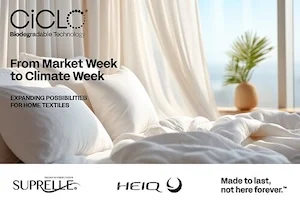
NEW YORK — Intrinsic Advanced Materials, a division of Parkdale Mills, has announced a significant strategic expansion of its proprietary CiCLO technology, marking a pivotal shift in how the home and hospitality textile sectors address the pervasive issue of synthetic microplastic pollution. As of September 2026, the company is integrating its biodegradable additive into the premium fiberfill portfolios of ADVANSA and launching a technical collaboration with Swiss-based materials innovator HeiQ. This dual-pronged market expansion coincides with a high-profile presence at NYC Climate Week, where the technology will be showcased as part of Lonely Whale’s "Fashion the Future" initiative.
The expansion comes at a critical juncture for the global textile industry. With synthetic fibers such as polyester and nylon accounting for more than 60 percent of global fiber production, the environmental footprint of non-biodegradable shedding has become a focal point for regulators and environmental advocates alike. By embedding the CiCLO ingredient directly into the polymer matrix during the fiber manufacturing process, Intrinsic Advanced Materials provides a solution that does not rely on post-consumer behavior changes, but rather on inherent material design.
A Chronology of Material Innovation
The integration of CiCLO into the broader textile supply chain follows a multi-year development trajectory. Initially conceptualized to address the durability-versus-degradability paradox in synthetic textiles, the technology moved from laboratory-scale testing to initial commercial pilots between 2023 and 2025.
The current phase of expansion, formalized in September 2026, represents the maturation of these efforts. By aligning with established industry giants like ADVANSA, Intrinsic is moving from niche applications to high-volume home textile categories, including bedding, mattress ticking, and pillows. This transition is expected to provide a blueprint for how functional additives can be integrated into existing manufacturing infrastructures without disrupting the complex supply chains that support global hospitality and consumer goods markets.
The Science of Accelerated Biodegradation
At the core of the CiCLO value proposition is its ability to transform inert synthetic fibers into materials that are recognized by microorganisms in end-of-life environments. Standard synthetic fibers—such as polyester—are essentially plastics that persist in the environment for hundreds of years. When these fibers shed during laundering or wear, they contribute to the accumulation of microplastics in aquatic ecosystems.
CiCLO works by creating specific, nutrient-rich "pathways" within the fiber. When these fibers find themselves in an environment containing moisture and microbes—such as a landfill, wastewater treatment plant, or the ocean—the additive encourages the growth of a microbial biofilm. This biofilm secretes enzymes that break down the synthetic polymer structure, effectively enabling the fiber to biodegrade at a rate comparable to natural fibers like wool or cellulose.
Third-party validation has been a cornerstone of the technology’s market entry. The fibers are tested using standardized ASTM (American Society for Testing and Materials) and ISO (International Organization for Standardization) methods, ensuring that the claims of biodegradation meet rigorous, repeatable scientific benchmarks.
ADVANSA and the Suprelle Portfolio Integration
The partnership with ADVANSA is perhaps the most significant indicator of the technology’s scalability. By incorporating CiCLO into the Suprelle fiberfill line, ADVANSA is effectively "upgrading" a product that is already a staple in high-end hospitality environments.
Suprelle is known for its performance characteristics, including loft, resilience, and moisture management. Jean-Christophe Rouyer, head of global business development at ADVANSA, noted that the primary challenge was maintaining these performance metrics while enhancing the product’s environmental profile. According to industry reports, the integration process did not necessitate a change in the manufacturing equipment, a factor that is essential for the rapid adoption of sustainable additives in the textile industry.
For hotel groups and high-volume bedding retailers, this integration offers a way to meet internal sustainability targets—often mandated by corporate ESG (Environmental, Social, and Governance) requirements—without compromising the comfort or longevity of the products provided to guests.
Synergistic Innovation with HeiQ
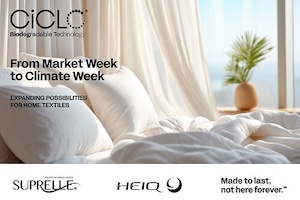
While the ADVANSA partnership focuses on fiberfill, the collaboration with HeiQ Materials AG targets the functional requirements of the textile surface. HeiQ, a Swiss innovator, brings a wealth of expertise in chemistry-based textile finishes, such as odor control, cooling, and allergen reduction.
By pairing CiCLO fibers with HeiQ’s functional chemistries, the two companies are creating a "performance-sustainability" hybrid. In the past, adding functional finishes to textiles often made them more difficult to recycle or further increased their chemical footprint. This new approach seeks to harmonize these requirements, ensuring that a mattress protector, for example, can offer both advanced cooling capabilities and a reduced environmental footprint in the event of disposal.
Mike Abbott, executive vice president of advanced materials and general manager of HeiQ USA, highlighted that the current market landscape is characterized by "feature fatigue." Brands are wary of adding complexity to their products, particularly if it adds cost or operational friction. The collaboration aims to mitigate this by offering a "plug-and-play" solution where performance and environmental mitigation are baked into the raw material.
NYC Climate Week: Bridging Innovation and Awareness
The culmination of these commercial announcements is the participation in Lonely Whale’s "Fashion the Future" activation during NYC Climate Week. By hosting the technology at PlanetHAUS on September 21–22, 2026, Intrinsic Advanced Materials is shifting the focus from the technical specifications of the fiber to the broader systemic impact of material choices.
The "Fashion Stream" educational experience is designed to walk stakeholders—ranging from designers to investors—through the lifecycle of a garment. By placing CiCLO at the "production stage," the exhibition aims to illustrate that the most effective way to combat microplastic pollution is to prevent it at the molecular level, rather than relying on end-of-pipe solutions like microplastic-capturing laundry bags or wastewater filtration, which have varying degrees of efficacy.
Analytical Perspectives: The Road Ahead
From a market analysis standpoint, the expansion of CiCLO signals a maturation of the "Circular Textiles" movement. For years, the industry focused heavily on mechanical recycling—the process of shredding old garments to make new ones. However, mechanical recycling has limitations regarding fiber quality and the eventual degradation of the material after multiple cycles.
The adoption of CiCLO introduces an "end-of-life" strategy that complements existing recycling loops. If a textile is eventually discarded and cannot be mechanically recycled, the presence of the CiCLO additive ensures that it will not persist as an inert microplastic.
However, challenges remain. The cost-premium associated with advanced additives remains a barrier for mass-market, low-cost apparel. While the home and hospitality sectors—where quality and durability command higher price points—are well-suited for this technology, widespread adoption in fast fashion will likely depend on economies of scale and potential legislative shifts, such as extended producer responsibility (EPR) laws, which are gaining traction in the European Union and parts of North America.
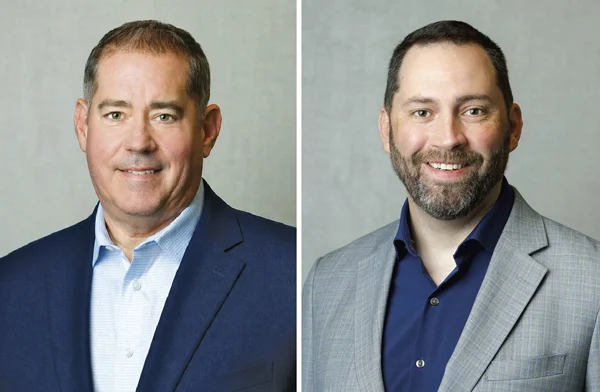
Cheryl Smyre, vice president of Parkdale Advanced Materials, has emphasized that the goal is to set a new paradigm for the industry. The collaboration between Parkdale, ADVANSA, and HeiQ serves as a template for cross-industry cooperation, where material science firms provide the core technology and application-specific partners provide the reach.
Conclusion
As the textile industry faces increasing pressure from regulators, consumers, and environmental NGOs to reduce its contribution to the global plastic crisis, the expansion of CiCLO technology offers a tangible, data-backed pathway toward change. By successfully integrating biodegradable functionality into premium fiberfill and combining it with advanced performance finishes, Intrinsic Advanced Materials has moved the conversation from theoretical sustainability to practical, large-scale implementation. Whether this model can be successfully scaled to the broader apparel industry remains the next frontier in the ongoing effort to decouple textile production from long-term environmental degradation.