




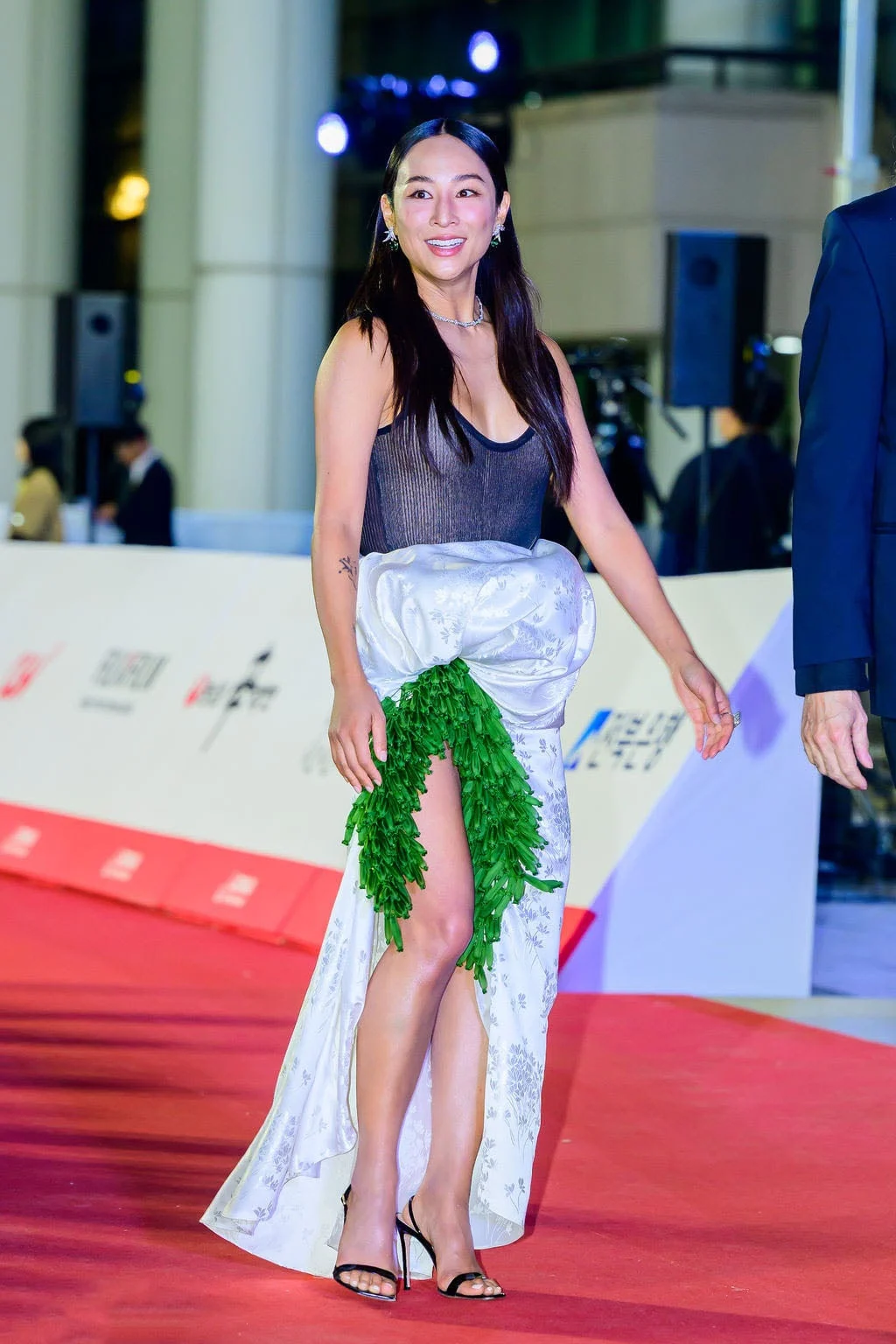
The 27th Jeonju International Film Festival (JIFF) officially commenced on Wednesday evening, marked by a high-profile red carpet event at Moak Hall within the Sori Arts Center in Jeonju, South Korea. Among the most anticipated arrivals was actress Greta Lee, whose presence underscored the festival’s growing international prestige and its intersection with global high fashion. Lee, who has garnered significant acclaim for her roles in Past Lives and The Morning Show, appeared at the opening ceremony as a focal point of both cinematic and stylistic interest. Her choice of attire—a sophisticated ensemble from the Christian Dior Spring 2026 Haute Couture collection—signaled a high-stakes return to the French heritage house, following a period of experimentation with various other luxury labels.
The Architectural Details of the Dior Haute Couture Ensemble
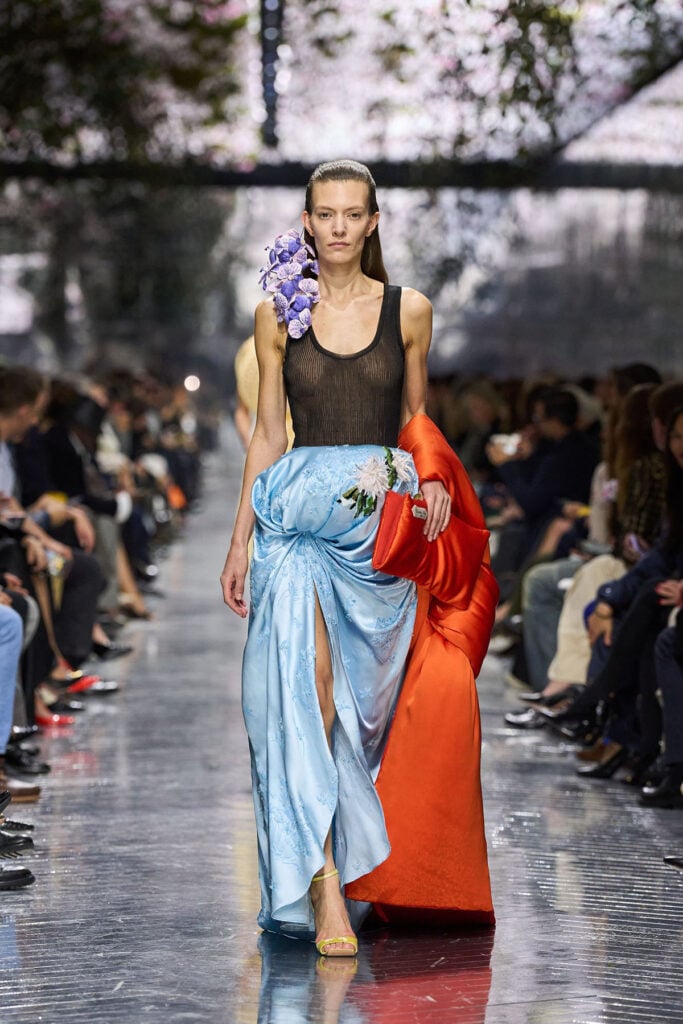
The garment selected for the Jeonju opening ceremony represents a specific creative direction within the Dior Spring 2026 Haute Couture line. Under the creative influence of Jonathan Anderson—whose involvement with the house in this 2026 context marks a shift toward more experimental, directional silhouettes—the dress combines traditional couture craftsmanship with avant-garde structural elements. The upper portion of the gown features a sheer black bodice, meticulously constructed to provide a delicate yet disciplined frame. This transparency serves as a counterpoint to the lower half of the ensemble, which is defined by a softly draped skirt that utilizes fluid fabric manipulation to create movement.
The most discussed element of the gown is the vivid green embellishment that emerges from a high-set slit in the skirt. This textural addition provides a sharp chromatic contrast to the monochrome base of the dress. Industry observers noted that while the embellishment appears as a sudden eruption of color and texture, it follows a specific design language intended to challenge conventional red-carpet aesthetics. The placement of the green detail serves as a focal point, drawing the eye toward the structural asymmetry of the piece. This "directional" choice aligns with Lee’s established reputation for favoring fashion that prioritizes artistic expression over traditional glamour.
Strategic Styling and Jewelry Integration
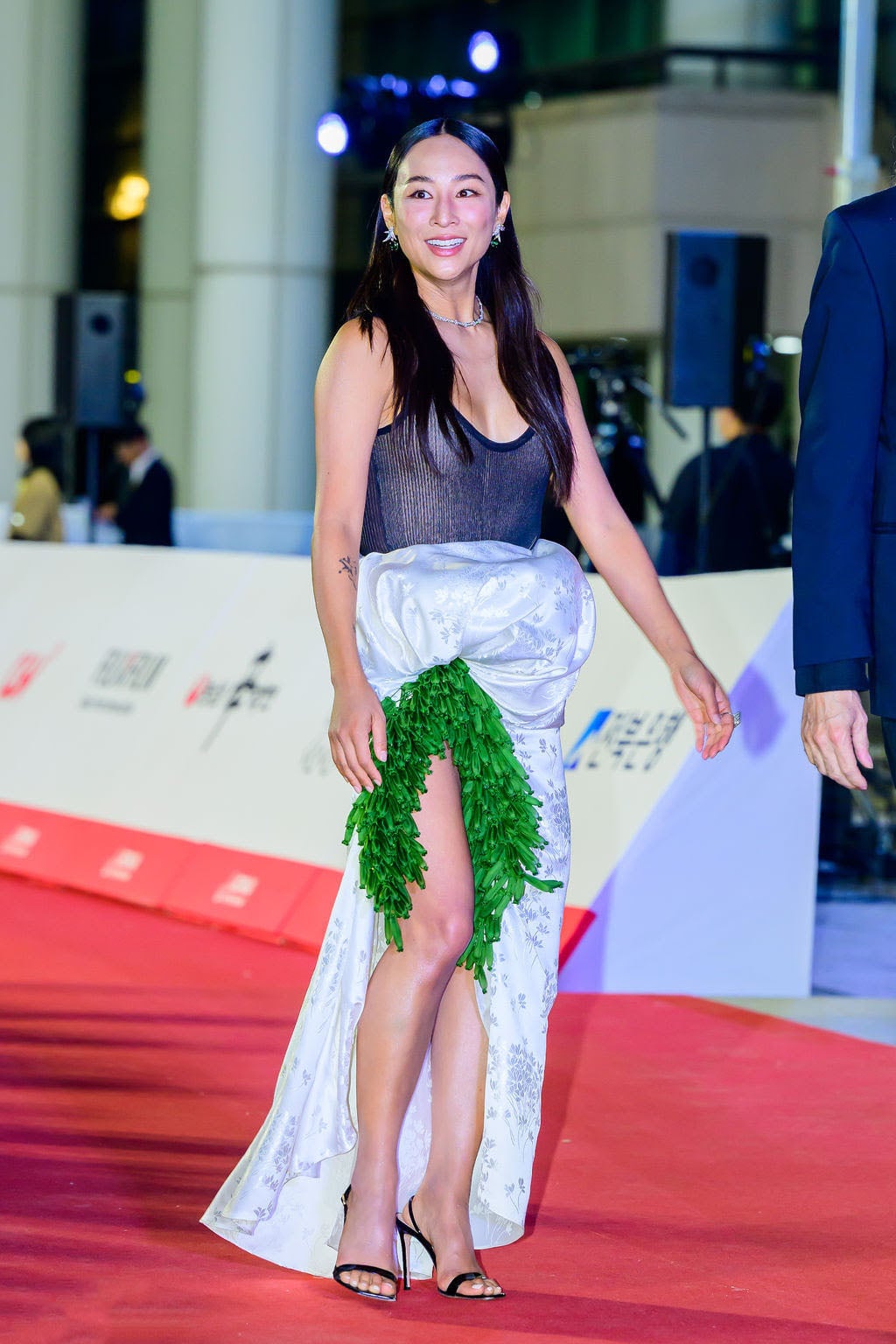
To complete the look, Lee collaborated with her long-time stylist, Danielle Goldberg. Goldberg, recognized in the industry for her ability to curate "minimalist-maximalist" aesthetics for clients such as Ayo Edebiri and Olivia Rodrigo, focused on creating a sense of cohesion between the dress and its accessories. A critical component of this strategy was the inclusion of high jewelry from Tiffany & Co.
Lee wore the iconic Bird on a Rock drop earrings, a design originally conceptualized by Jean Schlumberger for Tiffany & Co. in the mid-20th century. For this specific appearance, the earrings were set with prominent emerald stones, a choice that served a dual purpose. Beyond their intrinsic value as pieces of high jewelry, the emeralds provided a visual bridge to the green embellishment on the Dior gown. This intentional color coordination addressed what some critics initially perceived as a disconnect between the dress’s black bodice and its vibrant green accent. By echoing the hue in the jewelry, the styling team established a unified color story that anchored the experimental nature of the couture piece.
A Chronological Perspective on Greta Lee’s Fashion Trajectory
The appearance at Jeonju marks a significant chapter in Lee’s ongoing relationship with the House of Dior. To understand the importance of this moment, it is necessary to look back at the actress’s red-carpet timeline over the past several months.
In October 2025, Lee wore Dior to the Los Angeles premiere of Tron: Ares. That particular look received a mixed reception from fashion commentators, who suggested that the silhouette did not fully harmonize with Lee’s personal style. Following that event, the actress and her styling team moved away from the brand, exploring partnerships with Loewe, Bottega Veneta, and various independent designers. This hiatus from Dior allowed Lee to further solidify her status as a "fashion darling" who is not bound by traditional brand ambassadorships, but rather chooses pieces based on their architectural merit.
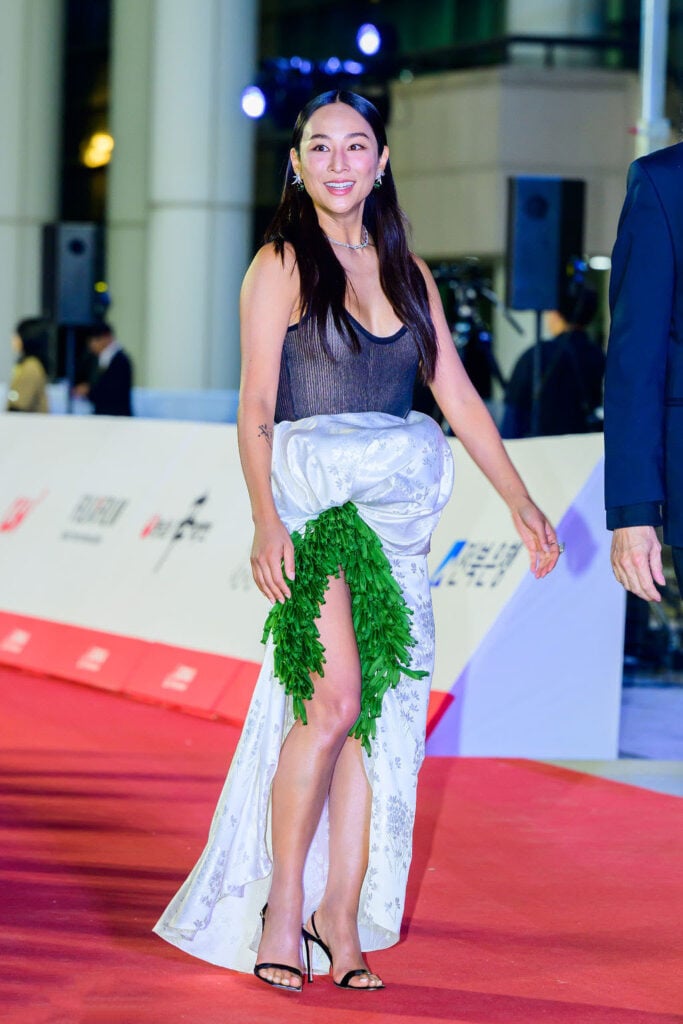
Her return to Dior at the 27th Jeonju International Film Festival suggests a renewed synergy between the actress and the house’s current creative direction. By selecting a piece from the Spring 2026 Haute Couture collection, Lee positioned herself at the forefront of the brand’s most exclusive tier of design. The choice to debut this look in South Korea—a critical market for global luxury brands—further highlights the strategic nature of the appearance.
The Significance of the Jeonju International Film Festival
While the red carpet often dominates social media discourse, the context of the Jeonju International Film Festival provides the necessary background for Lee’s appearance. Established in 2000, JIFF has carved out a niche as one of the most important festivals for independent and experimental cinema in Asia. Unlike the Busan International Film Festival, which often focuses on large-scale commercial premieres, Jeonju is celebrated for its "Jeonju Cinema Project," which commissions and supports unconventional filmmaking.
The 27th edition of the festival continues this tradition, hosting filmmakers, critics, and actors from around the globe at the Sori Arts Center. Lee’s attendance at the opening ceremony at Moak Hall reflects the festival’s successful efforts to attract international talent with deep ties to the Korean diaspora. As a Korean-American actress who has achieved global stardom, Lee embodies the bridge between Hollywood and the burgeoning South Korean film industry. Her presence at the festival serves to elevate the event’s profile, drawing international media attention to the independent films being screened throughout the week.
Technical Analysis of the 2026 Haute Couture Market
The dress worn by Lee is indicative of broader trends within the 2026 Haute Couture market. Analysts have noted a move toward "narrative textiles"—fabrics and embellishments that tell a story through their physical form. The green element on Lee’s dress, which appears almost organic or moss-like, reflects an industry-wide interest in incorporating naturalistic textures into high-fashion garments.
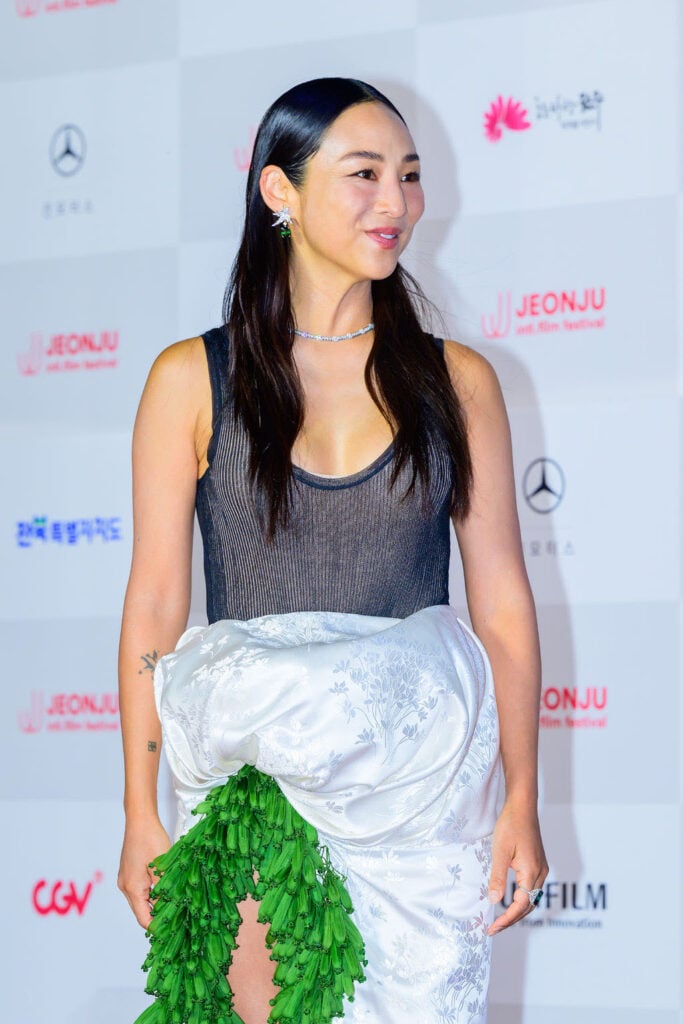
Furthermore, the involvement of Jonathan Anderson in the Dior Spring 2026 collection represents a pivotal moment for the LVMH-owned brand. Anderson’s design philosophy often involves deconstructing traditional forms and reassembling them in ways that feel both familiar and alien. In Lee’s gown, this is seen in the juxtaposition of the classic sheer bodice with the disruptive green slit. For Dior, using the Jeonju red carpet as a platform for this specific look demonstrates a commitment to maintaining a presence in the "intellectual fashion" space, appealing to celebrities who are viewed as tastemakers rather than just mannequins.
Industry Reactions and Broader Implications
While official statements from the House of Dior typically focus on the craftsmanship of the "petites mains" in the Parisian ateliers, the reaction from the fashion community in Jeonju was one of cautious admiration. The gown is undeniably a "hard sell"—a term used in the industry for garments that require a specific type of presence and styling to succeed. However, the consensus among fashion editors present at the festival was that Lee’s poise and the strategic use of Tiffany & Co. jewelry allowed the look to transcend its divisive elements.
The implications of this appearance extend beyond the red carpet. For South Korea, the continued presence of global stars like Greta Lee at domestic festivals reinforces the country’s status as a cultural superpower. The "Greta Lee effect" on luxury sales is well-documented; her ability to make avant-garde pieces appear wearable has made her a highly sought-after figure for brands looking to capture a sophisticated, affluent demographic.
As the 27th Jeonju International Film Festival progresses, the focus will shift from the opening night glamour to the cinematic offerings. However, the image of Lee in Dior Haute Couture at Moak Hall will likely remain one of the defining visual moments of the festival. It represents a successful fusion of high-art cinema and high-art fashion, set against the backdrop of one of the world’s most vibrant cultural hubs.
Conclusion of the Opening Night
The opening ceremony concluded with the screening of the festival’s first official selection, but the conversation surrounding Lee’s return to Dior continued into the evening’s private receptions. By navigating the complexities of a "directional" couture piece and successfully integrating heritage jewelry, Lee and her team have set a high bar for the remainder of the festival’s red-carpet events. The 27th Jeonju International Film Festival has once again proven that it is not only a sanctuary for independent film but also a significant stage for the evolution of global fashion.