








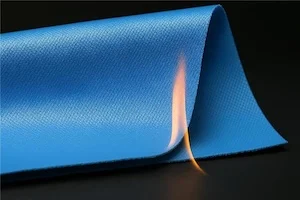
In a significant advancement for the global technical textiles and construction industries, Elkem Silicones has officially announced the launch of BLUESIL™ TCS 7544. This new silicone-based coating solution, unveiled in Lyon, France, on April 9, 2026, is specifically engineered to meet the rigorous demands of the EN 13501-1 Euroclass A1/A2 fire safety standards. As urban density increases and building regulations tighten globally, the introduction of this material marks a pivotal shift in how manufacturers approach the balance between aesthetic flexibility in architectural textiles and the non-negotiable requirement for fire prevention and structural integrity.
The development of BLUESIL™ TCS 7544 comes at a time when the architectural landscape is increasingly utilizing tensile structures, permanent canopies, and textile facades for major public infrastructure projects. These applications require materials that can withstand extreme environmental stressors while providing a safety profile that prevents the spread of flame and minimizes toxic emissions in the event of a fire. By achieving the Euroclass A1 and A2 classifications—the highest possible ratings for non-combustible or very low-combustible products—Elkem is positioning itself as a primary partner for developers and architects working on high-stakes public works.
Technical Innovation and Fire Performance Metrics
The primary differentiator of BLUESIL™ TCS 7544 lies in its molecular formulation, which is designed to significantly lower the calorific value of the coated textile system. In many composite textile materials, the coating layer is the most vulnerable component regarding flammability. However, testing conducted through EN 1716 PCS calorimetric analysis has verified that this new solution reduces heat release by approximately 20 percent compared to standard fire-resistant silicone coatings currently available on the market.
This reduction in heat release is critical for passing the "Bomb Calorimeter" test, which measures the gross heat of combustion. By minimizing the energy contributed by the coating during a thermal event, BLUESIL™ TCS 7544 ensures that the entire textile assembly—typically a glass fiber or high-strength synthetic base—remains within the strict limits of the Euroclass A2 rating. Beyond heat release, the material is also optimized for low smoke density and the elimination of flaming droplets, two factors that are essential for occupant safety and evacuation procedures in large-scale venues such as airports, stadiums, and shopping malls.
Engineering for Industrial Efficiency and Processability
While fire safety is the headline feature, Elkem has also addressed the practical challenges faced by textile coaters and manufacturers. BLUESIL™ TCS 7544 is a two-component polyaddition system with a standardized 10:1 mixing ratio. This formulation was specifically chosen to integrate seamlessly into existing industrial coating lines without requiring extensive retooling or specialized equipment.
One of the most notable operational advantages is the material’s extended pot life. At a stable temperature of 23°C, the mixture remains viable for over 24 hours. This long window of processability allows manufacturers to manage large production runs with greater flexibility, reducing material waste and allowing for pauses in production without the risk of the silicone curing in the reservoir.
Furthermore, the material’s viscosity is tuned to 45,000 mPa·s. This specific rheology facilitates easy pumping and allows for the application of low coat weights. In the world of technical textiles, achieving a low coat weight while maintaining high-performance properties is a "holy grail" of sorts, as it reduces the overall weight of the architectural structure and lowers costs without compromising on safety or durability. The curing process is equally efficient, with the silicone achieving full crosslinking in approximately three minutes when exposed to temperatures of 150°C, supporting high-throughput manufacturing environments.
Durability and Environmental Resilience
Architectural textiles are often exposed to the harshest environmental conditions, from intense UV radiation in desert climates to freezing temperatures and high humidity in coastal regions. BLUESIL™ TCS 7544 is formulated to maintain its mechanical stability and aesthetic integrity under these conditions. Unlike traditional PVC coatings, which can degrade or become brittle over time due to plasticizer migration, silicone coatings offer inherent UV resistance and thermal stability.
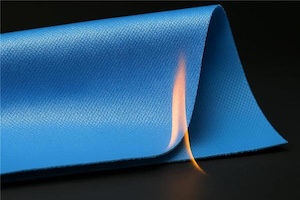
The "off-white" base of the coating is also pigment-addable, providing architects with the creative freedom to select specific color palettes while ensuring that the fire-retardant properties remain consistent across different hues. This aesthetic versatility, combined with the material’s resistance to atmospheric pollutants and weather exposure, ensures that the textiles retain their structural properties and appearance for decades, significantly extending the lifecycle of the building components.
Market Context and Regulatory Evolution
The launch of BLUESIL™ TCS 7544 is a direct response to a tightening global regulatory environment. Following several high-profile fire incidents in the early 2020s, international building codes have moved toward stricter "Reaction to Fire" requirements. In Europe, the EN 13501-1 standard has become the benchmark, and achieving an A1 or A2 rating is increasingly becoming a mandatory requirement for materials used in high-rise buildings and public assembly spaces.
Claire Lacroix, Business Development Manager for Textile Coating at Elkem, highlighted this shift during the product unveiling. "BLUESIL™ TCS 7544 sets a new benchmark for fire performance in silicone-coated textiles," Lacroix stated. "It combines enhanced fire safety with durability and processing ease, giving manufacturers a reliable path to meet increasing regulatory expectations while supporting long-term performance in advanced textile applications."
Industry analysts suggest that the move toward silicone coatings over traditional materials like PVC is accelerating. While PVC has historically been a cost-effective option, its performance in fire—specifically regarding smoke toxicity and heat release—has led to its gradual phase-out in high-specification projects. The 20% improvement in heat release performance offered by Elkem’s new solution provides a significant "safety margin" for manufacturers who must guarantee compliance across variable production batches.
Timeline and Global Availability
The rollout of BLUESIL™ TCS 7544 follows a rigorous multi-year research and development cycle conducted at Elkem’s European research centers. Following the April 9 announcement, the material has been moved into the sampling phase. This allows manufacturers to conduct their own internal testing and integration trials before full-scale commercial adoption.
The official global debut to the wider industry is scheduled to take place at the Techtextil Expo in Frankfurt, Germany, from April 21 to 24, 2026. Techtextil is widely regarded as the most important trade fair for technical textiles and nonwovens, and Elkem’s presence in Hall 11, Stand E70, is expected to draw significant interest from international engineering firms and textile producers. During the expo, Elkem’s technical experts will be available to discuss the specific calorimetric data and provide guidance on application techniques for the new coating.
Broader Implications for the Textile Industry
The introduction of BLUESIL™ TCS 7544 is likely to trigger a ripple effect throughout the supply chain. As a primary manufacturer of silicones, Elkem’s move into high-tier fire-rated coatings pressures other chemical suppliers to innovate further. For the end-users—architects and developers—this innovation provides a broader palette of safe, durable materials that can be used to create iconic, lightweight structures that were previously difficult to approve under strict fire codes.
Furthermore, the focus on "low coat weight" and "high throughput" aligns with the industry’s broader goals regarding sustainability. By reducing the amount of material required to achieve a safety rating and speeding up the manufacturing process, the carbon footprint associated with the production of architectural textiles can be marginally reduced.
As Elkem Silicones, the silicone-manufacturing division of Elkem ASA, continues to expand its portfolio, the focus remains on specialty applications where high-performance chemistry meets stringent safety standards. The launch of BLUESIL™ TCS 7544 is a testament to the company’s strategy of targeted innovation, addressing specific regulatory pain points with advanced material science. With the Techtextil Expo on the horizon, the industry will soon see how this new solution integrates into the next generation of the world’s most ambitious architectural projects.