











As the global economy navigates persistent volatility, UK fashion brands, including prominent names like Percival, Fabletics, Superdry, Orlebar Brown, Pour Moi, and Luca Faloni, are meticulously strategising for the 2026 peak selling season. This year’s crucial retail period, traditionally encompassing Black Friday, Cyber Monday, and the extensive Christmas and New Year sales, arrives amidst a backdrop of escalating Middle East supply chain disruption, forcing an industry-wide re-evaluation of logistics, inventory management, and risk mitigation. Drapers investigates how these leading brands are fortifying their operations to ensure resilience and sustained performance in an increasingly unpredictable global trade landscape.
The Evolving Landscape of Supply Chain Instability
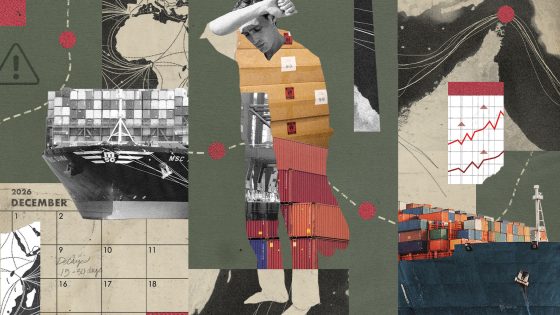
The origins of the current supply chain challenges can be traced back to a confluence of geopolitical tensions and economic shifts that intensified significantly from late 2023 into 2024. The primary catalyst for the "Middle East supply chain disruption" referenced by fashion executives has been the persistent unrest in the Red Sea region, particularly attacks on commercial shipping in the Bab-el-Mandeb Strait. This critical choke point, leading to the Suez Canal, a vital artery for East-West trade, has compelled many shipping lines to reroute vessels around the Cape of Good Hope. This diversion adds an estimated 7-20 days to transit times for goods travelling between Asia and Europe, depending on the origin and destination, significantly increasing fuel consumption, operational costs, and insurance premiums.
By July 2026, the cumulative impact of these prolonged disruptions has led to a structural shift in global logistics. Freight rates, while fluctuating, have stabilised at a higher baseline compared to pre-2023 levels. For instance, the Shanghai Containerized Freight Index (SCFI) for routes to Europe, which saw dramatic spikes in 2024 and early 2025, has settled at approximately 150-200% above its five-year average, reflecting the increased operational complexities. Moreover, port congestion, which had eased slightly post-pandemic, has re-emerged in certain European and Asian hubs as carriers grapple with altered schedules and larger, less frequent vessel arrivals.
Beyond the Red Sea, broader geopolitical uncertainties across the Middle East continue to cast a shadow over energy markets and regional stability, indirectly influencing shipping routes and manufacturing capabilities in adjacent areas. This multifaceted environment necessitates a proactive and adaptable approach from retail businesses, particularly those in the fashion sector, where seasonal trends and rapid inventory turnover are paramount.
Chronology of Disruption and Industry Response
The fashion industry’s journey towards a shock-resistant peak in 2026 has been a reactive and adaptive process, built on lessons learned from a series of global disruptions:
- Late 2023 – Early 2024: Initial reports of Red Sea shipping disruptions emerge, leading to tentative rerouting decisions by major carriers. Fashion brands begin contingency planning, assessing inventory buffers.
- Q1 2024: Rerouting becomes widespread. Average transit times for Asian imports to Europe increase by 15-25%. Brands like Superdry, heavily reliant on Asian manufacturing, start exploring alternative freight options and earlier order placements.
- Mid-2024: Freight costs solidify at elevated levels. Industry discussions shift from short-term fixes to long-term resilience strategies. Nearshoring and reshoring options gain traction, though implementation is slow due to existing contractual obligations and infrastructure limitations.
- Late 2024 – Early 2025: The first peak season (Christmas 2024) under significant Red Sea pressure reveals vulnerabilities. Some brands experience stockouts or delayed deliveries, impacting sales. This period serves as a crucial learning curve, prompting deeper investment in supply chain visibility and predictive analytics.
- Mid-2025: Strategic shifts become more concrete. Brands actively diversify their supplier base geographically and invest in technology platforms for real-time tracking and risk assessment. Discussions about ‘just-in-case’ inventory models replacing ‘just-in-time’ intensify.
- Q4 2025: A more prepared industry navigates the 2025 peak season with revised strategies, though challenges persist. Early ordering, increased safety stock, and diversified logistics partners mitigate some of the previous year’s issues.
- Early 2026: Focus shifts to optimising the 2026 peak. Brands are now refining their multi-pronged approaches, drawing on data and experiences from previous years to build truly shock-resistant operations. The emphasis is on agility, transparency, and strategic partnerships.
Strategies for a Shock-Resistant Peak 2026
UK fashion brands are implementing a diverse array of strategies to safeguard their peak season performance, moving beyond reactive measures to proactive resilience building.
1. Diversification of Sourcing and Manufacturing:
A core tenet of current strategies is reducing reliance on single geographic regions or a limited set of suppliers. Brands are actively exploring and onboarding manufacturers in new territories. For example, while Asia remains a dominant manufacturing hub, there’s increased interest in countries closer to Europe, such as Turkey, Portugal, and North Africa (Morocco, Tunisia), for faster turnaround times and reduced exposure to long-haul ocean freight disruptions. Luca Faloni, known for its premium Italian craftsmanship, benefits from a largely European supply chain, offering a degree of insulation from East-West maritime issues, but still faces potential ripple effects in material sourcing or component supply.
"The days of putting all your eggs in one basket are firmly behind us," stated a procurement director for a major UK fashion conglomerate, speaking anonymously to Drapers. "We’ve mapped out our entire supply chain, identifying critical single points of failure, and are actively developing redundant pathways. This means working with multiple factories for the same product lines and even exploring regional production hubs to serve different markets."
2. Strategic Inventory Management and Buffer Stock:
The traditional ‘just-in-time’ (JIT) inventory model, designed for efficiency and minimal warehousing costs, has been re-evaluated in favour of a more ‘just-in-case’ (JIC) approach for critical peak season products. Brands are deliberately increasing safety stock levels for best-sellers and high-demand items, accepting higher carrying costs as a trade-off for assured availability.
Percival, known for its contemporary menswear, has reportedly adjusted its buying cycles, placing orders earlier and holding larger quantities of foundational pieces. Similarly, Fabletics, with its subscription-based model and constant new drops, leverages data analytics to forecast demand with greater precision, allowing them to pre-position inventory strategically across distribution centres closer to major customer bases. "Our data scientists are working overtime to refine predictive models," shared a Fabletics representative in a recent industry forum, "anticipating not just demand, but also potential logistics bottlenecks to inform our pre-season buys."
3. Multi-Modal Logistics and Carrier Relationships:
Brands are no longer solely relying on ocean freight. Air freight, despite its higher cost, is being strategically utilised for high-value, time-sensitive, or urgently needed inventory. This hybrid approach allows for flexibility. Strong relationships with multiple freight forwarders and shipping lines are also crucial. By partnering with several logistics providers, brands can pivot quickly if one carrier faces significant delays or capacity constraints. Pour Moi, specialising in swimwear and lingerie, where seasonal trends are acute, has invested in flexible shipping contracts that allow them to scale up air freight capacity as needed.
4. Enhanced Supply Chain Visibility and Technology Adoption:
Investment in technology has become paramount. Advanced supply chain management (SCM) software, real-time tracking platforms, and predictive analytics powered by Artificial Intelligence (AI) are providing brands with unprecedented visibility into their goods in transit. This allows them to identify potential delays early, reroute shipments, or adjust marketing campaigns accordingly. Superdry, with its extensive global footprint and diverse product range, has been a significant adopter of such technologies, aiming to create a "digital twin" of its supply chain to simulate disruptions and test mitigation strategies.
5. Demand Forecasting and Agile Assortment Planning:
Accurate demand forecasting is more critical than ever. Brands are leveraging historical sales data, market trends, social media insights, and even macroeconomic indicators to predict consumer behaviour for the peak season. This informs not only buying decisions but also agile assortment planning, allowing them to prioritise core, less trend-sensitive items that can withstand longer lead times, while reserving faster, more flexible production for trend-driven capsules. Orlebar Brown, with its luxury resort wear, focuses on timeless designs that can be produced further in advance, mitigating some of the immediate pressures of fast fashion cycles.
Expert Analysis and Market Outlook
Industry analysts concur that the current environment demands a fundamental shift in retail operations. "The era of lean, hyper-optimised supply chains that prioritised cost above all else is being challenged," says Dr. Emily Thorne, a senior retail analyst at Global Insights Group. "What we’re seeing now is a pivot towards resilience and agility, even if it comes with a slightly higher operational cost. The cost of a lost sale due to stock unavailability far outweighs the incremental cost of buffer stock or diversified logistics."
Thorne predicts that brands that successfully navigate the 2026 peak season will be those that have:
- Invested in data infrastructure: Allowing for dynamic forecasting and real-time decision-making.
- Cultivated strong supplier relationships: Moving beyond transactional interactions to true partnerships.
- Embraced technological innovation: From AI-driven logistics to blockchain for traceability.
- Prioritised transparency: Both internally within their supply chain and externally with their customers regarding potential delays.
The UK fashion market, projected to reach £68 billion in value by 2027 (source: industry reports, 2026 estimates), remains highly competitive. The ability to consistently deliver products during peak demand periods will be a significant differentiator. Consumer spending remains robust in certain segments, but price sensitivity is also a factor, meaning brands must absorb some of the increased logistics costs rather than passing them entirely to the consumer, or risk losing market share.
Broader Economic Implications and Consumer Impact
The sustained supply chain disruptions have broader implications beyond individual brand profitability. At a macroeconomic level, increased shipping costs contribute to inflationary pressures, as businesses ultimately factor these into their pricing. While some brands are absorbing these costs, a proportion will inevitably be passed on to consumers, potentially impacting discretionary spending.
For consumers, the primary effects are likely to be a combination of slightly higher prices for certain imported fashion items and, crucially, potential challenges with product availability. While brands are working diligently to prevent stockouts, some popular items may see longer lead times or intermittent availability. The emphasis for consumers during the 2026 peak season might shift towards earlier purchasing to avoid disappointment, or a greater willingness to explore alternative brands if their first choice is unavailable. This could accelerate the trend towards local shopping or supporting brands with transparent, robust supply chains.
Moreover, the environmental impact of rerouting ships around Africa is not insignificant. Longer voyages mean increased fuel consumption and higher carbon emissions, posing a challenge for brands committed to sustainability goals. While air freight offers speed, it carries a much larger carbon footprint per tonne-mile than ocean freight, creating a dilemma for brands balancing speed, cost, and environmental responsibility. This is driving conversations around optimising container loading, exploring alternative fuels, and investing in carbon offsetting initiatives.
Looking Ahead: Building Long-Term Resilience
The challenges of 2026 are not isolated incidents but rather a continuation of a new paradigm for global trade. The fashion industry, historically globalised and reliant on complex, often distant, supply networks, is at the forefront of this transformation. The strategies being deployed for the upcoming peak season are not merely short-term fixes but foundational steps towards building long-term resilience.
Future-proofing supply chains will involve continuous investment in predictive analytics, forging deeper, more collaborative relationships with suppliers and logistics partners, and exploring innovative manufacturing techniques like on-demand production or localised micro-factories. The imperative to balance cost efficiency with supply chain robustness will remain a central strategic challenge. As James Knowles highlighted in his initial assessment, the 2026 peak season serves as a critical test for the adaptability and strategic foresight of the UK’s leading fashion brands, demonstrating their capacity to thrive in an era defined by persistent global shocks. The lessons learned and the strategies implemented this year will undoubtedly shape the future of fashion retail for years to come.