
The political landscape in Westminster was plunged into fresh turmoil on May 12, 2026, as four senior ministers tendered their resignations from Sir Keir Starmer’s government, intensifying calls for the Prime Minister to step down. The immediate fallout saw a ripple effect across various sectors, with the fashion retail industry emerging as a particularly divided voice, as revealed by an inquiry conducted by the leading trade publication, Drapers. The resignations, citing a divergence in strategic direction and a loss of confidence in the Prime Minister’s leadership, have ignited a fierce debate within the Labour Party and across the nation regarding the stability and future trajectory of the current administration.
The Political Quagmire: A Day of Resignations
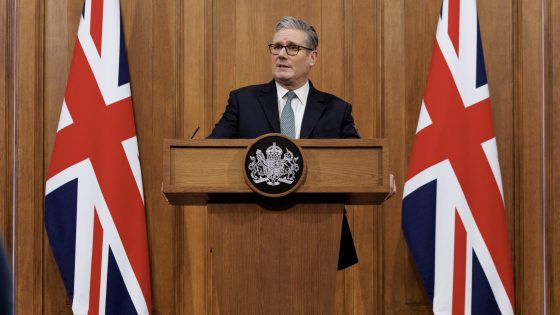
The events of May 12th unfolded rapidly, beginning with a series of high-profile departures that sent shockwaves through Downing Street. While the specific portfolios of the resigning ministers were not immediately disclosed, sources close to the government indicated that they represented key departments, suggesting a deep-seated fracture within the cabinet. The official statements released by the departing ministers hinted at fundamental disagreements over critical policy decisions, particularly concerning economic strategy and the government’s approach to persistent cost-of-living challenges. One departing minister reportedly cited "an unbridgeable chasm" between their vision for national recovery and the Prime Minister’s current agenda, while another alluded to a "failure of decisive leadership" in navigating ongoing domestic and international crises. These resignations have undeniably placed immense pressure on Sir Keir Starmer, who assumed the premiership with a mandate to deliver stability and economic growth.
Starmer’s Premiership Under Scrutiny: A Brief History
Sir Keir Starmer’s journey to Prime Minister had been marked by a period of rebuilding for the Labour Party following several challenging electoral cycles. His premiership, which commenced after a hard-fought general election, initially promised a new era of competence and ethical governance. Key policy pledges included significant investment in public services, a renewed focus on environmental sustainability, and a commitment to fiscal responsibility. However, like many modern administrations, Starmer’s government has faced a relentless barrage of challenges. Persistent inflationary pressures, an ongoing energy crisis exacerbated by geopolitical tensions, and a stagnating economy have tested his administration’s resilience. Public approval ratings have fluctuated, often reflecting the perceived success or failure of government interventions in these critical areas. Prior to May 12th, there had been growing whispers of discontent within the Labour Party’s backbenches regarding the pace of reform and the perceived lack of a clear, inspiring vision. Minor cabinet reshuffles and policy adjustments in the preceding months were seen by some as attempts to quell this internal dissent, but ultimately proved insufficient to prevent the dramatic events of this pivotal day.
Chronology of a Crisis
The current political instability did not emerge in a vacuum. A timeline of recent events helps contextualise the mounting pressure on Sir Keir Starmer:
- Late 2025: Economic forecasts downgraded, indicating slower-than-expected growth and persistent inflation. Public concern over the cost of living intensifies.
- January 2026: A highly anticipated government white paper on economic reform receives a lukewarm reception, with critics from both within and outside the Labour Party questioning its ambition and efficacy.
- February 2026: A key piece of legislation, aimed at reforming a contentious public service, faces significant opposition in Parliament, requiring substantial concessions from the government to pass.
- March 2026: Polls indicate a dip in public confidence in the Prime Minister’s handling of the economy, alongside a slight narrowing of the Labour Party’s lead over the opposition.
- April 2026: Rumours of cabinet disagreements begin to surface in political circles, focusing on internal debates over tax policy and departmental spending cuts.
- Early May 2026: Intense, closed-door meetings reportedly take place within Downing Street as the Prime Minister attempts to unify his senior team around a revised economic strategy.
- May 12, 2026 (Morning): Reports begin to emerge of high-level ministerial meetings concluding without resolution.
- May 12, 2026 (Afternoon): The first resignation is officially confirmed, followed quickly by three others, precipitating a full-blown political crisis. Downing Street issues a brief statement acknowledging the resignations and reiterating the government’s commitment to its agenda. Drapers initiates its industry survey.
- May 12, 2026 (Evening): Opposition parties call for a vote of no confidence or a general election, citing government instability.
The Fashion Retail Sector Divided: Voices from Drapers’ Survey
The Drapers inquiry into the fashion retail sector’s reaction to the political upheaval revealed a stark division of opinion regarding Sir Keir Starmer’s future. The industry, inherently sensitive to consumer confidence and economic stability, expressed both deep concern and varying perspectives on the best path forward.
A significant portion of respondents articulated a belief that Starmer should resign. "The current level of political instability is anathema to business confidence," stated the CEO of a major high-street fashion chain, requesting anonymity. "Consumers are already tightening their belts; a government in disarray only exacerbates this uncertainty, making discretionary spending, particularly in fashion, an even lower priority. We need decisive leadership and a clear economic plan, not this constant flux." Others echoed this sentiment, arguing that a change in leadership, while potentially disruptive in the short term, might offer a clearer path to stability and a renewed sense of direction. "We cannot afford a prolonged period of indecision from Number 10," commented the head of a fast-growing online retailer. "Investment decisions are on hold, expansion plans are paused. A fresh start, even if difficult, might be the only way to restore market confidence." These voices often highlighted the negative impact of political uncertainty on consumer behaviour, noting that discretionary purchases like clothing are among the first to be curtailed during times of economic anxiety.
Conversely, a substantial segment of the industry argued against Starmer’s resignation, positing that a leadership contest at this juncture would only deepen the crisis. "Another leadership election, another period of internal party wrangling, would simply prolong the agony," argued the director of a luxury fashion brand. "What the country, and indeed our industry, needs most right now is continuity, even if it’s imperfect. Stability, however fragile, is preferable to outright chaos." Proponents of Starmer staying argued that he should be given the opportunity to reshuffle his cabinet, reassert his authority, and demonstrate a renewed commitment to his core agenda. "Changing the captain mid-storm rarely ends well," offered a spokesperson for a prominent fashion industry body. "The focus should be on rallying around the Prime Minister to deliver on existing commitments, not on triggering further destabilisation. We need policy certainty, not just a new face." These respondents often pointed to the potential for further economic downturn if political instability continued, regardless of who was at the helm.
A third group of respondents expressed a more cautious, neutral stance, emphasising the need for any government, regardless of leadership, to prioritise economic stability and clear policy communication. "Our primary concern is the economic environment," said the owner of an independent boutique. "Whether Starmer stays or goes, we need a government that understands the challenges facing small businesses and is capable of implementing consistent policies to support growth and employment."
Economic Reverberations: Uncertainty for Consumers and Businesses
The political upheaval triggered by the ministerial resignations carries significant economic ramifications that extend far beyond the immediate political sphere. Investor sentiment, already fragile due to persistent inflation and global economic headwinds, is likely to be further dented. Major stock market indices reacted with volatility, and the pound sterling experienced fluctuations as markets digested the news of government instability.
Consumer confidence, a critical driver for the retail sector, is particularly vulnerable. Economic data from the preceding months had already indicated a cautious approach by consumers, with year-on-year retail sales growth slowing to a modest 1.2% in April 2026, down from 3.5% a year prior. Furthermore, inflation, though showing signs of moderation from its peak, remained stubbornly above the Bank of England’s target of 2%, hovering around 4.1%. This sustained pressure on household budgets means that any additional political uncertainty is likely to translate into further tightening of discretionary spending. Reports from the Office for National Statistics (ONS) indicated a slight contraction in household disposable income in Q1 2026, making consumers even more susceptible to news of instability. Businesses, too, face increased challenges. Investment decisions often hinge on a stable political and economic outlook. Prolonged uncertainty can lead to deferred capital expenditure, reduced hiring, and a general slowdown in business expansion, directly impacting employment figures and overall economic output.
Specific Challenges for Fashion Retail
The fashion retail sector, in particular, is uniquely exposed to these economic and political shifts. As a discretionary spend category, it is often the first to feel the pinch when consumers become more cautious.
- Consumer Confidence: A lack of faith in the government’s ability to manage the economy directly translates into reduced consumer willingness to spend on non-essential items like clothing and accessories. This could exacerbate existing trends of reduced footfall in physical stores and a more selective approach to online shopping.
- Supply Chain Stability: International trade agreements and customs procedures, often influenced by political stability and government policy, are crucial for an industry heavily reliant on global supply chains. Any perceived shift in policy or trade relations due to a change in leadership could introduce new complexities and costs.
- Investment and Innovation: The fashion industry requires continuous investment in technology, sustainability initiatives, and marketing. Political uncertainty can deter both domestic and foreign investment, slowing down innovation and hindering the sector’s ability to adapt to evolving consumer demands and environmental regulations.
- Workforce Implications: Retail employment, particularly in fashion, is sensitive to economic downturns. A period of prolonged uncertainty could lead to job freezes, redundancies, and a struggle to retain talent as businesses batten down the hatches.
- Sustainability Agenda: Many fashion brands have committed to ambitious sustainability targets. Government policies, grants, and regulatory frameworks often underpin these initiatives. A change in leadership could lead to a reprioritisation of environmental policies, potentially disrupting the industry’s progress in this critical area.
Statements from Downing Street and Opposition Benches
In the immediate aftermath of the resignations, Downing Street issued a statement affirming the Prime Minister’s determination to continue leading the country. A spokesperson stated, "The Prime Minister remains focused on delivering for the British people and implementing the government’s agenda for growth and stability. We acknowledge the challenges but are resolute in our commitment to overcoming them." Efforts were reportedly underway to fill the vacant ministerial positions rapidly, with an announcement expected within days.
Meanwhile, opposition parties wasted no time in capitalising on the government’s disarray. The leader of the Conservative Party called the situation "a government in utter chaos, incapable of leading the nation through these challenging times." They reiterated calls for a general election, arguing that the public deserved a clear choice and a stable government. The Liberal Democrats echoed these sentiments, highlighting the need for immediate electoral reform to ensure greater governmental accountability.
The Path Forward: Implications for Governance and Industry
The coming days and weeks will be critical for Sir Keir Starmer’s premiership. His ability to swiftly appoint new ministers, unify his party, and articulate a clear, reassuring vision for the country will determine his political survival. Should he fail to quell the internal dissent and reassert his authority, a leadership challenge from within the Labour Party or sustained pressure for a general election appears increasingly likely.
For the fashion retail industry, the implications are profound. Businesses will be closely monitoring political developments, seeking any signs of renewed stability or a definitive shift in economic policy. Strategic planning will remain challenging in an environment of uncertainty, forcing many to adopt a more conservative approach to inventory, investment, and expansion. The Drapers survey highlights not just a division, but a collective anxiety within an industry that thrives on consumer confidence and a predictable economic climate. The debate over Starmer’s leadership is therefore not merely a political skirmish; it is a critical determinant of the operational environment for thousands of businesses and millions of jobs across the UK’s vibrant fashion retail sector. The outcome of this political crisis will undoubtedly cast a long shadow over the industry’s prospects for the remainder of 2026 and beyond.