




London’s historic Soho district has long served as a crucible for avant-garde expression, countercultural movements, and bohemian socializing. At the epicenter of this district sits The Groucho Club, a private members’ establishment renowned for its patronage of the arts, literary figures, and media elite since its founding in 1985. Over the past several days, the landmark townhouse on Dean Street has undergone a striking visual transformation. Passersby navigating the heart of the British capital have encountered a prominent crimson and emerald-green awning draped across the neoclassical facade. Bearing the enigmatic William Blake aphorism, “If the fool would persist in his folly he would become wise,” the installation signals a temporary yet profound shift in the institution’s visual and conceptual identity.
This arresting street-level intervention marks the arrival of Feast of Fools, a multi-disciplinary group exhibition curated and spearheaded by British artist Corbin Shaw. Known widely for his wry, subversively humorous critiques of contemporary masculinity, British identity, and institutional tradition, Shaw has utilized the hallowed halls of The Groucho Club to stage an elaborate theatrical critique. The exhibition draws its conceptual framework from the medieval European Feast of Fools—a historical festival where traditional social hierarchies were inverted, the poor assumed the roles of the rich, and ecclesiastical and political authorities were subjected to biting satire. By superimposing this historical tradition onto the modern contemporary art establishment, Shaw and a collective of invited emerging visionaries aim to dismantle, interrogate, and playfully mock the rigid conventions, exclusivity codes, and socio-economic value systems that govern the global art market.
Main Facts and Conceptual Framework
The Feast of Fools exhibition officially opened to the public following a high-profile private view held on Friday, October 16. Co-hosted by the Dazed Club community, the opening event served as a major convergence point for London’s contemporary creative underground and established art world insiders. Rather than presenting a homogenous body of work, Shaw opted for a collaborative, decentralized curatorial approach. He invited a cohort of nine rising artists and designers to occupy, subvert, and dialogue with The Groucho Club’s historic interiors.
The participating creatives whose works populate the labyrinthine rooms and winding staircases of the Soho townhouse include Danny Ische-Knoblauch, Alex Morante, Doron Beuns, Goldeh, Jett Sacher, Lily Bunney, Tegan Chinogurei, and Mia-Violet Leech. Across sculpture, installation, interactive media, and mixed-media painting, these ten artists explore a cohesive triad of contemporary anxieties: access, belonging, and institutional value.
The resulting exhibition forces a confrontation between the historical exclusivity of private London members’ clubs and the democratizing impulse of contemporary youth culture. Works are deliberately interspersed among the club’s permanent collection of blue-chip modern and contemporary art—featuring pieces by Damien Hirst, Tracey Emin, and Gavin Turk—creating a generational dialogue that bridges the YBA (Young British Artists) era with the current vanguard of British contemporary art.
Chronology of the Exhibition and Opening Night
The genesis of Feast of Fools traces back several months, emerging from ongoing dialogues between Corbin Shaw and cultural programmers seeking to inject participatory energy back into London’s traditional private spaces. Preparations culminated in the early-week installation of the exterior awning, which immediately generated significant foot-traffic interest and social media speculation across the city.
The timeline of the exhibition’s public debut unfolded through a carefully orchestrated sequence of events on Friday, October 16:
- 18:30 GMT: Doors opened for the Dazed Club private view, welcoming an invited community of emerging creatives, critics, and cultural practitioners up the winding staircase of the Dean Street institution.
- 19:00 GMT: Initial gallery walkthroughs commenced, featuring artist-led interactions with key installations. Guests were served custom cocktails provided by El Rayo, setting a convivial, unpretentious tone that contrasted sharply with the often sterile atmosphere of traditional white-cube gallery openings.
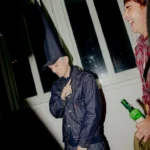
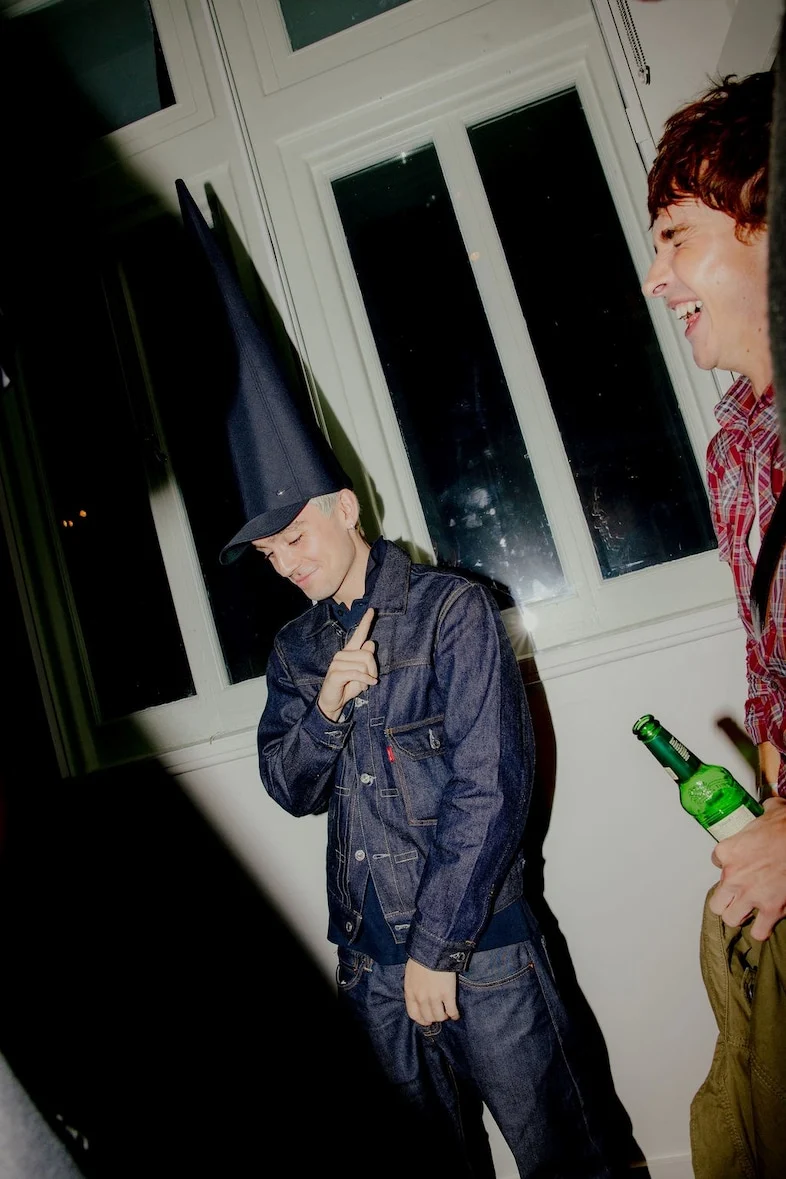
- 20:30 GMT: Interactive elements of the exhibition reached peak engagement. Visitors queued to test Tegan Chinogurei’s meticulously crafted, crucifix-shaped pool table, while others tried on Shaw’s subversive commentary piece: a traditional medieval dunce cap executed in inky black fabric and emblazoned with a contemporary Nike swoosh.
- 22:00 GMT onwards: The boundary between curated exhibition and celebratory house party dissolved. As custom drinks flowed and the recurring motif of the court jester rotated across digital displays and projected light installations, attendees dispersed into the darker corners of the club’s lounges, extending the event late into the night.
Supporting Data and Contextual Analysis
The contextual backdrop of Feast of Fools is rooted in the ongoing debate surrounding access and equity within the British cultural sector. According to recent data from the Department for Culture, Media and Sport (DCMS) and independent arts sector monitors, London remains the undisputed capital of the UK’s commercial art market, accounting for a significant majority of gallery sales and institutional foot traffic. However, the barriers to entry for emerging artists—particularly those outside traditional educational and socioeconomic networks—remain acutely high.
Private members’ clubs like The Groucho Club have historically functioned as the informal boardroom annexes of the art establishment. While instrumental in nurturing artistic movements such as Britart in the 1990s, these spaces can inadvertently reinforce insular networks of power and capital. By inserting a cohort of emerging, non-traditional makers into this environment, Feast of Fools generates quantifiable tension around the metrics of value assignment.
The artworks themselves serve as data points in a broader sociological inquiry. For instance, the physical placement of subcultural artifacts—such as Shaw’s Nike-branded dunce cap—alongside works worth hundreds of thousands of pounds on the secondary market directly challenges the objective basis of art valuation. It highlights the extent to which cultural capital is tied to institutional validation rather than intrinsic material worth.
Official Responses and Stakeholder Perspectives
While formal institutional press releases from The Groucho Club emphasized the club’s long-standing commitment to radical hospitality and artistic experimentation, statements and reactions inferred from participating artists and cultural partners point to a shared desire for systemic critique wrapped in accessible aesthetics.
Speaking on the motivations behind the exhibition, curatorial insiders noted that the project was designed to bypass the gatekeeping mechanisms that typically govern institutional shows. By collaborating with a youth-focused media platform like Dazed Club, the organizers successfully bridged the gap between elite institutional validation and grassroots cultural production.
"The art world takes itself exceptionally seriously," remarked an independent curator observing the private view. "It operates on layers of unspoken rules, dress codes, and financial vetting. What Corbin Shaw and this collective have achieved is a weaponization of humor. By dressing up as jesters, fools, and outsiders inside a citadel of the cultural elite, they are performing a legitimate critique of the systems that sustain them."
Representatives from Dazed Club echoed this sentiment, emphasizing the importance of physical, real-world community building in an era increasingly dominated by digital alienation. The collaboration underscores a strategic shift among contemporary media brands toward physical activations that foster direct, tactile engagement with art and culture.
Broader Impact and Implications
The implications of Feast of Fools extend far beyond a temporary pop-up exhibition in a Soho townhouse. As major cities globally grapple with the commercialization of artistic districts, rising property costs, and the gentrification of cultural spaces, interventions that question institutional authority carry heightened resonance.
By utilizing humor, historical pastiche, and participatory installation art, Shaw and his contemporaries have demonstrated that institutional critique does not need to be academic or exclusionary to be effective. Instead, by inviting the public into the machinery of the art world—and encouraging them to put on the dunce cap, play on the crucifix pool table, and question the value assigned to objects—the exhibition democratizes the discourse of contemporary art.
Furthermore, the success of the October 16 launch event signals a growing appetite for hybrid spaces where high-art curation intersects with subcultural nightlife. As cultural institutions search for ways to remain relevant to younger, more diverse demographics, the model established by Feast of Fools—decentralized curation, historical juxtaposition, and unapologetic irreverence—may well serve as a blueprint for future institutional engagements.
Ultimately, as the crimson and emerald awning continues to greet visitors on Dean Street, it stands as a physical manifestation of Blake’s wisdom: a reminder that acknowledging one’s own folly, and the absurdity of the systems we inhabit, is often the first step toward genuine institutional enlightenment.