










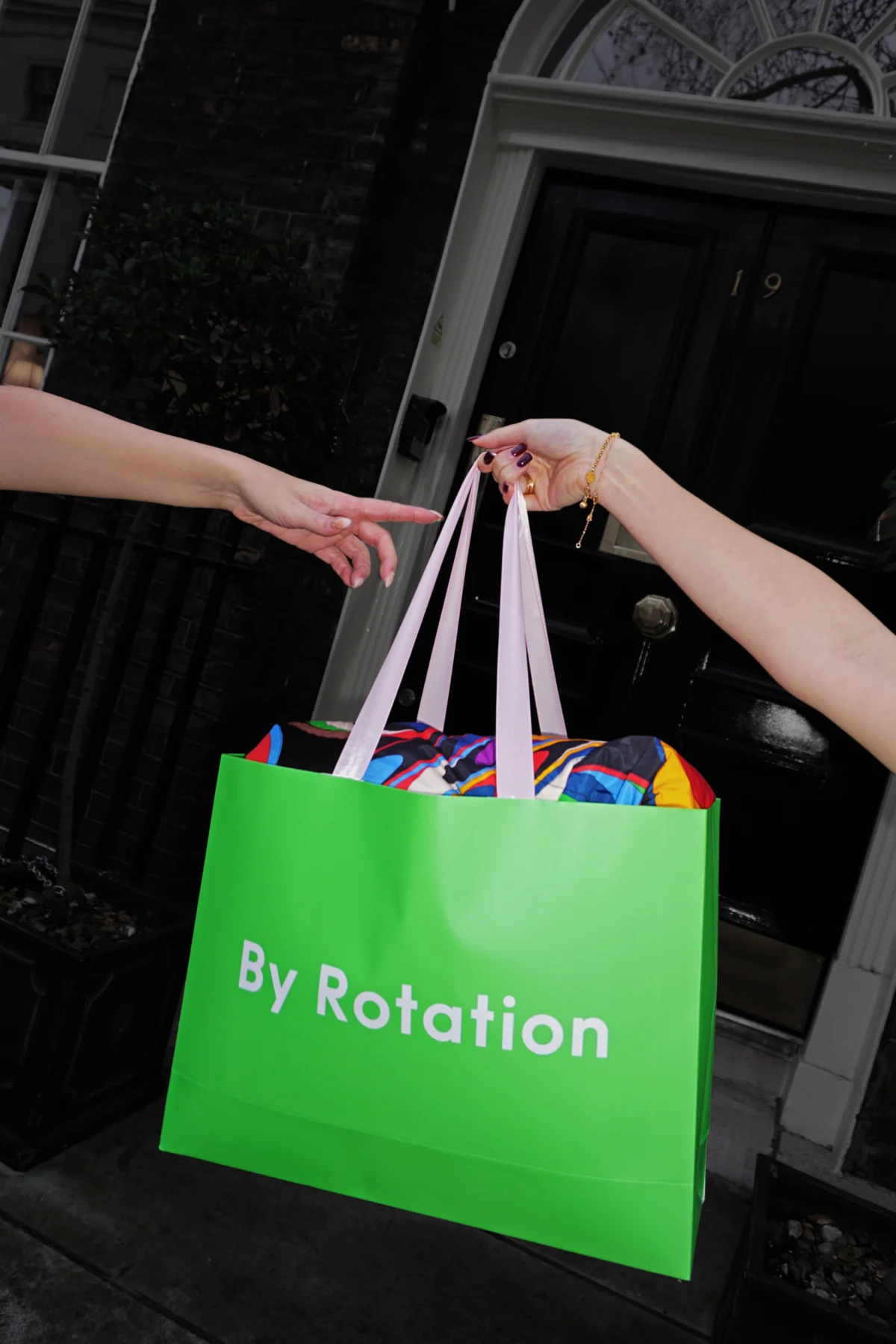
The United Kingdom’s fashion landscape is witnessing a significant shift in the intersection of technology, logistics, and sustainability as By Rotation, the nation’s leading peer-to-peer fashion rental platform, officially announced a strategic partnership with the global ride-sharing giant Uber. This collaboration, aimed at bridging the gap between high-speed e-commerce and the circular economy, allows users to rent designer outfits and have them delivered to their doorstep within 60 minutes. Operating initially as a seasonal push through May 31, the service utilizes Uber’s courier network to facilitate rapid peer-to-peer exchanges, primarily targeting the growing demand for high-end ski apparel and luxury event wear.
The partnership introduces a 10% discount for users who opt for the Uber-integrated delivery service, a move designed to incentivize the transition from "fast fashion" consumption to "slow fashion" sharing. By integrating Uber’s logistical infrastructure directly into the By Rotation app, the two companies aim to eliminate the primary barrier to peer-to-peer rental: the physical effort and time required to drop off and pick up items. As urban consumers increasingly prioritize convenience, this collaboration represents a critical evolution in how the sharing economy operates in dense metropolitan areas.
Addressing the Logistical Bottleneck of the Sharing Economy
Since its inception, the fashion rental market has faced a persistent challenge: the "logistics of immediacy." While traditional e-commerce platforms have spent billions perfecting next-day or same-day delivery from centralized warehouses, peer-to-peer platforms rely on decentralized individual wardrobes. This often means that a renter must coordinate a meeting with a lender or rely on traditional postal services, which can be unreliable for last-minute needs.
Eshita Kabra-Davies, the founder and CEO of By Rotation, identified this "friction point" as a major hurdle for the platform’s growth. According to internal data from By Rotation, approximately one in four rental requests are made within 48 hours of an event. This phenomenon, which Kabra-Davies describes as the "emergency economy," often leads to "sartorial panic"—a state where a consumer realizes they lack an appropriate outfit for an imminent engagement. Historically, this panic has driven consumers toward fast-fashion retailers, where cheap, disposable garments can be purchased quickly on the high street.
By partnering with Uber, By Rotation is positioning itself as a sustainable alternative to the "panic purchase." The integration allows a user to browse a neighbor’s wardrobe, secure a rental, and call an Uber Courier to handle the transit—all within an hour. This level of speed effectively mimics the convenience of a physical retail store while maintaining the environmental benefits of the circular economy.
The Strategic Focus on the Ski Industry
While the service is available for all categories of clothing on the platform, the current rollout is heavily geared toward the winter sports market. Skiing has seen a resurgence in popularity among UK travelers, with industry reports indicating a 7% increase in the number of UK skiers during the last season. However, the high cost of quality ski gear—often reaching thousands of pounds for a complete technical outfit—combined with the bulky nature of the items, makes it a prime candidate for the rental model.
By Rotation reported that 30% of its ski-related renters specifically look for same-day pickup. The logistics of transporting heavy salopettes, puffer jackets, and technical mid-layers across a city like London can be a significant deterrent. The partnership with Uber Courier alleviates this "luggage burden," allowing users to receive professional-grade gear without the long-term investment or the storage hassle. This niche focus serves as a proof-of-concept for how specialized logistics can support seasonal fashion trends.
Chronology of By Rotation’s Strategic Partnerships
The collaboration with Uber is not By Rotation’s first foray into creative brand synergy. The company has a history of identifying consumer pain points and partnering with established giants to solve them.
- 2019: The Launch: Eshita Kabra-Davies founded By Rotation as the UK’s first peer-to-peer fashion rental app, focusing on a community-led approach rather than a warehouse-heavy inventory.
- 2022: Global Expansion: The platform successfully launched in New York City, marking its first major international move and testing the appetite for P2P rental in the US market.
- 2024: The Airbnb Collaboration: Earlier this year, By Rotation partnered with Airbnb to offer complimentary designer wedding guest outfits for travelers booking destination wedding stays. This partnership targeted the "destination guest" demographic, recognizing the high cost of attending overseas weddings.
- 2024 (Late): The Uber Integration: The current partnership marks a transition from lifestyle-based collaborations to logistics-based integrations, focusing on the "last mile" of the rental journey.
This timeline reflects a deliberate strategy to embed the "shared wardrobe" concept into every facet of the modern consumer’s life, from travel and accommodation to daily transportation.
Supporting Data: The Rise of the Circular Economy
The partnership comes at a time when the circular economy is moving from a niche movement to a mainstream economic force. The global apparel rental market is projected to reach a valuation of several billion dollars by the end of the decade, driven largely by Gen Z and Millennial consumers who are increasingly conscious of the environmental impact of their wardrobes.
Fashion is currently cited as one of the world’s most polluting industries, responsible for an estimated 8-10% of global carbon emissions and 20% of global wastewater. By promoting the reuse of existing high-quality garments, By Rotation claims to help mitigate the demand for new production. The platform currently hosts more than 1 million users and manages a luxury inventory valued at over $100 million. By enabling lenders to monetize their wardrobes, the platform has also created a new stream of "passive income" for its community. In one notable case cited by the company, a top lender utilized her earnings to fund her IVF journey, highlighting the tangible economic impact of the peer-to-peer model.
Official Responses and Industry Implications
The integration of Uber Courier into a fashion platform is also a significant move for Uber. As the ride-sharing company seeks to diversify its revenue streams beyond passenger transport and food delivery (Uber Eats), its "Uber Direct" and courier services have become central to its growth strategy. By acting as the logistical backbone for local marketplaces, Uber is positioning itself as an essential utility for the urban "sharing economy."
Industry analysts suggest that this partnership could set a precedent for other retail sectors. If 60-minute delivery can be successfully applied to peer-to-peer fashion, it could theoretically be applied to home tools, electronics, or other underutilized household assets.
"It gives our community the luxury of choice," Kabra-Davies stated during the announcement. "They can now secure a high-quality, high-value piece over a disposable garment, simply because it can reach their door just as quickly." This sentiment underscores a broader shift in consumer psychology where "access" is beginning to outweigh "ownership," provided that access is frictionless.
Broader Impact and Future Projections
Looking ahead, By Rotation’s ambitions remain global. With a successful foothold in London and New York, the company is eyeing expansion into the United Arab Emirates (UAE) and other major fashion hubs. The goal, according to Kabra-Davies, is to make the "rotating wardrobe" the default mode of consumption globally.
The success of the Uber partnership will likely be measured by its ability to convert "panic buyers" into "emergency renters." If the pilot program proves successful through May, it could lead to a permanent integration, potentially expanding to other cities where Uber’s courier network is already established.
Furthermore, the partnership highlights the increasing importance of "interoperability" between apps. By allowing a fashion app to communicate seamlessly with a logistics app, the user experience is simplified, reducing the "cognitive load" of choosing a sustainable option. In an era where convenience is the ultimate currency, the ability of By Rotation and Uber to synchronize their services may be the key to making sustainable fashion a viable competitor to the fast-fashion giants that have dominated the market for decades.
As the May 31 deadline approaches, the industry will be watching closely to see if this 60-minute delivery model can scale. If it does, the "emergency economy" may no longer be defined by a rush to the nearest high-street store, but by a quick tap on a smartphone to summon a neighbor’s designer wardrobe via an Uber courier. This evolution marks a definitive step toward a more efficient, circular, and technologically integrated future for global fashion consumption.