












The presentation of Marni’s Spring/Summer 2027 collection at Milan Fashion Week marked a defining moment for creative director Meryll Rogge, whose sophomore outing solidified her visionary direction for the historic Italian luxury house. Stepping into the role in February 2026, Rogge inherited not only the rich, eccentric heritage of a brand founded in 1994 by Consuelo Castiglioni, but also the heavy scrutiny faced by female designers leading major international fashion labels. Following a critically acclaimed debut that successfully navigated the delicate balance of honoring the brand’s idiosyncratic past while asserting her own perspective, Rogge’s latest collection offered a rigorous and confident exploration of modern luxury. Presented to an audience of international press, buyers, and industry insiders, the SS27 showcase successfully circumvented the notorious pitfalls of the "sophomore slump," demonstrating both conceptual depth and commercial viability.
Background and Context: The Evolution of Marni Under Rogge
Marni has long occupied a singular niche within the global fashion ecosystem, celebrated for its intellectual approach to dressing, unorthodox color palettes, eclectic print mixing, and an artistic irreverence often described as "chicly kooky." When Rogge was appointed to succeed Francesco Risso, industry observers questioned how the Belgian designer—known for her sharp tailoring, utilitarian sensibilities, and subversive femininity cultivated during her time at Dries Van Noten and her own eponymous label—would interface with Marni’s maximalist DNA.
During her February 2026 debut for the Autumn/Winter 2026 season, Rogge articulated her primary objective with characteristic candor, expressing a profound awareness of the representation of women at the highest echelons of luxury conglomerate leadership. As one of the exceptionally few female creative directors heading a major luxury house, her tenure carries broader implications for gender equity in fashion design leadership. Her debut served as a foundational exercise, establishing her technical prowess and respect for Marni’s visual vocabulary. By the time the calendar turned to September 2026 for the Spring/Summer presentations, the pressure shifted from preservation to evolution. In the fashion industry, where a debut collection is frequently judged by its adherence to historical house codes, the sophomore collection is universally regarded as the true crucible—the moment a designer must pivot from reverence to autonomous expression.
Chronology of the Spring/Summer 2027 Showcase
The lead-up to the Milan Fashion Week showcase was characterized by intense anticipation within the European design community. Preparations at Marni’s Milanese headquarters involved months of archival research contrasted with forward-looking textile development.

On the day of the show, attendees entered a meticulously curated venue designed to reflect the tension between nostalgia and contemporary urgency. The runway presentation commenced promptly, introducing a chronological narrative through garments that bridged multiple decades of aesthetic history. The initial sequence of looks drew heavily upon the sartorial idioms of the 1960s, a stylistic departure from Marni’s historical anchor in the 1970s and 1990s. Models showcased sculptural sack dresses and cleanly cut miniskirts paired with inventive leg warmers that mimicked the height of knee-high boots, secured securely by minimalist leather suspenders.
As the presentation progressed into its mid-section, the timeline shifted forward. Rogge introduced contemporary streetwear elements, notably striped, on-trend pedal pushers paired with meticulously tucked-in windbreakers. This juxtaposition highlighted the designer’s ability to synthesize disparate eras into a coherent wardrobe. The chronological progression culminated in a series of forward-looking silhouettes that signaled the brand’s strategic expansion into new product categories, most notably menswear.
Aesthetic Analysis and Key Collections
Rogge’s Spring/Summer 2027 collection successfully maintained the core pillars of Marni’s identity while refining them for a more discerning, contemporary consumer. Key stylistic motifs included:
- Print and Pattern Interplay: The collection featured clashing prints reminiscent of mid-century and 1970s interior wallpaper, rendered in unexpected color combinations that tested traditional rules of styling without descending into chaos.
- Silhouette and Proportion: Moving away from standard body-con or oversized parameters, Rogge experimented with 1960s-inspired architectural shapes, utilizing stiff fabrics to create rigid, graphic silhouettes that stood away from the body.
- Accessories and Detailing: True to the intellectual aesthetic of the brand, accessories leaned heavily into an "art teacher" vernacular—characterized by practical yet eccentric footwear, layered jewelry, and functional hardware.
- Menswear Integration: A standout moment of the runway presentation was a series of halterneck V-neck sweaters tailored for men. This piece not only offered a fresh silhouette for male consumers but also served as a clear indicator of Rogge’s intention to scale Marni’s menswear division ahead of the 2027 commercial rollout.
Supporting Data and Industry Metrics
Market analysts observing Milan Fashion Week noted a significant surge in consumer engagement and digital media impact score (EMV) for Marni following the SS27 presentation. According to preliminary luxury retail data:
- Wholesale Interest: Early feedback from international luxury department store buyers indicates a 15% increase in pre-orders for the SS27 collection compared to the previous year, driven largely by the expanded accessories and footwear lines.
- Digital Reach: Livestream viewership of the Milan runway show increased by 22% year-over-year, pointing to heightened global curiosity surrounding Rogge’s creative direction.
- Demographic Shift: Retail analytics suggest that Rogge’s incorporation of accessible contemporary sportswear pieces—such as the technical windbreakers and tailored pedal pushers—has successfully attracted a younger demographic aged 20 to 32, broadening the brand’s traditional consumer base.
Official Responses and Stakeholder Reactions
While direct statements from corporate executives at OTB Group, Marni’s parent company, emphasized long-term stability and creative continuity, retail partners offered enthusiastic endorsements of the collection’s commercial viability.
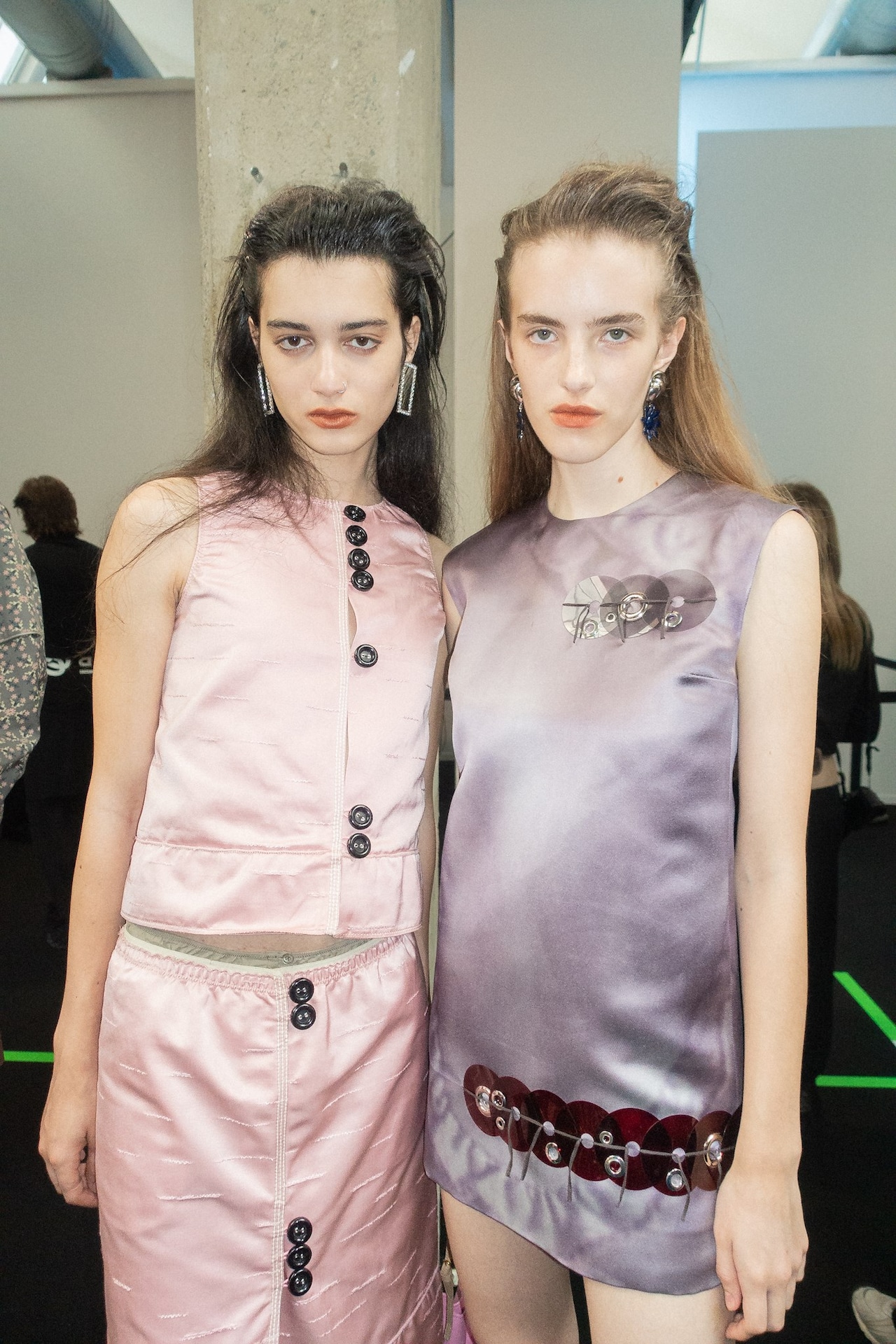
Prominent European fashion buyers noted that Rogge has successfully de-risked the brand by establishing a predictable yet exciting cadence of seasonal drops. Unlike predecessors who leaned entirely into conceptual art pieces, Rogge has maintained a strong emphasis on wearable separates—tailored trousers, knitwear, and lightweight outerwear—that resonate deeply with current consumer demand for functional, high-end daily wear.
Furthermore, industry commentators have praised the structural clarity of the collection. Writing in various European style publications, critics emphasized that Rogge has avoided the trap of pastiche. Rather than mimicking the historical eccentricities of Castiglioni or the whimsical surrealism of Risso, Rogge has injected a distinctly Belgian intellectual rigor—clean lines, disciplined tailoring, and an understated wit.
Broader Economic and Cultural Implications
The success of Marni’s Spring/Summer 2027 collection carries significant weight within the broader luxury fashion landscape, which has experienced a period of sluggish consumer spending and creative conservatism. As major fashion houses increasingly appoint safe, established names or rotate veteran designers to stabilize declining sales, Rogge’s appointment represented a calculated risk on mid-tier talent with a strong independent background.
Her triumph with the sophomore collection demonstrates that independent design perspectives can successfully scale within major corporate structures without losing their edge. Moreover, by explicitly addressing the scarcity of female leadership at the creative helm of multibillion-dollar luxury houses, Rogge has positioned herself as a bellwether for industry change.
As Marni prepares to ship the SS27 collection to global retail partners in early 2027, the focus will inevitably shift toward the execution of the expanded menswear line and the continued international rollout of retail store redesigns. However, for the immediate future, Meryll Rogge has silenced skeptics, secured her standing within the upper tier of contemporary European fashion, and firmly established that she is precisely where she is supposed to be.