





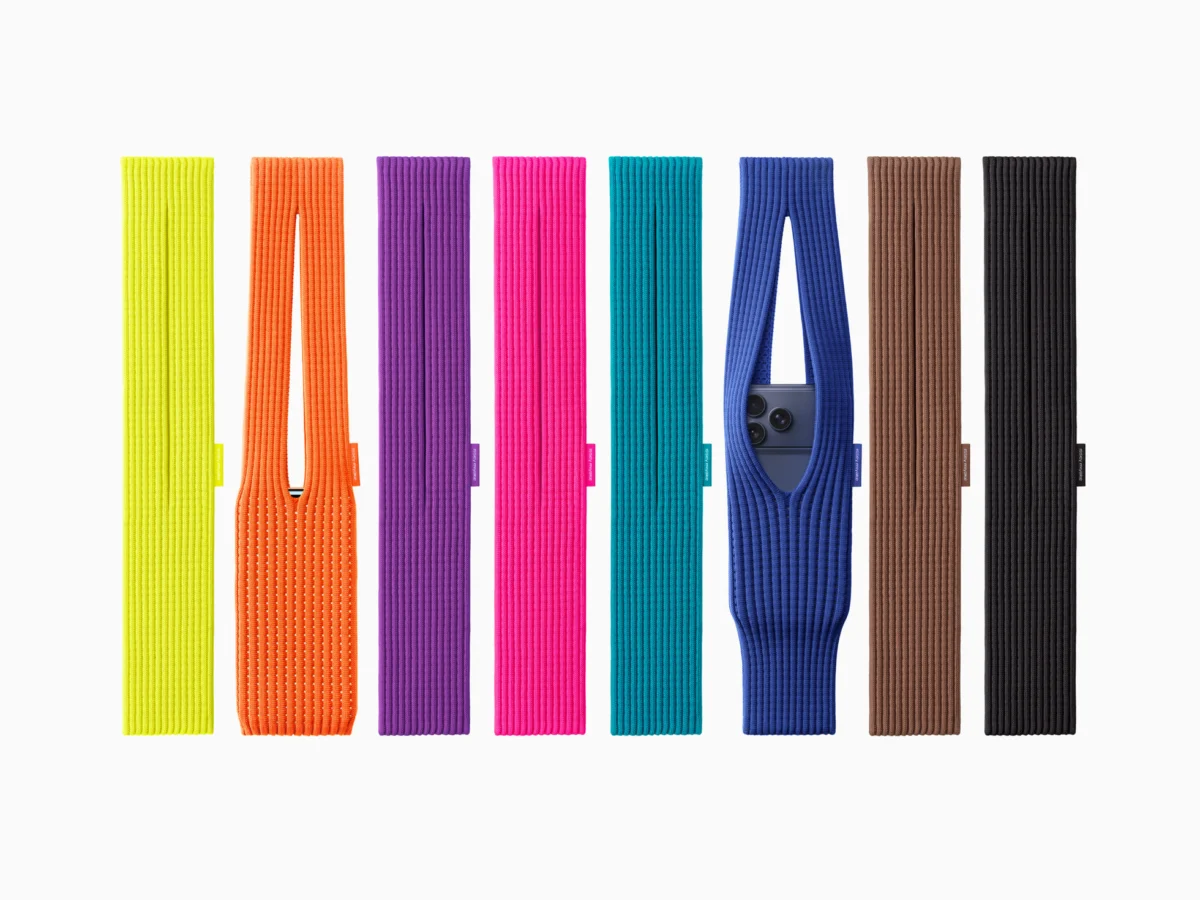
Apple has officially expanded its high-end accessory lineup with the introduction of the iPhone Pocket, a minimalist carrying solution designed in collaboration with the renowned Japanese fashion house Issey Miyake. The product, which debuted on the Apple Store this week, represents a significant intersection of consumer electronics and avant-garde textile engineering. Retailing at $149.95 for the short "hand-held" version and $229.95 for the long "crossbody" variant, the iPhone Pocket is positioned as a premium lifestyle product rather than a traditional protective case. The launch follows a history of polarizing accessory releases from the Cupertino-based tech giant, most notably the $19 Polishing Cloth, but marks the first formal product collaboration between Apple and the studio of the late Issey Miyake.
Design Philosophy and Technical Specifications
The iPhone Pocket is built upon the "A Piece of Cloth" (APOC) concept, a revolutionary manufacturing technique pioneered by Issey Miyake and designer Dai Fujiwara in 1997. The APOC system uses computer-controlled knitting technology to create entire garments from a single continuous tube of fabric, significantly reducing material waste and eliminating the need for traditional cut-and-sew assembly.
The iPhone Pocket features a distinctive ribbed mesh structure that echoes the signature pleats for which the Miyake brand is globally recognized. According to Apple’s product description, the textile is engineered to be both elastic and durable. When the fabric is stretched by the weight or shape of the iPhone, the open-weave structure becomes more translucent, allowing users to view incoming notifications or check the time on the device’s Always-On display without removing the phone from the pocket.
The accessory is available in two distinct configurations. The short version is designed to be attached to larger bags or carried as a wristlet, available in a diverse palette of vibrant colors, including "Lemon." The long version, intended for crossbody wear, is offered in a more limited color selection, targeting the growing market for "phone-as-accessory" fashion.
Historical Context: The Jobs-Miyake Relationship
While the iPhone Pocket is the first official co-branded retail product between the two entities, the relationship between Apple and Issey Miyake spans decades. The collaboration is deeply rooted in the personal history of Apple co-founder Steve Jobs.
In the early 1980s, during a visit to Sony’s headquarters in Japan, Jobs was impressed by the company’s employee uniforms designed by Miyake. The uniforms, which featured ripstop nylon jackets with sleeves that could un-zip to become vests, promoted a sense of corporate unity. Jobs attempted to implement a similar uniform policy at Apple, commissioning Miyake to design a vest for Apple employees. However, the idea was met with significant resistance from the Apple workforce.

Despite the failure of the corporate uniform project, Jobs developed a close personal friendship with Miyake. He requested that the designer create a personal "uniform" for him that would provide daily convenience and a distinct visual identity. Miyake responded by producing hundreds of copies of a black mock-neck sweater. This garment became the cornerstone of Jobs’ iconic daily attire—paired with Levi’s 501 jeans and New Balance sneakers—symbolizing the "quiet genius" and sleek minimalism that eventually defined Apple’s product design philosophy.
Although Issey Miyake passed away in 2022, his studio continues to operate under his design principles. The release of the iPhone Pocket is viewed by industry analysts as a posthumous tribute to the synergy between Jobs’ digital revolution and Miyake’s textile innovation.
Market Trends and the Rise of "Accessories for Accessories"
The launch of the iPhone Pocket occurs amidst a broader shift in the luxury goods market toward "micro-accessories" and "accessory augmentation." The tech industry has observed a trend where functional items are increasingly treated as fashion statements.
- The Crossbody Phone Trend: Brands such as Bandolier have popularized the concept of the phone as a standalone wearable item. Apple previously entered this space with its own $59 crossbody strap, but the Miyake collaboration elevates the concept into the luxury fashion tier.
- Micro-Bags and Charms: The "short" version of the iPhone Pocket taps into the "bag charm" trend currently dominating the fashion industry. This is evidenced by the massive popularity of "Labubu" vinyl figures—monster-themed plush keychains that have seen resale prices reach as high as $10,000 for rare editions.
- Miniaturization of Icons: Retailers such as IKEA, Lululemon, and Baggu have successfully marketed miniature versions of their signature bags as keychains. The iPhone Pocket follows this logic, offering a "miniature" textile environment for the user’s most essential piece of hardware.
Data from the luxury accessory sector suggests that consumers, particularly in the Gen Z and Millennial demographics, are increasingly willing to invest in high-margin, low-utility items that signal brand loyalty or aesthetic alignment. Apple’s decision to price the iPhone Pocket between $150 and $230 places it firmly within the "attainable luxury" category, alongside brands like Telfar or Longchamp.
Comparative Pricing and Consumer Reception
The pricing of the iPhone Pocket has generated significant discussion within the tech community. To provide context, the following table compares the iPhone Pocket to other notable Apple accessory releases and comparable luxury items:
| Product | Price | Category |
|---|---|---|
| Apple Polishing Cloth | $19.00 | Utility / Maintenance |
| Apple MagSafe Wallet | $59.00 | Functional Accessory |
| Apple Crossbody Strap | $59.00 | Utility Wearable |
| iPhone Pocket (Short) | $149.95 | Luxury Collaboration |
| iPhone Pocket (Long) | $229.95 | Luxury Collaboration |
| Hermès Case for iPhone | $350.00+ | Ultra-Luxury |
Initial reactions from tech analysts are mixed. Critics argue that the product offers minimal protection against drops or environmental hazards compared to traditional rugged cases. However, fashion journalists have praised the move as a sophisticated brand extension. The use of the APOC technology is particularly noted for its sustainability credentials, as the seamless knitting process produces virtually zero fabric scrap, aligning with Apple’s stated "2030" goal of carbon neutrality across its entire supply chain and product life cycle.
Broader Implications for Apple’s Strategy
The introduction of the iPhone Pocket suggests a strategic pivot for Apple’s accessory division. By moving away from purely functional silicone and leather (or "FineWoven") cases and toward high-fashion collaborations, Apple is diversifying its revenue streams in a maturing smartphone market.

1. Brand Elevation
By partnering with the Issey Miyake studio, Apple reinforces its image as a design-first company. This helps insulate the brand from being perceived as a mere utility provider, maintaining its status as a lifestyle symbol.
2. High-Margin Revenue
Textile-based accessories often carry significantly higher profit margins than hardware. The iPhone Pocket requires no electronic components, sensors, or batteries, yet commands a price point higher than the Apple Pencil or certain models of AirPods.
3. Ecosystem Integration
The "Pocket" is designed to complement the modern "wallet-less" lifestyle. With the proliferation of Tap to Pay (NFC) technology and digital car keys, the need for a traditional handbag or bulky wallet has diminished. The iPhone Pocket addresses the "minimalist carry" market, where the phone is the only necessary item for daily navigation.
Chronology of Apple’s Luxury Fashion Forays
The Miyake collaboration is part of a decade-long timeline of Apple’s attempts to bridge the gap between technology and the fashion runway:
- 2014: Apple hires Angela Ahrendts, former CEO of Burberry, to oversee retail operations.
- 2015: The launch of the Apple Watch Hermès edition, featuring handmade leather straps from the French luxury house.
- 2016: Apple sponsors the Met Gala’s "Manus x Machina: Fashion in an Age of Technology" exhibition.
- 2021: The release of the $19 Polishing Cloth, which becomes a viral sensation and sells out globally.
- 2023: Apple transitions away from leather in favor of "FineWoven" materials to meet environmental goals.
- 2025: The launch of the iPhone Pocket by Issey Miyake, marking a return to high-concept textile design.
Conclusion
The iPhone Pocket by Issey Miyake is more than a simple carrying case; it is a manifestation of Apple’s long-standing design heritage and its future ambitions in the luxury lifestyle sector. While the price point may be prohibitive for the average consumer, the product is likely to find a dedicated audience among design enthusiasts and collectors of Miyake’s work. As the line between digital devices and personal attire continues to blur, the iPhone Pocket serves as a high-profile experiment in how tech companies can leverage fashion history to create new categories of "must-have" accessories. Whether this "piece of cloth" becomes a staple of urban fashion or remains a niche collector’s item will depend on the market’s appetite for high-priced, high-concept minimalism in the coming holiday season.