










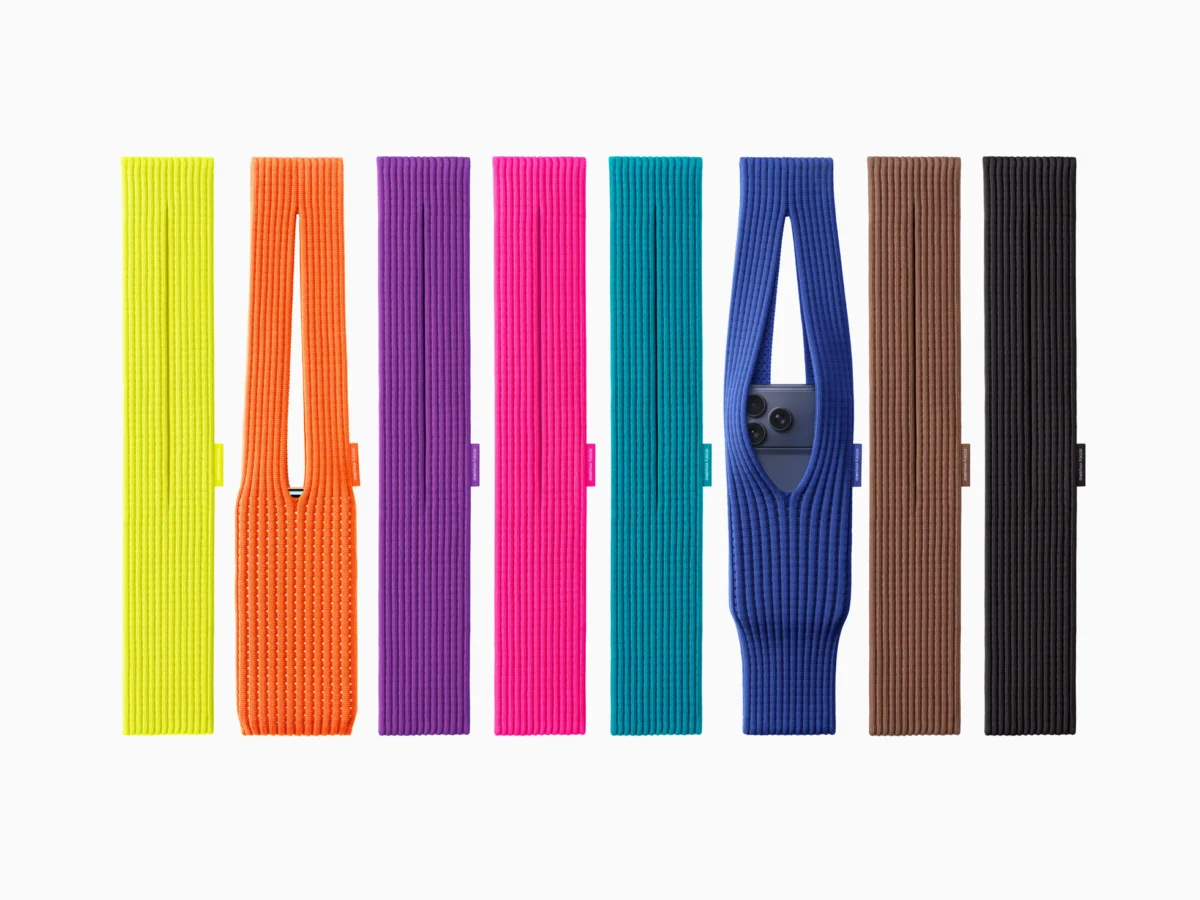
The global technology giant Apple has officially expanded its ecosystem of premium lifestyle accessories with the introduction of the iPhone Pocket, a high-end textile sling designed in collaboration with the renowned Japanese fashion house Issey Miyake. This new product line, which draws heavily on the avant-garde design principles of the late Issey Miyake, represents a significant move by Apple to further integrate its hardware into the world of luxury fashion. The iPhone Pocket is available in two distinct configurations: a "short" size intended for attachment to larger bags, retailing at $149.95, and a "long" crossbody version priced at $229.95.
The release marks a notable escalation in Apple’s strategy of offering high-margin, specialized accessories that cater to a niche intersection of technology enthusiasts and fashion-forward consumers. Following the viral success of the $19 Apple Polishing Cloth in 2021, the iPhone Pocket suggests a continued institutional confidence in the brand’s ability to market minimalist, high-concept goods at premium price points.
Design Philosophy: The A-POC Concept and Ribbed Mesh Construction
The iPhone Pocket is not merely a protective sleeve; it is a functional application of the "A-POC" (A Piece of Cloth) concept pioneered by Issey Miyake in 1997. The A-POC methodology utilizes a unique manufacturing process where a single piece of fabric is used to create a three-dimensional garment or accessory with minimal waste and no traditional sewing. This philosophy aligns with modern sustainability goals while maintaining a high level of artistic integrity.
The accessory features a signature ribbed mesh structure, reminiscent of the pleats that made Miyake a household name in the fashion industry. According to product specifications provided by Apple, the textile is engineered to be highly elastic. When the fabric is stretched by the weight or presence of the iPhone, the open-weave mesh subtly expands, allowing the user to view the time or notifications on the device’s display without removing it from the pocket. This "peek-through" functionality balances the need for device protection with the high-frequency usage patterns of modern smartphone owners.
The Historical Relationship Between Apple and Issey Miyake
While this is the first official commercial collaboration between the Apple brand and the Issey Miyake label, the relationship between the two entities dates back several decades. The connection was forged through a personal friendship between Apple co-founder Steve Jobs and Issey Miyake.
During a visit to Sony’s headquarters in Japan in the early 1980s, Jobs was impressed by the company’s employee uniforms, which were designed by Miyake. Jobs initially attempted to implement a similar uniform policy at Apple, though the idea was met with resistance from employees. Despite this, Jobs commissioned Miyake to design a personal uniform for him, resulting in the creation of the iconic black mock-neck sweaters that Jobs wore for nearly every public appearance for the remainder of his life.

Miyake reportedly provided Jobs with over 100 of these garments. This aesthetic—characterized by sleek, functional minimalism—became synonymous with Apple’s design language under Jobs’ leadership. Although Issey Miyake passed away in 2022, his design house has continued to operate under his established principles, eventually leading to this formal product partnership with Apple.
A Chronology of Apple’s Premium Lifestyle Accessories
The launch of the iPhone Pocket follows a clear timeline of Apple testing the limits of its brand equity through high-priced, non-electronic accessories.
- The iPod Sock (2004): Apple released a set of colorful knit sleeves for the iPod, priced at $29 for a pack of six. While initially viewed as a novelty, they became a cult favorite among early adopters.
- Apple Watch Hermès (2015): This marked Apple’s first major foray into true luxury, partnering with the French fashion house for premium leather bands and exclusive watch faces.
- The Polishing Cloth (2021): A $19 micro-fiber cloth that became a subject of intense online discourse, yet remained sold out for months after its debut.
- The Crossbody Strap (Early 2025): Earlier this year, Apple released a $59 utilitarian crossbody strap. While well-received by mobile photographers for its build quality, it was criticized by some for its lack of aesthetic versatility.
- The iPhone Pocket (November 2025): The current release represents the culmination of these efforts, merging the "sock" concept with luxury fashion heritage and premium pricing.
Market Context: The Rise of the Crossbody Phone Accessory
The iPhone Pocket enters a market that has seen a rapid rise in "wearable tech" that focuses on the physical carrying of the device rather than its internal software. Brands like Bandolier have popularized the concept of the smartphone as a primary fashion accessory, replacing the traditional wallet or handbag for users who rely on digital payments and keyless entry systems.
Data from the fashion retail sector indicates a growing consumer preference for "micro-bags" and phone-specific slings. This trend is driven by the increasing functionality of smartphones; as devices take over the roles of credit cards, identification, and keys, the need for a traditional large bag diminishes. The iPhone Pocket’s long version, priced at $229.95, directly competes with high-end leather goods in the "tech-luxury" category, positioning the iPhone not just as a tool, but as the centerpiece of an outfit.
Analyzing the "Accessory for an Accessory" Consumer Trend
The "short" version of the iPhone Pocket, which is designed to be tied to the handles of larger bags, taps into a specific cultural phenomenon often referred to as "accessorizing the accessory." This trend has been exemplified by the recent global craze for Labubu—designer art toy keychains that consumers attach to high-end handbags. In some markets, rare Labubu figures have seen resale prices exceed several thousand dollars.
Similarly, the trend of "Stanley Cup accessorizing"—where users attach small pouches, charms, and straws to their insulated tumblers—demonstrates a consumer desire to personalize and elevate everyday functional objects. By offering the iPhone Pocket in a variety of vibrant colors, such as "Short Lemon," Apple is providing a way for users to add a "pop of color" and a designer pedigree to their existing bags, such as the popular Telfar shoppers or Lululemon totes.
Manufacturing and Sustainability: Addressing Textile Waste
A key component of the Issey Miyake design ethos is the reduction of material waste. The A-POC technology used in the iPhone Pocket is a computer-programmed knitting process that creates the final shape of the product directly on the machine. This eliminates the "cut-and-sew" waste typical of traditional textile manufacturing, where large amounts of fabric scraps are discarded.

Industry analysts note that this focus on sustainable manufacturing allows Apple to justify the high price point to environmentally conscious consumers. Furthermore, the durability of the pleated mesh ensures that the product has a longer lifecycle than cheaper silicone or plastic alternatives, aligning with Apple’s broader corporate goal of becoming carbon neutral across its entire footprint by 2030.
Strategic Implications for Apple’s Luxury Market Positioning
The introduction of the iPhone Pocket serves several strategic purposes for Apple. First, it strengthens the company’s margins. Unlike iPhones or MacBooks, which require expensive components and complex global supply chains, textile accessories offer high profit margins relative to their production costs.
Second, it reinforces Apple’s status as a "prestige" brand. By aligning with a name like Issey Miyake, Apple distances itself from utilitarian competitors and cements its place in the luxury lifestyle market. This is particularly important in regions like East Asia and Europe, where the intersection of high fashion and consumer technology is a major driver of retail growth.
Finally, the product acts as a conversation starter. Much like the Polishing Cloth before it, the iPhone Pocket generates significant media coverage and social media engagement. Whether the public reaction is one of admiration for the design or skepticism regarding the price, the result is increased brand visibility and a reinforcement of the idea that Apple products are objects of desire.
While the iPhone Pocket may be viewed by some as a superfluous luxury, its release is a calculated move based on decades of design history and current consumer behavior trends. As the line between technology and fashion continues to blur, Apple appears committed to leading the market in both sectors, transforming the way users interact with and carry their most essential devices.