



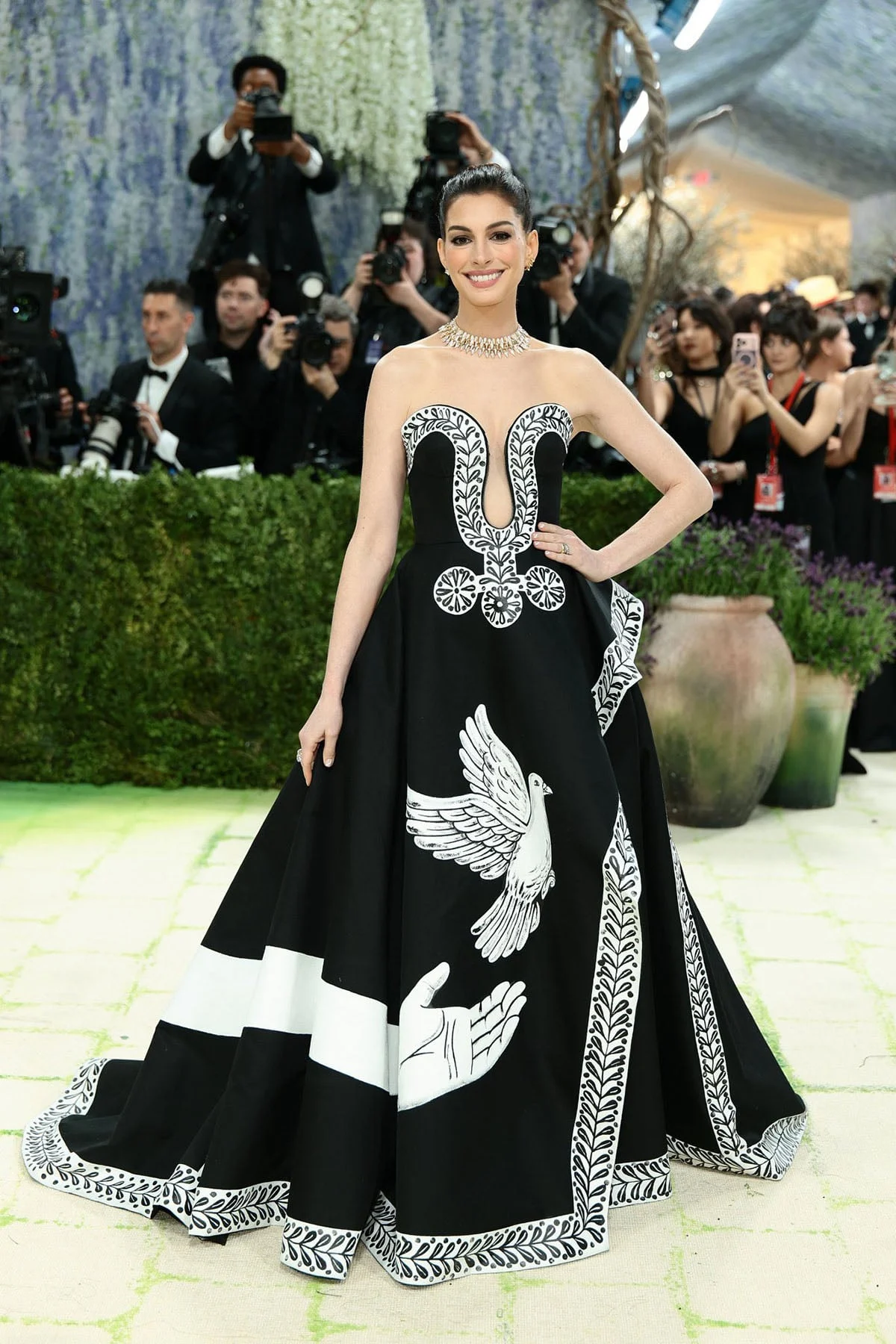
The 2026 Met Gala, centered on the conceptual theme of Costume Art, witnessed a significant intersection of cinema, fine art, and high fashion as Anne Hathaway arrived on the red carpet in a bespoke creation by Michael Kors Collection. Emerging from a high-profile international press tour for the highly anticipated sequel The Devil Wears Prada 2, Hathaway’s appearance marked a departure from the sleek, corporate-chic aesthetic of her recent character-driven wardrobe. Instead, the Academy Award-winning actress opted for a look that combined the regal silhouette of her early career milestones with a sophisticated, contemporary approach to wearable art. The ensemble, a strapless ball gown featuring hand-painted illustrations by renowned artist Peter McGough, served as a literal and figurative canvas, reinforcing the Met’s 2026 exploration of the garment as a medium for narrative expression.
Architectural Design and Artistic Collaboration
The foundation of the look was a classic strapless ball gown silhouette, a signature of the Michael Kors Collection’s evening wear. However, the traditional form was elevated through a unique collaboration with Peter McGough, an artist known for his work that often bridges the gap between historical eras and modern sensibilities. The gown was constructed from a heavy, matte silk faille, chosen specifically for its ability to hold the weight of paint without compromising the structural integrity of the bodice or the voluminous drape of the skirt.
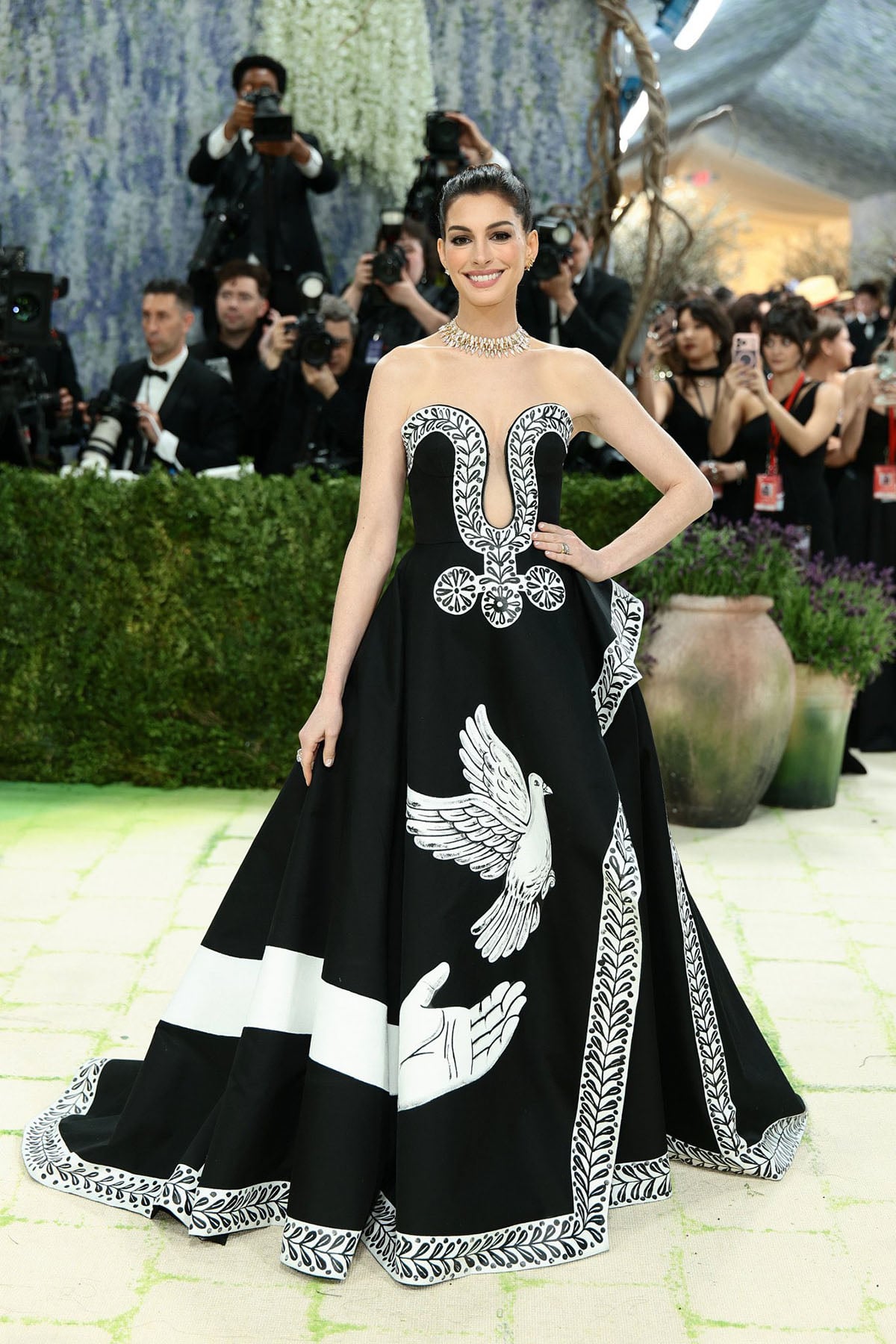
McGough’s contributions were not merely decorative but were integrated into the gown’s architecture. The hand-painted motifs featured a monochromatic palette of black and white, ensuring that the complexity of the imagery did not overwhelm the wearer. On the front of the skirt, prominent illustrations of hands and a dove were positioned to guide the viewer’s eye across the fabric. In the context of the "Costume Art" theme, these symbols were interpreted by fashion historians as a dialogue on peace and human connection—the dove representing a universal plea for harmony, while the outstretched hands signaled a sense of release or surrender to the creative process.
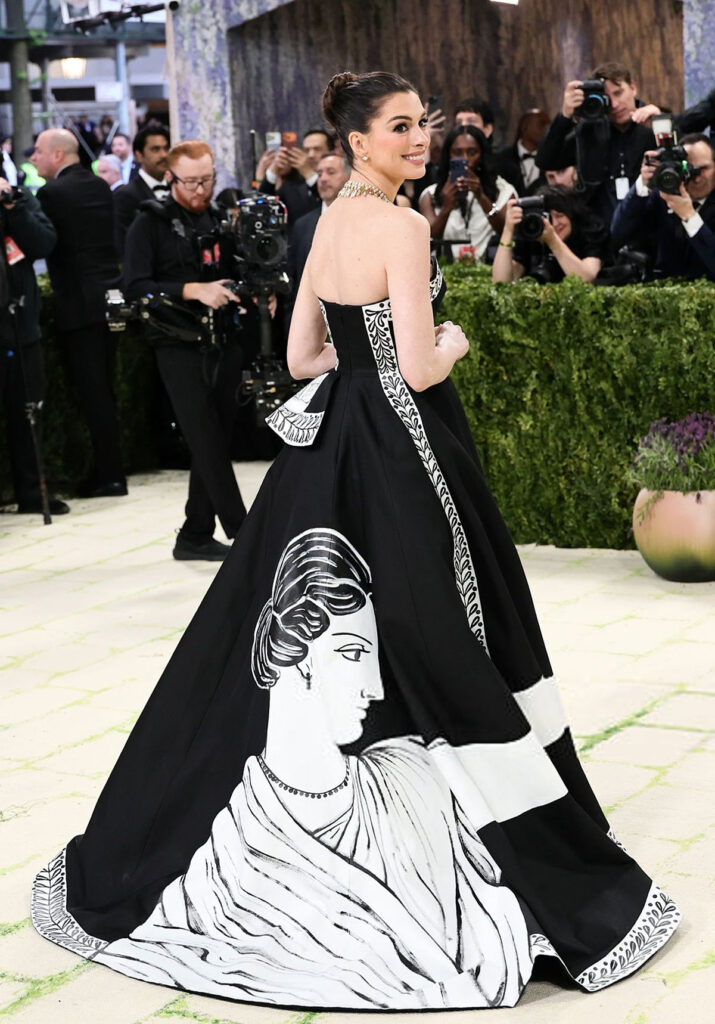
The reverse of the gown offered a stylistic shift, featuring a large-scale, classical-style profile reminiscent of Greco-Roman portraiture. This nod to art history grounded the piece in the tradition of the Old Masters, effectively turning Hathaway into a walking gallery. The placement of the portrait on the back of the gown ensured that her exit was as impactful as her entrance, providing a 360-degree experience of the artwork.
Chronology of the Hathaway Fashion Renaissance
Hathaway’s 2026 Met Gala appearance comes at a pivotal moment in her career and her standing within the global fashion industry. The timeline of her "fashion renaissance" can be traced back several years, but it reached a crescendo in the months leading up to the gala.
- Late 2025 – Early 2026: Hathaway began the global press tour for The Devil Wears Prada 2. Working closely with stylist Erin Walsh, she utilized the tour to showcase a series of high-fashion looks that paid homage to her character, Andy Sachs, while maintaining a modern, editorial edge.
- March 2026: Rumors began to circulate regarding the theme of the 2026 Met Gala, "Costume Art." Reports indicated that the Costume Institute intended to focus on garments that utilized traditional art techniques—painting, sculpture, and tapestry—rather than digital prints.
- April 2026: Michael Kors confirmed a collaboration with an unnamed "major artist" for a gala attendee. Hathaway, a longtime friend of the Kors brand, was immediately speculated to be the muse.
- May 4, 2026: Hathaway debuted the McGough-painted gown on the Met steps, signaling a shift from the "method dressing" of her film tour to a more abstract, intellectual fashion statement.
This appearance follows a string of successful Met Gala turns for Hathaway, including her viral 2023 Versace safety-pin dress and her 2018 "Heavenly Bodies" ensemble. Analysts suggest that her 2026 choice reflects a maturing style that prioritizes artistic depth over trend-driven spectacle.
Technical Specifications and Styling Details
To ensure the artwork remained the focal point, the styling of the ensemble followed a philosophy of strategic minimalism. Stylist Erin Walsh, who has been credited with much of Hathaway’s recent fashion success, curated a selection of accessories that complemented rather than competed with the Peter McGough illustrations.
- Jewelry: Hathaway wore a high-jewelry choker and matching stud earrings from Bvlgari. As a global ambassador for the brand, her choice of a structured, diamond-encrusted collar provided a sharp, geometric contrast to the fluid lines of the hand-painted motifs. The jewelry served to frame her face, drawing attention upward from the expansive skirt.
- Footwear: Beneath the voluminous layers of the gown, Hathaway wore custom sandals by Roger Vivier. The choice of Vivier, a brand with its own deep roots in the history of fashion-as-art, aligned with the evening’s overarching theme.
- Beauty: The hair and makeup were kept classic, featuring a soft, swept-back hairstyle that echoed the "Princess" aesthetic of her early career while allowing the classical profile painted on the back of the gown to be fully visible.
The structure of the gown itself was a feat of engineering. The full skirt required a lightweight yet rigid internal framework to maintain the "canvas" surface. This allowed the illustrations to remain legible even as Hathaway moved, preventing the fabric from folding or distorting the hand-painted images.
Analysis of the Costume Art Theme
The 2026 Met Gala theme, "Costume Art," was designed to challenge the distinction between the fine arts and the decorative arts. By inviting designers to collaborate with painters and sculptors, the Costume Institute aimed to highlight the labor-intensive, artisanal nature of high fashion.
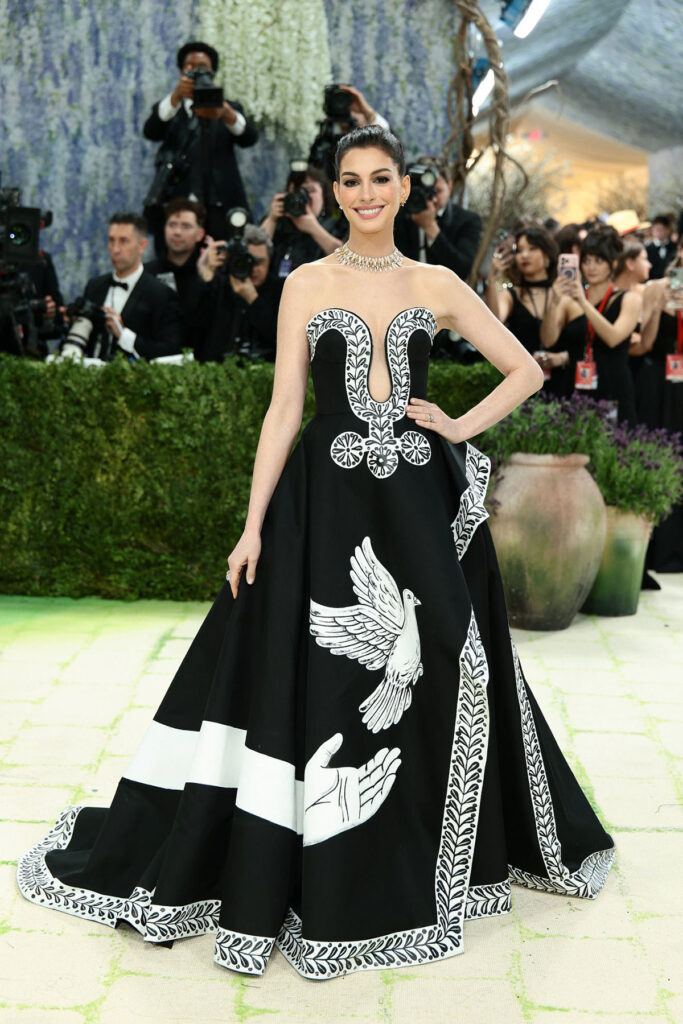
Hathaway’s Michael Kors gown is a primary example of this successful synthesis. Unlike digital printing, which can be replicated with ease, the hand-painted nature of the McGough motifs ensures that the garment is a "one-of-one" piece. This exclusivity is a core tenet of both the art market and haute couture. Industry experts noted that where other attendees may have interpreted the theme through abstract shapes or avant-garde silhouettes, Hathaway and Kors chose a direct, legible approach. By using the gown as a literal surface for imagery, they honored the tradition of narrative painting, a medium that has historically been used to document the very fashion it now adorned.
Market Impact and Official Responses
The collaboration between Michael Kors and Peter McGough is expected to have a lasting impact on the brand’s positioning. While Kors is often associated with "American sportswear" and accessible luxury, this venture into hand-painted, artist-led couture elevates the brand’s "Collection" line into the realm of high-art collectability.
In a brief statement following the event, a spokesperson for Michael Kors Collection noted, "The goal was to create a dialogue between the structure of the garment and the soul of the painting. Working with Peter McGough allowed us to treat the 2026 Met Gala as an exhibition space rather than just a red carpet."
Social media analytics and fashion retail data suggest that the "Hathaway Effect" remains potent. Within hours of her arrival, searches for "hand-painted gowns" and "Michael Kors Collection" saw a 140% increase in traffic. Furthermore, the look was widely praised by critics for its "legibility"—a term used in the industry to describe a look that is easily understood and appreciated by both fashion insiders and the general public.
Broader Implications for the Fashion Industry
The success of Hathaway’s 2026 Met Gala look suggests a growing trend toward "Slow Fashion" within the celebrity sphere. The move away from rapid-cycle trends in favor of garments that require hundreds of hours of manual artistry reflects a broader cultural shift toward sustainability and value. By commissioning an artist to paint a gown, the production process is slowed down, emphasizing the human hand in an increasingly automated world.
Furthermore, Hathaway’s ability to pivot from the commercial requirements of a film press tour to the intellectual requirements of the Met Gala reinforces her status as a versatile fashion icon. As The Devil Wears Prada 2 continues to dominate the box office and cultural conversation, Hathaway’s Met Gala appearance serves as a reminder that she is not merely a subject of the fashion world, but an active participant in its artistic evolution.
The 2026 Met Gala will likely be remembered for how it bridged the gap between the gallery and the wardrobe. In this landscape, Anne Hathaway and Michael Kors provided a definitive template for how fashion can serve as a vessel for storytelling, history, and fine art, ensuring that the look remains a point of reference for years to come.