







Alexandra Waespi, a photographer celebrated for her insightful documentation of niche communities, embarked on a photographic journey to Tokyo that transcended an initial exploration of the city’s vibrant nail art scene, evolving into an intimate portrayal of the young creatives defining its most expressive subcultures. Her ongoing series delves into the private realms of individuals immersed in Gyaru, Otaku, and other adjacent aesthetics that first emerged as significant cultural phenomena in the 1990s. This project, moving away from the often-depicted exterior spectacle of Tokyo, offers a rare glimpse into the bedrooms and personal spaces where these intricate identities are meticulously crafted, challenging prevalent misconceptions and revealing the profound personal meaning behind their distinctive beauty routines.
The Genesis of a Project: Unveiling Tokyo’s Inner Worlds
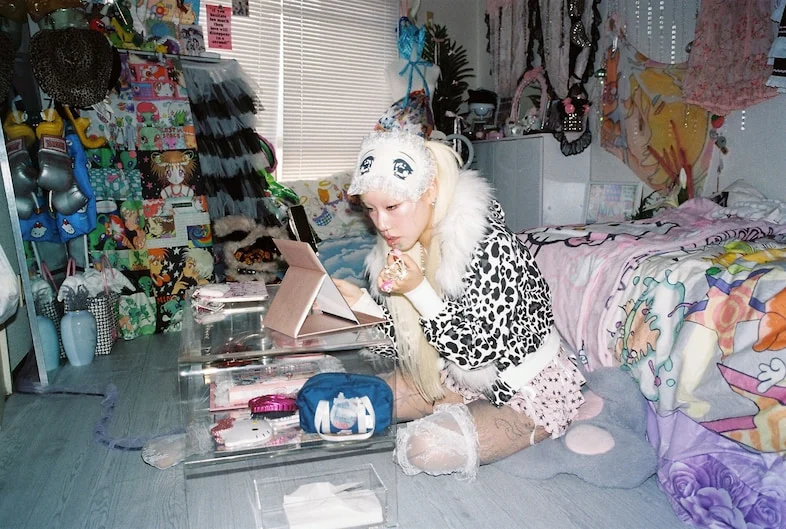
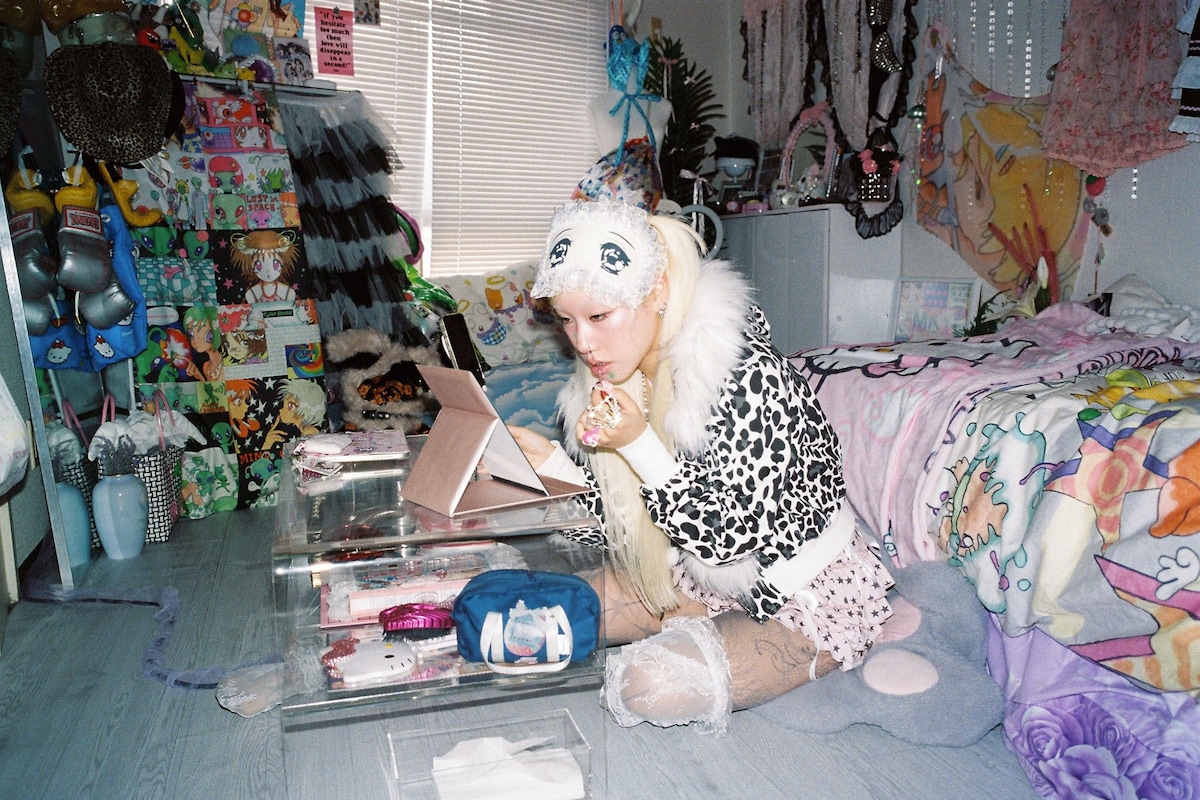
Waespi’s initial intent was to document Tokyo’s highly skilled nail artists, a community at the vanguard of the city’s maximalist beauty expressions. However, upon arrival, she quickly realized that the scope of this creative effervescence extended far beyond intricate manicures. Her lens soon turned to the broader ecosystem of young individuals whose lives revolved around these highly stylized forms of self-expression. This pivot allowed her to explore the multifaceted identities cultivated within these subcultures, leading her to the unexpected intimacy of their private bedrooms. These spaces, far from the bustling streets of Shibuya or Harajuku, serve as sanctuaries where personal narratives unfold amidst a rich tapestry of beauty tools, kitschy accessories, vibrant beads, and cherished toy dolls. Waespi notes, "The spaces all hold the tools they need to create and build these characters and worlds and identities." This observation underscores the profound connection between environment and identity, highlighting how physical surroundings become extensions of one’s inner world and creative aspirations.
The project implicitly challenges the often-superficial portrayals of Tokyo’s youth cultures, which frequently focus on their outlandish aesthetics without delving into the underlying motivations or personal stories. By entering these private domains, Waespi uncovers a deeper layer of meaning, revealing that these styles are not mere costumes but integral components of self-definition. Her work acts as a corrective lens, particularly for Gyaru, a subculture she found to be widely misunderstood. "I found how many misconceptions there are [about gyaru] and how misunderstood it is… it’s not just about clichés of big eyelashes, tanned skin and blonde hair," Waespi emphasizes. This statement serves as the core thesis of her project, aiming to deconstruct stereotypes and present a more nuanced, authentic narrative of these vibrant communities.
A Historical Glimpse: Tracing the Roots of Gyaru and Japanese Youth Subcultures
To fully appreciate the depth of Waespi’s photographic series, it is essential to contextualize the subcultures she explores. The 1990s in Japan marked a significant era for youth fashion and identity formation, giving birth to movements like Gyaru and solidifying the Otaku aesthetic. Gyaru, derived from the English word "gal," emerged as a rebellious counter-culture to traditional Japanese beauty standards, which often favored natural, demure looks. It was characterized by tanned skin, bleached or dyed hair (often blonde), heavy makeup with dramatic eyeliner and false eyelashes, and brightly colored, often provocative, fashion. This aesthetic was a bold declaration of individuality and freedom, moving away from societal expectations of conformity.
Over the decades, Gyaru evolved into numerous sub-styles, each with its distinct characteristics, demonstrating the incredible dynamism and creativity within the movement. Styles like "Kogal" (high school girls in loose socks and mini-skirts), "Ganguro" (extremely tanned skin with stark white makeup around the eyes and lips), "Manba" (an even more extreme version of Ganguro with vibrant colors and tribal-inspired patterns), and "Hime Gyaru" (a princess-like aesthetic featuring elaborate updos, voluminous dresses, and intricate accessories) illustrate the diverse spectrum of self-expression. These evolutions were not just fleeting trends but represented continuous innovation and adaptation, reflecting the shifting social landscapes and individual desires of their adherents. The common thread among them, however, remained the pursuit of a self-defined beauty that challenged the mainstream.
Parallel to Gyaru, the Otaku subculture, deeply rooted in anime, manga, video games, and pop culture, also developed its unique visual language. While not exclusively focused on beauty routines in the same overt way as Gyaru, Otaku culture often influences personal aesthetics through character cosplay, themed accessories, and a dedication to specific fictional worlds. The intersection of these subcultures, as explored by Waespi, highlights a shared commitment to crafting an identity that resonates deeply with personal interests and passions, often expressed through maximalist and highly personalized styling. Tokyo, with its unparalleled density of specialized fashion districts, niche boutiques, and beauty salons, has historically served as a fertile ground for the incubation and proliferation of such distinct youth movements, making it an ideal canvas for Waespi’s investigation.
The Private Sanctuary: Bedrooms as Laboratories of Identity
Waespi’s decision to focus on the subjects’ bedrooms is a critical element of her project’s methodology, offering an unprecedented level of intimacy and insight. These rooms are not just places of rest but serve as private laboratories where identities are experimented with, refined, and solidified away from public scrutiny. The cluttered mix of beauty products, accessories, and personal artifacts within these spaces is not chaos but a carefully curated environment that fuels creativity and self-affirmation. This stands in stark contrast to the often-polished and curated public images these individuals might present online or in public spaces. The bedroom becomes a sacred space, a sentiment echoed by Chipi, one of Waespi’s subjects, who describes her room as "proof of how I’ve protected myself all this time. It’s overflowing with all the cute things I love, and being in this space heals me and stops me from losing sight of who I am." This powerful statement highlights the role of personal space in mental well-being and identity maintenance, particularly in a society that can often be demanding of conformity.
The intimate setting allows Waespi to capture her subjects in their most authentic state, reflecting a vulnerability and dedication that might otherwise be obscured. The photographs become portraits not just of individuals, but of their inner worlds, revealing the intricate processes behind their outward presentations. This approach provides a counter-narrative to the idea that these beauty routines are superficial. Instead, they are shown as acts of profound self-care, artistic expression, and identity construction, rooted in deeply personal experiences and emotional needs.
Voices from the Subculture: Individual Narratives of Beauty and Self
Waespi’s series is enriched by the direct voices of the young women she photographs, each offering a unique perspective on their beauty philosophy and its connection to their personal spaces.
Chipi: The "Candy Doll" and Her Protective Lashes
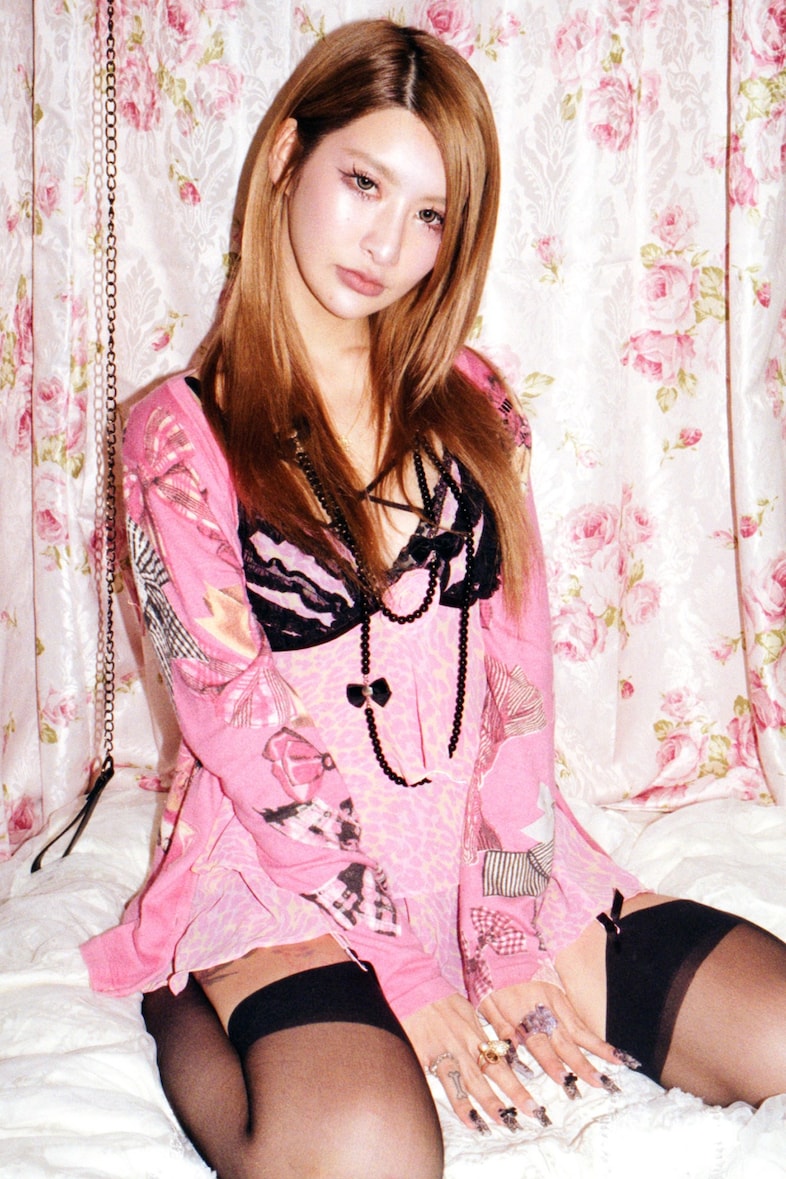
Chipi describes her personal style as "Candy Doll – a girl who looks like a sweet treat that’s probably bad for you." This intriguing self-description immediately hints at a playful yet complex identity. For Chipi, her room is more than just a living space; it’s a sanctuary. "Especially with work, there are times when I feel like I’m losing myself, so every day my room reminds me of the person I’m supposed to be. On weekdays, I come home and take off my ‘work armour,’ and on weekends, I dream about what kind of princess I want to become. It’s a sacred place." This powerful statement highlights the dual nature of her self-presentation: a public "work armour" versus a private, idealized "princess" persona nurtured within her personal haven.
Her beauty routine, even when performed under challenging circumstances like a hangover during the shoot, is meticulously executed. Chipi emphasizes her love for "intense lashes," stating, "The thicker they are, the more they feel like guardian spirits protecting me." This reveals a symbolic dimension to her makeup choices, where beauty elements serve as talismans for strength and confidence. Her preference for "cool-toned pinks and nude beige-pink lip and cheek colours" and "dreamy, ‘yumekawa’ unicorn colours" since childhood further links her aesthetic to a deep-seated desire for healing and enchantment. For Chipi, makeup is not just adornment but "armour," a means to maintain her authentic self and pursue her vision of becoming a "dreamy-cute old lady," even in old age. Her narrative underscores beauty as a lifelong journey of self-affirmation and protection.
Noah: Emotional Beauty and the Blue Aesthetic
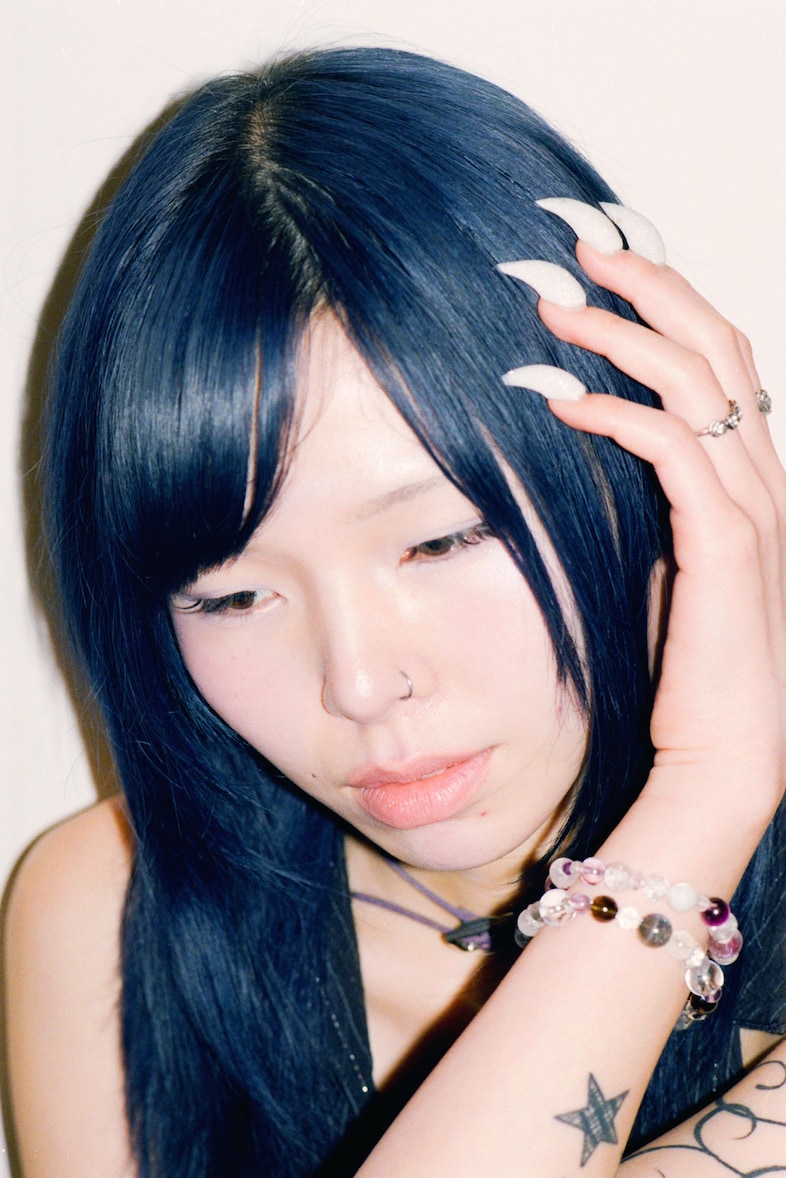
Noah’s approach to beauty is notably introspective, prioritizing feeling over overt aesthetics. She prefers "natural make-up" on herself, eschewing heavy lashes or dramatic looks, which contrasts with some of the more maximalist Gyaru styles. Her most striking feature is her blue hair, maintained for over six months. She explains, "when I first tried blue, it strangely felt so right on me. I think it matches the kind of aesthetic I love – a blend of cute, dreamy, melancholic, sensual and dark elements." This demonstrates a deep connection between her inner emotional landscape and her external presentation.
For Noah, beauty transcends superficiality: "To me, beauty is more about a feeling than just looking pretty. I love things that feel emotional, memorable and leave some kind of lingering mood behind." This perspective aligns with a more artistic and existential understanding of beauty, where the impact and resonance of an aesthetic are paramount. Her room, much like her hair, is a reflection of this internal world. She describes it as "a mood board for my nail art," where "the atmosphere, colours, lighting and objects around me naturally influence the emotions and aesthetics I create through nails." Noah’s narrative illustrates how personal environments are not merely backdrops but active participants in the creative process of self-expression.
Minori: Decoration as Self-Presentation
Minori views beauty through the lens of decoration, a skill she deeply cherishes. "What I’m good at, and what I truly love, is decorating things. I approach beauty with that same sense of decoration, so I believe that’s what gives my styling its own unique world and perspective." This perspective casts self-presentation as an intricate art form, where every element is intentionally placed and styled. Her room is a testament to this philosophy: "I want my room to be surrounded only by the things I love, and unless everything I see is decorated and arranged exactly the way I want it, I can’t truly relax." This highlights a meticulous approach to her surroundings, where order and aesthetic harmony are crucial for her well-being and creative flow.
In her shoot looks, Minori opted for a glossy skin texture with purple and white highlighter, avoiding bold colors to suit the bedroom setting. Her choice of green star stickers as an accent against pink styling reveals a keen eye for complementary contrasts. Her love for anime aesthetics is evident in her frequent use of blue contact lenses, influenced by the prevalence of "blonde-haired, blue-eyed girls" as characters. Minori also designs and makes her own nails, adapting them to her current obsessions, such as the "Hime Gyaru" look featuring "lots of pink, black, and pearls" during the shoot. Her story exemplifies the intricate interplay between personal passions, cultural influences, and a highly personalized approach to beauty.
Suzukei: Reviving the Heisei Gyaru Spirit
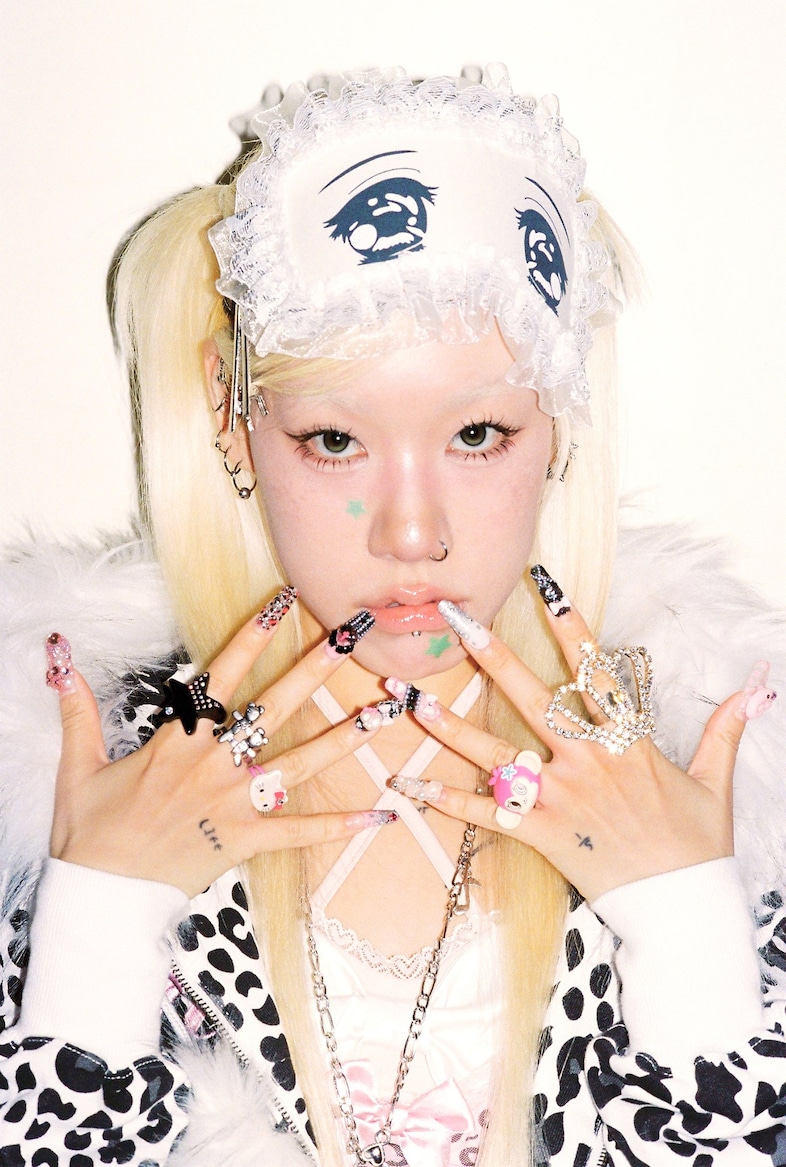
Suzukei embodies a classic interpretation of Gyaru, emphasizing its empowering and expressive qualities. For her, "gyaru make-up is all about creating a stronger, more expressive version of yourself." She identifies heavy eye makeup – "bold lashes, dramatic eyeliner, enlarged eyes, and that striking, exaggerated look" – as an iconic part of the culture, alongside hair, which "completely changes the vibe." This underscores the holistic nature of Gyaru aesthetics, where every element contributes to a cohesive, powerful statement.
For the shoot, Suzukei consciously aimed for a "classic Heisei gyaru feel," layering double upper lashes and adding lower lashes to achieve a "bigger and more dramatic" eye look. Her desire was for an "overall look to feel flashy, confident and nostalgic, like the glamorous gyaru styles you’d see in old Japanese fashion magazines from the 2000s." This reveals a deep historical awareness and appreciation for the roots of Gyaru culture, demonstrating a commitment to preserving and reinterpreting its legacy. Suzukei’s personal style is similarly rooted in this appreciation, describing herself as "always been really drawn to bold, expressive styles," and having "grown up loving Japanese Heisei-era fashion." Her current "obsession with gyaru culture and aesthetics" is a living testament to the enduring appeal and transformative power of this subculture.
Broader Implications: Authenticity, Agency, and Global Influence
Alexandra Waespi’s project stands as a significant contribution to the understanding of contemporary Japanese youth culture. By focusing on the intimate narratives and private spaces of these young women, her work transcends superficial observations and delves into the psychological and sociological underpinnings of self-expression. It highlights that these elaborate beauty routines and aesthetic choices are not merely fleeting fashion trends but profound acts of agency, identity construction, and personal empowerment. In a world increasingly dominated by standardized beauty ideals and mass-produced aesthetics, the dedication and creativity displayed by these Gyaru and adjacent subculture members offer a powerful counter-narrative.
The project’s emphasis on challenging "misconceptions" about Gyaru is particularly pertinent. Mainstream media often sensationalizes such subcultures, reducing them to exotic spectacle or superficial rebellion. Waespi’s intimate portraits, however, reveal the meticulous thought, personal history, and emotional investment that go into crafting these identities. This promotes a more empathetic and nuanced understanding, affirming the validity and depth of these alternative forms of beauty.
Furthermore, the global reach of Japanese street style and subculture cannot be overstated. From Harajuku fashion to the intricate details of Shibuya’s Gyaru scene, these aesthetics have continually influenced global fashion and beauty trends. Waespi’s work provides valuable documentation of the authentic sources of this influence, showcasing the raw creativity before it is filtered through commercialization. Her project serves as a reminder of the vital role that individual expression plays in shaping broader cultural landscapes, demonstrating how personal sanctuaries can be incubators for global trends. Ultimately, "Alexandra Waespi, Gyaru beauty routines" is not just a photographic series; it is a profound sociological study, inviting viewers to look beyond the surface and appreciate the rich, complex worlds meticulously built by these young women within the privacy of their own spaces.