










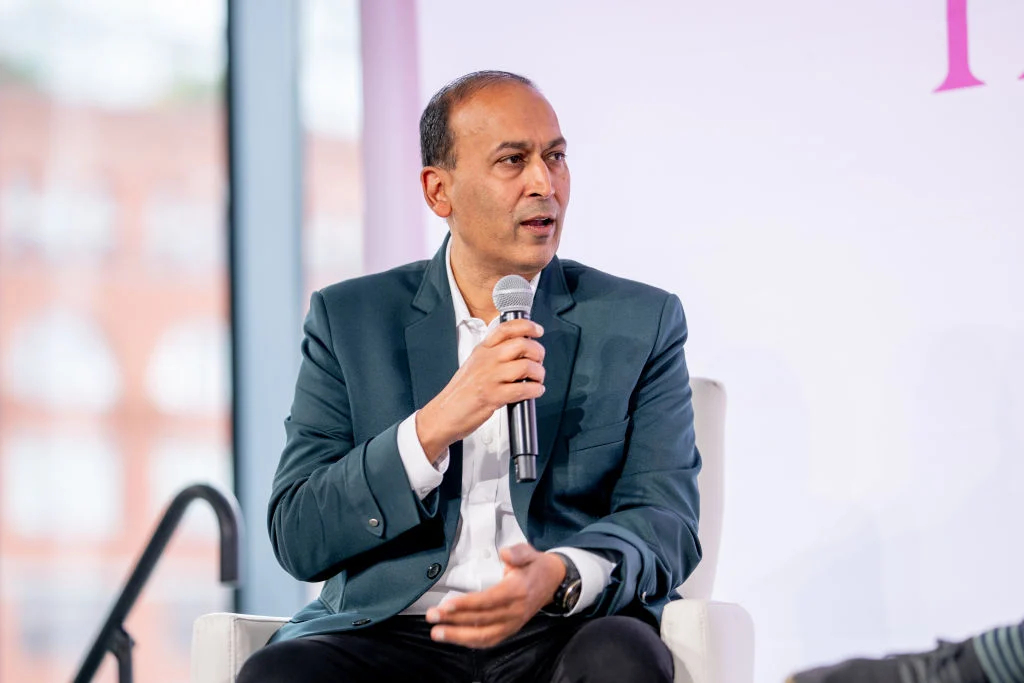
Poshmark, the social commerce powerhouse that redefined the secondhand fashion landscape, announced a pivotal leadership transition on Monday, August 11, 2025. Manish Chandra, the visionary who founded the company in 2011 and steered it through a decade of rapid growth, a public listing, and a high-profile acquisition, will step down from his role as Chief Executive Officer. Succeeding him is Namsun Kim, an experienced executive who has served as the company’s executive chairman since April 2025 and previously held the position of President of Investments at Naver, Poshmark’s parent company.
Chandra will not be exiting the organization entirely; instead, he will transition to a seat on the Board of Directors, where he is expected to provide strategic oversight and maintain the cultural continuity of the brand he built from the ground up. The transition marks the end of an era for Poshmark, which grew from a Silicon Valley garage startup into a global community of over 150 million users.
The Evolution of Poshmark: From Garage Startup to Global Marketplace
The story of Poshmark is inextricably linked to Manish Chandra’s vision of "social commerce." Founded in 2011 alongside co-founders Tracy Sun, Gautam Golwala, and Chetan Pungaliya, Poshmark was launched at a time when the resale market was largely fragmented and lacked a cohesive mobile-first experience. Chandra’s insight was to combine the utility of an e-commerce platform with the engagement of a social network. By allowing users to "follow" each other, "share" listings, and participate in virtual "Posh Parties," the platform created a sticky, community-driven environment that distinguished it from competitors like eBay or Craigslist.
Under Chandra’s fourteen-year tenure, Poshmark achieved several significant milestones:
- 2011: Launch of the Poshmark app, focusing initially on women’s fashion.
- 2017-2019: Expansion into new categories, including men’s, kids’, home goods, and beauty, as well as international expansion into Canada.
- January 2021: The company went public on the Nasdaq under the ticker symbol POSH, with shares soaring more than 140% on their first day of trading, valuing the company at over $7 billion at its peak.
- October 2022: In a move that surprised many industry analysts, South Korean internet giant Naver announced it would acquire Poshmark for approximately $1.2 billion in cash.
- 2023-2025: Post-acquisition, Poshmark focused on integrating Naver’s advanced AI and search technologies while expanding its "Posh Shows" live-streaming commerce feature.
Chandra’s departure as CEO represents a natural progression for a founder-led company that has transitioned into a subsidiary of a massive international conglomerate. In a heartfelt email addressed to the Poshmark community, Chandra expressed his gratitude, stating that leading the company was the "greatest honor" of his professional life. He credited the platform’s success to the creativity and trust of its millions of "Poshers."
Profiling Namsun Kim: A Strategic Choice for Future Growth
The appointment of Namsun Kim as CEO signals a shift toward deeper integration with Naver’s technological ecosystem and a focus on operational scaling. Kim is a seasoned executive with a background in high-level finance and corporate strategy. Before joining Poshmark’s leadership team as executive chairman in April 2024, Kim was a key figure at Naver, serving as the President of Investments.
In his role at Naver, Kim was instrumental in the $1.2 billion acquisition of Poshmark, meaning he possesses an intimate understanding of the strategic rationale behind the merger. His expertise in M&A, investment strategy, and global operations suggests that Poshmark may look toward further international expansion and the implementation of sophisticated data analytics to drive user retention.
Chandra noted that he and Kim have been working closely since the beginning of 2025 to ensure a seamless transition. This deliberate, months-long handoff is designed to maintain stability within the organization and reassure the platform’s massive user base that the core values of the community will remain intact even as leadership changes.
The Strategic Context of the Naver Acquisition
To understand the leadership change, one must look at the broader goals of Naver. When the South Korean giant acquired Poshmark in 2022, it was seeking a foothold in the North American market and a way to export its advanced commerce technologies. Naver is often referred to as the "Google of South Korea," but it is also a leader in "Live Commerce"—a shopping format that combines live video streaming with real-time social interaction.
Under Kim’s leadership, Poshmark is expected to lean even more heavily into these technological synergies. The "Posh Shows" feature, which allows sellers to host live auctions, has already seen significant traction. By leveraging Naver’s Smart Lens deep learning technology and its sophisticated AI-driven recommendation engines, Poshmark aims to make the discovery process more intuitive for buyers and the selling process more efficient for its community.
The acquisition was also a defensive and offensive move in the global "circular economy" market. As consumers, particularly Gen Z and Millennials, become more conscious of sustainability, the resale market has become a multi-billion dollar frontier. Naver’s investment in Poshmark was a bet on the long-term viability of secondhand fashion as a primary mode of consumption.
Analyzing the State of the Fashion Resale Industry
The leadership transition at Poshmark comes at a critical juncture for the resale industry. According to industry reports from GlobalData and ThredUp, the global secondhand apparel market is projected to reach $350 billion by 2027. However, the sector is also becoming increasingly crowded and competitive.
Poshmark faces stiff competition from several fronts:
- Specialized Marketplaces: Platforms like Depop (owned by Etsy) appeal strongly to the Gen Z demographic with a "streetwear" aesthetic, while The RealReal and Vestiaire Collective dominate the luxury authentication space.
- Mass-Market Players: Vinted has seen massive growth in Europe by offering a no-fee model for sellers, and eBay has reinvested in its fashion vertical with improved authentication services.
- Fast Fashion Resale: Brands like Zara and H&M have launched their own in-house resale platforms, attempting to capture the "circular" lifecycle of their products directly.
For Namsun Kim, the challenge will be to maintain Poshmark’s unique "social" identity while improving the platform’s profitability and technological edge. While Poshmark boasts high engagement, the costs of customer acquisition and the logistical complexities of peer-to-peer shipping remain constant hurdles in the resale space.
Implications for Users and the Poshmark Community
For the average user, the immediate impact of Chandra’s departure may be minimal, but the long-term trajectory of the platform will likely reflect Kim’s corporate background. Analysts expect a continued push toward professionalizing the seller experience. This could include more robust tools for high-volume "pro-sellers," improved shipping integrations, and enhanced AI tools to help sellers price their items competitively based on real-time market data.
There is also the question of community sentiment. Manish Chandra was a visible and beloved figure within the "Poshmark family," often appearing at "PoshFest" (the company’s annual developer and user conference) to interact directly with sellers. Namsun Kim will need to bridge the gap between being a data-driven corporate leader and a community-centric figurehead to maintain the brand loyalty that has been Poshmark’s greatest asset.
Chronology of Poshmark’s Leadership and Corporate Milestones
- February 2011: Poshmark is incorporated in Redwood City, California.
- December 2012: The company raises $12 million in Series B funding, led by Menlo Ventures.
- November 2017: Poshmark raises $87 million in Series D funding, signaling its intent to become a dominant player in the e-commerce space.
- May 2019: The platform expands into the Home Decor category, moving beyond apparel.
- January 14, 2021: Poshmark debuts on the Nasdaq; Manish Chandra rings the opening bell.
- October 3, 2022: Naver enters into a definitive agreement to acquire Poshmark for $17.90 per share in cash.
- January 5, 2023: The acquisition is finalized, and Poshmark becomes a privately held subsidiary of Naver.
- April 2024: Namsun Kim is appointed Executive Chairman of Poshmark.
- August 11, 2025: Manish Chandra announces his transition from CEO to Board Member; Namsun Kim is named CEO.
Conclusion: A New Chapter for Social Commerce
The departure of a founder-CEO is always a watershed moment for a technology company. For Poshmark, Manish Chandra’s transition marks the successful completion of the startup-to-conglomerate lifecycle. He leaves behind a platform that did more than just sell clothes; it created a new category of "social commerce" that forced traditional retailers to rethink how they engage with customers.
As Namsun Kim takes the helm, the focus will undoubtedly shift toward the next frontier: the intersection of AI, live-streamed entertainment, and global logistics. With the backing of Naver’s technological resources and Kim’s strategic financial oversight, Poshmark is well-positioned to navigate the increasingly competitive resale market. However, the true test of this new leadership will be whether it can scale the platform’s technology without losing the "heart" of the community that Chandra spent nearly fifteen years cultivating.
The industry will be watching closely to see how Kim balances the demands of a corporate parent with the idiosyncratic, vibrant, and often fiercely loyal community of millions of sellers who call Poshmark their digital home. For now, the transition appears to be a calculated and cooperative move, designed to ensure that Poshmark remains a leader in the circular economy for years to come.