









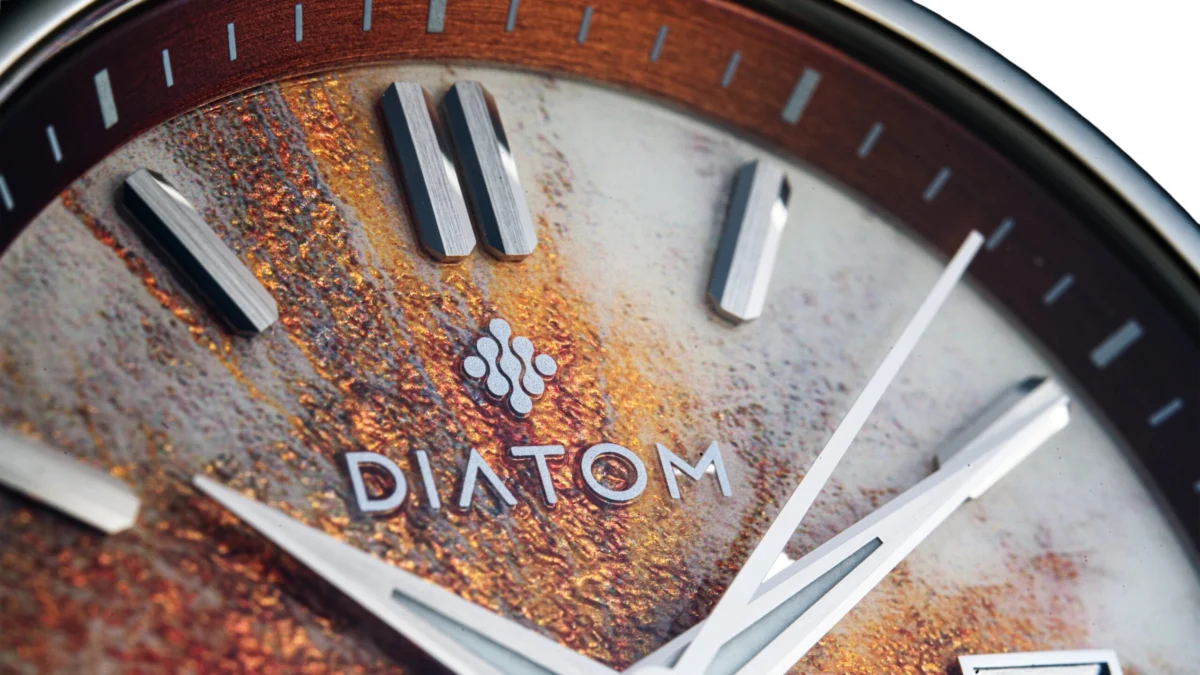
The intersection of horology and aerospace engineering has reached a new threshold with the release of the Diatom Inner Worlds collection. This series of limited-edition timepieces distinguishes itself not merely through aesthetic inspiration drawn from the solar system’s inner planets, but through the integration of genuine, flight-proven space materials and a rigorous testing protocol that sees each individual unit launched beyond the Armstrong Limit. As the luxury watch industry increasingly pivots toward the use of exotic materials, Diatom’s latest offering attempts to bridge the gap between speculative design and tangible aerospace heritage.
A Chronology of Celestial Materials
The Diatom Inner Worlds series, consisting of five distinct models—Mercury, Venus, Earth, Moon, and Mars—utilizes a specialized supply chain to acquire materials that have either traveled into space or originated from extraterrestrial environments. The provenance of these components is a cornerstone of the collection’s value proposition.

The Mercury model incorporates metal harvested from the Liberty Bell 7, the second crewed American spacecraft in the Mercury program, which was piloted by Gus Grissom in 1961. After resting on the ocean floor for nearly 38 years, the recovered spacecraft provided materials that Diatom has alloyed into the watch’s custom winding rotor.
The Venus iteration utilizes metal from an Atlas-Agena launch vehicle. This platform is historically significant as the propulsion system for Mariner 2, the first successful planetary exploration probe, which conducted a flyby of Venus in December 1962. By utilizing remnants of the launch architecture that enabled humanity’s first look at another planet, the brand anchors the timepiece in the early era of the Space Age.
The Earth model features a component from the Apollo 13 Command Module, Odyssey. This specific material—Kapton thermal insulation—is historically tied to the 1970 mission that necessitated one of the most famous rescue operations in history. Following the explosion of an oxygen tank, the crew utilized the Lunar Module as a lifeboat, and the thermal integrity of the Command Module remained a critical variable in their successful reentry.

The Moon and Mars models shift the focus from human-made craft to geological samples. The Moon model features authentic lunar dust integrated beneath the dial’s enamel, while the Mars model utilizes the NWA 13187 meteorite. The latter is a chemically verified piece of Martian Shergotite, a rare class of meteorite ejected from the Martian surface by a massive impact millions of years ago, eventually traversing the vacuum of space to reach Earth.
Engineering Specifications and Orbital Testing
While the provenance of the materials provides historical weight, the mechanical integrity of the watches is subject to a unique validation process. Each timepiece in the Inner Worlds series is powered by the Swiss-made ETA 2892-A2 automatic movement. This caliber, operating at 28,800 beats per hour (4 Hz) and providing a 42-hour power reserve, is a reliable industry standard known for its slim profile and mechanical stability.
What separates these movements from standard off-the-shelf configurations is the testing protocol. Diatom subjects every watch in the production run to an orbital flight test. Each unit is housed within a carbon-fiber launch vehicle and sent beyond the Armstrong Limit—the altitude of approximately 19,000 meters where atmospheric pressure is so low that the boiling point of water drops to the temperature of the human body. By exposing the finished watches to the extreme temperatures, vacuum conditions, and high-G forces of a suborbital flight, the brand aims to demonstrate the resilience of the 39.5mm 316L stainless steel case and the internal lubricants of the movement.

Aesthetic Design and Dial Artistry
The visual language of the collection is defined by an intricate, multi-day manufacturing process. Each dial is stamped with textures intended to mimic the surface topography of the target celestial body. Following this, the dials undergo sandblasting and electroplating. The final aesthetic depth is achieved through the application of multiple layers of translucent enamel, which are cured individually to create a refractive quality that emphasizes the dial’s relief.
The Mercury dial uses a high-contrast palette of deep blue and gold to represent the planet’s cratered, scorched surface. The Venus dial utilizes an inverted texture, layered with white enamel to suggest the thick, reflective cloud cover that obscures the planet’s surface. The Earth model employs a gradient oceanic blue, with concentric rippling patterns. The Moon and Mars dials are perhaps the most technically complex, with the Moon dial incorporating actual dust particles and the Mars dial utilizing the aforementioned meteorite fragments to provide an authentic, rugged finish.
Market Context and Industry Implications
The watch industry has seen a marked increase in the use of "space-proven" components, ranging from fragments of the International Space Station to lunar meteorites. Diatom’s strategy reflects a broader trend among independent watchmakers to differentiate themselves by offering provenance that exceeds the marketing claims of larger, mass-market manufacturers.

Data from the luxury watch market indicates that consumers are increasingly prioritizing "narrative-driven" acquisitions. A timepiece that contains a fragment of a historical mission or an extraterrestrial body transforms the object from a mere tool of timekeeping into a physical artifact. However, the use of such materials introduces significant challenges in supply chain management and authentication. Diatom’s reliance on verified, mission-flown materials and the publication of their testing results are intended to mitigate the skepticism that often accompanies high-concept horology.
From an economic standpoint, the price point of £2,200 GBP is notable for the level of material complexity and specialized testing involved. By limiting the production to 450 units per model, the brand creates an artificial scarcity that aligns with the rarity of the materials used. The economic viability of this model relies on the brand’s ability to maintain a transparent chain of custody for its aerospace components.
Analysis of Technical Challenges
The decision to expose finished, lubricated mechanical watches to the vacuum of space is a complex engineering choice. Lubricants in mechanical watches are typically optimized for standard Earth atmospheric pressure and temperature ranges. Vacuum exposure can lead to the "outgassing" of lubricants, where volatile components evaporate, potentially leaving the movement dry or causing the oil to migrate from friction points. By testing the watches in a custom flight vehicle, Diatom is essentially conducting an environmental stress screening (ESS) program that exceeds the requirements for standard luxury timepieces.

Experts in horological engineering note that while such testing confirms the watch can survive the transit, it does not necessarily improve the long-term chronometric performance of the movement. Instead, the primary value is the certification of the "space-flown" status, which serves as a badge of honor for the wearer. This "space-flown" credential is a highly coveted status in the collector community, often serving as a catalyst for long-term appreciation in the secondary market.
Official Stance and Future Outlook
Diatom has positioned itself as a "scientifically-minded" brand, a designation that suggests a long-term commitment to combining physical sciences with horology. While the current collection focuses on the inner planets, the methodology established with the Inner Worlds series—sourcing space-age materials, implementing rigorous flight testing, and utilizing high-precision manufacturing—provides a template for future iterations.
The response from the horological community has been one of cautious intrigue. While the integration of mission-flown materials is not unique, the scale of Diatom’s testing program—applying it to every single production unit—is a significant departure from standard industry practices, where only prototypes might undergo such extreme testing. As the brand moves forward, the primary metric for its long-term success will be its ability to scale this complex, material-intensive process without compromising the build quality or the historical integrity of the components.

The Inner Worlds collection, now available through the company’s online channels, serves as a testament to the ongoing fascination with the final frontier. By condensing the history of space exploration into a 39.5mm case, Diatom is providing a physical connection to the most significant technological achievements of the 20th and 21st centuries. For the collector, these watches represent more than just a method of keeping time; they are a synthesis of geology, history, and the relentless drive to test the limits of mechanical engineering in the most unforgiving environment known to humanity.