







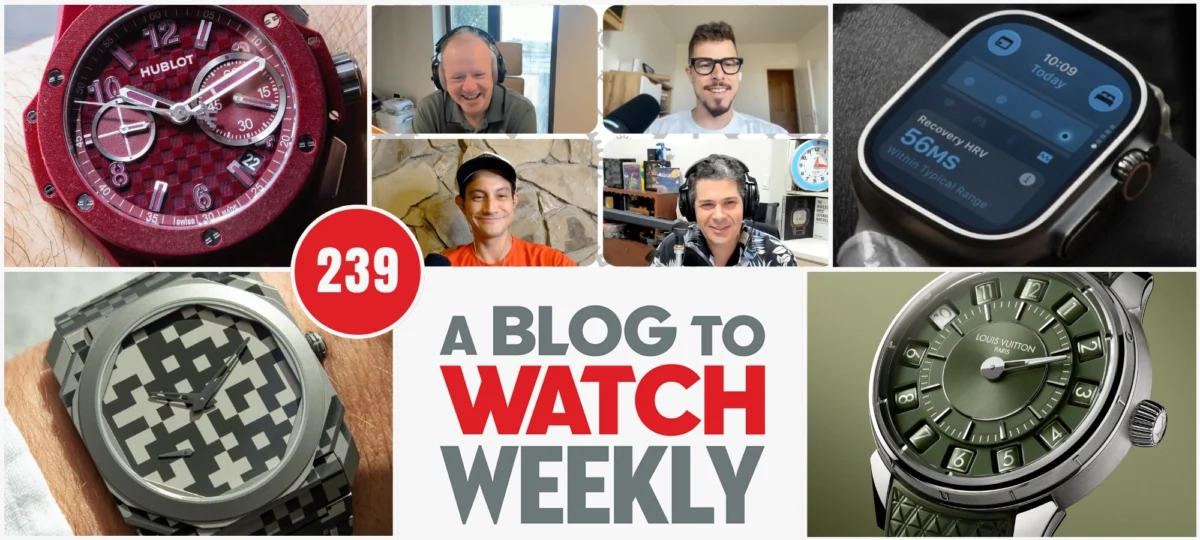
The latest installment of the aBlogtoWatch Weekly podcast brings together hosts Rick, Ariel, David, and Ripley to dissect the multifaceted nature of the modern watch industry. Episode 239 serves as a comprehensive deep dive into the technical manufacturing standards of independent horology, the polarizing aesthetic choices of high-luxury brands, and the escalating intersection of traditional watchmaking with invasive consumer technology. By examining the current landscape of the market, the episode provides a roadmap for understanding how manufacturing capabilities, brand narratives, and digital integration are shaping the future of timekeeping.
The Foundation of Value: Dexel and Formex Manufacturing
At the core of the episode’s technical discussion is an examination of the manufacturing partnership between the component producer Dexel and the watch brand Formex. Often, consumers focus on the movement or the dial of a timepiece, yet the structural integrity and ergonomics of a watch depend heavily on its case, bracelet, and clasp technology.
Dexel, a Swiss-based specialist, provides the technical infrastructure that allows Formex to position itself as a high-value player in the competitive mid-tier market. The production process involves sophisticated CNC machining and advanced metallurgical techniques that ensure high tolerances for water resistance and structural durability. This behind-the-scenes look reveals that the "value proposition" of a watch is frequently dictated by the investment in hardware—the tactile experience of a folding clasp or the precise articulation of a link bracelet—rather than marketing campaigns. Industry analysts note that as watch prices rise across the board, the ability of brands like Formex to maintain "entry-level luxury" status depends almost entirely on these foundational manufacturing efficiencies.
Aesthetic Extremes: Bulgari and Hublot
The discussion shifts from internal engineering to external design, focusing on two industry stalwarts: Bulgari and Hublot. The Bulgari Octo Finissimo Dazzle represents a departure from the brand’s traditional focus on ultra-thin precision, opting instead for an overwhelming visual impact. By utilizing complex geometric motifs that challenge the viewer’s perception, the Dazzle model illustrates a growing trend in luxury horology: the "statement piece" that prioritizes artistic disruption over conservative legibility.
Conversely, Hublot’s introduction of the Big Bang Original Soft Touch marks an unconventional experiment in material science. By applying a rubberized coating to the titanium chassis of one of the industry’s most recognizable silhouettes, Hublot has ignited a fresh round of debate regarding material longevity and luxury expectations. The "soft-touch" finish raises practical questions regarding surface wear, dust adhesion, and the aesthetic aging process of such materials. Historically, Hublot has been a lightning rod for community critique—a fact that has remained consistent since the brand’s resurgence in the mid-2000s. The ongoing discourse involving high-profile commentators and industry figures, such as the widely publicized critiques from Nico Leonard and the comparisons to Christopher Ward’s growth trajectory, reflects a broader tension in the watch world: should legacy designs be "reimagined" for modern tastes, or does constant iteration risk diluting the brand’s historical identity?
The Two-Decade Milestone and Material Innovation
As aBlogtoWatch approaches its 20th anniversary, the podcast hosts reflected on the evolution of watch media since 2007. The longevity of the platform provides a unique vantage point on how the industry has shifted from a niche hobbyist community to a multi-billion dollar asset class.
Looking toward the future, the conversation touched upon a unique commemorative project involving 5,000-year-old fossilized wood. The use of such rare, ancient materials is becoming a distinct marker of prestige in the high-end watch market. These projects are not merely about aesthetics; they are about supply chain exclusivity and the "storytelling" component of horology. By incorporating geological history into a contemporary timepiece, brands attempt to bridge the gap between permanent art and functional instrument, an approach that has become increasingly popular as collectors seek "investment-grade" watches with unique backstories.

The Digital Frontier: Apple and the Surveillance Dilemma
Perhaps the most critical segment of the episode involves the technological evolution of the Apple Watch. Apple has recently integrated advanced artificial intelligence and machine learning capabilities that allow for continuous audio monitoring, real-time transcription, speaker identification, and the automated generation of meeting summaries.
While these features offer significant utility for professionals, they raise profound questions about privacy and the nature of the "wrist-worn" experience. The ability of a device to passively listen and process sensitive information creates a complex ethical landscape. For the traditional watch community, which prides itself on mechanical independence and the absence of batteries or software, these developments highlight a growing divide. The conversation among the hosts suggests that as smartwatches become more capable of recording and analyzing personal interactions, the appeal of the "analog sanctuary"—the mechanical watch that requires no connection to the internet—may ironically increase among privacy-conscious consumers.
Market Dynamics: Auction Houses and Charitable Stewardship
The episode also analyzed the intricate and often opaque relationships between watch media, auction houses, and the charitable sector. Auction houses play a vital role in setting the "market price" for rare timepieces, yet their involvement in charity auctions has faced increased scrutiny regarding transparency and the actual impact of donor funds.
The hosts examined how the "hype cycle" of auction lots influences retail prices. When a watch achieves a record-breaking price at auction, the secondary market often adjusts accordingly, which can lead to volatility. The discussion emphasized the need for objective media coverage to act as a counterweight to the marketing-heavy narratives often pushed by auction houses during major sales events. By maintaining a critical lens, outlets like aBlogtoWatch aim to provide consumers with a more grounded understanding of true market value versus manufactured demand.
Concluding Insights: The Future of the Wrist
The final segment of the episode turned to Louis Vuitton’s Tambour Spin Time collection. This collection, characterized by its innovative display mechanisms, serves as a case study for how high-fashion houses are successfully pivoting into "Haute Horlogerie." The Spin Time complication, which uses rotating cubes to indicate the hour, is a testament to the brand’s commitment to mechanical complexity.
When contextualized with the other topics discussed—the technical precision of Formex, the material experimentation of Hublot, and the digital advancements of Apple—a clear theme emerges. The watch industry is bifurcating. On one side, there is an intense focus on mechanical purity and the preservation of traditional craftsmanship; on the other, there is a rapid acceleration toward digital integration and "smarter" wearables.
As consumers navigate this landscape, the challenge lies in balancing the desire for technological convenience with the enduring value of mechanical integrity. The insights shared by the aBlogtoWatch team highlight that the modern collector is no longer just buying a tool to tell time; they are buying into a system of manufacturing, a legacy of design, and, increasingly, a complex set of digital capabilities.
The episode serves as a reminder that even as the industry faces dramatic shifts in technology and consumer expectations, the fundamental core of watchmaking remains the same: the desire to create objects that are both functional and deeply meaningful. Whether it is through the use of 5,000-year-old wood or advanced AI transcription, the industry continues to push the boundaries of what can be placed on the human wrist, ensuring that the conversation surrounding horology remains as dynamic as it is enduring. As we look toward the next twenty years, the tension between the "smart" and the "mechanical" will undoubtedly define the next era of horological evolution.