











In an era defined by ubiquitous digital connectivity yet persistent social fragmentation, a new photography exhibition is examining the fundamental forces that bind individuals to one another and to themselves. Titled "What Holds Us," the multi-artist showcase features exclusive works captured entirely on the iPhone 18 Pro by acclaimed visual artists Alex Prager, Jack Davison, and Jimmy Chin. Curated by Kathy Ryan, the former longtime director of photography for The New York Times Magazine, the exhibition debuted in New York City, running from September 18 to 20, before slated international stops in London and Shanghai.
The exhibition marks the third consecutive year that Ryan has curated a high-profile showcase dedicated exclusively to mobile device photography. Against a backdrop of global polarization, technological creep, and societal distraction, the conceptual framework of the exhibition emerged from a singular, pressing inquiry: amidst modern chaos, what truly sustains human cohesion?
The Genesis of the Exhibition and Curatorial Vision
The conceptual origins of "What Holds Us" stem from a growing cultural anxiety surrounding isolation, political polarization, and the pervasive integration of artificial intelligence and digital surveillance into daily life. Ryan, whose decades-long tenure at The New York Times Magazine positioned her at the forefront of contemporary photojournalism and fine art photography, sought to address these modern fractures by assembling a diverse trio of artists capable of interpreting the theme through distinct visual vocabularies.
"We’re living in a very fractured, difficult moment," Ryan observed during the exhibition’s development. "There’s so much division, so much polarization. And it was just the thought: what holds us? What holds us within ourselves? What holds us to each other?"
Rather than commissioning artists who worked in similar styles, Ryan deliberately selected practitioners whose creative approaches diverged significantly. This curatorial strategy was designed to generate a dynamic interplay of visual energies within the gallery space. The resulting collection juxtaposes the meditative, tactile minimalism of Davison against the exuberant, narrative-driven scenes of Prager and the stark, sublime isolation captured by Chin.
The Artists and Their Bodies of Work
The exhibition is divided into three distinct bodies of work, each utilizing the advanced computational photography and sensor capabilities of the iPhone 18 Pro to investigate presence, absence, and connection.
Alex Prager: The Aftermath of Celebration
Known for cinematic, highly staged photographs that evoke Hollywood psychological thrillers and street photography traditions, Alex Prager turned her lens toward the bittersweet residue of human gathering. Her series for "What Holds Us" captures the immediate aftermath of celebrations.
Rather than focusing on the kinetic energy of a party in full swing, Prager’s stills present empty rooms littered with confetti, discarded party favors, and the subtle melancholy of spaces left behind. The emotional resonance of the work mimics the disorienting experience of entering a venue after the festivities have concluded. Through these meticulously composed frames, Prager explores the transient nature of collective joy and the lingering sense of isolation that often follows social engagement in contemporary society.
Jimmy Chin: Scale, Nature, and the Sublime
Shifting the lens from urban interiors to the natural world, mountaineer, National Geographic photographer, and filmmaker Jimmy Chin contributed a breathtaking series documenting the rugged landscapes of Canada’s Bugaboo Mountains. Chin’s work leverages the wide dynamic range and portability of the iPhone 18 Pro to examine the duality of nature—its simultaneous capacity for awe-inspiring beauty and lethal danger.

Utilizing dramatic shifts in scale, Chin captured expansive vistas that render the mountain environment as an infinite, overwhelming expanse, juxtaposed against intimate macro shots highlighting the intricate, fragile geometry of ancient glaciers. For Chin, the mountains represent a space where distraction is impossible; survival demands absolute presence. His photographs serve as a visual meditation on humanity’s small footprint within a vast, indifferent natural order.
Jack Davison: Tactility, Mythology, and the Human Touch
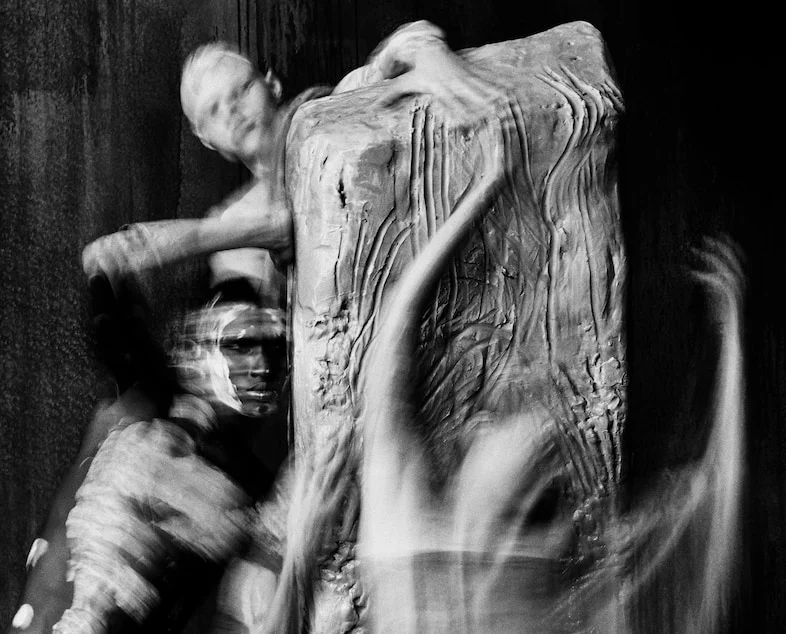
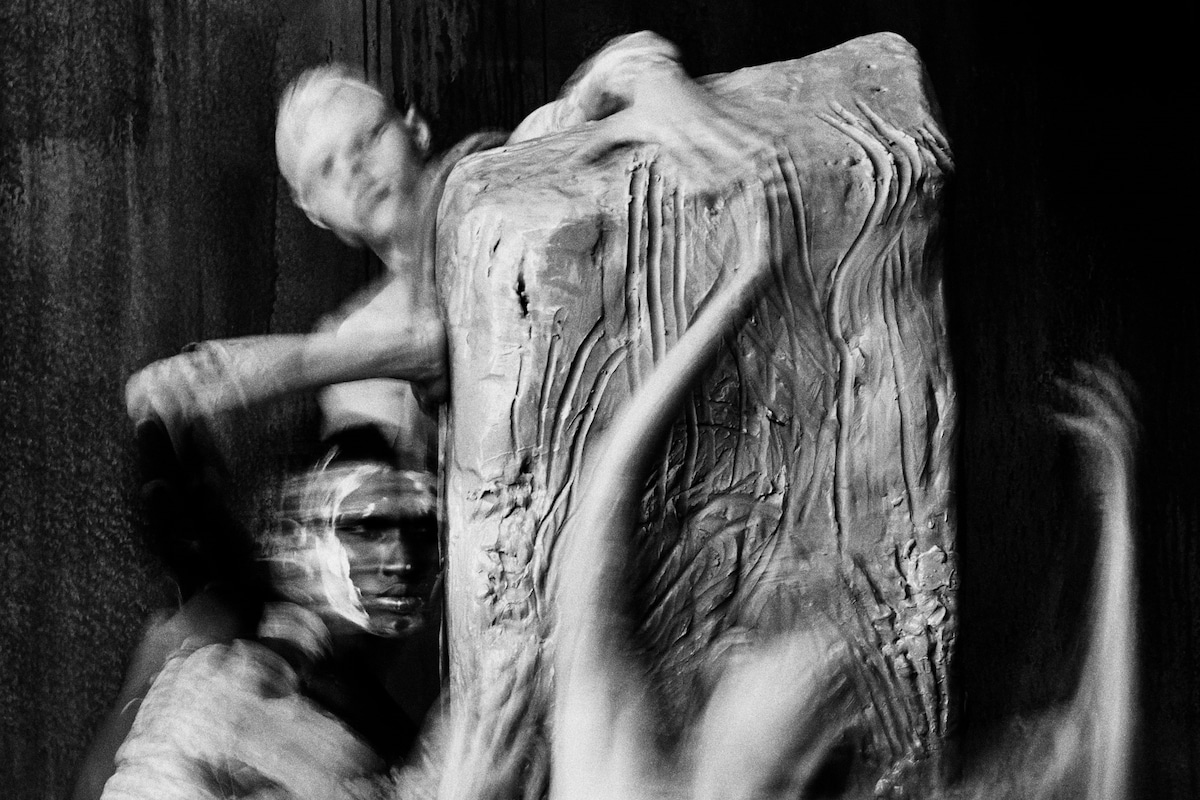
Jack Davison’s contribution offers the most literal interpretation of the exhibition’s title, focusing heavily on human touch, texture, and the physical body. Incorporating themes from ancient creation myths—wherein primordial humans were sculpted from clay—Davison’s photographs feature subjects interacting directly with raw earth, which smears across skin and fills the cracks of hands.
Davison’s series engages directly with the anxieties of the digital age, including the rise of artificial intelligence and screen-based detachment. By emphasizing physical tactility, the artist sought to counteract what he perceives as a growing sensory deprivation caused by virtual living.
"I obviously was thinking a lot about tech, AI, and the kind of digital creep of technology," Davison noted. Describing the process behind his sensual, blurred portraits of figures grappling with mounds of clay, he added: "It was really a celebration of touch and human tactility… They’re quite sensual pictures, and I’m surprised I got away with what I did."
In one of the exhibition’s most striking portraits, three indistinct figures grapple with a shifting mass of clay. The deliberate blurriness of the subjects underscores the elusiveness of the exhibition’s central question. By asking what holds us together, the artwork suggests a sobering paradox: in an increasingly virtualized world, nearly nothing tangible truly does.
Technological Evolution and Mobile Photography in Fine Art

The technical execution of "What Holds Us" highlights a broader institutional shift within the fine art photography community toward accepting and utilizing consumer mobile technology. Historically dismissed by purists as a casual medium, smartphone cameras have undergone a rapid technological evolution over the past decade.
The exclusive use of the iPhone 18 Pro for an exhibition of this caliber underscores the sophisticated computational photography, low-light performance, and lens versatility that modern mobile devices offer. Curators and artists alike are increasingly drawn to the discretion, speed, and accessibility of smartphones, which allow creators to capture spontaneous moments without the physical burden of heavy professional gear.
For Kathy Ryan, utilizing consumer technology for a museum-grade exhibition is also an exercise in democratization. By employing a tool that is globally ubiquitous, the art bridges the gap between the observer and the creator, inviting viewers to reconsider the creative potential resting in their own pockets.
Implications and Cultural Reception
As "What Holds Us" concludes its initial run in New York City and prepares for international exhibitions in London and Shanghai, art critics and cultural analysts have noted its timely resonance. In an era dominated by algorithmic feeds, remote work structures, and digital fatigue, the exhibition addresses a collective yearning for authentic physical presence and shared human experience.
The contrasting emotional undercurrents of the three artists—Prager’s theatrical loneliness, Chin’s humbling isolation, and Davison’s tactile intimacy—provide viewers with a multifaceted lens through which to examine modern alienation. Rather than offering simplistic solutions, the exhibition functions as a mirror for contemporary anxieties, posing a question that remains as urgent as it is unanswered: when the digital scaffolding of modern life begins to crumble, what remains to hold us together?