

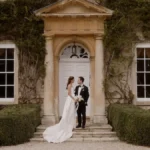


The marriage of Ally, a prominent investment banker, and her long-term partner Kerry, celebrated this past August, represents a sophisticated intersection of mid-century aesthetics, community tradition, and historical preservation. The proceedings commenced with a traditional ceremony at Our Lady of Sorrows Catholic Church in Peckham, followed by a meticulously curated reception at Wilton’s Music Hall in East London. The event was characterized by a deep adherence to the fashion, music, and cinematic influences of the 1950s, a decade that has served as the foundational pillar of the couple’s twelve-year relationship.
A Decade of Shared History and the 2024 Proposal
The relationship between Ally and Kerry began more than twelve years ago within London’s vibrant 1950s "rockin’" scene, a subculture dedicated to the music and dance styles of the early rock and roll era. Despite a long-standing mutual agreement to maintain the status quo of their partnership, the couple’s trajectory shifted in April 2024.
The proposal, orchestrated by Kerry, was noted for its understated sentimentality. Returning to a gesture from the early days of their courtship, Kerry presented Ally with the same two perfumes he had gifted her on her 30th birthday a decade prior. Accompanying the gifts was a card formally requesting her hand in marriage. The couple chose to maintain the privacy of their engagement for several weeks, eventually announcing the news during Ally’s 40th birthday celebrations. This timeline highlights a deliberate approach to their union, moving from a decade-long partnership to a formalized marriage within a single year.
Architectural and Cultural Significance of the Venues
The choice of venues reflected the couple’s desire to ground their celebration in locations with significant historical and communal weight.
Our Lady of Sorrows, Peckham
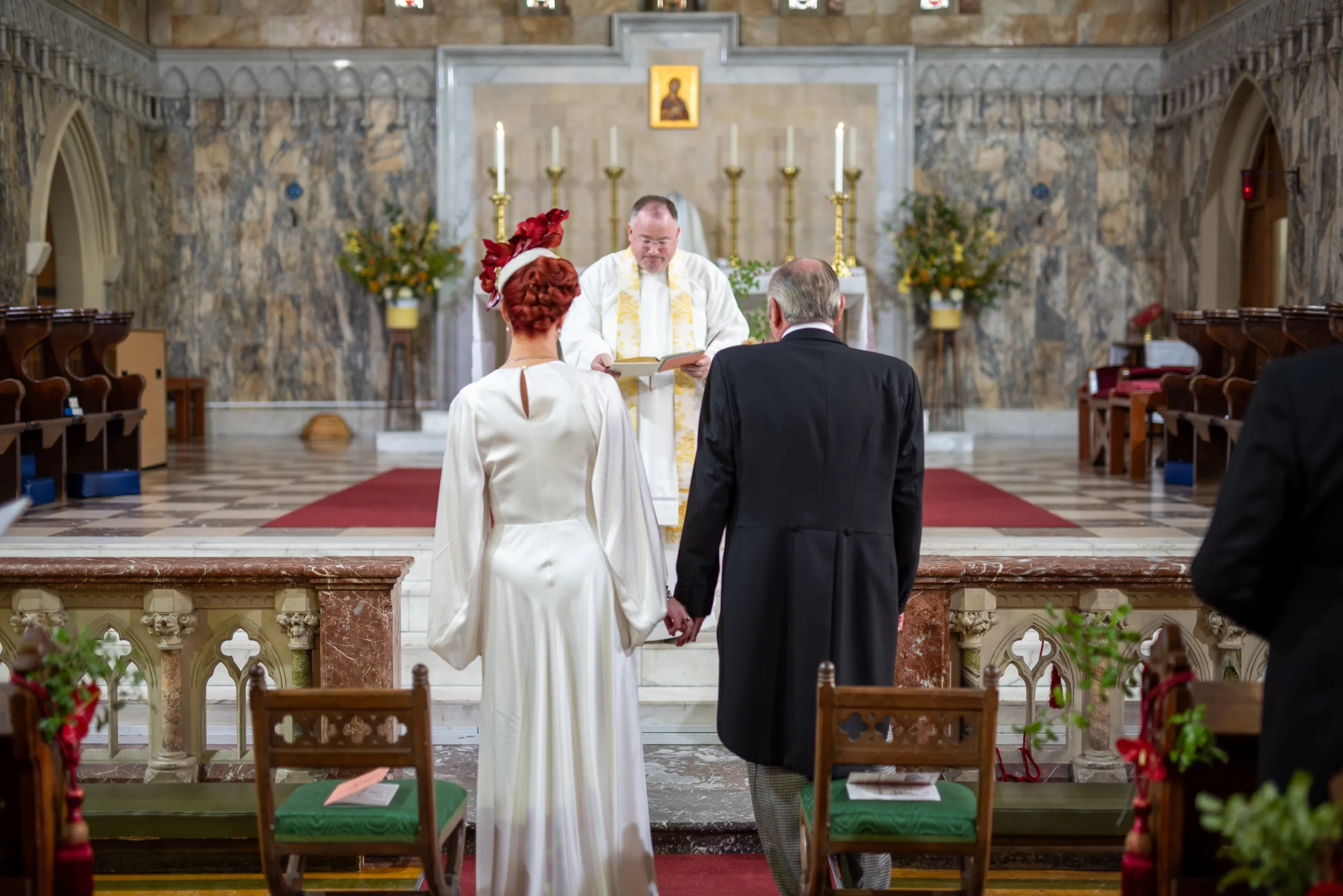
The ceremony took place at Our Lady of Sorrows Catholic Church on Friary Road, Peckham. The church, a cornerstone of the local Catholic community, provided a setting rooted in tradition. For Kerry, a regular attendee of the parish, the venue offered a sense of belonging. The ceremony was presided over by Abbot Hugh, following several months of introductory meetings intended to integrate the couple into the liturgical fabric of the parish.
Wilton’s Music Hall, East London
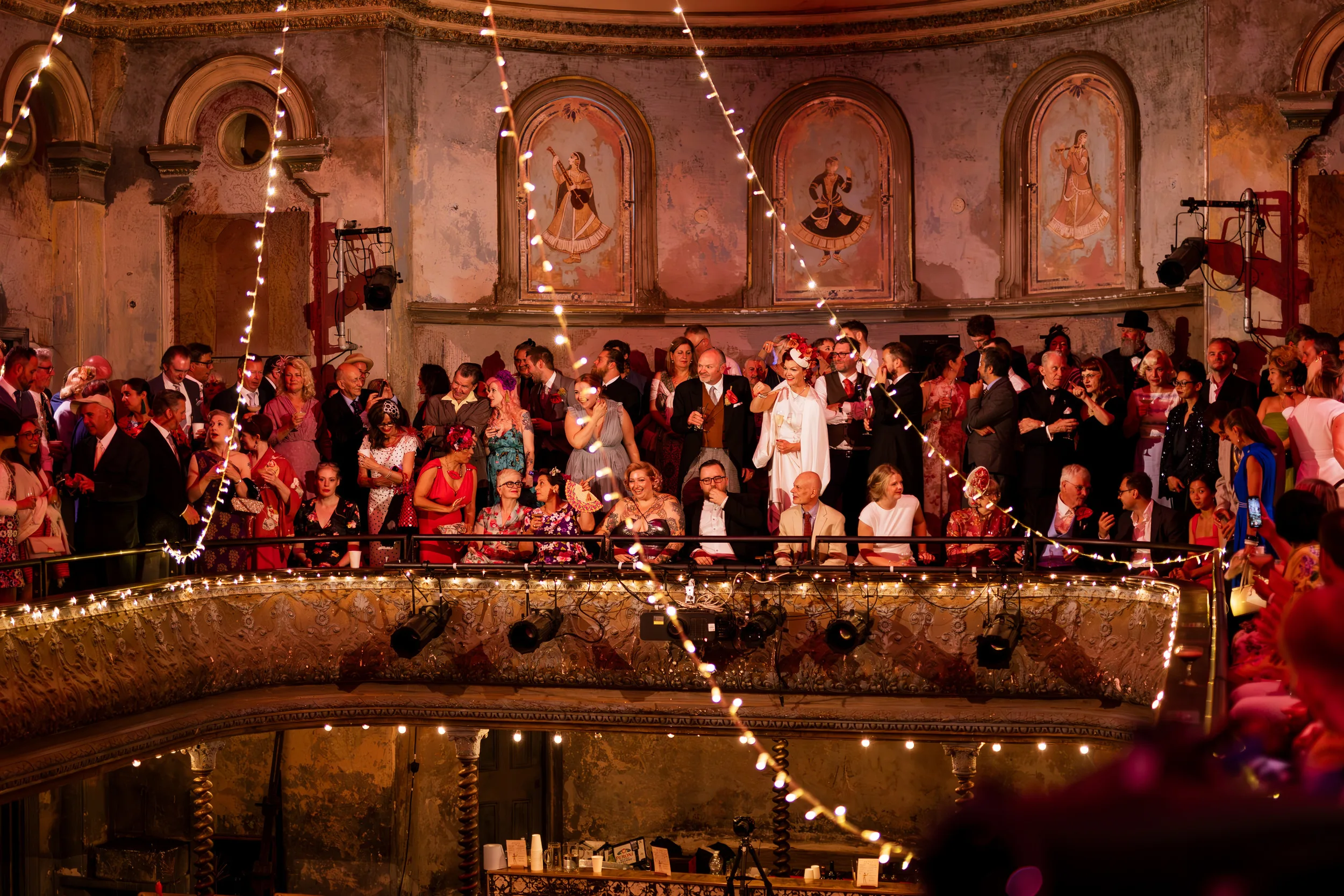
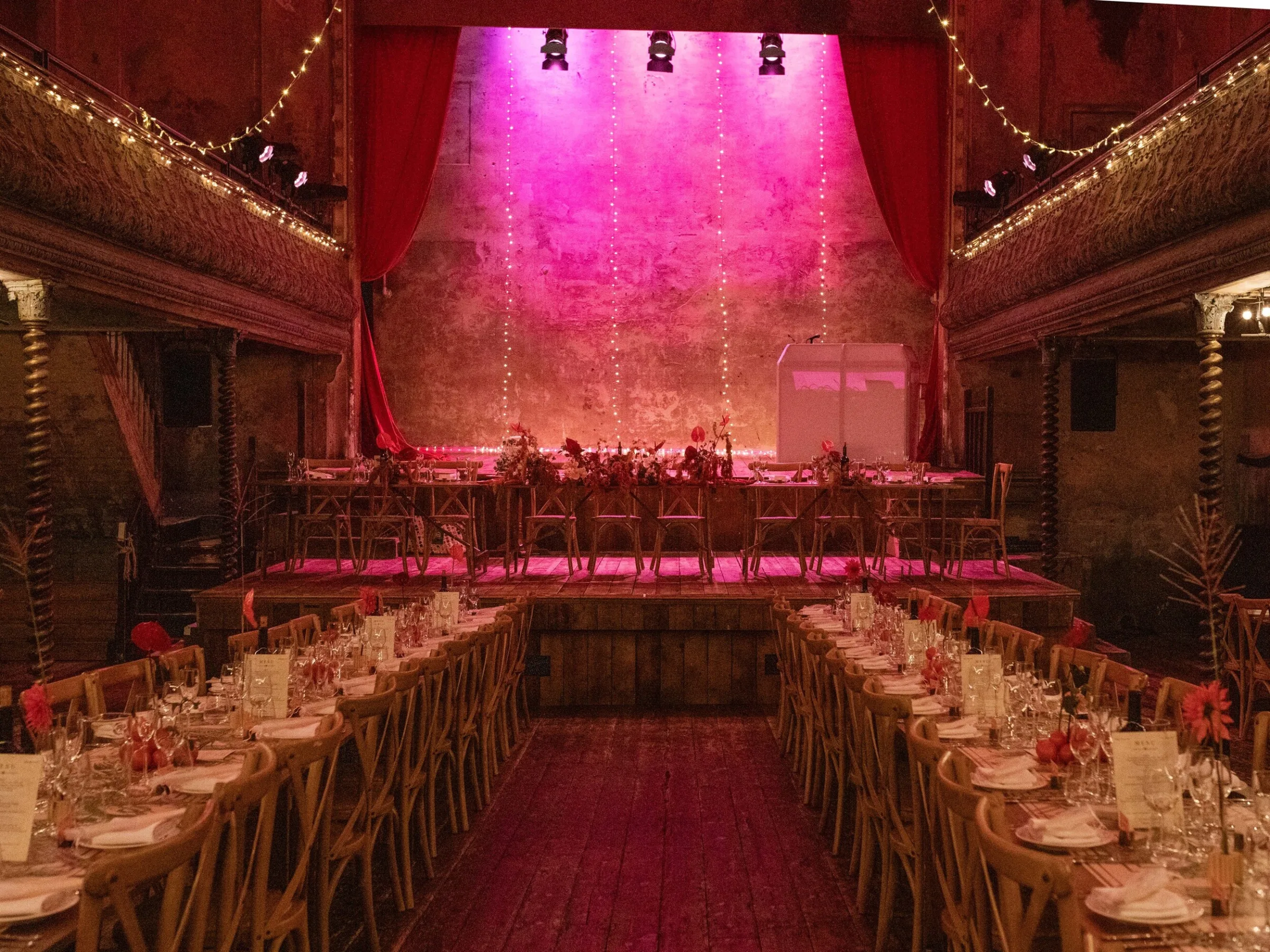
For the reception, the couple selected Wilton’s Music Hall, recognized as the oldest surviving grand music hall in the world. Originally built in 1859, the Grade II* listed building is a rare example of a mid-Victorian music hall attached to a public house. Its weathered paintwork, exposed brick, and red velvet interiors provided an atmospheric backdrop that aligned with the couple’s 1950s aesthetic. The venue is historically significant for its survival through the decline of the music hall era, its use as a Methodist mission, and its eventual restoration as a performance space.
Bespoke Design and Mid-Century Fashion
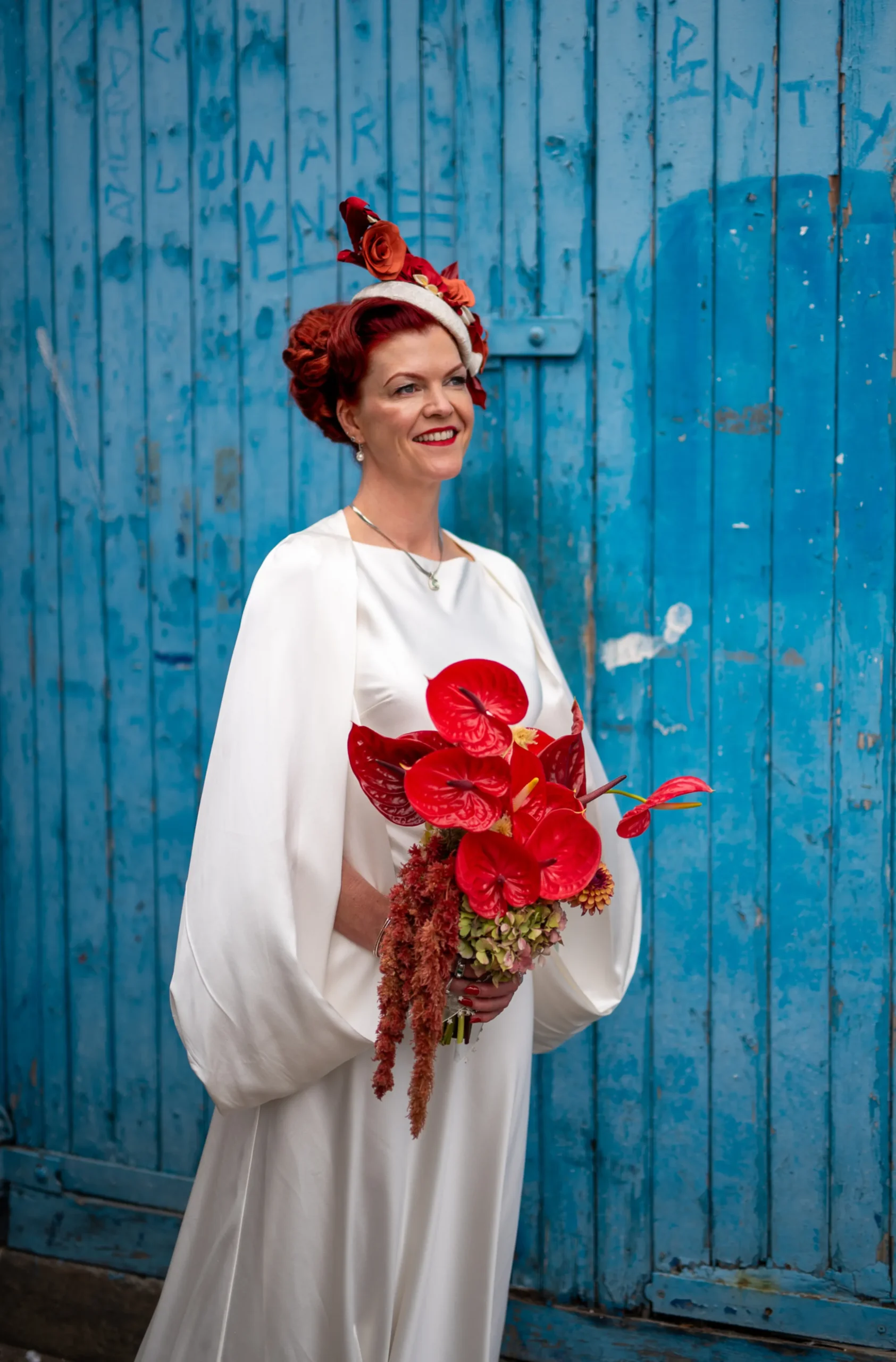
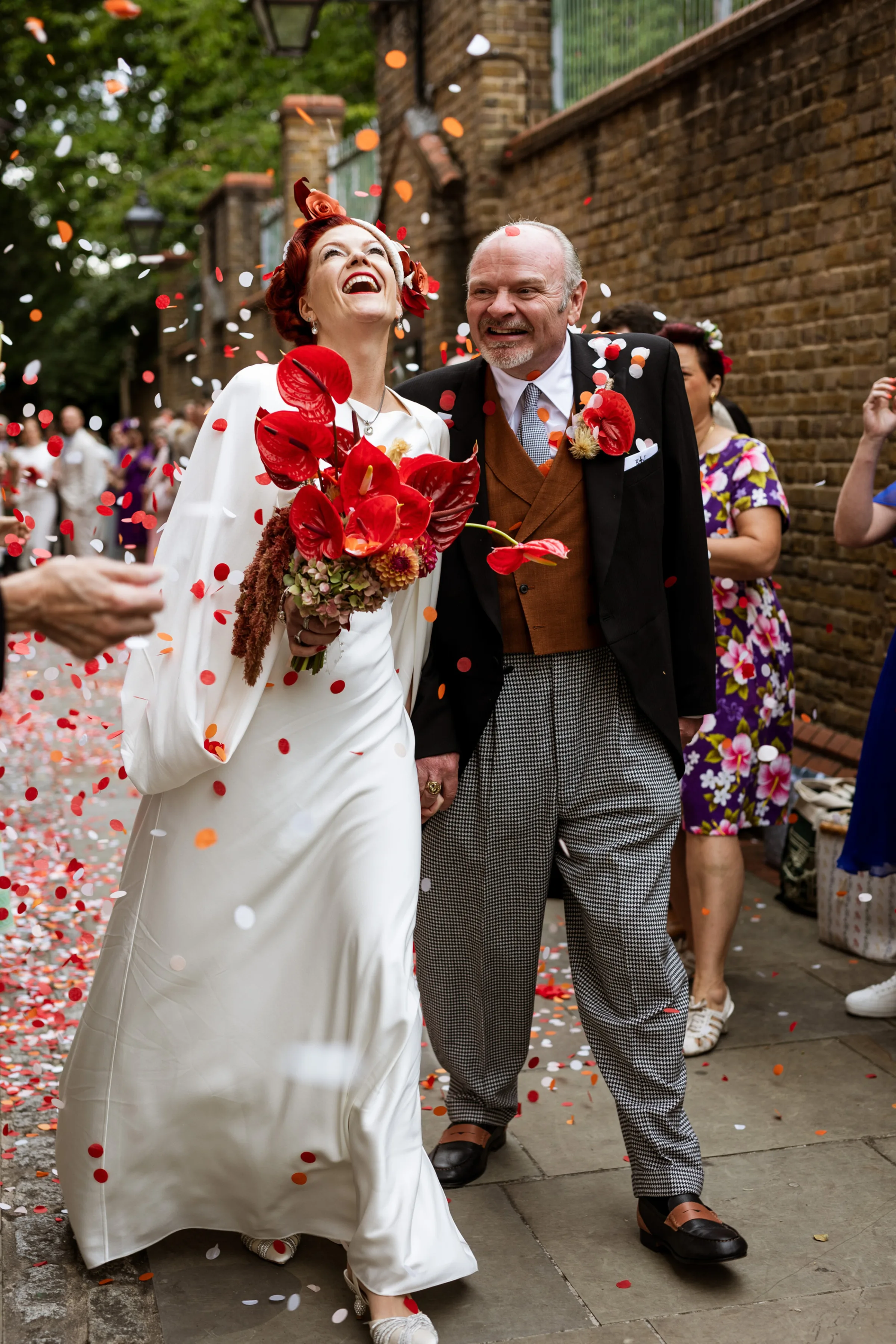
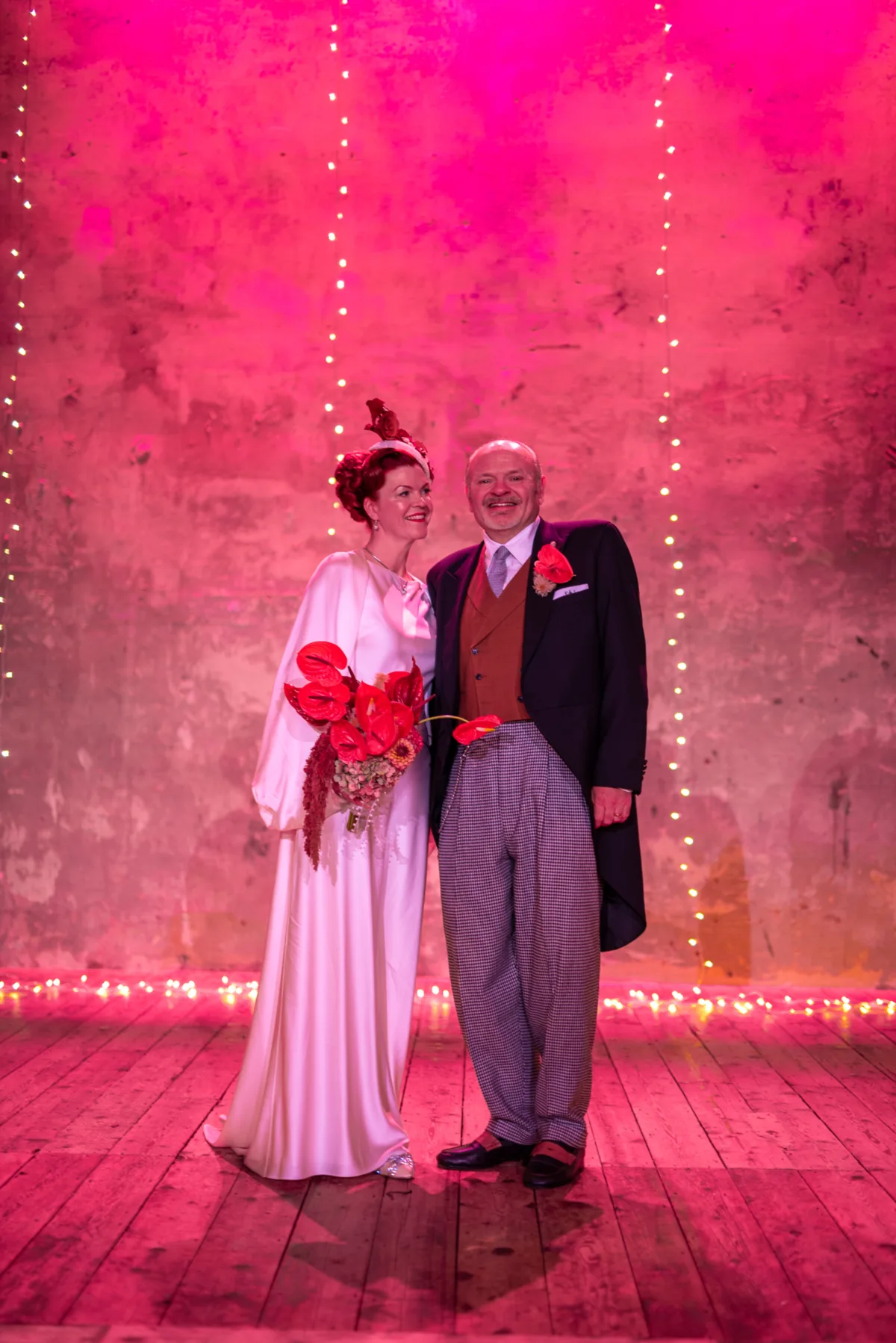
The wedding served as a showcase for high-fashion curation and DIY craftsmanship. Ally’s attire was centered around an ivory Roksanda Bridal gown. Roksanda Ilincic, the London-based designer known for architectural silhouettes and bold color blocking, has become a staple for modern brides seeking alternatives to traditional lace-heavy designs. Ally had reportedly tracked the specific gown for years after an accidental discovery while shopping for a birthday outfit.
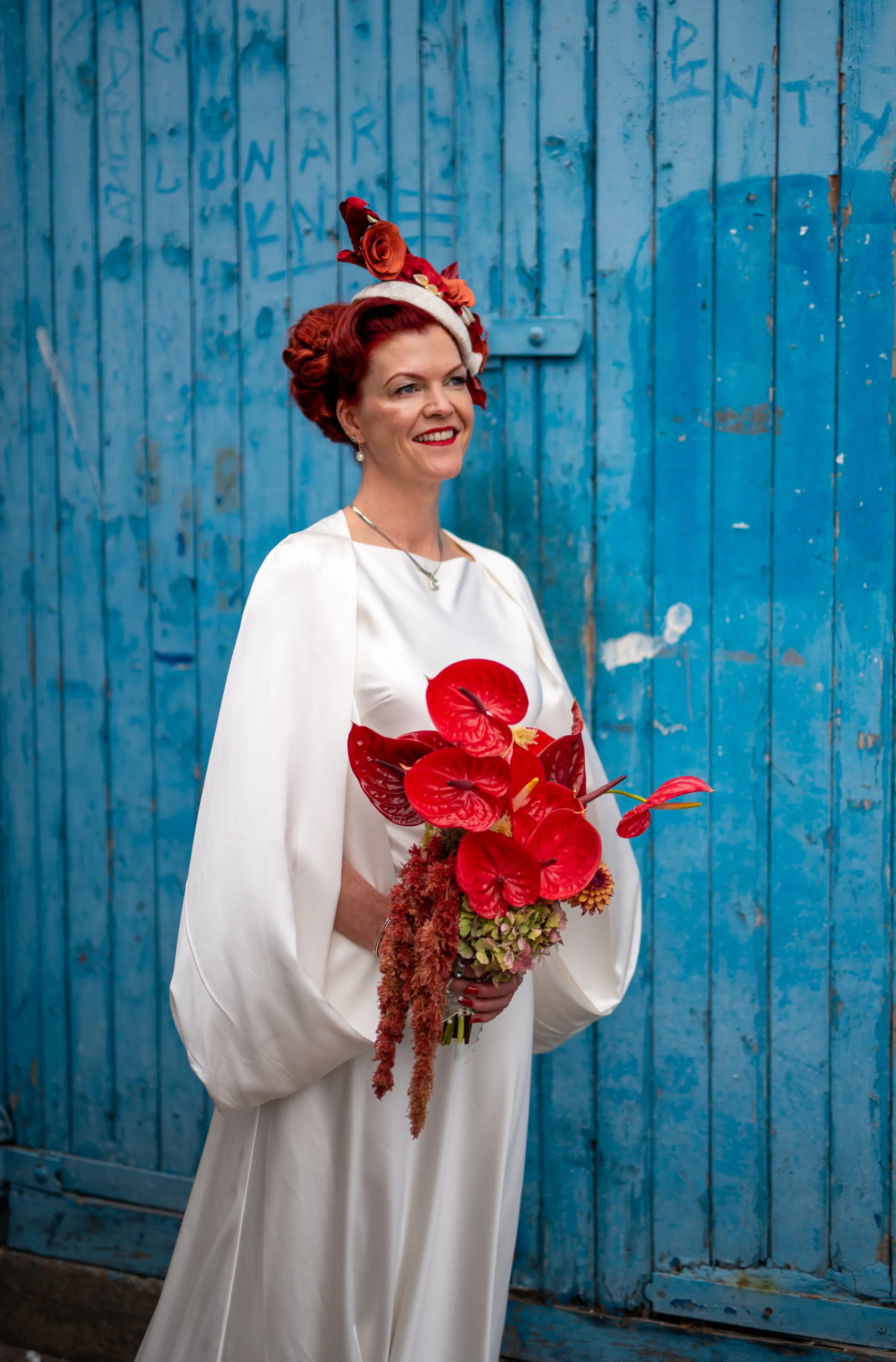
Complementing the designer gown was a bespoke hat, designed and constructed by the bride herself. In a move reflecting the "slow fashion" and sentimental curation movements, the millinery piece incorporated:
- Donated vintage lace.
- Silk repurposed from a legacy pillowcase.
- Hand-crafted flowers made from gifted leather.
- A handkerchief belonging to the bride’s late grandmother, stitched into the lining as a hidden heirloom.
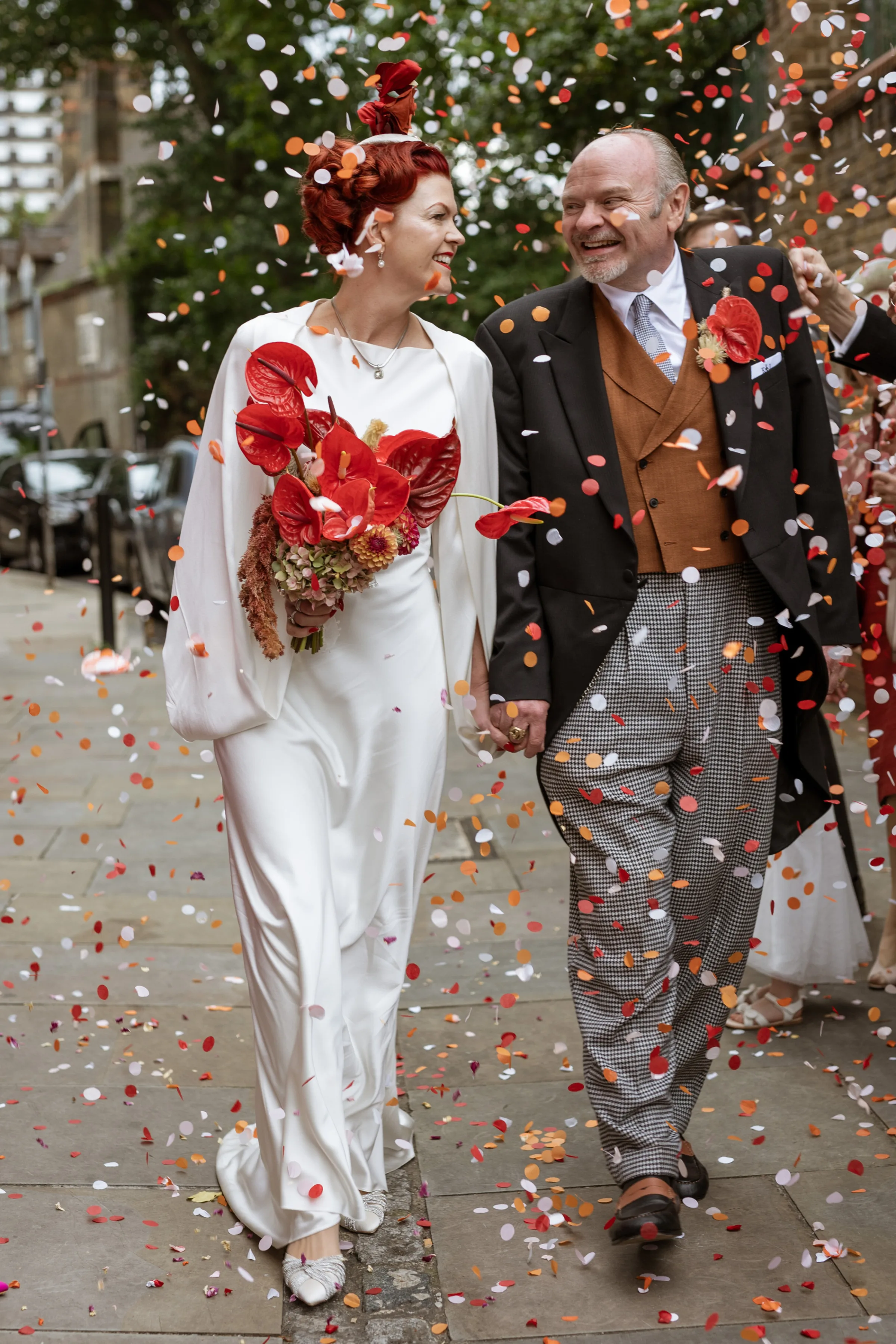
The groom and his party opted for a cohesive yet individualized take on the traditional morning suit. Inspired by historical wedding photography—specifically the 1953 nuptials of John F. Kennedy and Jacqueline Bouvier—the men’s attire balanced 1950s tailoring with formal British tradition.
Liturgical and Musical Programming
The ceremony was marked by a high level of musical sophistication, bridging the gap between classical opera and mid-century popular song.
The processional featured a live performance of the duet from Georges Bizet’s 1863 opera Les pêcheurs de perles (The Pearl Fishers), performed by baritone Louis Hurst and tenor Robin Whitehouse, accompanied by organist Lucy Morrell. The selection of this specific piece was a nod to a "fictitious wedding" the couple had planned in jest years prior.
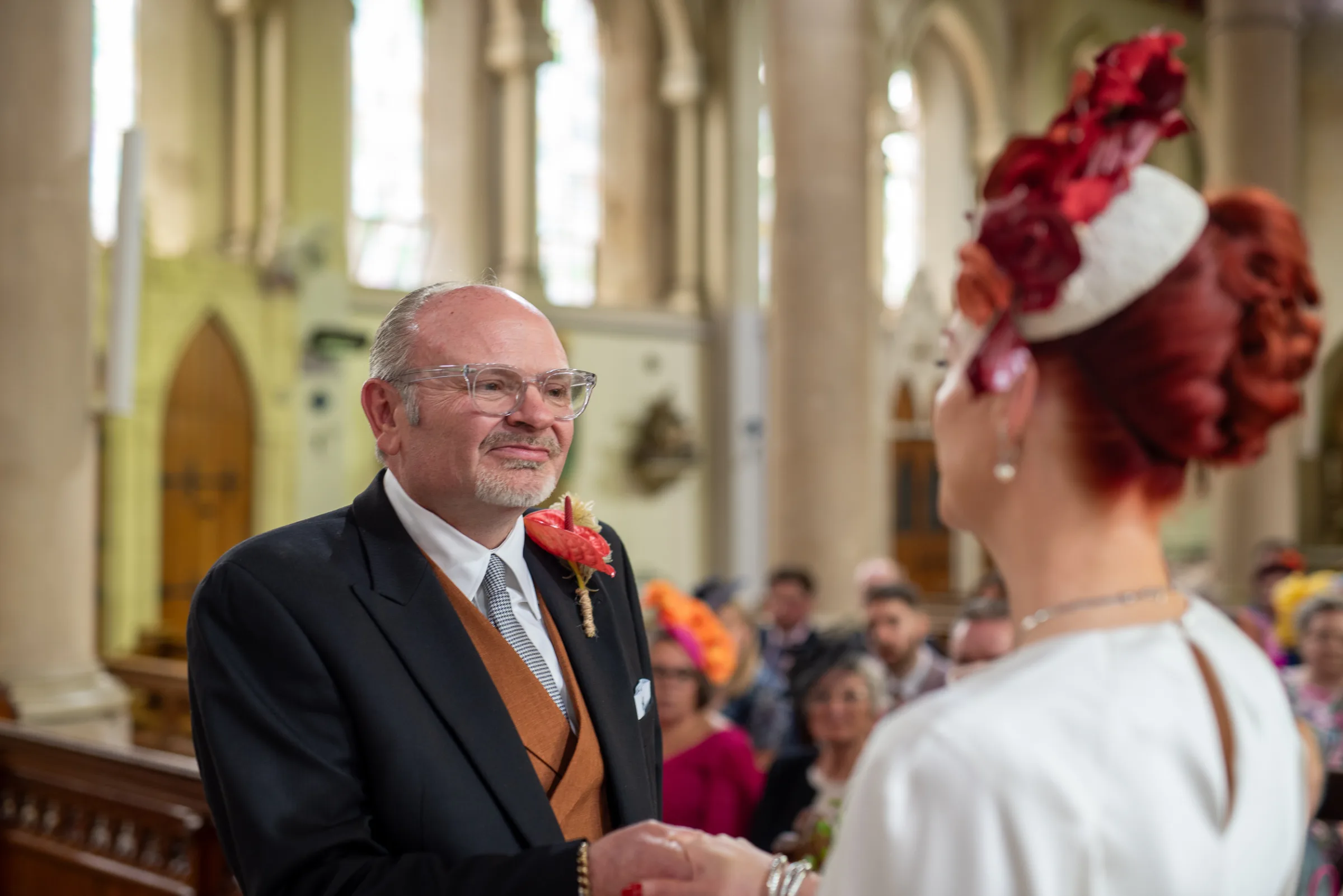
During the signing of the register, the vocalists performed "More I Cannot Wish You" from the 1950 musical Guys and Dolls, a song of significant personal meaning to the bride and her father. The recessional concluded with a rendition of "Because," a song popularized by Mario Lanza, which reportedly earned a rare standing ovation from the congregation.
In keeping with Catholic tradition, the couple exchanged pre-determined vows but supplemented the ceremony with personal vows shared privately later in the day. The rings were sourced from Daryl Gigg at DB Gems in Gray’s Antique Market, specializing in vintage and antique jewelry, ensuring the physical symbols of the union remained consistent with the era-specific theme.
Theatrical Reception and Visual Identity
Ally leveraged her professional attention to detail to act as the de facto event designer, eschewing a professional wedding planner. The visual identity of the reception was modeled after the 1950s theatre experience.
Stationery and Curation
The bride utilized digital design tools and vintage source material to create a comprehensive suite of stationery, including:
- Invitations: Designed to mimic 1950s concert tickets, complete with perforated RSVP stubs.
- Programmes: Inspired by 25 vintage theatre programmes sourced from eBay, Ally created a multi-page "Order of Service" that included a "cast list" (the wedding party), "synopses of scenes," and personalized vintage-style advertisements.
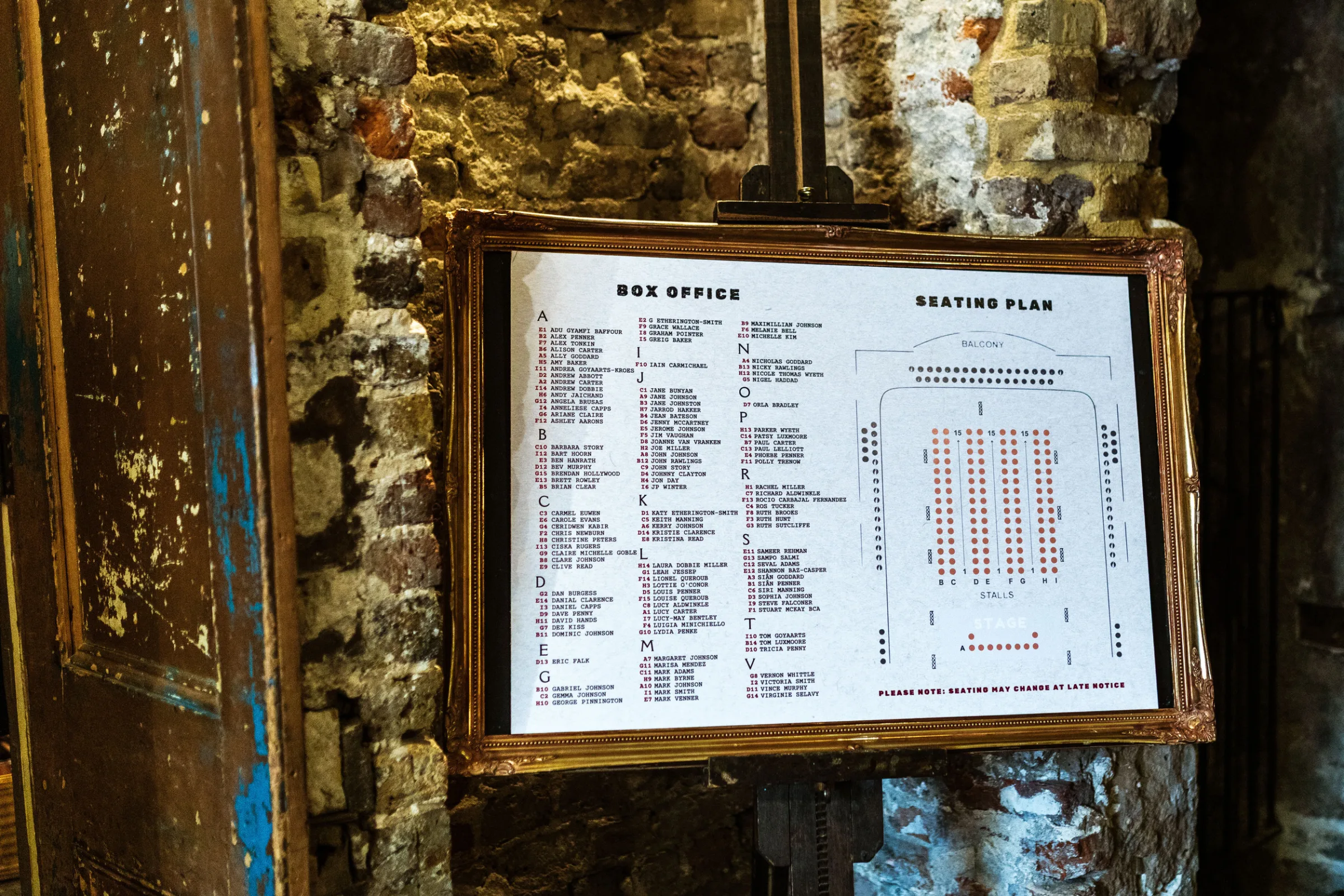
- Seating Plan: A replica of Wilton’s Music Hall’s own floor plan, requiring guests to collect "tickets" from a makeshift "Box Office" to find their seats in the "Stalls."
Floral Artistry
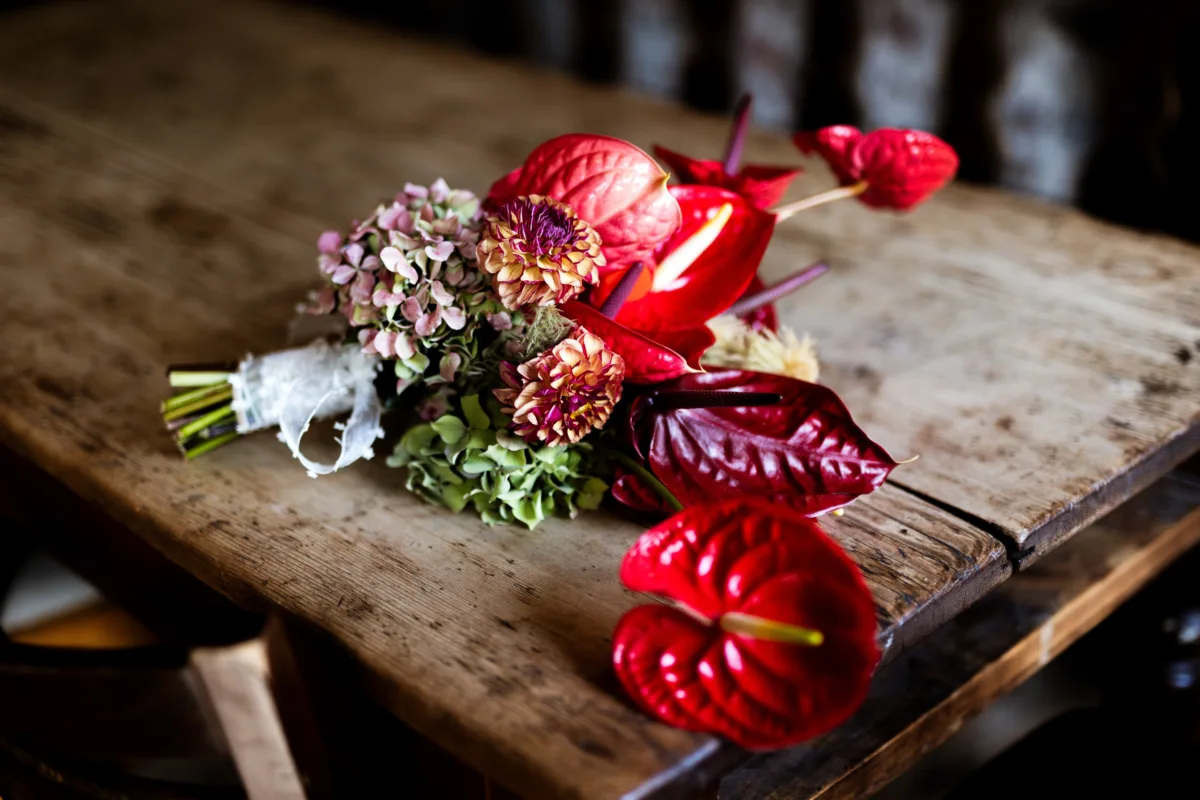
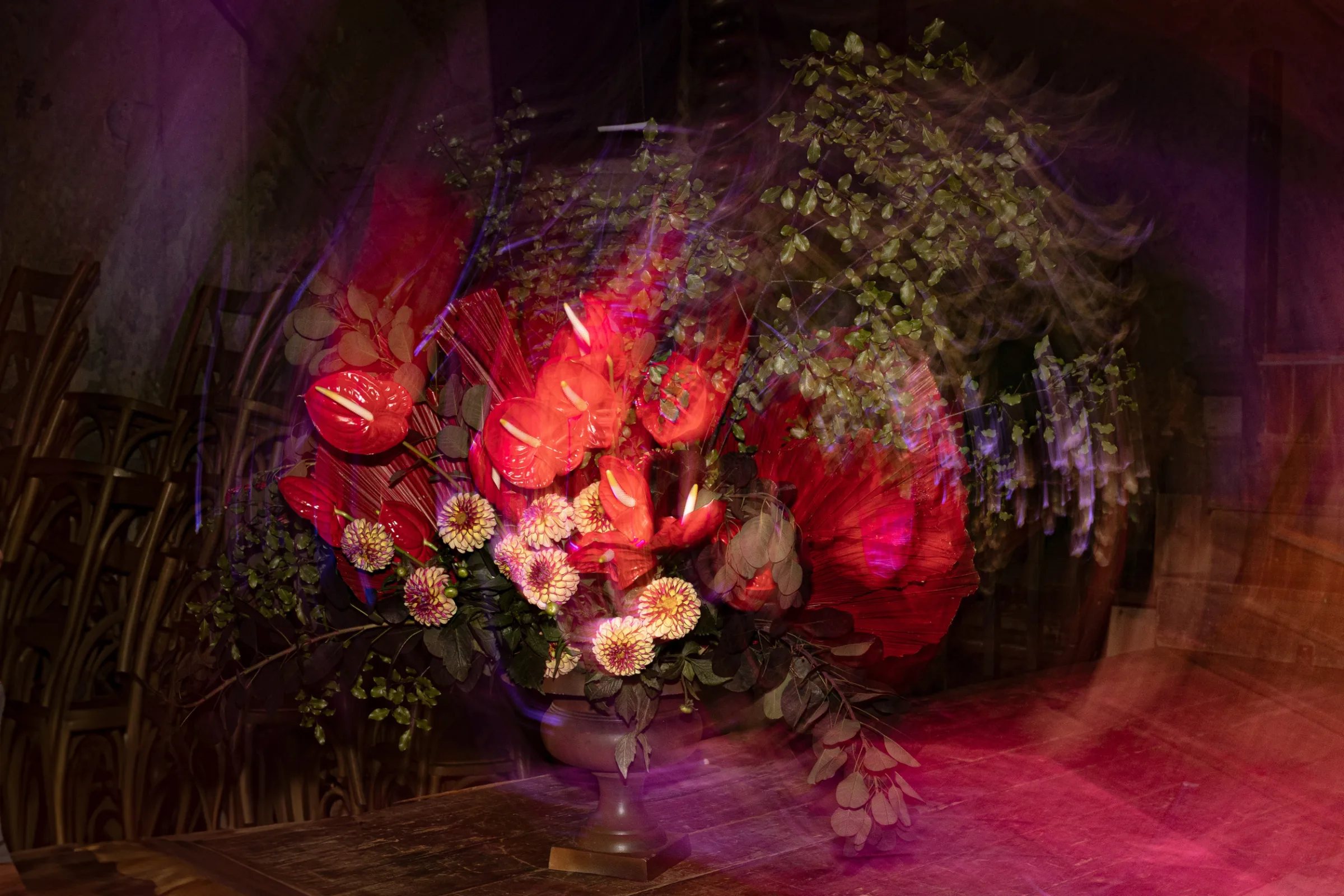
The floral arrangements were the work of artist Yan Skates. The design focused on the anthurium, a plant often associated with mid-century modern interiors due to its sculptural, waxy appearance. The arrangements were noted for their unconventionality, incorporating edible elements into the table displays, which allowed the flora to serve as both decoration and an interactive part of the dining experience.
Gastronomy and Entertainment
Catering was managed by Cater London, led by coordinator Lucy. The menu was designed to facilitate a smooth flow within the historic venue, which often presents logistical challenges due to its age and layout. The wedding cake was provided by Jim Vaughan, a long-time friend of the couple and a professional chef. The cake featured tiers of carrot and lemon drizzle, with additional vegan and gluten-free options to accommodate all 1950s-clad guests.
Music, being the catalyst for the couple’s initial meeting, remained the focal point of the evening. The entertainment included:
- The Piccadilly Bullfrogs: A live rockabilly trio featuring members of the world-renowned band The Stargazers.
- DJ Vernon: A specialist in 1950s vinyl sets.
- DJ Dandy (Martin): Who provided a "Power Hour" of retro hits to appeal to guests outside the rock and roll subculture.
The couple’s "first dance" was split into two segments: a slow dance to Mel Carter’s "Hold Me, Thrill Me, Kiss Me," followed by a high-energy jive to Jesse Belvin’s "I’m in Love with a Girl," effectively opening the dance floor to the many skilled dancers in attendance.
Market Context: The Rise of the "Individualized Wedding"
The union of Ally and Kerry exemplifies several growing trends in the global wedding industry, which is currently valued at approximately $70 billion in the United States and billions more in the UK.
- The "Slow Wedding" Movement: Much like the "Slow Food" movement, there is an increasing trend toward weddings that prioritize meaningful, time-intensive curation over mass-produced luxury. Ally’s multi-year search for a dress and her hand-made millinery are hallmarks of this shift.
- Historical Venue Resilience: The use of Wilton’s Music Hall highlights a preference for "non-traditional" venues that offer built-in character, reducing the need for temporary decor and supporting the preservation of local heritage sites.
- Late-Stage Marriage Demographics: With the bride at 41 and the couple having been together for over a decade, this wedding reflects the demographic shift toward later marriages where couples have established professional careers (such as investment banking) and specific, well-defined tastes.
Conclusion and Future Outlook
Following the celebration, the couple implemented an "Irish goodbye" policy, encouraging guests to depart at their leisure without interrupting the energy of the dance floor. In lieu of a traditional gift registry, Ally and Kerry utilized a honeymoon fund service to finance a forthcoming trip to Japan, focusing on the "gift of memories" over material goods.
The event stands as a testament to the possibility of blending rigid religious tradition with niche subcultural identity. By grounding their wedding in the history of Peckham and East London, Ally and Kerry created a celebration that was as much a tribute to their community and shared interests as it was to their personal union. As they prepare for their honeymoon in Japan, the couple leaves behind a blueprint for highly personalized, era-authentic celebrations that prioritize historical integrity and craftsmanship over conventional wedding tropes.