









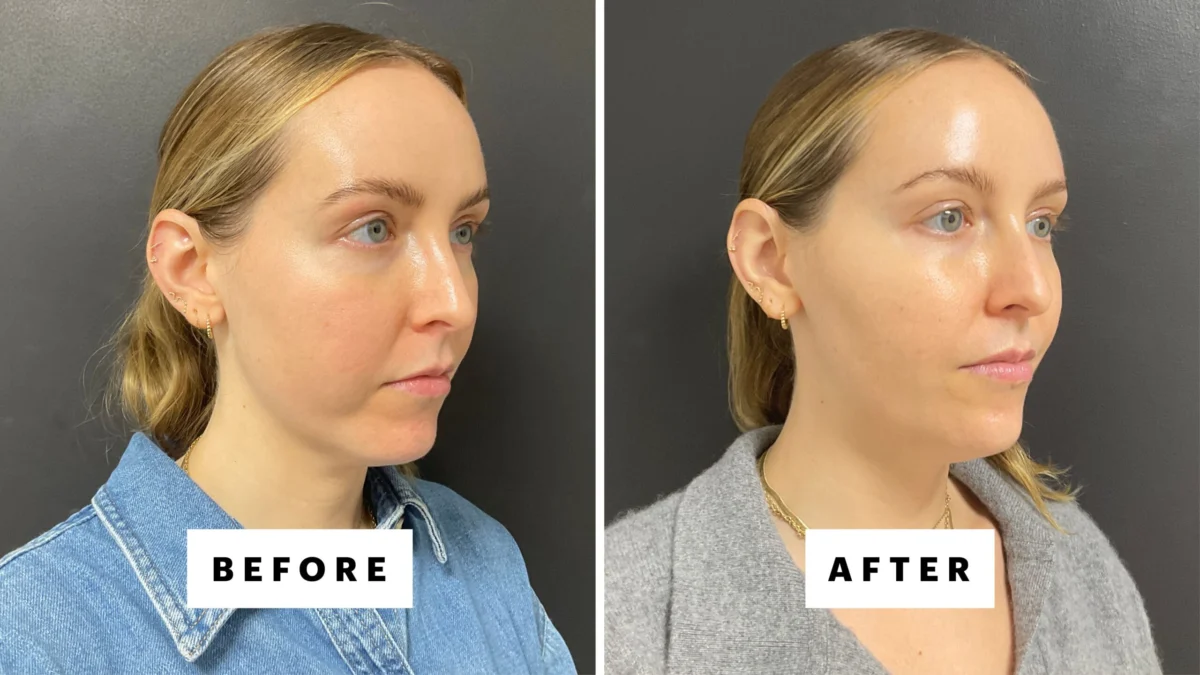
The journey began with a subtle dissatisfaction, a perceived lack of definition that sparked a personal quest for facial harmony. For beauty editor Sarah Kinonen, the reflection in the mirror presented a mild case of "recessed chin," a characteristic that, while not a medical concern, had fostered a long-standing self-consciousness. This narrative delves into her experience with chin fillers, exploring the procedure, the science behind it, and the profound impact it had on her confidence and perception of cosmetic enhancements.
Understanding Chin Fillers: A Sculptural Approach to Facial Aesthetics
Chin filler, as explained by board-certified dermatologists, is a cosmetic procedure designed to enhance or correct the structure of the lower face. Dr. Melissa Kanchanapoomi Levin, a New York City-based dermatologist, clarifies that "filler generally refers to any substance that can help lift or angle tissue—it’s most commonly composed of hyaluronic acid." These injectable substances are primarily used to address volume deficits and create more balanced facial features.
Dr. Dhaval G. Bhanusali, another board-certified dermatologist in New York City, elaborates on the specific application of chin fillers. "With chin filler, specifically, we look at if there is an imbalance, with chin protrusion appearing disproportionate with the rest of the face," he states. This is often colloquially referred to as a "weak chin."
The efficacy of chin fillers hinges on the type of product used. Dermal fillers are categorized by their stiffness, or G-prime level, which dictates their suitability for different facial areas. For the chin, a "pretty firm, high G-prime filler" is generally preferred. This is because these fillers possess the structural integrity to mimic bone, providing a scaffolding effect that creates lift and definition.
Several high G-prime fillers are available on the market, each with specific applications:

- Juvéderm Volux and Juvéderm Voluma XC (Allergan): These are often recommended for structuring the chin and jawline, offering significant lifting capabilities.
- Radiesse (Merz Aesthetics): Known for its ability to smooth deep wrinkles and add volume to the lower face, it can also contribute to chin augmentation.
- Restylane Lyft (Galderma): While primarily used for cheek and midface volume, its structural properties can sometimes be employed for lower facial enhancement.
The selection of the most appropriate filler is a collaborative decision between the patient and the medical provider, tailored to individual facial anatomy and desired outcomes.
The Decision-Making Process: A Leap of Faith Fueled by Expertise
Kinonen’s decision to pursue chin filler was not a meticulously planned event but rather an impulse during a routine appointment for neurotoxin treatments. This spontaneous choice, while potentially jarring for some, was underpinned by years of trust and a deep understanding of her facial anatomy developed with Dr. Levin over approximately eight years.
"As scary as this may sound, ‘on a whim’ is typically how I describe my decision-making process, especially when it comes to in-office procedures," Kinonen notes, attributing her reduced apprehension to her role as a beauty editor, which involves extensive research and reporting on such treatments.
Dr. Levin’s assessment of Kinonen’s candidacy was overwhelmingly positive. "You have great skin: thick, healthy, robust skin," she observed. "You don’t have any underlying skin laxity. You really fit the profile of what makes for a good candidate." Factors contributing to this assessment included Kinonen’s age (33 at the time), her non-smoking status, and her realistic expectations regarding the outcomes of non-surgical cosmetic procedures.
Dr. Levin emphasized the importance of patient understanding: "Patients should have an understanding of what fillers can and cannot achieve. They can enhance, but they don’t offer the same type of dramatic results that surgical interventions can. The role of filler is more subtle, natural-looking improvements rather than dramatic changes, [though] they may feel dramatic to you."
Pre-Procedure Preparations: Ensuring Safety and Efficacy
Once the decision was made, the pre-procedure protocol commenced. This involved thorough cleaning of the injection sites, application of a potent numbing cream, and a detailed explanation of the procedure and potential side effects.
.jpg)
Common side effects associated with facial fillers include bruising, swelling, and the possibility of allergic reactions. Dr. Bhanusali highlighted the inherent risks in any cosmetic procedure, including the rare but serious complication of vascular occlusion, which can lead to tissue compromise or vision impairment. He stressed the paramount importance of seeking treatment from a board-certified dermatologist or plastic surgeon to mitigate these risks.
Prior to injection, Dr. Levin confirmed that Kinonen had abstained from alcohol, had not undergone recent dental procedures, and had avoided aspirin or ibuprofen to minimize the risk of bruising.
The Injection Process: Artistry in Hyaluronic Acid
With the numbing cream taking effect, rendering the lower half of her face insensible, Dr. Levin proceeded with the injection. The choice of filler was critical, and for Kinonen’s specific needs, Juvéderm’s Volux was selected. This filler is FDA-approved for jawline enhancement and is particularly suited for structural augmentation, designed to be injected near the bone to address chin recession.
To achieve a more comprehensive and anatomically balanced result, Dr. Levin also employed Juvéderm Vollure. This softer, more flexible filler was used to provide "perioral support" in the area above the chin and below the lips. The injection was performed using a cannula, a blunt-ended tube, which minimizes the risk of vascular complications and filler migration in areas with a higher concentration of arteries and veins.
Dr. Levin described the injection process as an intuitive art form: "There is no perfect way to inject. There’s no recipe that says, ‘This is exactly how you do it.’ It’s more like cooking intuitively."
In Kinonen’s case, the procedure involved the use of one full syringe of Volux and half a syringe of Vollure. The cost of such treatments can vary significantly, ranging from approximately $800 to several thousand dollars, depending on the type of filler, the number of syringes used, geographic location, and the practitioner’s expertise. Kinonen’s treatment was provided gratis due to her role in documenting the experience.
.jpg)
A unique aspect of the procedure was the sculpting of the injected filler. Dr. Levin meticulously molded the hyaluronic acid under the skin to best complement Kinonen’s facial anatomy, akin to sculpting clay. This hands-on approach, while not always necessary, allows for fine-tuning the placement and ensuring seamless integration with surrounding tissues.
Post-Injection Guidelines and Healing: Navigating the Recovery
Following the injections, Kinonen received post-procedure instructions aimed at optimizing healing and results. A key directive was to limit salty food intake, as sodium can exacerbate swelling. Despite this advice, a planned road trip presented a challenge, leading to a minor indulgence in high-sodium fast food.
She was also advised to moderate physical activity for a few days. While light jogging was deemed acceptable, strenuous workouts were discouraged to prevent any undue pressure on the treated area.
The immediate aftermath of the procedure was characterized by tenderness, described by Dr. Levin as feeling like "someone punched me in the chin." This sensation, coupled with the feeling of a foreign substance being injected, necessitated careful handling of the treated area. Kinonen also opted to sleep on her back for the initial two weeks, a precaution against potential filler migration, though Dr. Levin later reassured her that side-sleeping after 24 hours is generally safe.
Filler migration, the phenomenon of injected filler moving away from its original site, is a recognized complication. Dr. Levin explained that this can occur due to overfilling, incorrect filler selection, or unskilled injection techniques. Fortunately, migrated hyaluronic acid fillers can be dissolved using hyaluronidase, an enzyme that breaks down the product. Kinonen experienced no such migration following her treatments.
Bruising and swelling typically subsided within five to seven days, and Kinonen found this to be accurate. The visual signs of bruising gradually faded, and she chose to forgo makeup during the initial healing period to allow the skin to recover undisturbed.
.jpg)
The Transformation: Subtle Enhancements, Profound Impact
Two Weeks Post-Initial Appointment:
At her two-week follow-up, Kinonen expressed profound satisfaction with the results. The enhancements, though described as "mild," had significantly improved her overall facial balance. Dr. Levin acknowledged her "beautiful bone structure in your mid-face" and "beautiful jawline," noting that the enhancement was "quite mild."
For Kinonen, however, these subtle changes were life-altering. The procedure provided a substantial boost in confidence, granting her the visual definition she had long sought. "I have a chin! I have a jawline! And I can see both in photos—from every angle!—for the first time," she declared.
The longevity of the filler was also a significant advantage. As Dr. Bhanusali noted, "Filler can last between eight and 12 months, and sometimes longer, depending on the patient." This extended duration meant less frequent touch-ups, aligning with a philosophy of gradual enhancement: "So start slow and remember, you can always add more—it’s a marathon, not a sprint."
Two Years Post-Initial Appointment:
Two years after her initial procedure, Kinonen’s filler had naturally dissolved, necessitating a refill. For this second appointment, Dr. Levin opted for Juvéderm Voluma, another high-G-prime filler, using one syringe instead of the nearly two syringes of Volux used previously. This adjustment was made because Kinonen’s chin and jawline still retained some of the previous structural support.

The technique for this session involved more extensive jawline support, extending the filler application to address the "post-jowl sulcus"—the dips behind the jowl that can contribute to a less defined jawline. This was again performed with a cannula, a sensation Kinonen found peculiar, likening it to a long, thin tube moving beneath the skin.
To further support the chin and address marionette lines, Juvéderm Vollure was again utilized. Dr. Levin highlighted Vollure’s suitability for areas requiring mobility due to its softer, more flexible nature, noting its longevity of up to 18 months.
The results of the second appointment were equally impressive, providing a pronounced chin that aligned directly under her mouth and a sharper, more structured jawline. This led Kinonen to contemplate the long-term implications of continued filler use.
Future Considerations: Sustaining Enhancement and Natural Aging
The question of whether to continue with dermal fillers indefinitely is a common one. Dr. Levin addressed this, stating, "Yes, long story short, you can definitely continue getting dermal fillers—but is it going to be exactly the same every time? No." She explained that aging needs change, and consistently applying the same treatment can lead to an overfilled or distorted appearance over time. "Sometimes you can’t just keep on mimicking and giving high G-prime filler in the same way," she advised.
At 35, Kinonen is embracing the ongoing journey of facial enhancement, planning for future appointments. Her positive experiences with chin fillers have reshaped her perspective on non-surgical cosmetic procedures, demonstrating their potential for subtle yet impactful improvements that can significantly boost self-confidence. Her narrative underscores the importance of informed choices, skilled practitioners, and a personalized approach to achieving aesthetic harmony.