










A handful of pioneering brands are now venturing into the realm of compostable clothing and footwear, promising a revolutionary return-to-earth pathway for textiles. This "soilpunk" vision, which envisions garments transforming into nutrient-rich soil, is undeniably seductive, offering a comforting alternative to the daunting images of textile waste choking landfills and natural landscapes globally. However, as analyst and researcher Fru Bekefi explores in a recent report, the practicalities of compostable fashion are far more intricate than the marketing suggests, fraught with certification gaps, widespread consumer confusion, and the inherent limitations of both home and industrial composting systems.
The Vision: A Garment’s Journey Back to the Garden
Imagine a scenario where your cherished, well-worn garment, having served its purpose through countless adventures, reaches the end of its useful life. Instead of contributing to ever-growing mountains of discarded textiles—like those infamously photographed in Accra, Ghana, or Chile’s Atacama Desert—you thoughtfully cut it into strips and integrate it into your home compost pile. Over time, this beloved item decomposes, transforming into valuable organic matter that enriches your garden soil, nurturing blossoming flowers and bountiful vegetable patches.
This vision offers a powerful antidote to the pervasive eco-anxiety that accompanies discussions of irreversible climate tipping points and environmental degradation. Composting, in this context, resonates deeply, both conceptually and materially, as an alchemical process capable of transforming what was once considered waste into a valuable resource. The growing interest in this practice is palpable across society, influencing everything from urban waste management policies to cultural movements. Indeed, several major fashion brands have recently introduced experimental compostable collections, eager to tap into this burgeoning desire for circularity.
Yet, at the vast scale of the global fashion industry, the widespread adoption of compostable fashion remains largely a distant dream. The material landscape is still overwhelmingly dominated by fossil-fuel-derived fibers and synthetic blends, while the relentless cycle of ultra-fast fashion continues to promote a disposable mindset, showing little sign of abatement. Nevertheless, on the fringes of the industry, a dedicated cadre of designers, material innovators, and brands are actively exploring the tenets of "soilpunk" circularity. They are rigorously scrutinizing whether this idyllic vision can genuinely withstand the complexities of real-world application.
On the surface, the concept of compostable fashion appears elegantly straightforward: utilize 100% natural fibers such as organic cotton or hemp, and introduce new end-of-life rituals for garments. With the proper infrastructure and comprehensive consumer education, composting could theoretically offer an ancient, nature-based solution to a thoroughly modern problem of waste. However, as multiple experts and nearly a dozen consumers interviewed for Bekefi’s report highlight, the compostability of even natural fibers is far from simple. Understanding what the compostable dream truly entails in practice requires a deeper dive into its scientific, logistical, and behavioral challenges.
The Rise of the "Soilpunk" Imagination and Cultural Currency of Composting
The term "soilpunk" refers to a burgeoning niche movement spanning art, design, and culture, united by a profound concern for soil health and the promotion of regenerative agricultural practices. This movement, with its emphasis on interconnectedness and ecological restoration, has even inspired creative endeavors like "The Regreening," a cozy ecological restoration gaming simulation. Soilpunk’s emergence is not coincidental; it aligns with a broader societal shift that is elevating composting from a mere household chore to a form of cultural currency.
Globally, composting is gaining significant traction. In New York City and France, for instance, separating food waste from other household trash has become mandatory, reflecting a governmental commitment to reducing organic waste in landfills. This regulatory push, combined with a heightened environmental consciousness, has led publications like Town and Country magazine to declare the arrival of "status composting"—a phenomenon where engaging in composting is increasingly seen as a marker of environmental responsibility and even luxury.
The escalating fears surrounding biodiversity loss and food insecurity have further amplified our collective appreciation for soil’s life-sustaining properties. This reverence is being celebrated through diverse cultural expressions, from dedicated art exhibitions like "Soil: The World at Our Feet" at Somerset House, to specialized tarot decks like "Grounded Wisdom," and even musical tracks that incorporate "soil samples" to turn the earth’s hidden sounds into evocative compositions.
Despite these hopeful visions and encouraging small steps forward, the entrenched legacy systems of the global economy, particularly within the fashion industry, prove stubbornly resistant to change. The industry finds itself in a precarious limbo, constantly navigating conflicting pressures: the imperative for continuous growth, the need to satisfy evolving consumer demands, and the urgent mandate to mitigate its significant environmental and social harms.
Nonetheless, themes of circularity and regeneration are becoming increasingly central to policy discussions. Governments, particularly in regions like the European Union, are actively developing legislation such as Extended Producer Responsibility (EPR) directives. These policies aim to shift the financial and operational burden of managing products’ end-of-life from taxpayers to businesses, compelling brands to consider the full lifecycle of their products, including their eventual disposal or regeneration.
Sarah Housley, a design futurist and author, observes the irresistible appeal of compostable fashion for both consumers and brands. "Compostable fashion is having an extended moment because consumers have become aware of low rates of recycling, particularly for textiles," she explains. "They’re seeking alternatives that still feel ecologically responsible, and the idea that your clothing can return to the earth is so irresistible. It’s popular with brands for similar reasons. While recycling requires daunting systemic change—which they can influence, but only to a certain extent—compostable designs may feel a little easier to crack."
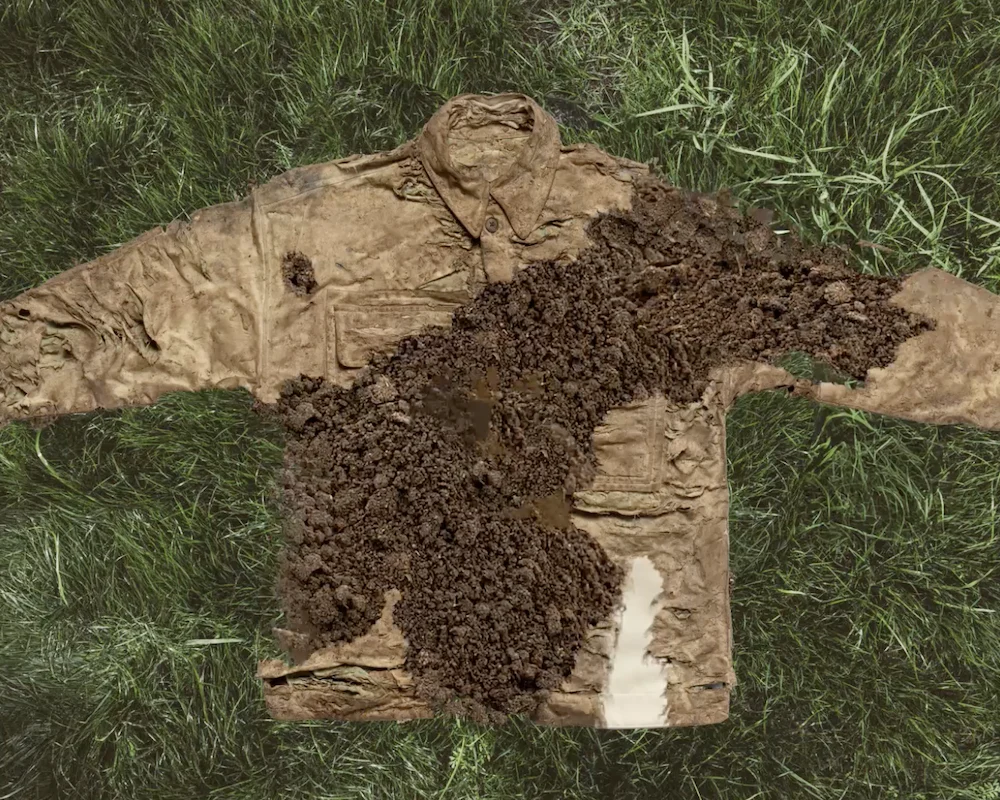
This inherent appeal explains why, despite slow progress in broader material innovation, brands continue to unveil compostable collections. These initiatives serve as powerful signals of regenerative intent, positioning companies at the forefront of sustainable design. A notable example is the "regenerative sportswear collection" debuted by Under Armour and Unless Collective during Milan Design Week in April 2025. With the evocative tagline "Make Good Dirt," this small pilot project tantalizingly teased a near-future paradigm where worn-out athletic gear could simply be buried in one’s backyard to enrich the soil.
However, the reality of this process is considerably more complex than the dream. Becca Willcox, a ratings analyst at Good On You, cautions, "The conditions in home composting systems are highly variable, in terms of temperatures, moisture levels, and the microbes that are present. Without the right conditions, textiles may take a lot longer than expected to break down, and perhaps much longer than achieved under the test conditions. The items won’t necessarily break down quickly if they are just left and forgotten about." This variability underscores a significant challenge in transitioning the "soilpunk" vision from a compelling concept to a widespread, reliable practice.
Beyond the Hype: Greenwashing Concerns and Genuine Innovation
The proliferation of compostable claims in fashion inevitably raises the specter of greenwashing—the practice of making unsubstantiated or misleading environmental claims. While not every compostable initiative is merely a performative corporate environmental stunt, the space is certainly haunted by this shadow. Seductive aesthetics and promises of effortless convenience can initially excite consumers, but if the fantasy consistently fails to meet expectations or evolve beyond one-off collections into more mature, scalable propositions, consumer skepticism is likely to grow.
Sarah Housley reiterates this point: "Compostable clothing lends itself to great visuals: brands have started to show their products buried and in different states of decomposition to really grab consumers’ attention and interest. But they’re still being used to give companies an innovation halo." This highlights the dual nature of these campaigns: while they showcase potential, they also risk being perceived as marketing ploys if tangible, systemic change doesn’t follow.
Nevertheless, there is a powerful potential for "incentive aesthetics"—a concept developed by designer Oonagh O’Hagan, describing "speculative design as a way to look at more sustainable futures in luxury fashion." This approach leverages curiosity and desire, the twin flames of behavior change, to forge deeper connections with audiences. Biodesigners, in particular, are at the forefront of this emerging field, pioneering soil-compatible solutions by working directly with living systems, including organisms like bacteria and algae.
Take, for instance, the startup Cell Sense, founded by materials designer Aradhita Parasrampuria. Her work directly addresses critical issues like microplastic pollution and the health impacts of toxic dyes on workers. Cell Sense is renowned for its compostable, biodesigned embellishments, notably its jade-like bioluminescent beads. These innovative beads boast a remarkable durability, lasting up to 15 years, yet are designed to decompose fully in a kitchen compost within a mere four weeks.
For brands, offering audiences a transparent, behind-the-scenes look into their product development process can be instrumental in building loyalty and engagement over time. Cell Sense’s recent collaboration with the personal care company Dulcie (formerly Haeckels) serves as an excellent example of thoughtful execution. Their durable yet compostable exfoliating face cloth was framed as a limited-edition experiment. Customers could purchase the item through Dulcie’s Citizen Subscription Box, while simultaneously learning about the intricate biomineral-inspired design development via the company’s blog and Instagram. This approach educates consumers and invites them into the journey of innovation.
Limitations can also be creatively transformed into unexpected sensory delights. Stella McCartney’s upgraded S-Wave sneaker, developed in collaboration with material science startup Balena, brilliantly harnesses the emotional power of scent. Facing the challenge of using non-toxic dyes, the brand turned it into a multisensory opportunity. The shoes’ BioCir Flex soles incorporate leftover cinnamon from the spice industry, imbuing them with a comforting, earthy fragrance. This initiative is more than a one-off prototype; it is the culmination of a multi-year research and development project. Earlier 2022 versions of the S-Wave, which relied on recycled TPU (thermoplastic polyurethane) for the sole, were not fully circular. The collaboration with Balena thus marked a significant milestone in McCartney’s ongoing commitment to truly circular design.
The Nuances of Composting: Materials, Methods, and Misconceptions
Understanding what materials are truly compostable, and critically, how to compost them effectively, is paramount. Becca Willcox from Good On You clarifies, "The most compostable fabrics are commonly known to be organic cotton, linen, kapok, hemp, organic bamboo, jute, wool and some man-made fabrics, like viscose and Lenzing Tencel."
However, the devil is often in the details. Even these naturally derived fibers may lose their compostability if they have been treated with synthetic dyes or chemical finishes. Furthermore, the ubiquitous functional and decorative trims found on most garments—zippers, buttons, sequins, synthetic threads, and elastic—are typically not compostable. For a garment to truly return to the earth, these non-compostable components must be meticulously removed before composting, a task that demands significant consumer effort and awareness.
It is also crucial to recognize that "compostable" does not automatically equate to "environmentally and ethically sound" in all contexts. As Willcox points out, "Composting isn’t always the solution with the lowest impact. You are completely destroying the fibre rather than extending the lifespan of clothing, while failing to cut the demand for new items. Composting is most suited for items that can’t be reused, such as underwear or socks." This underscores the importance of a hierarchical approach to waste management: reduce, reuse, repair, recycle, and then compost as a last resort for items genuinely at the end of their functional life.
A critical distinction must be drawn between the terms "compostable" and "biodegradable," which are often erroneously used interchangeably. Composting implies a material’s ability to break down into organic matter within a specific timeframe, under either home or industrial composting conditions. Biodegradation, conversely, refers to breakdown over an unspecified period, often without specific conditions or a beneficial outcome. This ambiguity is why the European Union now prohibits the unvalidated use of "biodegradable" in marketing, with member states like France and Belgium banning its use entirely. The persistence of seemingly benign materials can be surprising; a recent paper in iScience, co-authored by Fashion Revolution co-founder Carry Somers, revealed that cotton accounted for over 70% of the 150-year fiber record found in sediment from a UK lake historically fed by textile mills, challenging assumptions about its rapid environmental breakdown.
Asha Singhal, director of the Nature of Fashion Initiative at the Biomimicry Institute, further explained to Vogue Business that "Biodegradation is not just about the material itself. It depends on the ecosystem around it, from temperature and moisture to the presence of the right microbes." This means simply tossing a 100% cotton T-shirt into an unsuitable environment offers no guarantee of its decomposition.
Certain apparel categories are inherently more suited for compostability than others. Footwear, for instance, represents a prime but complex candidate for innovative design in this area. It is estimated that a staggering 90% of the 23.8 billion pairs of shoes produced annually end up in landfill or are incinerated. The intricate construction of modern shoes—glued layers of foam, rubber, mesh, and synthetic leather—renders them nearly impossible to recycle. Addressing this monumental waste challenge is the core motivation behind the "Closing the Footwear Loop" initiative, launched in February by Fashion For Good. This collaborative project brings together global brands like Adidas, Zalando, Inditex, and Target to tackle the category’s circularity challenges. While improving product recycling is a priority, one of the project’s research streams specifically explores bio-based polymers for soles, aiming to phase out fossil fuel-derived materials entirely.
Stella McCartney’s S-Wave Sport trainers are a significant step ahead in this regard. Designed for durability and recyclability, they offer industrial composting through Balena’s global network as a last resort in their lifecycle. However, a significant gap remains in consumer guidance. The Stella McCartney website does not explicitly detail how customers should dispose of their used shoes once they are beyond wear. While the brand provides clear return steps for its "Close the Loop parka" (which is recyclable but not compostable), this clarity is missing for the S-Wave trainers. This seemingly minor omission highlights a major barrier to ensuring compostable products actually deliver their promised environmental benefits. As author Sarah Housley observes, "There’s a huge amount of behaviour change for brands to engineer into place. For example, providing the envelope and label at point-of-purchase and then incentivising customers to return the product to them to dispose of professionally."
A shining example of effective consumer engagement and infrastructure is the underwear brand Kent, through its innovative "Compost Club." This pioneering take-back program, the first of its kind in the fashion industry, transforms textile waste into valuable fertilizer. Relaunching in summer 2026, the program allows US-based customers to purchase a $5 shipping label and return kit. After cutting up their washed briefs, they can drop them at any United States Postal Service location and receive a $10 credit towards future Kent purchases. The used textiles are then sent to a community composting organization in Southern California, where they are converted into nutrient-rich soil, effectively diverting waste from landfills and supporting local food ecosystems.
Like footwear, underwear is particularly well-suited for composting. "It’s a really strong use case because this is an item that people replenish frequently, that can only have its lifetime of use extended a certain amount, and that has no resale value and very little reuse or recycling potential," Housley explains. However, both Kent’s and Stella McCartney’s initiatives, while commendable, underscore the iterative challenge of pioneering new infrastructure and service designs at a meaningful scale. Without broader systemic change, individual brands are tasked with engineering significant shifts in consumer behavior—a tall order in a fashion culture largely driven by convenience.
The Future Trajectory of Compostable Fashion: Beyond Niche to Norm?
Currently, compostable clothing remains firmly in its niche, experimental era, primarily attracting curious and committed early adopters seeking genuinely regenerative alternatives. However, historical precedent suggests that even small, vocal minorities can catalyze significant social movements. Research from the University of Pennsylvania in 2018 indicated that roughly a 25% "tipping point" is sufficient to shift societal norms. The small but dedicated cohort of compostable fashion’s early adopters could potentially represent this critical minority, provided the underlying systems and infrastructure evolve to support them.
A major hurdle remains the verifiability of a brand’s compostable claims, particularly for items intended for home disposal. Becca Willcox notes, "Certification schemes for clothing that guarantee home composting are rare and not widespread." This lack of clear, ubiquitous standards leaves consumers in a quandary. When interviewed, almost none of the 10 consumers Fru Bekefi surveyed had actually attempted composting a garment. Their hesitations predominantly revolved around practical infrastructure—"Where would I compost it?" and "No suitable composting facilities" were common refrains—and concerns about product durability, "How long will it last after washing?"
While existing certifications like OK compost HOME by TÜV AUSTRIA and Cradle to Cradle (C2C) can offer some guidance, each has limitations. TÜV’s certification, for instance, typically validates individual fibers rather than finished garments. And while some C2C-certified products do guarantee compostability, the organization itself acknowledges that textiles are currently "most likely" to be recycled into new products rather than composted, highlighting the practical realities of current waste streams.
This reveals a substantial composting literacy and infrastructure gap that urgently needs to be addressed. Sarah Housley emphasizes, "Explaining the difference between home compostable and industrially compostable is crucial, because people who haven’t gone to the effort of educating themselves will not see any difference between the two, and will think that any compostable item can go in their food waste bin when that’s not the case." Clear labeling, accessible information, and readily available disposal pathways are essential.
The future development of this space will be heavily influenced by the interplay between evolving consumer sentiment and shifting industry priorities. Housley suggests, "It’s increasingly likely that people will perceive it as greenwashing if they don’t see compostable designs being scaled up quickly." She adds a crucial point: "textile-to-textile recycling is advancing and as that becomes more commercially viable for the fashion industry, it may take some of the spotlight away from alternative strategies [like compostable design]."
Ultimately, compostable propositions are not a panacea; they are most effectively deployed in a targeted, intentional manner, serving as a complementary strategy rather than a replacement for established practices of reuse and recycling. Their enormous potential lies in specific apparel categories: replacing seductive but often toxic embellishments with biodesigned alternatives, and transforming materials that are truly no longer fit for their original purpose into a valuable resource.
It is this profound potential for metamorphosis—the ability to envision what an object or material can become through decomposition—that makes compostable design so compelling and exciting. Perhaps, in a truly regenerative fashion future, we will indeed witness this transformation unfold, not just in industrial facilities, but in our very own gardens, completing a natural cycle that enriches life from soil to wardrobe and back again. The journey from soilpunk dream to widespread reality is complex, but the seeds of possibility have certainly been sown.