


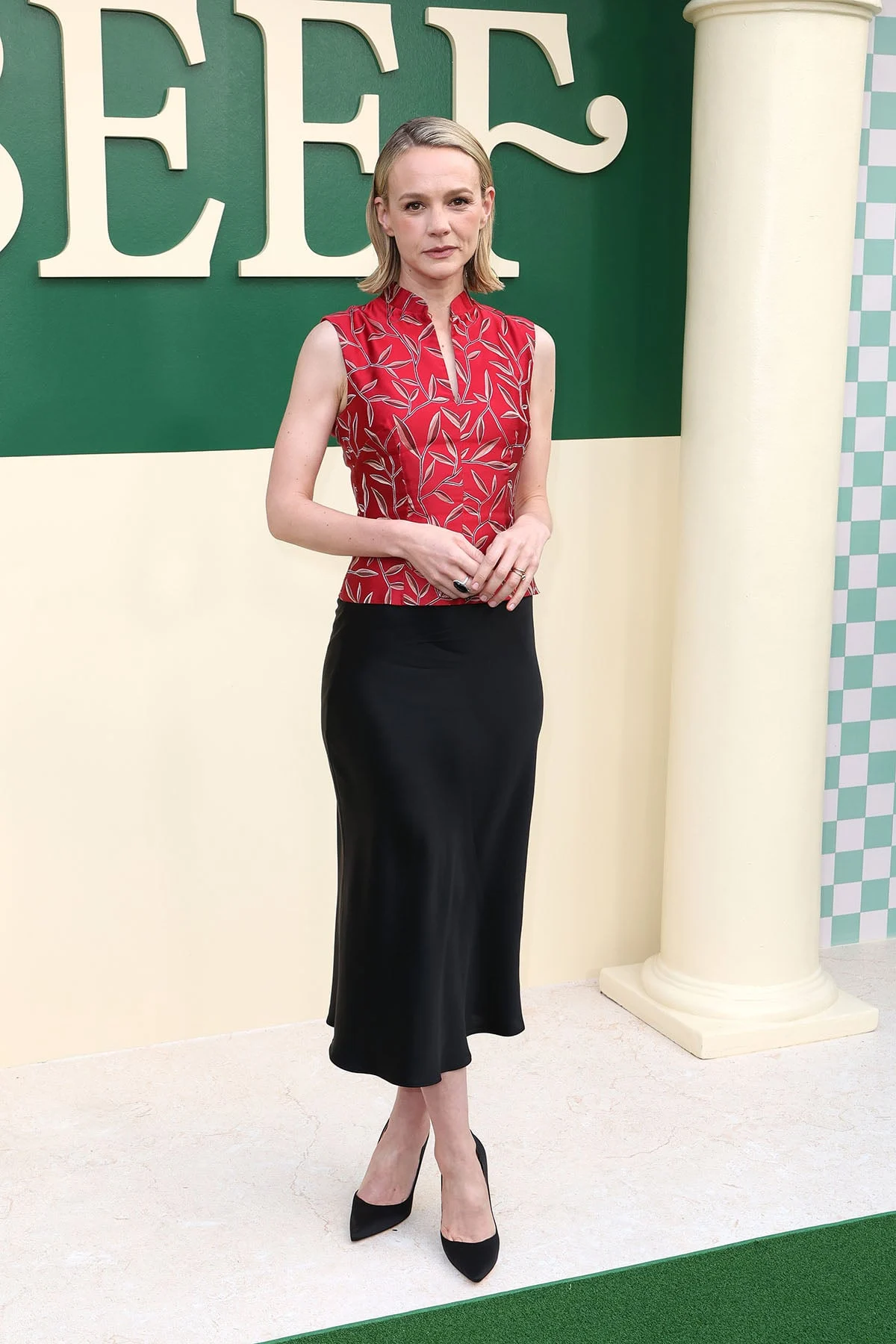
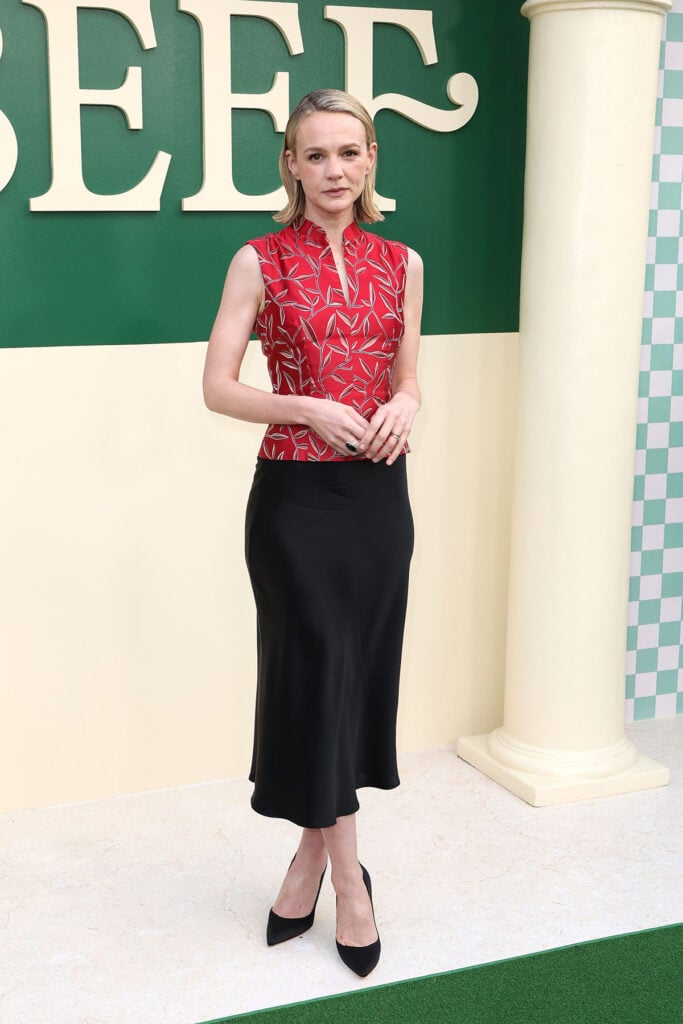
Carey Mulligan made a significant appearance at the Netflix Academy of Television Arts & Sciences (ATAS) event in Burbank, California, participating in a panel that highlighted the streaming giant’s critically acclaimed series, Beef. The British actress, known for her curated and often understated red-carpet presence, utilized the occasion to showcase a piece of fashion history, wearing an archival-inspired look from Prada. The event, held as part of Netflix’s "For Your Consideration" (FYC) campaign, brought together industry professionals and voters to discuss the creative process behind the show’s success. Mulligan’s choice of attire underscored a growing movement within the entertainment industry: the strategic use of archival fashion to convey a sense of timelessness, sustainability, and brand heritage.
The Aesthetic Composition: A Study in Modern Minimalism
The centerpiece of Mulligan’s ensemble was a Prada top featuring a distinctive red silk jacquard foliage motif. This specific pattern is a direct reference to the Prada Spring 1997 Ready-to-Wear collection, an era defined by Miuccia Prada’s "ugly chic" philosophy—a subversion of traditional glamour that prioritized intellectualism and unconventional color palettes. While the original runway presentation in the late 1990s featured the print in a more layered, avant-garde context, Mulligan and her stylist, Danielle Goldberg, opted for a streamlined, contemporary interpretation.
The actress paired the vibrant, textured top with a sleek black pencil skirt. This styling choice served to ground the historical print, providing a sharp contrast that allowed the intricate jacquard weave to remain the visual focal point. The silhouette adhered to the principles of "quiet luxury," a trend that has dominated the fashion landscape throughout 2023 and 2024, emphasizing high-quality materials and precise tailoring over overt logos or ostentatious embellishments. To complete the look, Mulligan wore a single ring by Sophie Buhai, a designer known for her sculptural, modernist jewelry, further reinforcing the minimalist aesthetic.
Historical Context: The Significance of Prada Spring 1997
The Spring 1997 collection is widely regarded by fashion historians as a pivotal moment for the Prada brand. It was during this period that Miuccia Prada solidified the house’s reputation for intellectual fashion, moving away from the high-octane glitz of the 1980s toward a more cerebral, often minimalist approach. The foliage print seen on Mulligan was a hallmark of that collection, representing a blend of organic inspiration and industrial precision.

The resurgence of this specific motif has been noted across several high-profile events in the current fashion cycle. Only days prior to the Burbank event, the actress Elodie was seen at the Cannes Film Festival wearing a custom Prada gown that utilized the same silk jacquard foliage motif. The repetition of this archival print across different continents and events suggests a deliberate effort by the Prada house to celebrate its legacy. By revisiting the 1997 archives, the brand is not merely engaging in nostalgia but is recontextualizing its historical designs for a modern audience that values provenance and craftsmanship.
The Event: Netflix’s Beef and the ATAS FYC Circuit
The Burbank event was part of the rigorous "For Your Consideration" circuit, a series of screenings and panels designed to influence members of the Academy of Television Arts & Sciences ahead of the Emmy Awards. Beef, a dark comedy-drama starring Ali Wong and Steven Yeun, has been a flagship property for Netflix, garnering widespread critical acclaim and multiple awards for its exploration of road rage, class dynamics, and existential dread.
While Mulligan is not a member of the Beef cast, her presence at the event highlights the interconnected nature of the Netflix talent stable. As an Academy Award nominee and a frequent collaborator with major streaming platforms, Mulligan’s participation in these panels often serves to lend additional prestige to the proceedings. These events are crucial for studios; they provide a platform for creators and actors to discuss the technical and emotional labor behind their projects, providing voters with the context necessary to make informed decisions during the awards season.
Chronology of the Archival Fashion Trend
The decision to wear archival Prada is part of a broader chronological shift in celebrity styling that has accelerated over the last three years.
- 2021-2022: The Emergence of Vintage as Statement. Celebrities began increasingly opting for "true vintage" pieces from the 1980s and 90s (e.g., Zendaya in archival Valentino and Versace) to differentiate themselves from the standard "look 1" runway cycle.
- Early 2023: The Rise of the Stylist-Archivist. Stylists like Danielle Goldberg and Law Roach began working more closely with fashion house archives, requesting re-editions of historical pieces or pulling original garments from temperature-controlled vaults.
- Mid-2023: The House Revival. Major brands like Chanel and Giorgio Armani began formalizing their archival projects. Chanel revisited signature designs under its heritage program, while Armani launched the ARMANI/Archivio project to document and celebrate its decades of influence.
- 2024: The Prada Archival Dominance. Prada has been particularly active in this space, with Miuccia Prada and Raf Simons frequently nodding to the brand’s 1990s output. The appearance of the 1997 foliage print on both Mulligan and Elodie within the same week marks a peak in this archival revival strategy.
Analysis of Implications: Sustainability and Brand Equity
The move toward archival fashion carries significant implications for the global fashion industry, particularly regarding sustainability and the longevity of luxury goods. By wearing a design that is nearly 30 years old, Mulligan and other high-profile figures are effectively endorsing the idea that "good design is forever." This counters the fast-fashion narrative of obsolescence and encourages a more circular view of the luxury market.
Furthermore, for fashion houses like Prada, these archival pulls serve as a powerful marketing tool. They reinforce the brand’s "DNA," reminding consumers and critics of the house’s historical contributions to the fashion canon. In an era where new creative directors often struggle to define a brand’s identity, leaning on established, iconic motifs provides a sense of stability and prestige. Data from luxury resale platforms such as The RealReal and Vestiaire Collective indicates that interest in "vintage Prada" (specifically from the 1990s) has seen a double-digit percentage increase in search volume following red-carpet appearances like Mulligan’s.
The Role of the Stylist: Danielle Goldberg’s Influence
The success of Mulligan’s look can be attributed in large part to the vision of her stylist, Danielle Goldberg. Goldberg has become one of the most influential stylists in Hollywood, known for her ability to craft "intellectual" looks that avoid the pitfalls of over-styling. Her roster, which includes stars like Greta Lee and Ayo Edebiri, is defined by a commitment to clean lines, archival depth, and a rejection of traditional "bombshell" aesthetics.
Goldberg’s approach with Mulligan typically involves a "less is more" philosophy. By selecting a piece with a rich historical background—like the 1997 Prada top—Goldberg ensures that the outfit has a narrative without requiring heavy accessorizing or dramatic hair and makeup. This "understated" approach has become a hallmark of Mulligan’s public persona, aligning her with the "quiet luxury" movement while maintaining a distinct, high-fashion edge.
Conclusion and Broader Industry Impact
Carey Mulligan’s appearance at the Netflix Beef ATAS event is a testament to the evolving nature of the red carpet. It is no longer merely a venue for displaying the latest commercial offerings from major brands; it has become a gallery for fashion history. The use of the Prada Spring 1997 foliage print serves as a bridge between the past and the present, highlighting the enduring relevance of Miuccia Prada’s early work.
As the industry moves forward, the reliance on archives is expected to grow. This trend offers a more sustainable path for celebrity dressing and provides a richer, more storied experience for the viewing public. For Netflix and the creators of Beef, having a figure of Mulligan’s stature participate in their awards campaign—while wearing a piece of fashion history—only adds to the cultural capital of the event. The intersection of high-stakes television promotion and high-fashion heritage continues to be a fertile ground for brand building in the modern entertainment landscape.