







The global textile industry is preparing for one of its most significant gatherings as the International Textile Machinery Exhibition (ITM) 2026 approaches, scheduled to take place from June 9 to June 13 at the Tüyap Fair Convention and Congress Center in Istanbul. Among the primary innovators attending is BB Engineering GmbH, a German powerhouse in machine manufacturing, which has announced a comprehensive showcase of its latest advancements in man-made fiber production and polyethylene terephthalate (PET) recycling technology. Operating out of Hall 7, Booth 702B, BB Engineering will maintain its long-standing tradition of collaborative excellence by sharing a joint booth with its parent company, Oerlikon Barmag, and its regional representative, Tekstil Servis. This strategic presence underscores the company’s commitment to the Turkish market, which remains a vital hub for synthetic fiber production and textile manufacturing.
The upcoming exhibition serves as a critical platform for BB Engineering to demonstrate its entire product portfolio, ranging from high-precision components like extruders and filters to sophisticated, turnkey systems for spinning synthetic fibers and air-texturing. As the textile industry faces increasing pressure to adopt sustainable practices while maintaining high-speed production efficiency, BB Engineering’s 2026 lineup focuses on bridging the gap between high-performance virgin material processing and the growing demands of the circular economy.
Technical Innovation: The ValuePack Two-Step Filtration System
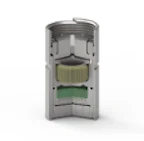
A focal point of the BB Engineering exhibit will be the ValuePack, a new generation of patented spin packs designed to redefine the standards of synthetic fiber spinning. The development of the ValuePack addresses a long-standing compromise in the industry regarding filter media. Historically, manufacturers have had to choose between metal powder (commonly referred to as "sand") and filter candles. While sand packs provide excellent homogeneity and are ideal for processing virgin polymers, they often lack the surface area required for long-term efficiency. Conversely, filter candles offer a significantly larger filtration area—perfect for the higher impurity levels found in recycled materials—but can suffer from lower flux rates and reduced shear, which can negatively impact the homogeneity of the melt.
The ValuePack eliminates this trade-off by integrating both methods into a sophisticated two-step filtration process. In this system, the polymer melt first passes through a filter candle, where large-scale impurities are captured across an expansive surface area, filtering down to 15 µm. Following this initial cleaning, the melt flows through a sand chamber where the primary focus shifts to homogenization and shearing. This hybrid approach ensures that the resulting yarn is not only free of contaminants but also possesses uniform temperature and viscosity profiles.
The implications for manufacturers are substantial. By achieving superior homogeneity, the ValuePack enhances spinning performance and yarn quality across a diverse range of applications, including those using 100% recycled content. Furthermore, the ValuePack features a pressure-independent forced-sealing mechanism. Unlike traditional self-sealing packages that can leak under fluctuating pressures, this design provides a wider process window and increased operational safety. BB Engineering has also ensured that existing spinning lines can be retrofitted with the ValuePack, despite its slightly elongated design, allowing older facilities to upgrade to modern quality standards without total system replacements.
VarioFil: Dominance in the Turkish Textile Sector
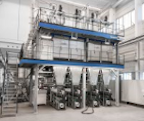
The Turkish textile market has long been a cornerstone of BB Engineering’s global strategy, particularly regarding the VarioFil compact spinning system. With more than 60 systems currently installed across Turkey, the nation represents the largest market for this specific technology. The VarioFil system is celebrated for its modularity and flexibility, allowing producers to switch between various polymers and yarn types with minimal downtime.
In Turkey, the outputs from VarioFil systems are utilized in a vast array of high-value sectors. These include the apparel industry, the carpet manufacturing hub in Gaziantep, and the automotive textile sector, where high-tenacity yarns are required for seat covers and safety belts. Ralf Morgenroth, Head of Sales and Customer Service at BB Engineering, noted that the system’s ability to produce high-quality Partially Oriented Yarn (POY), Fully Drawn Yarn (FDY), High Tenacity Yarn (HTY), Low Shrinkage Yarn (LSY), and High Modulus Yarn (HMY) makes it an indispensable tool for Turkish manufacturers.
The VarioFil system is capable of a production capacity of up to 450 kg/h per extruder. Perhaps its most relevant feature in the current economic climate is its ability to spin recycled PET or bottle flakes directly into high-quality POY or FDY. This "bottle-to-yarn" capability bypasses several intermediate steps, reducing energy consumption and the carbon footprint of the final textile product.
Setting New Standards in Recycling: The COBRA Filter
As the global regulatory environment tightens regarding plastic waste, BB Engineering has introduced the COBRA filter to address the specific challenges of recycling highly contaminated polymers. Originally unveiled at the Plastics Recycling Show Europe and the K 2025 exhibition, the COBRA filter is designed for automation and cost-efficiency.

Traditional recycling filters often require frequent manual intervention, leading to significant downtime and melt loss during screen changes. The COBRA system solves this through a continuous, large-area filtration design equipped with two filter cartridges and an automatic switching mechanism. This ensures that the production line remains operational even during filter cleaning cycles.
One of the most innovative aspects of the COBRA filter is its integrated, chemical-free intermediate cleaning system. By automating the cleaning process, the system extends the service life of the filter media and reduces the need for expensive consumables. This results in lower operational costs and a more stable process, even when dealing with the inconsistent quality often associated with post-consumer recycled (PCR) materials. The COBRA filter is versatile enough to be used for both coarse and fine filtration and can be integrated into new lines or retrofitted into existing plastic spinning systems to improve efficiency.
Chronology of Development and Strategic Milestones
The presentation at ITM 2026 is the culmination of a multi-year development cycle for BB Engineering. To understand the significance of these innovations, it is helpful to look at the company’s recent timeline:
- 2024: Initiation of the ValuePack research and development phase, focusing on hybrid filtration to solve homogeneity issues in recycled yarns.
- Early 2025: Introduction of the COBRA filter at the Plastics Recycling Show Europe, targeting the urgent need for better melt filtration in the PET circular economy.
- Late 2025: Presentation of the refined COBRA technology and early ValuePack prototypes at K 2025 in Düsseldorf, the world’s leading trade fair for the plastics and rubber industry.
- May 2026: Official announcement of the finalized ValuePack and the full commercial rollout of the COBRA filter for the textile market.
- June 2026: Live demonstration of the integrated portfolio at ITM Istanbul, focusing on the specific needs of the Middle Eastern and European markets.
Market Analysis and Industry Implications
The innovations presented by BB Engineering arrive at a time when the synthetic fiber market is undergoing a paradigm shift. According to industry data, the global recycled polyester market is expected to grow at a compound annual growth rate (CAGR) of over 7% through 2030. This growth is driven by consumer demand for sustainable fashion and stringent EU regulations, such as the Strategy for Sustainable and Circular Textiles, which mandates higher recycled content in textile products.
Turkey’s role in this transition is pivotal. As the third-largest exporter of textiles to the European Union, Turkish manufacturers are under immense pressure to modernize their fleets to meet "Green Deal" requirements. By providing technologies like the VarioFil and COBRA, BB Engineering enables these manufacturers to maintain their competitive edge. The ability to process recycled flakes into high-tenacity automotive yarns, for instance, allows Turkish firms to move up the value chain, shifting from basic commodities to specialized, high-performance technical textiles.
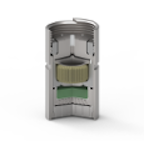
Furthermore, the "forced-sealed" technology in the ValuePack addresses a common pain point in high-speed spinning: leakage. Melt leakage not only causes material waste but also poses a fire hazard and increases maintenance costs. By solving this through engineering rather than relying on the pressure of the melt itself, BB Engineering is enhancing the safety and reliability of the modern spinning mill.
Official Perspectives and Future Outlook
The partnership between BB Engineering and Oerlikon Barmag is a critical component of their success. By combining BB Engineering’s specialized focus on components and recycling with Barmag’s global reach and system-wide expertise, the group offers a "one-stop-shop" for fiber producers.
Industry analysts suggest that the "two-step" filtration found in the ValuePack could soon become the industry standard for manufacturers attempting to hit 100% recycled content targets. The ability to filter down to 15 µm while maintaining the shear necessary for molecular homogeneity is a significant engineering hurdle that BB Engineering appears to have cleared.
As ITM 2026 begins, the focus will remain on how these technologies perform in real-world, high-volume environments. For the Turkish textile industry, the arrival of these systems represents an opportunity to consolidate its position as a global leader in sustainable textile production. BB Engineering’s presence in Istanbul is more than just a product showcase; it is a signal of the technological direction the entire man-made fiber industry is moving toward—one that is cleaner, more efficient, and increasingly circular.