








The global fashion industry is currently grappling with a systemic crisis of overproduction, with major international brands holding billions of dollars in unsold inventory and consumer returns. In a strategic move to address this inefficiency while providing affordable high-end apparel to African consumers, the South African startup FARO has announced the successful closing of a $6 million funding round. This capital injection is earmarked for the expansion of FARO’s "recommerce" model, which sources excess stock and slightly defective returns from global retail giants to resell them in emerging markets where demand for authentic, branded merchandise remains high but purchasing power is limited.
The funding round was led by JP Zammitt, President of Bloomberg, and saw participation from a diverse group of venture capital firms and private investors, including Presight Capital, Gharage Ventures, and E4E Africa. Individual backers included Mato Perić of MPGI, Leonard Stiegeler of Pulse, and several founders from high-growth startups like Flink, Cars24, and Razor Group. This significant financial backing underscores a growing confidence in the circular economy and its potential to solve both economic and environmental challenges in the global South.
The Global Inventory Crisis and the Paradox of Plenty
To understand the necessity of FARO’s business model, one must examine the current state of the global fashion supply chain. Each year, the apparel industry produces approximately 100 billion garments. Industry reports suggest that roughly 30% of these items are never sold at full price, leading to a massive surplus that brands struggle to manage. Traditionally, brands have been hesitant to discount this inventory heavily in their primary markets, such as the United Kingdom, the United States, and Western Europe, fearing that doing so would "cannibalize" their core business and dilute brand prestige.
This surplus often ends up in one of three places: long-term storage, incinerators, or the secondhand export market. The latter has become a significant environmental concern. Every year, millions of tons of used clothing are shipped to African ports. However, environmental watchdogs and local distributors report that between 30% and 40% of these imports are of such poor quality that they are deemed "unusable" upon arrival. These discarded textiles frequently end up in landfills or polluting waterways in countries like Ghana and Kenya, creating an ecological catastrophe.
FARO’s intervention aims to disrupt this cycle by creating a formal, high-quality alternative to the informal secondhand market. By sourcing overstock and consumer returns directly from brands like Zara, Levi’s, Tommy Hilfiger, and Calvin Klein, FARO ensures that the products entering the African market are authentic and of a verifiable standard.
A New Model for Recommerce: Reconditioning and Value Addition
At the heart of FARO’s operations is a sophisticated reconditioning process designed to salvage items that brands would otherwise write off. David Torr, co-founder and co-CEO of FARO, notes that a significant portion of their inventory consists of consumer returns with minor defects—perhaps a missing button, a loose thread, or a small smudge. In developed markets, the labor cost required to repair these items often exceeds the item’s residual value, leading brands to discard them.
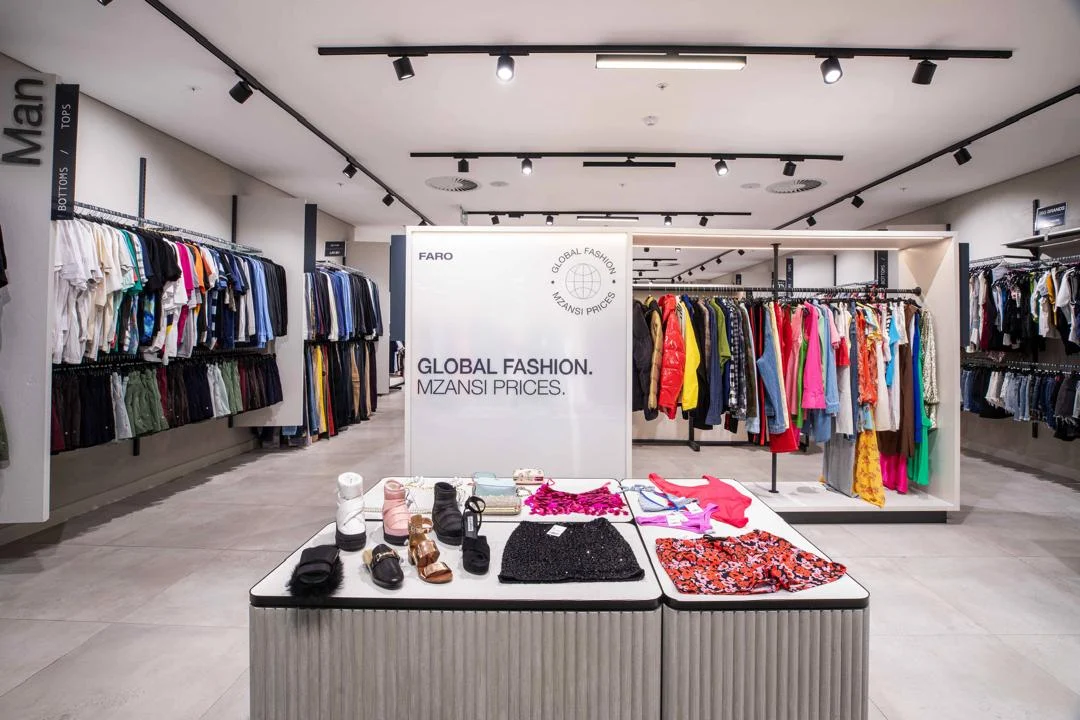
FARO leverages the lower labor costs in South Africa to perform industrial-scale restoration. The company operates facilities equipped with industrial laundries, steam tunnels, and repair stations. By reconditioning these items to a "near-new" state, FARO is able to acquire inventory at exceptionally low price points—sometimes as low as £1 per piece—and resell them at a significant discount to retail prices, often up to 70% off.
The business operates on a disciplined fixed-margin model. According to Torr, the company targets a 45% margin after all processing, logistics, and packaging costs are accounted for. Rather than maximizing profits on high-demand items, the company reinvests excess margins into lowering prices further for the consumer, a strategy intended to build long-term customer loyalty in a price-sensitive market.
Chronology of Growth and Market Entry
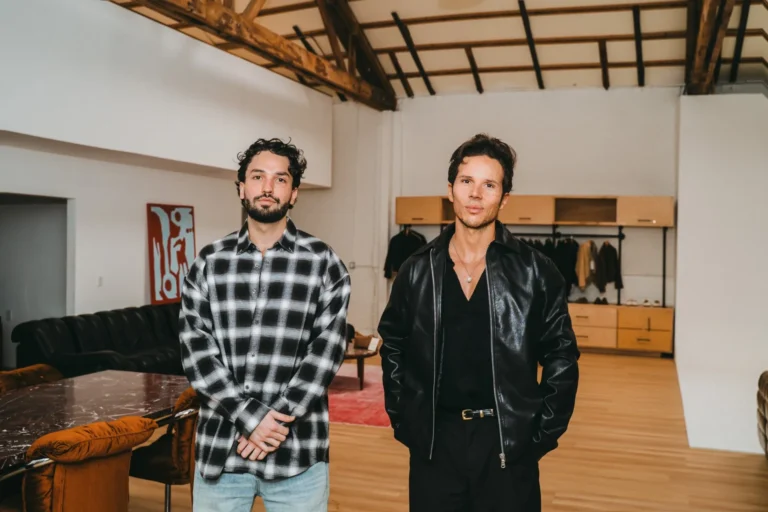
FARO was founded in 2023 by a team of retail and technology veterans: David Torr, Will McCarren, Chris Makhanya, and Amber Penney-Young. The founding team brought together experience from major global and regional entities, including Amazon, Jumia, and the South African food-tech success story UCOOK.
The company’s trajectory over the past 18 months highlights the rapid scalability of the recommerce model:
- Early 2023: FARO launched its first experimental pop-up store in a high-traffic South African urban hub. The store generated $100,000 in revenue in its first month, signaling immediate market fit.
- Late 2023: Based on traditional retail benchmarks, the founders initially estimated they would need seven stores to reach an annual revenue run rate of $2 million. However, the high sell-through rate of branded inventory allowed them to surpass this milestone with just four physical locations, recording $2.3 million in revenue.
- 2024: Following the successful seed round, the company reported 20x year-on-year revenue growth. The current goal is to quintuple its revenue within the next twelve months while refining its technological backend.
Integrating AI into Retail Operations
A critical component of FARO’s strategy is the use of artificial intelligence to manage the complexities of off-price retail. Unlike traditional retail, where a buyer might order 10,000 units of a single SKU (Stock Keeping Unit), recommerce involves managing thousands of unique, one-off items. Manually cataloging, pricing, and distributing these items is a logistical nightmare that has historically kept large off-price retailers like TJX (parent of T.J. Maxx) focused primarily on physical stores rather than digital platforms.
To solve this, FARO is developing AI-powered agents designed to automate the procurement and inventory management workflow. In traditional head offices, hundreds of employees often spend their days manipulating massive data manifests in Excel to track shipments. FARO’s AI models are designed to process these manifests in seconds, predicting demand for specific brands in specific neighborhoods with higher accuracy than human planners.
Furthermore, FARO plans to implement personalized shopping tools. Because their inventory is unpredictable, the company wants to use AI to notify customers when a specific brand or size they prefer has arrived at their local store. This creates a "treasure hunt" shopping experience that is highly engaging for consumers.
The South African Advantage and Continental Expansion
South Africa serves as an ideal launchpad for FARO due to its unique retail infrastructure. The country boasts over 2,000 formal shopping centers, a density that is far higher than most other African nations. This allows FARO to utilize a physical-first distribution model, which is essential for off-price goods. Because each item is unique, the cost of photographing and listing every single piece for an e-commerce site is often prohibitively expensive. By focusing on physical "bricks-and-mortar" stores, FARO eliminates the high costs of digital cataloging and last-mile delivery.
However, the company’s vision extends far beyond South Africa. The roadmap includes a target of 1,000 stores over the next decade, with expansion planned for other emerging markets in Africa, South America, Asia, and the Middle East. Each of these regions presents a similar dynamic: a burgeoning middle class that is brand-conscious but lacks the disposable income for full-price luxury or "fast-fashion" imports.
Competitive Landscape and Broader Implications
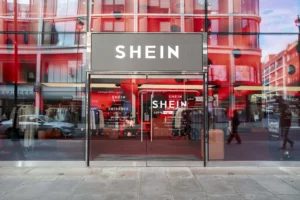
FARO enters a market that is becoming increasingly crowded. In South Africa, established e-commerce players like Takealot and Jumia have long dominated the digital space. More recently, ultra-cheap Chinese platforms like Temu and Shein have made significant inroads, appealing to consumers with rock-bottom prices.
FARO’s differentiator lies in the "aspirational" nature of its inventory. While Temu and Shein offer unbranded or "white-label" fast fashion, FARO offers recognized global brands. For many African consumers, wearing an authentic G-Star RAW jacket or a pair of Levi’s jeans carries a social status that ultra-cheap unbranded clothing cannot provide.
From an environmental perspective, FARO’s model offers a compelling case for the "circular economy." By extending the life of garments that were destined for the incinerator or a landfill, the company reduces the overall carbon footprint of the fashion industry. If FARO succeeds in scaling to 1,000 stores, it could divert hundreds of millions of garments from the waste stream, providing a blueprint for how emerging markets can participate in global trade without becoming the world’s dumping ground for textile waste.
As the $350 billion global recommerce market continues to evolve, FARO’s blend of high-tech inventory management and low-tech physical retail positioning represents a significant shift in how surplus goods are distributed globally. The company’s success will depend on its ability to maintain its supply chain partnerships with global brands while navigating the diverse regulatory and logistical landscapes of the various emerging markets it aims to enter.