








The convergence of generative artificial intelligence and the global fashion industry has reached a significant milestone with the official launch of Alta, an AI-driven personal styling and shopping platform. Founded by 28-year-old Harvard-trained engineer Jenny Wang, Alta announced today that it has closed an $11 million seed funding round led by Menlo Ventures. The capital infusion is earmarked for the development of what Wang describes as a "personal styling agent," a sophisticated digital tool designed to manage every aspect of a user’s wardrobe, from daily outfit selection to optimized retail purchasing.
The concept of a computerized wardrobe assistant is not new to the public consciousness, having been famously popularized by the 1995 film "Clueless." However, while previous iterations of digital closets focused primarily on inventory management, Alta leverages contemporary advancements in large language models (LLMs) and computer vision to provide a proactive, context-aware service. The platform analyzes a user’s existing wardrobe alongside external variables such as budget constraints, lifestyle demands, local weather patterns, and personal calendar events to offer real-time sartorial guidance.
The Evolution of the Digital Closet and Technical Maturity
Jenny Wang’s journey to launching Alta is rooted in a decade of observation within the technology sector. A Harvard University engineering graduate, Wang has spent years navigating the intersection of technical infrastructure and consumer applications. Throughout her career—which included roles as a technical advisor to various brands and an investor at prominent firms—she repeatedly returned to the concept of an automated stylist.
According to Wang, earlier attempts to bring such a product to market were stymied by the limitations of the technology available at the time. "The AI technology was not yet mature enough," Wang noted in a statement regarding the launch. The recent "AI summer," characterized by the rapid advancement of generative models capable of understanding nuanced human preferences and generating high-fidelity visual content, provided the necessary framework for Alta to transition from a conceptual dream to a functional enterprise.
Unlike traditional fashion apps that rely on static filters or manual tagging, Alta utilizes a more dynamic technical architecture. Users populate their digital closets by uploading photographs of their garments, forwarding digital purchase receipts, or selecting items from Alta’s extensive existing database. The AI then processes these inputs to create a "digital twin" of the user’s wardrobe.
Personalized Avatars and the Virtual Try-On Experience
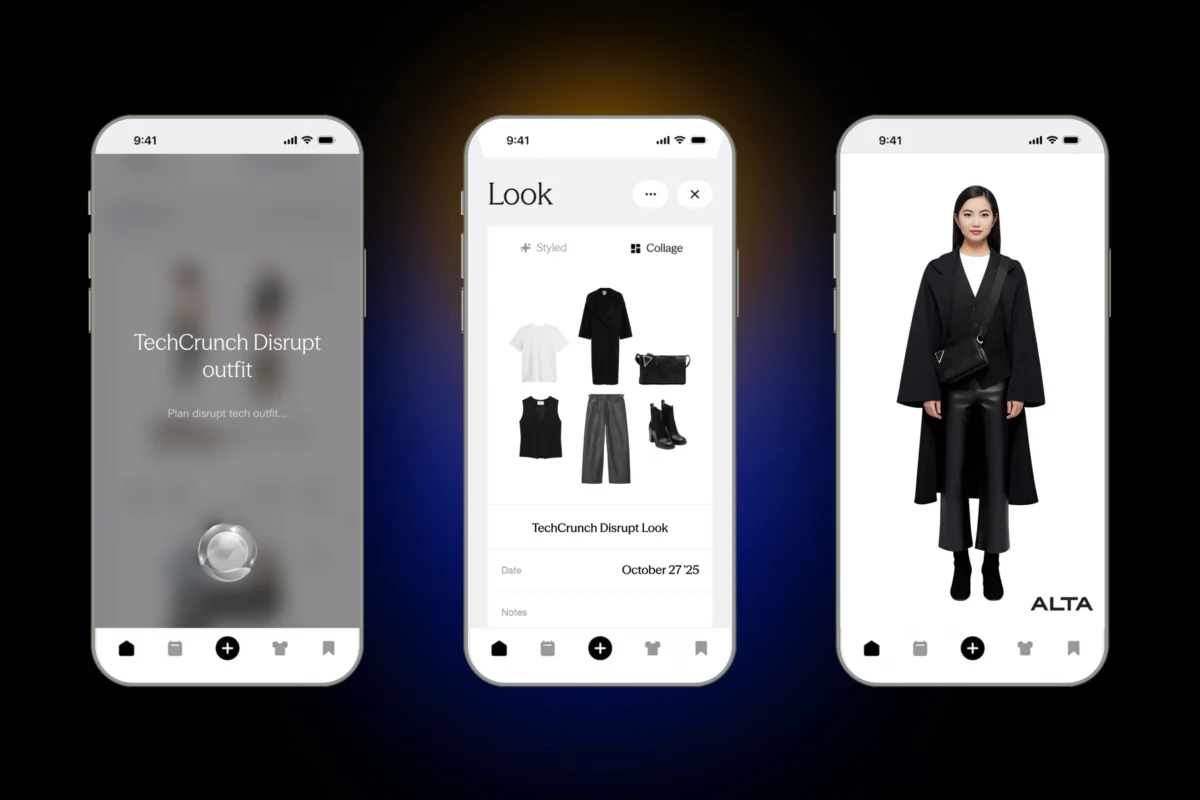
A core feature of the Alta platform is the integration of personalized virtual avatars. This technology allows users to see how specific combinations of clothing will look on their own likeness before physically dressing. This functionality extends beyond the user’s current inventory; the platform allows for the "mixing and matching" of owned items with prospective purchases from third-party retailers.
For example, a user preparing for a specific event, such as a high-profile professional conference or a formal social gathering, can prompt the AI for suggestions. The system then generates a lookbook of outfits that adhere to the event’s dress code while accounting for the user’s personal style and the predicted weather. This "try-before-you-buy" digital layer aims to reduce the high rate of returns in e-commerce—a significant logistical and environmental challenge for the fashion industry.
Strategic Investment and a High-Profile Backing
The $11 million seed round reflects a high degree of confidence from both Silicon Valley and the global fashion elite. Menlo Ventures, a firm known for its early bets on transformative consumer technologies, led the round. The participation of Aglaé Ventures, the investment vehicle of the Arnault family (the controlling force behind LVMH), signals a strategic interest from the world’s largest luxury goods conglomerate.
The investor roster also includes:
- Benchstrength: A venture firm focused on next-generation consumer platforms.
- Phenomenal Ventures: Founded by Meena Harris, focusing on culturally impactful enterprises.
- Anthology Fund: The venture arm of AI research company Anthropic.
- Industry Icons: Individual backers include DoorDash co-founder and CEO Tony Xu, Poshmark co-founder Manish Chandra, and Rent the Runway co-founder Jenny Fleiss.
- Fashion Influence: Supermodels Karlie Kloss and Jasmine Tookes, alongside Zita d’Hauteville, have joined as angel investors.
Notably, the AI’s training was supported by Meredith Koop, the longtime stylist for former First Lady Michelle Obama. Koop’s involvement ensures that the AI’s recommendations are grounded in professional styling principles rather than purely algorithmic patterns.
Market Context and Competitive Landscape
The launch of Alta comes at a time when the "AI in Fashion" market is experiencing exponential growth. According to industry data from market research firms, the global AI in fashion market was valued at approximately $650 million in 2022 and is projected to expand at a compound annual growth rate (CAGR) of over 35% through 2030.
While Alta enters a space occupied by established players like Google Shopping and Pinterest—both of which have integrated AI-driven visual search and "shop the look" features—Wang argues that these platforms are limited by their legacy infrastructures. Newer entrants such as Whering and Cladwell have also attempted to capture the "Clueless" wardrobe magic, but Alta’s focus on a more robust technical architecture and a seamless user interface is intended to differentiate it as a "new wave" consumer technology.
Industry analysts suggest that the success of such platforms depends heavily on the accuracy of the recommendation engine. If the AI fails to understand the nuance of fit or the subtle shifts in fashion trends, user retention often drops. By involving professional stylists like Koop in the training phase, Alta is positioning itself to avoid the "uncanny valley" of fashion advice.
Global Expansion and Strategic Partnerships
Alta’s roadmap for growth is already underway with several key partnerships. The company has secured a collaboration with the Council of Fashion Designers of America (CFDA), providing its membership base—which includes many of America’s most prominent designers—access to the platform’s tools. This move positions Alta not just as a consumer tool, but as a bridge between designers and the end-user’s digital closet.
Furthermore, Alta is looking toward international markets. The company is collaborating with Marie Kondo, the world-renowned tidying expert, to expand its footprint in Oceania and the Pacific regions. In Europe, the backing of the Arnault family and influencer Zita d’Hauteville provides a direct pipeline into the Paris-centered luxury market.
To facilitate this global growth and stay close to the heart of the fashion industry, Wang recently relocated the company’s headquarters from San Francisco to New York City. "NYC is also a closer flight to Paris than SF," Wang remarked, highlighting the strategic importance of the New York-London-Paris fashion circuit. She noted that New York has become a burgeoning hub for consumer-facing AI startups, offering a unique blend of technical talent and creative industry proximity.
Economic and Environmental Implications
Beyond the convenience for the consumer, Alta’s model holds potential implications for the broader retail economy. By allowing users to virtually "test" outfits using their existing clothes in combination with new items, the platform encourages more intentional consumption. This could lead to a reduction in the "fast fashion" cycle, where consumers purchase low-cost items for one-time use because they cannot visualize how to integrate them into their existing wardrobes.
Additionally, the integration of retail partnerships suggests a new revenue model for fashion tech. Instead of relying solely on subscription fees, Alta can act as a high-intent referral engine for retailers. Because the AI knows exactly what is in a user’s closet, it can suggest the "missing piece" of an outfit with a level of precision that traditional targeted advertising cannot match.
Future Outlook and Research Development
With the fresh injection of capital, Wang plans to expand the Alta team, specifically targeting engineers with expertise in computer vision and generative AI. The company is committed to ongoing research and development to refine its in-house models.
"I am still actively coding every day and learning from our team and technical advisors," Wang said. The immediate focus for the company remains on improving the user experience based on community feedback and establishing deeper integrations with worldwide retailers.
As the fashion industry continues to grapple with digital transformation, Alta represents a significant bet on the idea that the future of shopping is not just about browsing a catalog, but about managing a personalized, data-driven digital ecosystem. By combining the technical rigor of a Harvard engineer with the aesthetic sensibilities of high-fashion veterans, Alta aims to finally deliver on the decades-old promise of a truly intelligent personal stylist.