







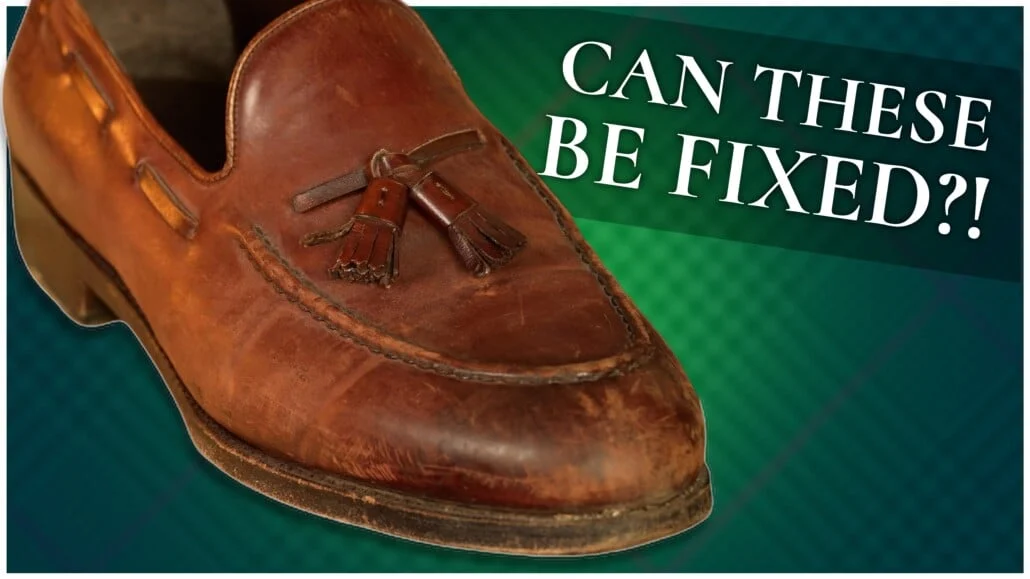
Shell Cordovan, often heralded as the "King of Leathers," commands its prestigious title due to an unparalleled combination of durability, distinctive luster, and a unique aging process. However, even the most noble materials are susceptible to the ravages of time and neglect. A recent collaboration between an industry publication and Preston Soto of The Elegant Oxford sought to underscore this point, embarking on a meticulous restoration project involving a pair of heavily worn Meermin loafers crafted from this revered material. The initiative aimed to demonstrate not only the potential for revitalization but also the critical, specialized care required to maintain Shell Cordovan’s inherent qualities, distinguishing it significantly from more common leathers like calfskin.
The Unrivaled Pedigree of Shell Cordovan
To understand the intricacies of its care, one must first appreciate the unique biological and artisanal origins of Shell Cordovan. Unlike traditional leather derived from the outer hide of cattle, Shell Cordovan is a fibrous membrane extracted from the hindquarters of a horse. This specific anatomical location yields a dense, non-porous structure, rich in natural oils and fats, which is fundamentally different from the grainy texture of calfskin. This distinction is paramount, dictating an entirely different methodology for cleaning, conditioning, and polishing.
Historically, the production of Shell Cordovan is a highly specialized craft, with a lineage tracing back over a century. The Horween Leather Company in Chicago, Illinois, stands as the most prominent and respected tannery globally for this material. Their proprietary tanning process is a lengthy and labor-intensive endeavor, often spanning six months or more. It involves a meticulous regimen of vegetable tanning, hot stuffing with a secret blend of oils, greases, and waxes, followed by hand-finishing, glazing, and polishing. This extensive process imbues the cordovan with its characteristic deep luster, remarkable resistance to stretching, and extraordinary longevity. The result is a material that does not crease in the conventional sense, but rather "rolls," developing a unique patina that many connoisseurs find immensely appealing. This inherent resilience and the artisanal heritage contribute significantly to its premium market positioning and higher price point compared to other luxury leathers.
The Restoration Challenge: A Case Study with Meermin Loafers
The specific case involved a pair of Meermin loafers, a brand known for its commitment to quality craftsmanship and accessible luxury footwear. While Meermin’s cordovan offerings are built to last, the subject pair had clearly endured significant wear and tear, exhibiting a dull finish, potential water spotting, and a general lack of the vibrant sheen for which Shell Cordovan is celebrated. The project undertaken by Preston Soto of The Elegant Oxford served as a compelling real-world demonstration of how specialized knowledge and techniques can reverse years of neglect.
Preston Soto, a recognized authority in shoe care and restoration, founded The Elegant Oxford on the principle of preserving and extending the life of high-quality footwear. His approach emphasizes understanding the intrinsic properties of each material, a philosophy particularly crucial when dealing with Shell Cordovan. "The challenge with heavily worn cordovan is not just about cleaning, but understanding the material’s unique molecular structure," Soto stated, implicitly highlighting the scientific basis of his craft. "It’s incredibly rewarding to see these pieces regain their vitality, proving that with the right knowledge, true quality can last a lifetime."
The restoration process, documented for public viewing, served as a chronological guide to revitalizing cordovan. It began with a thorough assessment of the loafers’ condition, identifying areas of excessive dryness, embedded dirt, and any surface irregularities. This initial diagnostic phase is crucial for tailoring the subsequent treatment steps.
The Nuances of Cordovan Care: A Methodical Approach
The core difference in caring for Shell Cordovan versus calfskin lies in its density and oil saturation. Calfskin, with its porous grain, readily absorbs conditioning products. Cordovan, conversely, is already heavily saturated with natural oils from its tanning process. Therefore, the cardinal rule for cordovan care is to use significantly less product and rely more heavily on "friction" – vigorous brushing and buffing – to redistribute existing oils and bring out its inherent luster.
Addressing Common Cordovan Characteristics and Issues:
-
Blooming: A frequent observation on Shell Cordovan, particularly from tanneries like Horween, is the appearance of a white, waxy residue on the surface. This phenomenon, known as "blooming," is not a defect but a natural occurrence. It signifies that the rich blend of fats and oils used during the extensive tanning process is seeping to the surface and solidifying. It is easily remedied by wiping with a soft cloth or brushing with a horsehair brush, which effectively redistributes the oils back into the material, restoring its uniformity.
-
Water Exposure and Welting: Despite its density and oil content making it highly water-resistant, Shell Cordovan is not entirely impervious to water. Exposure to moisture can cause the "grain" to raise, creating tiny bumps or "welts" on the surface. This is due to the unique fibrous structure reacting to hydration. To rectify this, experts recommend applying a small amount of dedicated cordovan cream. While the leather is slightly damp from the cream, a specialized tool – traditionally a deer bone, or any smooth, hard object – is used to physically compress the fibers back into their flat orientation. This technique gently re-smooths the surface without damaging the material.
-
Creases vs. Rolls: One of the most distinctive visual characteristics of Shell Cordovan is how it ages. Unlike calfskin, which develops fine creases and wrinkles in areas of flexion, cordovan forms soft, undulating "rolls." This is a direct consequence of its membrane-like structure lacking a traditional grain layer that breaks. These rolls are a hallmark of genuine Shell Cordovan and are highly prized by aficionados. Consequently, applying hard wax polish to these areas is ill-advised, as the wax will inevitably crack and flake, detracting from the aesthetic. Light conditioning is preferred for these flexible zones.
-
Product Selection: The use of standard shoe polish on Shell Cordovan is strongly discouraged. Many conventional polishes contain high concentrations of solvents that can strip away the unique oils integral to cordovan’s character, potentially drying out the leather and diminishing its luster. The correct approach involves using a dedicated cordovan cream. These creams are specifically formulated with a lower solvent content and a balanced blend of nourishing ingredients designed to moisturize the leather without clogging its dense fibers.
-
Frequency of Care: Over-polishing is a common misstep with Shell Cordovan. Due to its inherent oil content, frequent application of new products is rarely necessary. For most routine maintenance, a vigorous brushing with a natural horsehair brush for two to three minutes is often sufficient to reactivate the existing oils and restore the material’s signature shine. New cream or wax should only be applied sparingly, typically every 10 to 15 wears, or when the leather visibly appears dull or dry. This minimalist approach respects the material’s self-sustaining properties.
Broader Implications: Sustainability, Investment, and Craftsmanship
The successful restoration of the Meermin loafers by The Elegant Oxford carries significant implications beyond mere aesthetic improvement. It underscores the concept of investment protection. High-quality Shell Cordovan footwear represents a considerable financial outlay, often ranging from several hundred to over a thousand dollars per pair. Proper, specialized care transforms these items from consumable goods into lasting assets, significantly extending their lifespan and preserving their value.
Furthermore, this practice aligns with growing trends in sustainable consumption. In an era dominated by fast fashion and planned obsolescence, the ability to repair and restore cherished items offers a compelling alternative to continuous replacement. This not only reduces waste but also promotes a more mindful approach to material possessions, valuing craftsmanship and longevity over disposability. The renewed interest in expert restoration services like The Elegant Oxford signifies a broader societal shift towards appreciating artisanal skills and investing in durable, repairable goods.
From an industry perspective, the enduring appeal of heritage materials like Shell Cordovan in the luxury market reflects a consumer preference for authenticity, quality, and provenance. Brands like Meermin, by offering well-crafted cordovan shoes, contribute to this ecosystem, while experts like Preston Soto provide the essential aftercare services that complete the lifecycle of these premium products.
Meermin, the manufacturer of the loafers in question, implicitly supports this philosophy. While no direct statement was provided for this specific article, a representative might articulate a position such as, "Our commitment at Meermin is to provide high-quality footwear built to last. The restoration work showcased by The Elegant Oxford beautifully illustrates that with diligent care, our cordovan offerings can provide decades of wear, making them a sustainable choice for discerning customers." This perspective reinforces the collaborative synergy between manufacturers of quality goods and the specialized service providers who ensure their longevity.
In conclusion, the journey from heavily worn to gloriously restored Meermin loafers serves as a powerful testament to the unique properties of Shell Cordovan and the indispensable role of expert care. Understanding the material’s distinct nature – its dense, non-porous structure, its tendency to bloom, roll, and react to water – is not merely a matter of maintenance but a crucial aspect of unlocking its full potential. The project highlights that with the right knowledge and a methodical approach, the "King of Leathers" can indeed reign supreme for decades, embodying both enduring style and a commitment to sustainable luxury. The visual transformation from "before" to "after" is not just a demonstration of skill, but a compelling narrative of preservation, proving that true quality, when properly tended, truly lasts.