












Karen O’Rourke, managing director of H&M UK and Ireland, has provided Drapers with insights into the crucial technology transformation underway at the global fashion retailer. Her discussion underscores H&M’s strategic pivot towards leveraging advanced digital solutions to navigate an increasingly complex and competitive retail landscape, driven by evolving consumer expectations, operational demands, and an urgent need for greater sustainability. This comprehensive overhaul is not merely an upgrade of existing systems but a fundamental re-engineering of H&M’s entire value chain, from design and supply chain to customer interaction and circularity initiatives.
The Imperative for Digital Evolution in Retail
The retail sector has undergone unprecedented shifts in the last decade, with the COVID-19 pandemic serving as a significant accelerant for digital adoption. Consumers now expect seamless, personalized, and convenient shopping experiences across all channels – physical stores, e-commerce platforms, and mobile applications. Traditional brick-and-mortar retailers like H&M, once dominant through extensive physical footprints, have been compelled to invest heavily in digital infrastructure to compete effectively with agile online pure-plays and digitally native brands.
According to industry analysts, global retail technology spending is projected to continue its robust growth trajectory, with investments in areas such as artificial intelligence (AI), machine learning (ML), cloud computing, data analytics, and automation expected to surpass hundreds of billions of dollars annually by the mid-2020s. Retailers are recognizing that technology is no longer just a support function but a core strategic enabler for growth, efficiency, and customer loyalty. For H&M, a company with a vast global presence and a commitment to "fashion and quality at the best price in a sustainable way," this technological evolution is critical to maintaining its market position and relevance.
H&M’s Strategic Pillars for Technology Investment
While specific details of H&M’s proprietary technology investments remain confidential, the overarching strategy, as hinted by O’Rourke’s commentary, aligns with broader industry trends focusing on several key areas:
-
Enhanced Customer Experience and Personalization: At the forefront of H&M’s digital agenda is the creation of highly personalized and engaging customer journeys. This involves leveraging AI and ML to analyze vast amounts of customer data – purchase history, browsing behavior, demographic information – to deliver tailored product recommendations, personalized marketing communications, and dynamic pricing strategies. Technologies such as augmented reality (AR) and virtual reality (VR) are also being explored for virtual try-on experiences, enabling customers to visualize garments on themselves from the comfort of their homes or interact with digital displays in-store. The goal is to bridge the gap between online and offline, offering a truly omnichannel experience where customers can start a shopping journey on one channel and seamlessly complete it on another.
-
Supply Chain Optimization and Agility: The global supply chain has faced significant disruptions in recent years, exposing vulnerabilities and highlighting the need for greater resilience and efficiency. H&M’s technology investments are therefore heavily directed towards optimizing its extensive supply chain. This includes advanced demand forecasting models powered by AI, real-time inventory management systems (potentially utilizing RFID technology for granular stock visibility), and automated warehousing solutions. The aim is to reduce lead times, minimize waste, improve stock accuracy, and ensure products are available where and when customers want them, thereby reducing markdowns and improving profitability. Blockchain technology is also being investigated for enhanced supply chain traceability, offering greater transparency regarding the origin and journey of materials and finished products, a crucial aspect for sustainability claims.
-
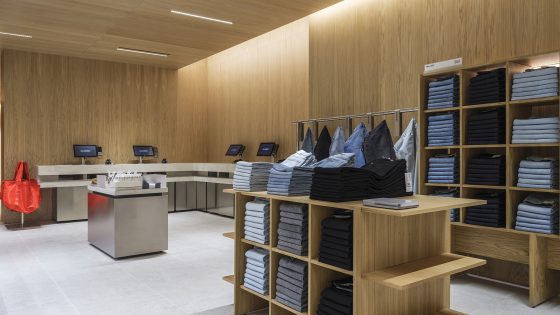
In-Store Innovation and Digital Integration: Despite the rise of e-commerce, physical stores remain vital for brand experience and customer engagement. H&M is transforming its stores into integrated hubs where digital and physical experiences merge. This involves implementing smart mirrors that offer styling advice or allow customers to request different sizes, self-checkout kiosks, mobile payment options, and digital signage that can dynamically update promotions and product information. Store associates are also being equipped with digital tools, such as mobile point-of-sale (mPOS) devices and inventory look-up apps, to provide more informed and efficient customer service. The objective is to make the in-store experience more convenient, interactive, and personalized.
-
Sustainability Through Technology: As a leading global fashion retailer, H&M faces intense scrutiny and has made significant commitments to sustainability. Technology plays a pivotal role in achieving these ambitious goals. AI can be used to optimize material sourcing, identify more sustainable alternatives, and minimize waste in the design and production phases. Data analytics can track energy consumption across operations and identify areas for reduction. Furthermore, digital platforms are essential for promoting circular fashion initiatives, such as garment collection programs for recycling, repair services, and even nascent resale marketplaces. By integrating sustainability metrics into its technological infrastructure, H&M aims to drive measurable environmental and social impact.
-
Data Analytics and Business Intelligence: Underlying all these initiatives is a robust data analytics framework. H&M is investing in centralized data platforms and advanced analytics tools to gather, process, and derive actionable insights from vast datasets. This includes customer data, sales figures, supply chain metrics, and operational performance. Real-time dashboards and predictive analytics enable better decision-making across all departments, from merchandising and marketing to logistics and financial planning, ensuring that H&M can respond rapidly to market changes and consumer trends.
A Chronology of H&M’s Digital Evolution
H&M’s journey towards digital transformation is not a recent phenomenon but an ongoing evolution, with significant acceleration in recent years:
- Early 2010s: H&M began its initial foray into comprehensive e-commerce, expanding its online presence beyond its home market. The focus was primarily on establishing functional online stores and basic digital marketing.
- Mid-2010s: Recognizing the growing importance of mobile, H&M launched dedicated mobile applications and invested in improving its mobile shopping experience. Early efforts in social media engagement also began to take shape. The company started experimenting with data collection for basic customer segmentation.
- Late 2010s: Acknowledging the disruptive potential of digital-first competitors, H&M intensified its digital strategy. This period saw the establishment of dedicated digital innovation labs and teams, a focus on improving logistics for online orders, and initial pilot projects involving AI for product recommendations and personalization. Investments in cloud infrastructure to support scaling digital operations also became a priority.
- Early 2020s (Post-Pandemic Acceleration): The global pandemic dramatically accelerated H&M’s digital transformation efforts. There was a significant push towards omnichannel integration, ensuring seamless transitions between online and offline touchpoints. Investment in supply chain resilience technologies, such as advanced forecasting and inventory management systems, became critical. The company also ramped up pilot programs for in-store digital innovations and explored new digital business models like rental and resale platforms.
- Present (2026): As articulated by Karen O’Rourke, H&M is now in a phase of consolidating successful pilot projects, integrating AI and ML more deeply across core business functions, and leveraging data analytics for predictive insights. Strategic partnerships with technology providers and startups are becoming increasingly important to accelerate innovation and access specialized expertise. The emphasis is on building a scalable, resilient, and customer-centric digital ecosystem.
Supporting Data and Industry Context
The competitive landscape for fashion retail is fiercely dynamic. Rivals like Inditex (Zara’s parent company) have also made significant strides in technology, particularly in supply chain automation using RFID for item-level tracking and integrating online and offline inventories for rapid fulfillment. Ultra-fast fashion players like Shein have demonstrated the power of a hyper-efficient, data-driven supply chain that leverages AI to predict trends and accelerate production cycles. E-commerce giants like Amazon continue to push boundaries with innovative retail concepts and logistics capabilities.
In 2025, e-commerce penetration globally reached approximately 25% of total retail sales, with projections indicating further growth. For fashion specifically, this figure is often higher, underscoring the necessity for robust digital channels. H&M’s recent financial reports have consistently highlighted the increasing contribution of its online sales to overall revenue, even as its physical store network remains substantial. The company reported continued growth in online sales in its latest quarterly results, emphasizing the critical role of digital channels in its overall performance. Analysts suggest that companies like H&M must allocate at least 3-5% of their annual revenue to technology investments to remain competitive and foster innovation.
Inferred Statements and Expert Commentary
While Karen O’Rourke’s full statements are exclusive to subscribers, her position as MD for the UK and Ireland suggests a focus on how these global technological strategies translate to market-specific implementations and customer experiences. It is reasonable to infer that she would emphasize the strategic importance of technology as a fundamental enabler for H&M’s future, rather than just an operational cost. "Our technology investments are not just about efficiency; they are about reimagining the customer experience, empowering our teams, and building a more sustainable future for fashion," she might have articulated, aligning with H&M’s stated corporate vision. "We are leveraging data and AI to understand our customers better than ever before, allowing us to offer truly personalized experiences both online and in our physical stores."
Industry analysts largely concur with the necessity of such investments. "For legacy retailers like H&M, the challenge isn’t just adopting new technology, but integrating it seamlessly with existing infrastructure and processes," commented Dr. Eleanor Vance, a retail technology expert at the Global Retail Institute. "Their success hinges on creating a unified data ecosystem and fostering a culture of continuous innovation. The payoff can be significant: improved operational efficiency, reduced waste, and a more loyal customer base." She added that the focus on sustainability through technology is particularly commendable, as it addresses both commercial and ethical imperatives.
Broader Implications and Future Outlook
H&M’s concerted technology investment carries profound implications across its business operations and the broader retail ecosystem.
- For Customers: The immediate impact will be a more personalized, convenient, and engaging shopping experience. From hyper-tailored product recommendations to frictionless checkout processes and immersive in-store interactions, customers can expect a heightened level of service and relevance.
- For Operations: Internally, the transformation promises greater operational efficiency, reduced waste through optimized inventory and supply chain management, and faster time-to-market for new collections. This translates into improved profitability and greater agility in responding to market shifts.
- For Sustainability: By integrating technology into its sustainability efforts, H&M can achieve greater transparency in its supply chain, reduce its environmental footprint through optimized production and logistics, and actively promote circular economy models such as garment repair, rental, and resale. This not only meets consumer demand for ethical fashion but also strengthens H&M’s brand reputation.
- For the Workforce: The shift towards a more tech-driven retail environment necessitates a significant upskilling of H&M’s workforce. New roles, such as data scientists, AI specialists, and digital merchandisers, will become increasingly critical, while existing employees will need training in new digital tools and processes. This represents both a challenge and an opportunity for talent development.
- Competitive Positioning: These investments are crucial for H&M to maintain its competitive edge against both established rivals and new-age digital disruptors. By embracing innovation, H&M aims to solidify its position as a forward-thinking leader in global fashion.
However, the journey is not without its challenges. The complexity of integrating disparate systems, ensuring robust cybersecurity measures to protect sensitive customer data, and maintaining a human touch in an increasingly automated environment are significant hurdles. Furthermore, the return on investment for large-scale technology projects needs careful monitoring and evaluation to ensure sustainable growth.
In conclusion, H&M’s targeted technology investments, as highlighted by Karen O’Rourke, represent a strategic imperative for the company’s long-term success. By focusing on customer experience, operational excellence, and sustainability, all powered by advanced digital solutions, H&M is not just adapting to the future of retail but actively shaping it, aiming to deliver enduring value to its customers, stakeholders, and the planet.