










The landscape of fashion technology reached a significant milestone during New York Fashion Week as Alta, the digital closet startup founded by Jenny Wang, announced a strategic integration with the acclaimed label Public School New York. This partnership marks a transition for the company from a consumer-facing styling application to a sophisticated enterprise solution, aiming to solve the long-standing "fitting room problem" that has plagued e-commerce since its inception. By allowing users to visualize garments on personalized digital avatars, Alta is effectively commercializing a concept that has lived in the cultural imagination since the 1995 film Clueless, where the protagonist Cher Horowitz utilized a computerized wardrobe to plan her daily attire.
The Evolution of the Digital Closet
When Jenny Wang launched Alta in 2023, the primary objective was to provide consumers with a centralized digital space to manage their existing wardrobes. However, the rapid advancement of generative artificial intelligence and computer vision has allowed the company to scale its ambitions. The core of the platform is the "Alta Avatar," a digital twin that users can customize to reflect their own likeness and body proportions. This technology enables a level of personalization that traditional "size guides" and static imagery cannot provide.
In the year since its inception, Alta has witnessed explosive growth. According to internal data shared by Wang, the platform has facilitated the generation of over 100 million unique outfits. This volume of data provides Alta with a unique vantage point regarding consumer preferences, styling trends, and purchasing intent. The company’s trajectory was further solidified by an $11 million seed funding round led by Menlo Ventures, with participation from the Anthology Fund—the venture arm of the AI safety and research company Anthropic. The involvement of fashion industry luminaries, including supermodels Karlie Kloss and Jasmine Tookes, as well as Rent the Runway co-founder Jenny Fleiss, underscores the industry’s belief in Alta’s potential to bridge the gap between social media inspiration and retail conversion.
Strategic Integration: The Public School New York Collaboration
The partnership with Public School New York, unveiled during the brand’s highly anticipated return to New York Fashion Week, represents the first time a designer has embedded Alta’s proprietary avatar and styling technology directly into their e-commerce infrastructure. Public School, led by designers Dao-Yi Chow and Maxwell Osborne, recently emerged from a multi-year hiatus. Their decision to integrate AI technology into their brand relaunch reflects a broader industry shift toward "tech-as-a-partner" strategies.
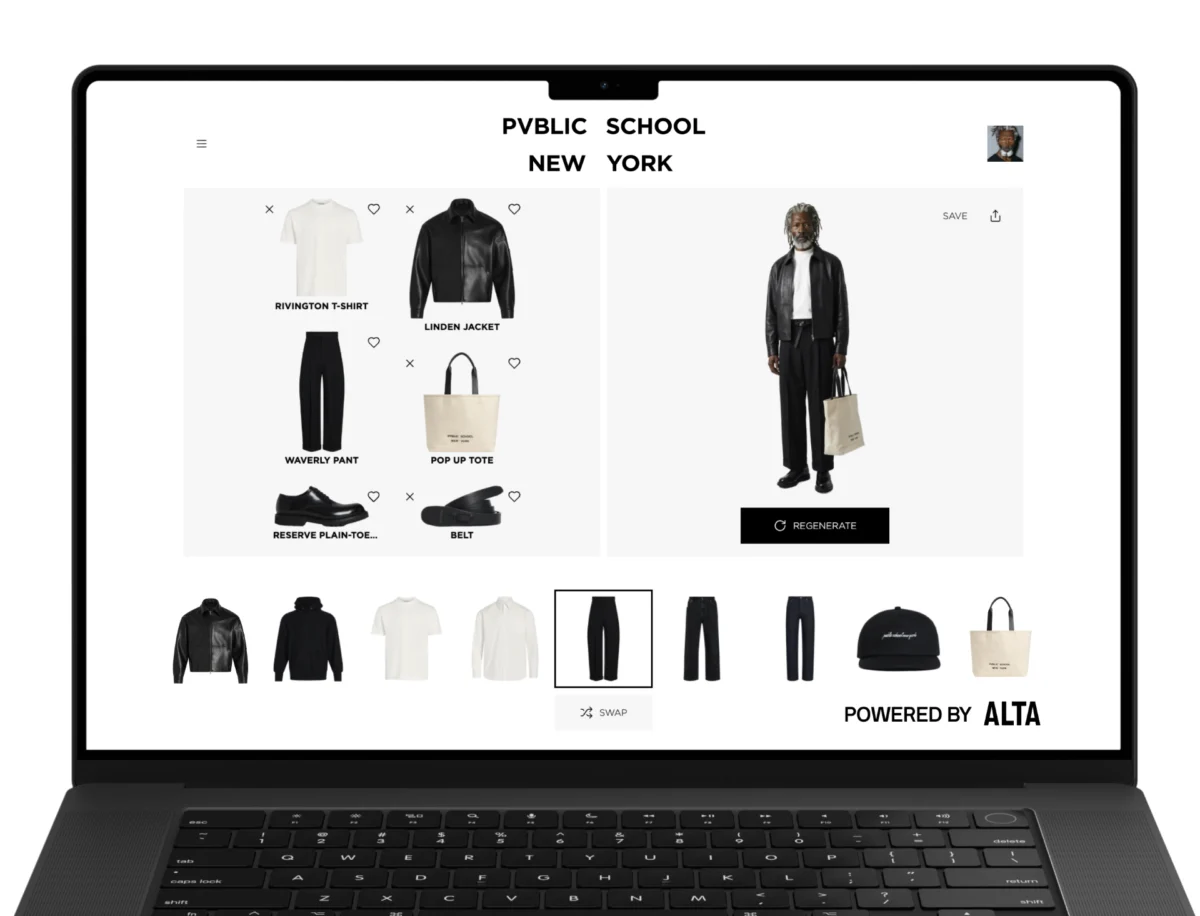
The integration manifests as a "Style with Alta" feature on the Public School website. When a shopper views a specific item, such as the new Linden Jacket, they can click a dedicated icon that redirects them to an Alta-powered interface. Here, the shopper can see the item rendered on their personalized avatar, allowing them to experiment with different combinations from the new collection before committing to a purchase.
Dao-Yi Chow, who was reportedly an early user of the Alta app himself, emphasized that the decision was driven by a desire to extend the brand’s storytelling capabilities. In a statement to industry observers, Chow noted that the fashion landscape has changed dramatically since 2015, requiring brands to be more thoughtful about how they interact with consumers who may never step foot in a physical boutique. For Public School, the avatar is not merely a design tool but a medium for consumer engagement and brand experience.
Comparative Technological Advantages
The virtual try-on market is not without competition. Fast-fashion giants like Zara and luxury houses such as Balmain have previously experimented with digital avatars and augmented reality. However, Wang notes that Alta’s competitive edge lies in its speed and technical capacity. Current industry standards often limit avatars to wearing four items simultaneously, with rendering times often exceeding two minutes—a latency that frequently leads to consumer drop-off.
In contrast, Alta’s architecture allows an avatar to be outfitted in up to eight separate items within seconds. This efficiency is critical for maintaining the "flow" of the shopping experience. By reducing the friction between selection and visualization, Alta aims to increase the average order value (AOV) for its partner brands, as users are more likely to purchase a full look rather than a single piece when they can see the cohesive outfit on their own digital likeness.

Chronology of Alta’s Development
The journey from a conceptual app to an enterprise-grade fashion tool has followed a rapid timeline:
- 2023: Alta launches its consumer app, allowing users to digitize their closets. The app quickly gains traction, earning "Innovation of the Year" accolades from publications such as Time and Vogue.
- Early 2024: The company secures partnerships with Poshmark and the Council of Fashion Designers of America (CFDA), expanding its database to include thousands of brands.
- June 2024: Alta closes an $11 million seed round led by Menlo Ventures. The funding is earmarked for scaling the AI infrastructure and developing brand-side integration tools.
- February 2025: During New York Fashion Week, Alta debuts its first website integration with Public School New York, signaling its move into the B2B enterprise space.
The Economic and Environmental Context
The rise of virtual try-on technology comes at a critical juncture for the retail industry. E-commerce return rates currently hover around 20% to 30%, with "fit and style" cited as the primary reason for returns in over 70% of cases. These returns represent a massive logistical cost for brands and a significant environmental burden due to the carbon emissions associated with reverse logistics and the potential for returned items to end up in landfills.
By providing a more accurate preview of how a garment will look on a specific body type, Alta’s technology has the potential to significantly reduce "bracketing"—the consumer habit of buying multiple sizes of the same item with the intent of returning those that do not fit. Market analysts suggest that even a 5% reduction in return rates could save the fashion industry billions of dollars annually, making the adoption of AI-driven fitting solutions an economic necessity rather than a luxury.
Future Implications: Agentic Commerce and the Data Layer
Looking beyond individual brand partnerships, Jenny Wang envisions Alta as the foundational "identity layer" for what she terms "agentic commerce." As AI agents become more prevalent in daily life, these digital assistants will eventually handle shopping tasks on behalf of consumers. For an AI agent to successfully purchase clothes for a user, it requires access to a sophisticated data layer that includes the user’s body measurements, current wardrobe inventory, and nuanced style preferences.
"For agentic commerce to truly work, we need a data layer that understands the shopper’s style preferences, such as their closet, past purchases, and their avatar, likeness, and body," Wang explained. In this vision of the future, Alta acts as a digital passport for fashion. A user’s Alta profile would follow them across the internet, allowing for a consistent and personalized shopping experience regardless of which brand’s website they are visiting.
The integration with Public School is viewed as a proof-of-concept for this broader ecosystem. As Alta prepares to announce more brand partnerships in the coming months, the focus remains on creating a seamless bridge between the Alta app and the wider web. The goal is to move away from a model where users must manually add items to a "wishlist" within the app, moving instead toward a reality where the "Clueless closet" is a native feature of every digital storefront.
Conclusion and Industry Outlook
The intersection of New York Fashion Week and cutting-edge AI highlights a pivotal shift in how the industry views technology. No longer relegated to the realm of novelty or science fiction, virtual avatars and digital closets are becoming essential tools for brand survival in a digital-first economy. As Alta continues to refine its "identity layer," the success of the Public School integration will likely serve as a blueprint for other heritage and contemporary brands looking to modernize their consumer journey.
While the "Cher Horowitz closet" was once a symbol of cinematic excess, Alta’s data-driven approach suggests that the future of fashion is not just about what we wear, but how we visualize our identities in an increasingly digital world. With 100 million outfits already generated and a growing list of high-profile investors, Alta is positioned to lead the charge in transforming the global retail experience from a series of static transactions into a dynamic, personalized, and technologically integrated journey.